The Bhutan Little Black Book: Lodges, Dzongs and the Last Himalayan Kingdom
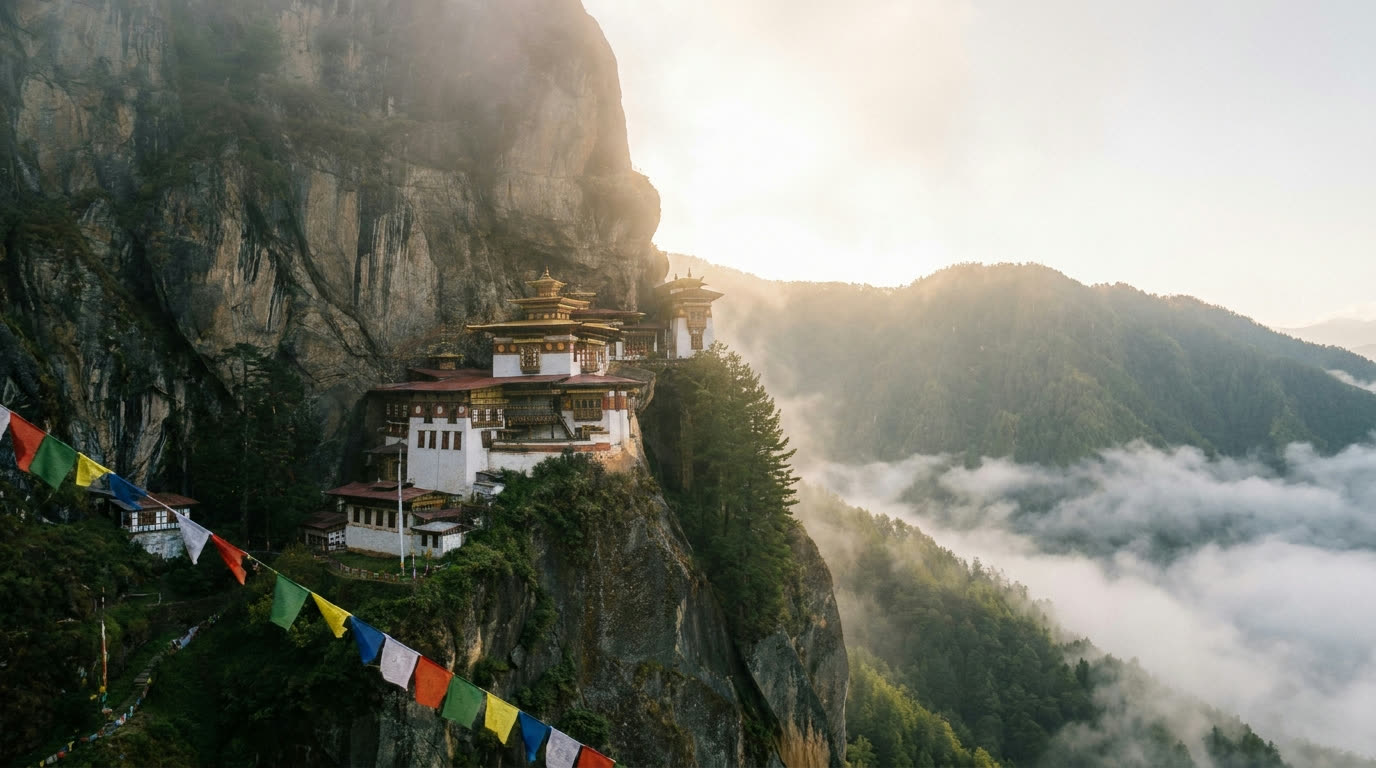
Bhutan meters its own popularity. The kingdom charges every visitor USD 100 a night simply for being there, keeps advertising to a whisper, and as a result hands you something almost extinct: a serious destination with nobody in the frame. We plan it as a slow circuit — never a base — because the country's genius reveals itself valley by valley, over mountain passes strung with prayer flags. See our Bhutan concierge page for the short version; this is the long one.
Fair warning. Roads are slow, altitude is real, and dinner ends early. Travellers who need a beach and a scene should read our Mauritius or Amalfi guides instead. Travellers who want the trip they'll still be describing in ten years should keep reading.
What is Bhutan really like? The big adventures What to do day by day Where to stay The iconic spots What to eat The luxury insider layer
What is Bhutan really like?
Bhutan is the last Vajrayana Buddhist kingdom, a country of 780,000 people that measures itself by Gross National Happiness and has never been colonised. In practice that translates into fortress-monasteries still functioning as government offices, men in belted gho robes debating archery scores, and a constitutional promise that 60% of the land stays forested forever. It suits curious, reasonably fit travellers; it wastes itself on anyone chasing nightlife.
The rhythm takes a day to accept. Shops shut early. Traffic lights don't exist — Thimphu famously runs on a white-gloved policeman instead. Tobacco sales only re-legalised in 2021 and smoking stays restricted to designated areas, which tells you plenty about the national temperament. Your guide (mandatory outside Thimphu and Paro, and genuinely the making of the trip) will happily detour to his family farmhouse if you ask. Ask.
Timing matters more here than almost anywhere we send clients. October and November bring surgical Himalayan clarity and the crane arrivals in Phobjikha. March–April stacks rhododendron bloom on top of the Paro Tshechu festival. June to August is monsoon: leeches on the trails, clouds on the peaks, and better places to be.
Every address in this guide can be reserved, sequenced and chauffeured for you — free, by your dedicated Dubai-based specialist.
Plan this journey with your free conciergeWhat are the big adventures in Bhutan?
The essential ones are the Tiger's Nest climb, a helicopter traverse of the high valleys, and — for the committed — the Trans Bhutan Trail, the restored 403-kilometre pilgrim route across the whole kingdom. All three can be scaled to your fitness; none should be skipped for the first two.
Paro Taktsang, done properly
The Tiger's Nest Map hangs 900 metres above the Paro Valley and the hike is a four-to-five-hour return with about 500 metres of gain. Leave the hotel at 6:30. You reach the cafeteria viewpoint before the tour buses, and the final staircase — 700-odd steps cut into the cliff, down into a waterfall gorge and up again — in cool shade. Ponies cover the first half for anyone unsure of their knees. Inside, no cameras; outside, the valley view earns every step.
By helicopter
Royal Bhutan Helicopter Services, the kingdom's sole operator, flies scenic circuits over Paro and, weather permitting, towards the unclimbed 7,570-metre wall of Gangkhar Puensum — the highest mountain on Earth nobody has summited, by law. We also use the heli to collapse the six-hour Punakha–Gangtey road day into twenty minutes when itineraries are tight.
On foot, for days
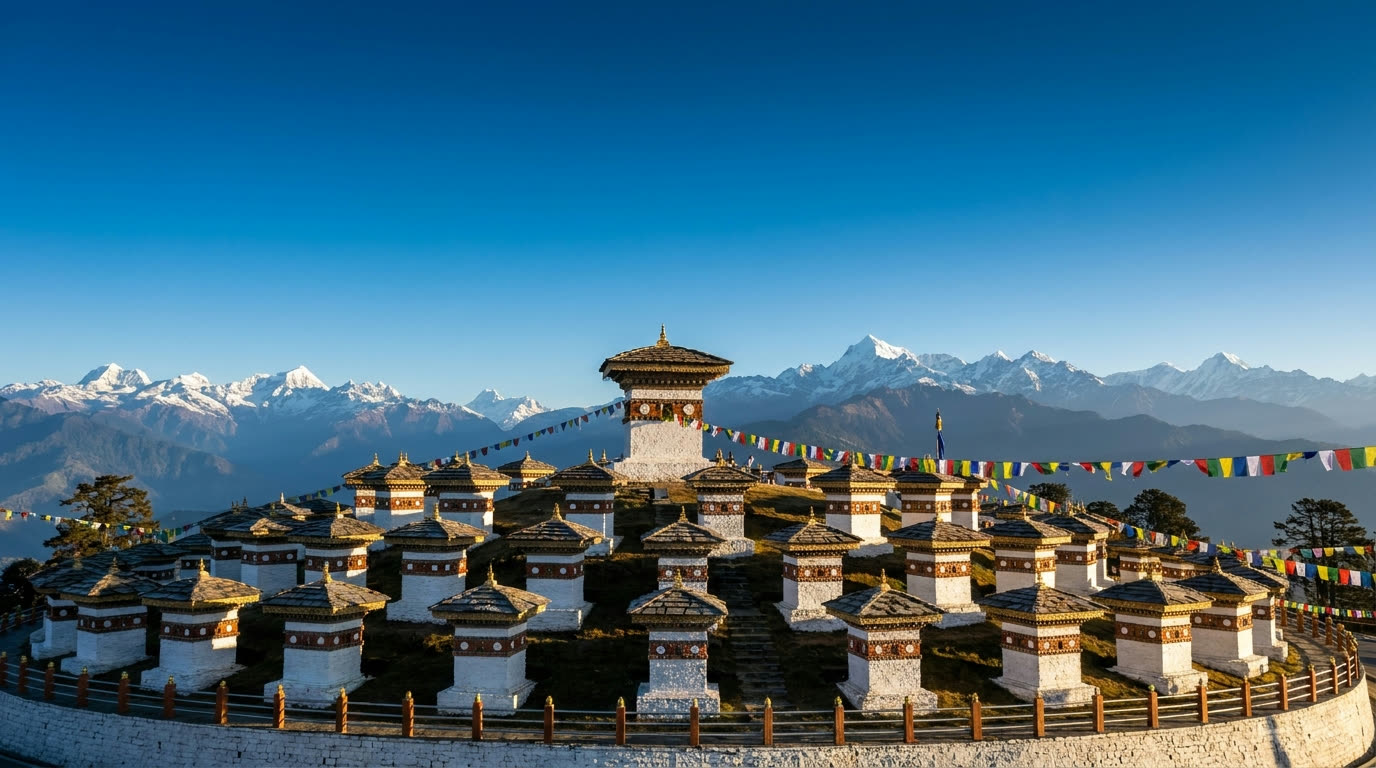
Sections of the Trans Bhutan Trail make superb day-hikes — the Dochula to Lumitsawa stretch drops through blue pine and rhododendron towards Punakha. Serious trekkers book the Druk Path, four to five days ridge-walking between Paro and Thimphu past alpine lakes, fully catered camps carried ahead by horse team.
What should you actually do day by day?
Plan three valleys in seven to nine nights: Paro, Punakha and either Thimphu or Gangtey. Two activities a day, one cultural and one physical, is the tempo that works; the altitude (2,200–3,100 metres in the main valleys) punishes over-scheduling.
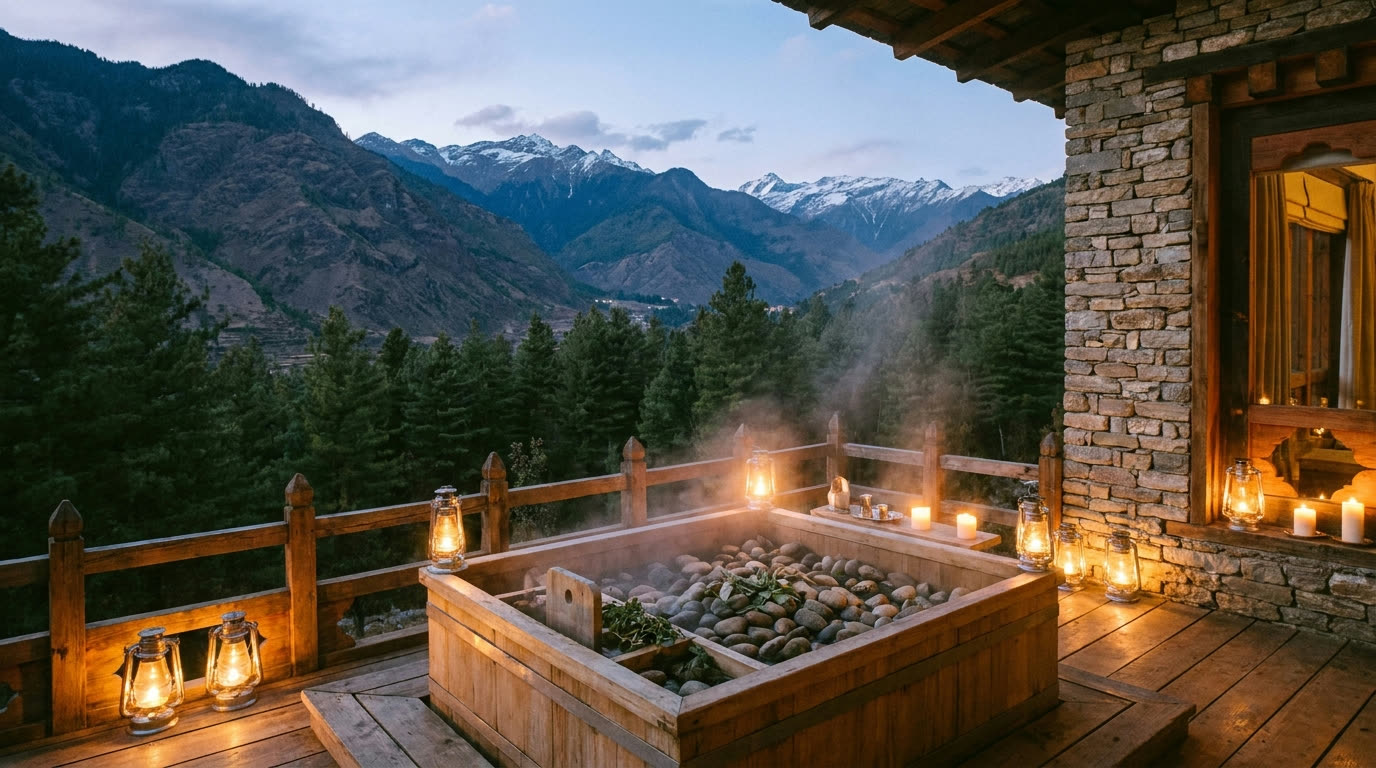
For couples: a private hot-stone bath on a farm in the Paro Valley — river stones roasted in a fire, dropped hissing into a wooden tub of artemisia-infused water; book the dusk slot and take the local Red Panda beer. Then a candlelit dinner in a 17th-century farmhouse dining room. Utterly unglamorous. Completely unforgettable.
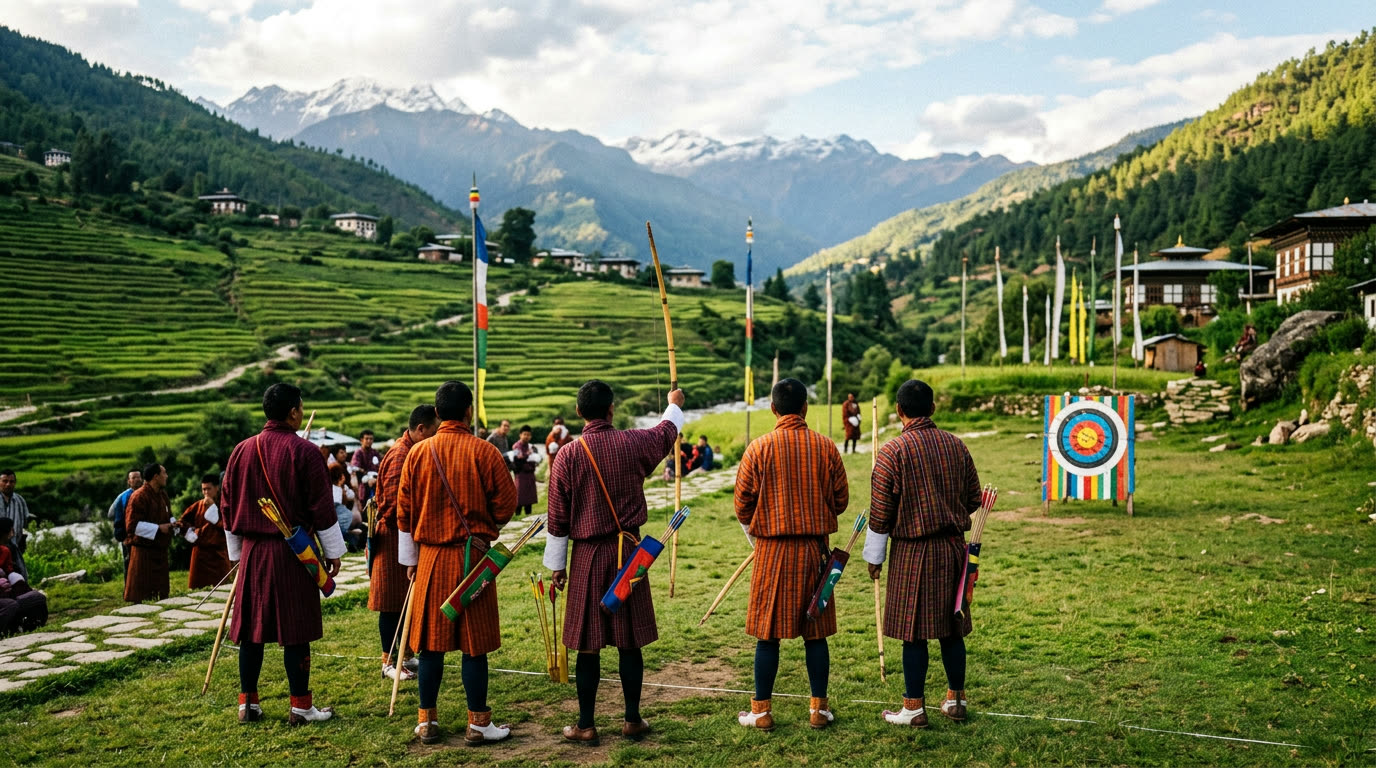
For families: archery lessons with traditional bamboo bows at the Changlimithang ground in Thimphu Map, white-water rafting the gentle Mo Chhu below Punakha Dzong (grade II, fine from age seven), and the takin preserve at Motithang Map — home of Bhutan's goat-antelope national animal, which looks designed by committee.
For everyone: time one day to a tshechu if the calendar allows. Masked cham dances in a dzong courtyard, whole districts in their best kira and gho, and not a ticket booth in sight. The Paro and Thimphu tshechus are the grandest; the small village ones are often better.
Where should you stay in Bhutan?
Bhutan invented the lodge-to-lodge circuit and it remains the right way to book: Amankora and Six Senses each operate five lodges across the western and central valleys, so you move between them with one bill, one standard and your preferences travelling ahead of you. Amankora and Gangtey Lodge each hold two Michelin Keys; Six Senses Bhutan holds one.
| Property | Tier | Indicative from | Best for |
|---|---|---|---|
| Amankora (5 lodges) | Ultra | USD 2,200/night | The definitive circuit; Gangtey's 8-suite lodge |
| Six Senses Bhutan (5 lodges) | Ultra | USD 1,800/night | Deepest spa and wellness programming |
| Gangtey Lodge, Phobjikha | Ultra | USD 1,400/night | 12 suites facing the crane valley |
| COMO Uma Paro | Luxury | USD 800/night | Tiger's Nest positioning, Bukhari restaurant |
| Taj Tashi, Thimphu | Refined | USD 450/night | Dzong-style city base in the capital |
Amankora Map
Rammed-earth and whitewash pavilions by Kerry Hill, all 65 suites near-identical by design so the valley outside becomes the decoration. Gangtey is the one to fight for — eight suites above the Phobjikha marshes, wood-burning stove in every room. Ask the Paro lodge for the potato shed hot-stone bath; it sounds like a joke and is the best single hour of the circuit.
Six Senses Bhutan Map
Five "palaces" themed to their valleys — Thimphu is all khang-zhi stonework above an apple orchard, Punakha has a flying-farmhouse pool cantilevered over rice terraces. The spa programme is the strongest in the kingdom. Take the oil-pouring shirodhara after the Tiger's Nest day, not before it.
Gangtey Lodge Map
Twelve suites, farmhouse-style, every bathtub aimed at the valley. In late October you watch black-necked cranes plane in from Tibet while your coffee goes cold. Book November through February far ahead; crane season sells out first in the whole country.
COMO Uma Paro Map
Twenty-nine rooms in blue pine forest above Paro town, ten minutes closer to the Tiger's Nest trailhead than anyone else, and home to Bukhari — the circular fireside dining room that remains our favourite restaurant in Bhutan. The private villas with their own spa rooms are the family play.
Every address in this guide can be reserved, sequenced and chauffeured for you — free, by your dedicated Dubai-based specialist.
Plan this journey with your free conciergeWhich iconic spots deserve your time?
Four, in this order: Punakha Dzong, the Tiger's Nest, Dochula Pass and the Phobjikha Valley. Each has an insider angle that separates a good visit from a great one, and none needs more than half a day.
Punakha Dzong Map
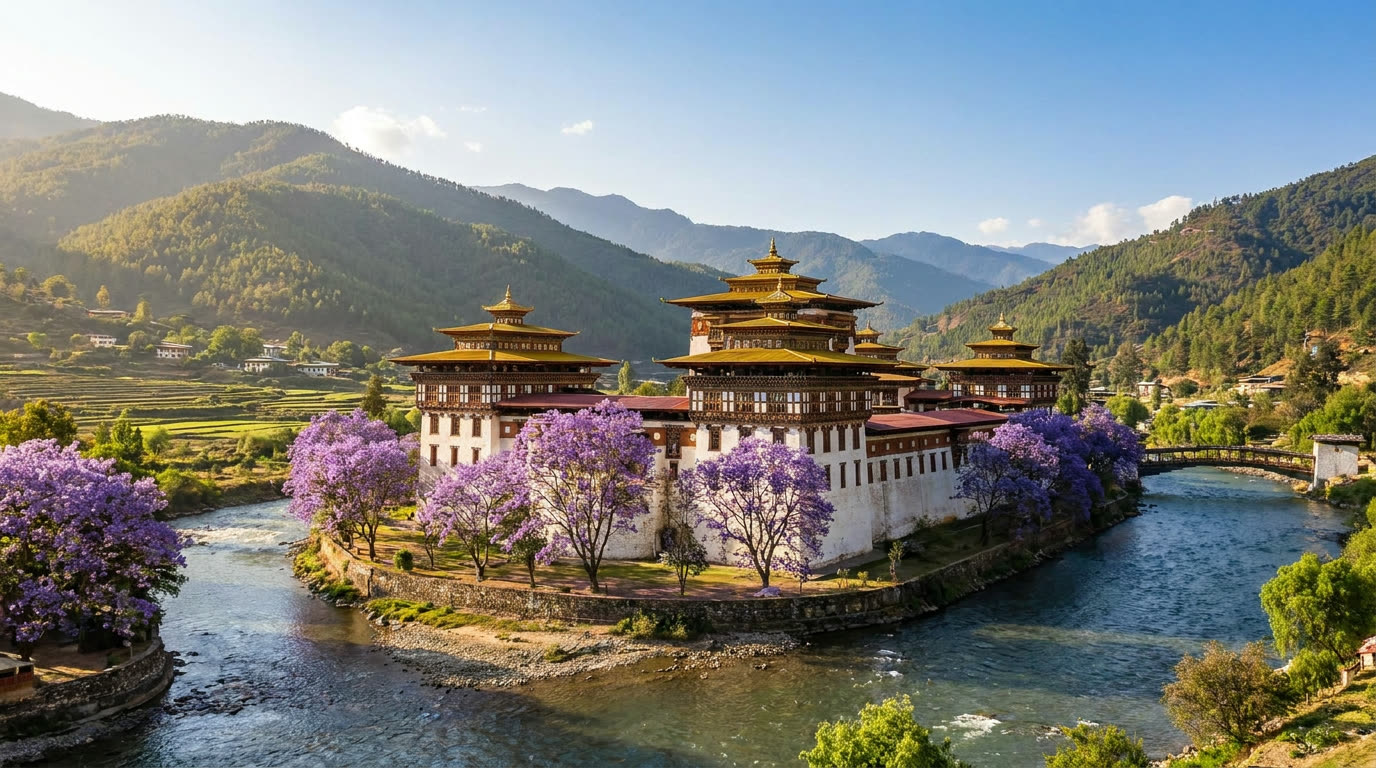
The most beautiful building in the Himalaya, sited where the Pho Chhu and Mo Chhu rivers meet, and still the winter seat of Bhutan's monastic body. Come late afternoon after the groups leave, when low sun hits the whitewash and the jacarandas (April) go violet against it. Cross the suspension bridge upstream — 160 metres of prayer-flagged wobble — before, not after, lunch.
Dochula Pass Map
The 108 memorial chortens at 3,100 metres, with a 180-degree Himalayan panorama on clear mornings. The view dies by 10am most days as valley cloud lifts, so we schedule the Thimphu–Punakha drive to cross before 8:30 and hold breakfast at the pass cafeteria. Cold hands, absurd view, decent coffee.
Phobjikha Valley Map
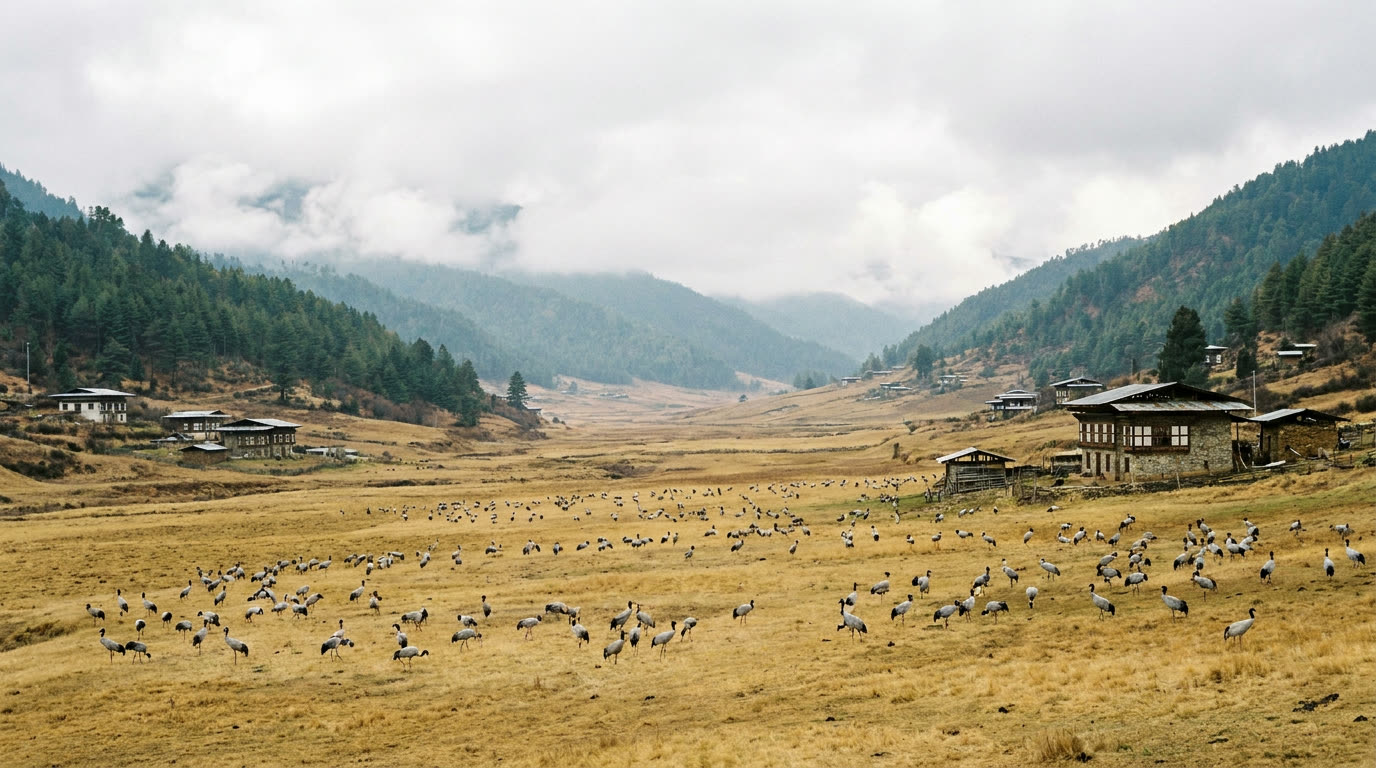
A U-shaped glacial bowl at 3,000 metres where several hundred black-necked cranes winter from late October to mid-February. Walk the Gangtey Nature Trail (90 easy minutes), visit the crane information centre run by the Royal Society for Protection of Nature Map, and note the valley deliberately keeps power lines buried for the birds. Nights drop below freezing; pack accordingly.
Thimphu, briefly
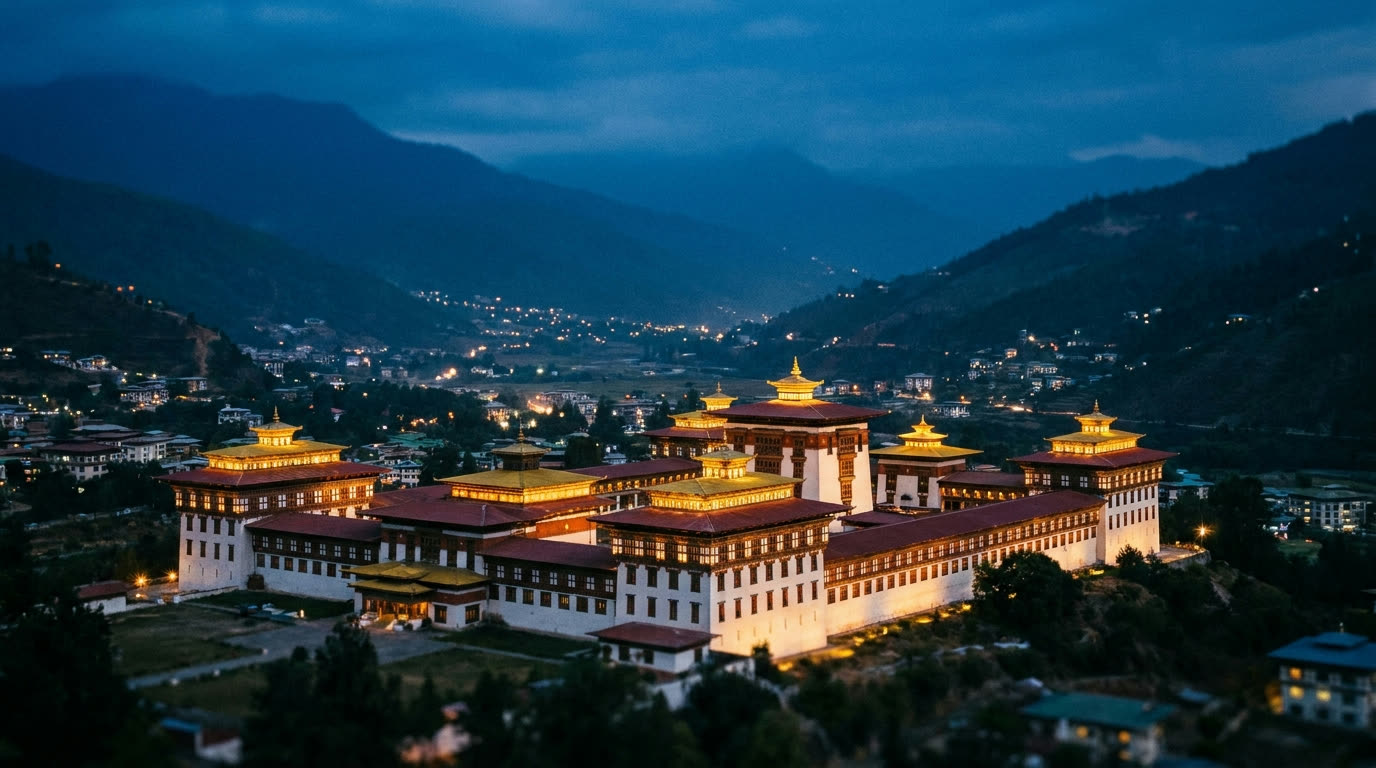
One full day covers the capital: Tashichho Dzong Map after 5pm when offices close to visitors' advantage, the giant Buddha Dordenma on its ridge Map, and the weekend Centenary Farmers' Market for dried chillies, yak cheese cubes and the national talent for chatting to strangers.
What should you eat in Bhutan?
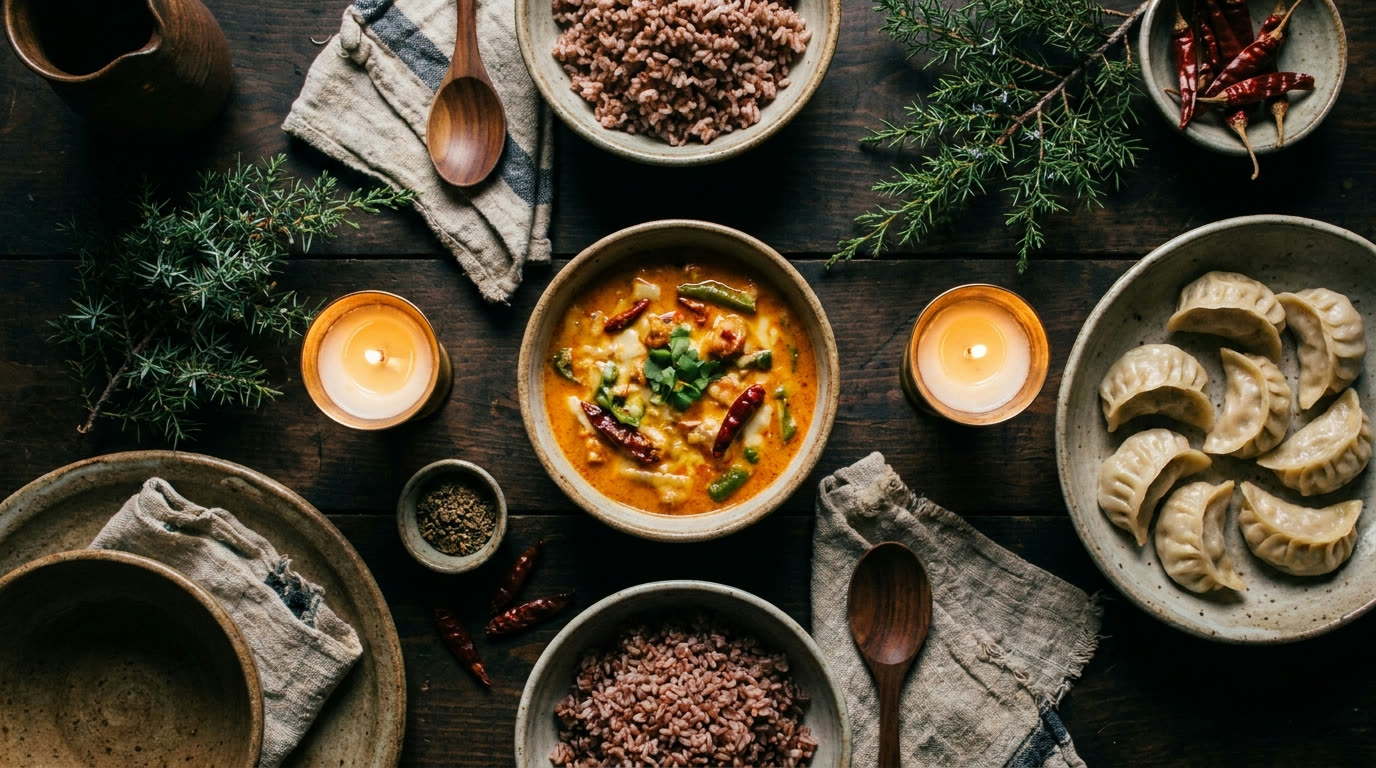
Bhutanese food is built on chillies treated as a vegetable, not a seasoning, and the national dish ema datshi — chillies stewed in farmhouse cheese — is compulsory at least once. The best meals split between lodge dining rooms, which now cook the kingdom's most refined food, and farmhouse tables, which cook its truest.
Order red rice with everything; the nutty Paro Valley grain outclasses the imported white. Try momos (the beef ones at Zombala 2 in Thimphu Map are a local institution, and lunch for two costs less than your airport coffee), jasha maroo chicken stew, and — bravely — suja, the salted butter tea. Our honest advice: one farmhouse dinner, taken with ara, the local rice spirit your host will distil herself, beats any tasting menu in the country.
At the top end, Bukhari at COMO Uma Paro remains the destination table: a circular room around a central hearth, Bhutanese ingredients handled with COMO's precision — ask for the datshi trio and the Bhutanese red rice risotto. Amankora's lodges do a moving-feast trick where dinner may appear in a potato shed, a pine forest or beside the river, announced only that morning. Babesa Village Restaurant in Thimphu Map, set in a 600-year-old house, is the city's best traditional set menu.
Where is the luxury insider layer in Bhutan?
Bhutan has no beach clubs and no cigar lounges — smoking is confined to designated areas and we'd counsel leaving the humidor at home. Its version of the insider layer is access: private blessings, closed-door craftsmanship and the quietest connectivity story in the Himalaya. This is what we actually arrange.
Private ritual
A monk-led private blessing ceremony inside a working lhakhang, arranged through your lodge with a donation to the temple — usually at dawn, butter lamps lit for your family by name. We also book private meditation sessions with a senior monk at Amankora Thimphu. Sceptics report back the same as believers.
Private shopping
Textiles are the treasure. The Royal Textile Academy in Thimphu Map shows museum-grade kira weaving and can introduce serious buyers to master weavers; a fine kushuthara piece takes a year on the loom and prices in the thousands, deservedly. For appointments with private dealers in antique textiles and silver, we arrange vetted introductions — export rules on antiques are strict, and your concierge handles the paperwork.
Connectivity and seclusion
Starlink was licensed in Bhutan in 2025, and the top lodges pair fast Wi-Fi with the option of none at all — Six Senses will happily lock your phone in a wooden box for the stay. For working travellers, Amankora Thimphu and Taj Tashi are the reliable video-call bases; Phobjikha is where you go to be unreachable with a clear conscience.
The money notes
The SDF is USD 100 per adult per night until at least 31 August 2027, on top of everything else — treat it as the entry price to the emptiest great destination on Earth. Druk Air and Bhutan Airlines monopolise Paro; book business class early (it is small and sells first) and sit on the left flying in from Kathmandu for the Everest flypast. There are no international luxury boutiques, no queues, and almost no crime. That is the product.
Every address in this guide can be reserved, sequenced and chauffeured for you — free, by your dedicated Dubai-based specialist.
Plan this journey with your free conciergeEvery address above can be arranged, reserved and chauffeured for you — free, by your dedicated Dubai-based specialist.
Plan my Bhutan journey