The Amalfi Coast Little Black Book
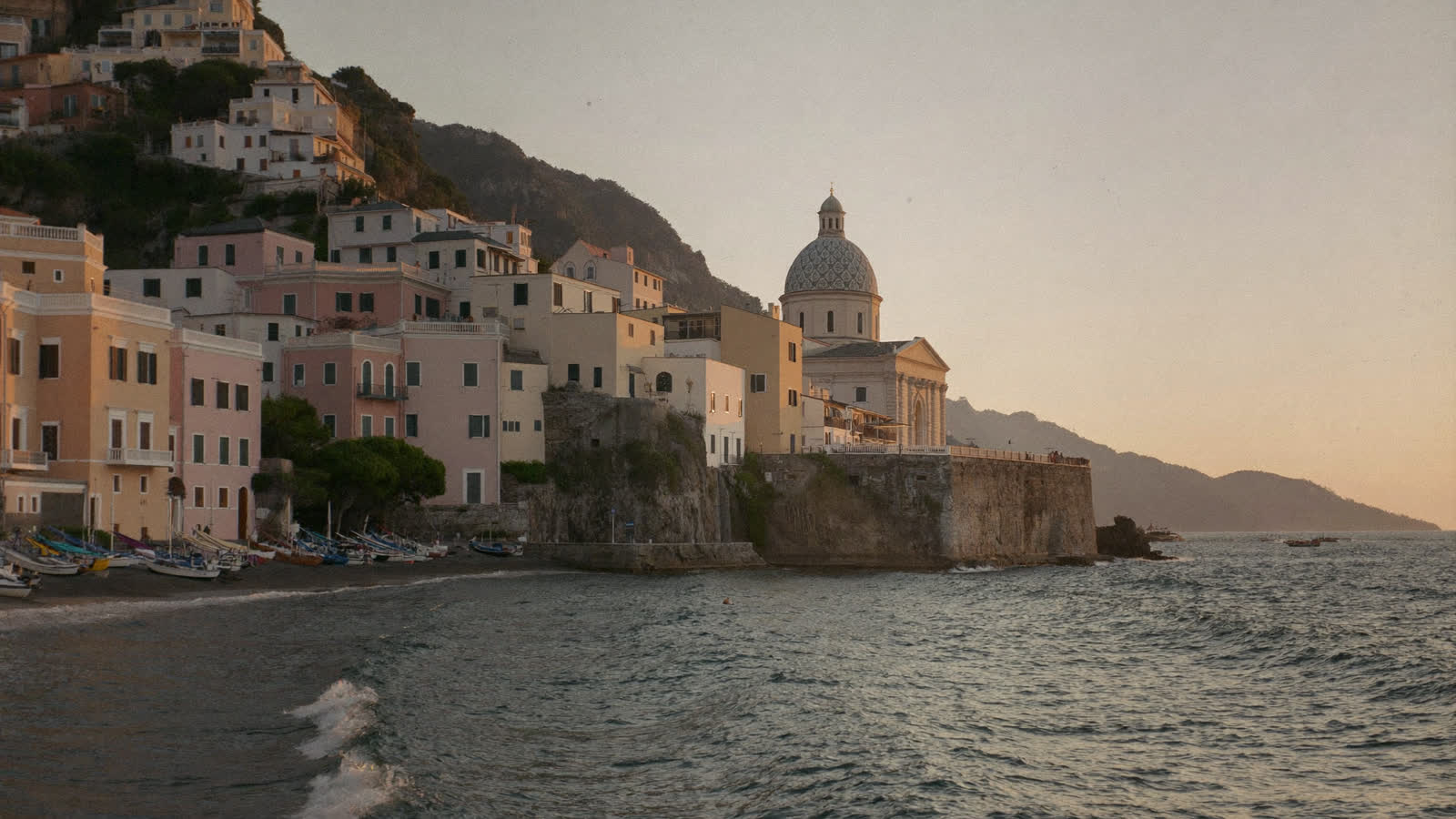
The Amalfi Coast does not need an introduction; it needs an edit. Between Positano's vertiginous stairways and Ravello's gardens sit perhaps two dozen addresses that matter, and the difference between a good week and an unrepeatable one is knowing which they are — and arriving by sea rather than by the coast road. Our Amalfi Coast page sketches the itinerary; this is the complete book.
Book everything before you fly. The season is short — the great tables shut over winter and reopen in April — and the best of the coast operates on a first-name basis.
What is the coast really like? The great adventures What to actually do Where to stay Iconic spots, taken properly What to eat The luxury insider layer Practical notes
What is the Amalfi Coast really like?
Vertical, short-seasoned and fiercely local. Fifty kilometres of cliff carry perhaps two dozen addresses that matter, the towns divide the labour between them — Positano the glamour, Ravello the intellect, Amalfi the history — and the initiated move by boat. Expect intensity rather than scale, and book months out.
Amalfi was a maritime republic before Venice mattered, and the coast has never quite stopped behaving like one: proud, vertical, self-contained. Its towns divide the labour between them. Amalfi keeps the history — the cathedral square and the old paper-mill valley behind town. Positano, draped down its ravine in ochre and rose, keeps the glamour it acquired when the dolce vita generation adopted it. Ravello, high above the sea, keeps the intellect: a patrician hill town of villas and gardens that has drawn composers and writers for well over a century. Praiano and Conca dei Marini, between them, keep the quiet. The whole coastline runs barely fifty kilometres, yet each town guards its own dialect of the same beauty, and the pleasure of a week here is learning to tell them apart.
The culture is coastal Campanian at its most concentrated: Catholic feast days that still stop traffic, lemon terraces farmed by hand because no machine can stand on them, ceramics and handmade paper sold a few doors from the workshops that produce them, and a table that has never needed to import an idea. What reads as effortless — the linen, the aperitivo hour, the boat idling at the jetty — is in fact a highly evolved choreography, refined over seventy years of receiving the world's most demanding guests without ever quite surrendering to them.
The coast suits travellers who prefer intensity to scale — couples above all, connoisseurs of the table, and anyone for whom a place's beauty is sharpened by a degree of difficulty. It is not a destination for the impatient: the coast road is a single ribbon of switchbacks, which is precisely why the initiated move by water and why the towns have kept their character. Come in June or September, when the sea is warm and the light long; July and August belong to those who booked everything in February; spring and October reward walkers. Between November and March much of the coast simply closes, and the great hotels sleep until Easter. That closure is not an inconvenience but the mechanism that keeps the coast itself: the families reclaim their towns, the kitchens rest, and the season reopens each spring with intent rather than fatigue.
Every address in this guide can be reserved, sequenced and chauffeured for you — free, by your dedicated Dubai-based specialist.
Plan this journey with your free conciergeWhat are the great adventures on the Amalfi Coast?
Three, in order: the Path of the Gods on foot, the helicopter in from Naples, and Capri by private boat before the hydrofoils wake. None needs special fitness. All three need booking, and the trail needs a 7am start in summer.
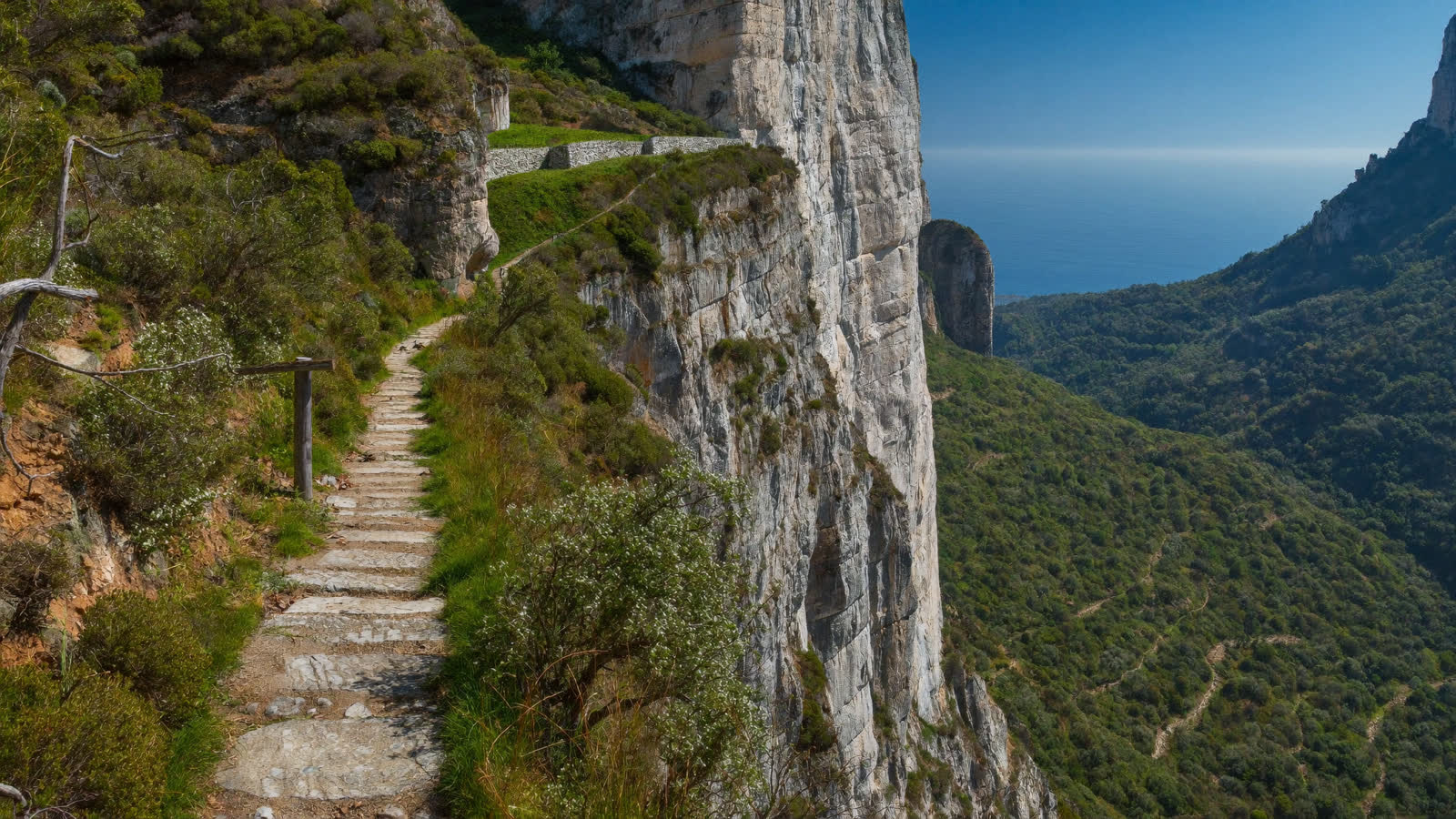
The coast's signature adventure costs nothing and outranks everything: the Path of the Gods (Sentiero degli Dei) Map, the 7.8-kilometre cliff trail from Bomerano, above Agerola, down to Nocelle on Positano's shoulder. Legend holds the Greek gods walked it to rescue Ulysses from the sirens of the Li Galli islets, and the route still feels borrowed from mythology — suspended viewpoints, rupestrian ruins built into the rock, the cavity of the Grotta del Biscotto, and Capri's Faraglioni floating on the horizon. Walk it early, from Agerola downhill, and finish with lunch at La Tagliata Map above Nocelle; the fit can add the 1,500 steps down into Positano itself. The trail is graded easy, but it is a mountain path, not a promenade — proper shoes, water, and no vertigo.
The second adventure is vertical in the other direction: the 40-minute helicopter transfer from Naples, which replaces two hours of switchbacks with a sweep over the Lattari mountains and delivers you to the coast while the luggage follows by car. The third is simply the crossing to Capri on your own boat — the grottoes and sea stacks of the island's quieter side, taken at swimming pace, remain the finest half-day in the Tyrrhenian. Cross early, before the hydrofoils, circle the island while the water is glass, and be back on the coast for a late lunch as the crowds are still queueing for the funicular.
Beneath the cliffs, the sea itself is the adventure. The coast's grottoes, arches and hidden coves are unreachable by road and mostly invisible from it; a skippered day boat turns the shoreline into a sequence of private swimming pools, each one abandoned the moment another boat appears. Swimmers should claim the first hour after breakfast, when the water off Li Galli is undisturbed; strong swimmers can round the islets themselves before the day's traffic builds.
What should you actually do on the Amalfi Coast?
Towns in the morning, water in the afternoon, one long dinner a night. That is the whole method; the rest is sequencing.
Structure the week around the rhythm the coast itself keeps. Mornings belong to the towns: Positano's boutiques open slowly, Amalfi's cathedral square is at its best before the day boats arrive, and Ravello's gardens — Villa Cimbrone Map chief among them — are emptiest at opening. Afternoons belong to the water or the lounger. Evenings belong to the aperitivo and the long dinner.
For couples, the canonical day runs: boat from Marina Grande after breakfast, first swim off Li Galli, lunch afloat or at a jetty table, a rest through the heat, then Franco's Bar at opening and a starred dinner. For families, the coast is kinder than its staircases suggest: the beach clubs take children seriously, the shuttle boat to Da Adolfo is an event in itself, and Agerola's high meadows — source of the fiordilatte mozzarella the region prizes — make an easy, cool escape from the coastal heat, with delis worth raiding for a picnic. Ravello asks a full day of everyone: gardens in the morning, a long lunch, and the Terrace of Infinity before the light goes. Walkers should keep a second morning for the coast's terraced mule paths — the Path of the Gods is merely the most famous of them.
A week, sequenced: arrive by helicopter and settle into Positano on day one; boat day to Li Galli and Capri on day two; the Path of the Gods early on day three with lunch above Nocelle; Amalfi's cathedral square and the paper-mill valley on day four, with Cetara's anchovies en route; Ravello's gardens and a starred dinner on day five; a beach-club day at Laurito or Arienzo on day six; and a final morning's shopping at Emporio Sirenuse before the boat back towards Naples. Nothing in that plan requires the coast road at midday — which is the entire art of the thing.
Beyond the coast itself, two excursions justify surrendering a day. Pompeii and Herculaneum lie on the road back to Naples and are transformed by a private early-entry guide — two hours in the quiet streets before the gates open to the public are worth more than a full afternoon in the crowds. South, past Salerno, the Greek temples of Paestum stand nearly empty in comparison, ringed by the buffalo farms whose mozzarella di bufala makes the detour a lunch as much as a lesson. Both pair naturally with the transfer days at either end of the week, so the itinerary loses nothing.
Where should you stay on the Amalfi Coast?
Il San Pietro or Le Sirenuse if the budget is open; Monastero Santa Rosa for romance; Caruso for altitude. The coast's serious stock runs to six houses, all family-run at the top, all booked out months ahead.
| Hotel | Tier | Where | Best for |
|---|---|---|---|
| Santa Caterina | Refined | Amalfi | First visit, central base |
| Le Agavi | Refined | Positano | Views, La Serra's star |
| Caruso, A Belmond Hotel | Luxury | Ravello | Altitude, gardens, cool evenings |
| Monastero Santa Rosa | Luxury | Conca dei Marini | Romance, the spa |
| Le Sirenuse | Ultra | Positano | Positano, distilled |
| Il San Pietro di Positano | Ultra | Positano headland | Total privacy, arrival by boat |
The coast's hotel stock is small, family-run at the top, and booked out months ahead. These are the six that matter, in ascending order of seclusion. Two rules govern the choosing. First, position beats category: a sea-facing room in the right town outranks a suite in the wrong one, and on this coast the view is the room. Second, book the hotel for its restaurant as much as its beds — the coast's best tables live inside its best houses, and residents hold the advantage when the dining room fills.
- Santa Caterina Map, Amalfi — refined. The grande dame above Amalfi town, with lift access to its sea platform and the Michelin Guide-listed Glicine on its terrace. The sensible base for a first visit, with the whole coast within reach: Positano and Ravello sit twenty minutes either side, and the hotel's own gardens supply the kitchen.
- Le Agavi Map, Positano — refined. A hillside of terraces connected by its own funicular, home to the Michelin-starred La Serra and views straight down the coast. Ask for a room on the upper terraces and let the funicular do the climbing.
- Caruso, A Belmond Hotel Map, Ravello — luxury. A medieval palazzo turned hotel in 1893 by Pantaleone Caruso, with vaulted ceilings, hanging gardens spilling towards the Tyrrhenian and a pretty wooden boat kept for exploring the coastline below. The choice for those who prefer altitude to beach — Ravello's cool evenings and empty morning lanes are the reward, and the sea is a chauffeured ten minutes below when wanted.
- Monastero Santa Rosa Map, Conca dei Marini — luxury. A restored 17th-century monastery of just twenty rooms, four levels of terraced garden, a pool that appears to float over the sea, and the Michelin-starred Il Refettorio — where the sfogliatella pastry is still made to the nuns' original recipe. The coast's most romantic address per square metre; the spa, dug into the rock with its hydro pool and tepidarium, is the coast's best. Book the room categories facing Capo di Conca.
- Le Sirenuse Map, Positano — ultra. The Sersale family's icon in the centre of Positano: La Sponda restaurant, Aldo's bar, the pool under the bougainvillea, and the house Riva waiting below. Positano, distilled. The house's real luxury is position: the town's stairways, boutiques and evening rituals begin at the front door.
- Il San Pietro di Positano Map — ultra. Carved into its own headland outside town with a private cove, the starred Zass on its terrace, and the coast's most jealously guarded quiet. Arrive by the hotel's boat; the approach to the jetty is half the theatre. Take a suite with a private terrace and you may plausibly never meet another guest.
Every address in this guide can be reserved, sequenced and chauffeured for you — free, by your dedicated Dubai-based specialist.
Plan this journey with your free conciergeWhat are the Amalfi Coast's iconic spots — and the insider way to see them?
Five fixtures, each with a correct hour. The Terrace of Infinity at opening, the Positano dome from a boat at dusk, the Duomo at breakfast. Get the timing right and the coast's most photographed places are, briefly, yours.
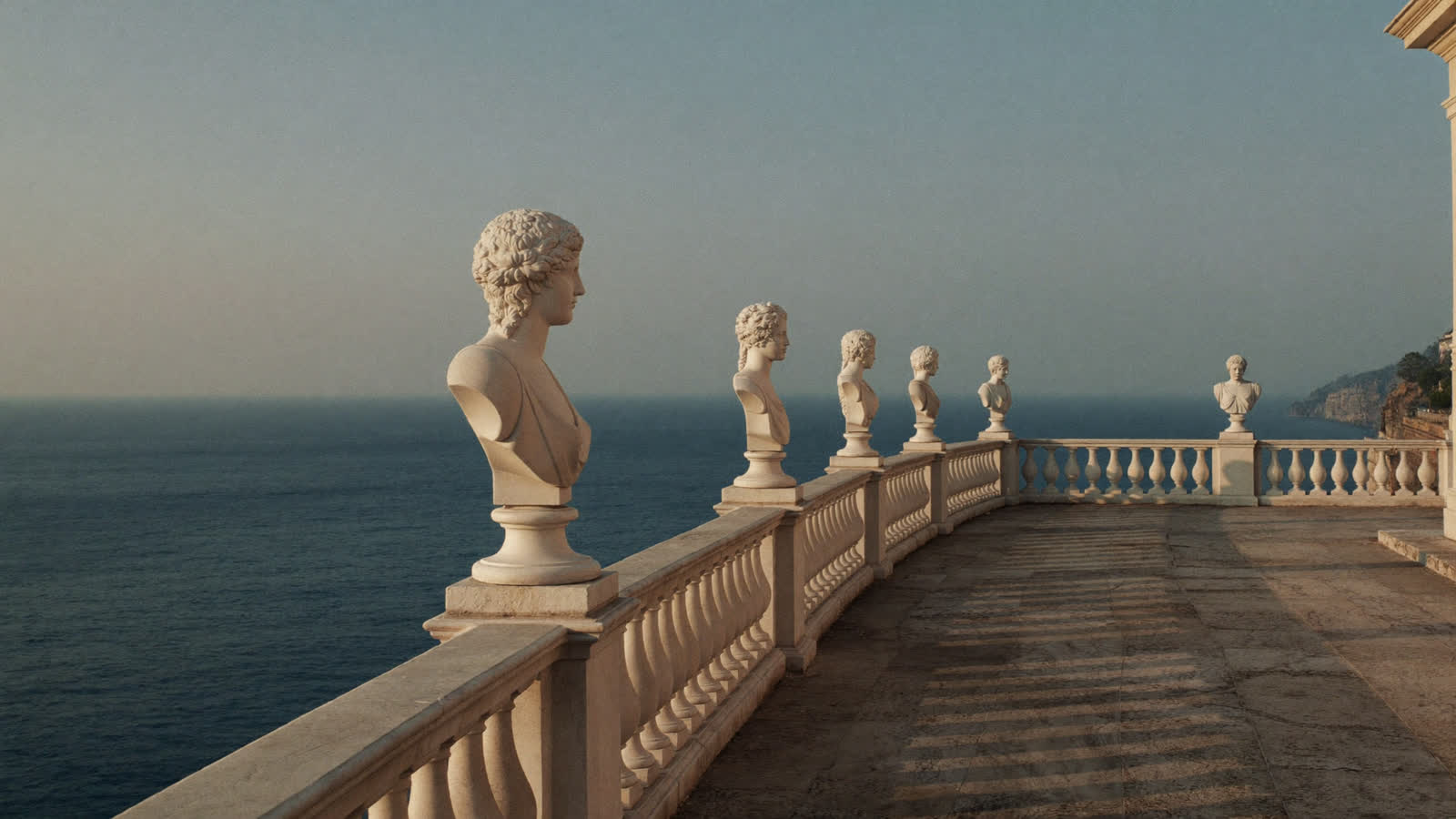
The Terrace of Infinity, Villa Cimbrone. Map The marble busts on their balustrade, 365 metres above the sea, form the coast's defining image. The insider angle is temporal: be at the gates at opening, walk directly to the terrace before the gardens fill, then take the gardens in reverse against the flow.
Santa Maria Assunta, Positano. Map The majolica-tiled dome is best read from the water — ask your skipper to hold position off Marina Grande in the last hour of light, when the town turns amber above it.
Li Galli. Map The sirens' islets of the Ulysses legend are privately held; you cannot land, but anchoring off them for the day's first swim is the correct opening move of any charter.
The Duomo di Amalfi. Map The striped cathedral atop its sixty-two steps anchors the old republic's square. Take it at breakfast time, when the piazza still belongs to the town, and climb to the Cloister of Paradise before the first coaches arrive.
The Faraglioni, Capri. Map Seen from a lounger at La Fontelina Map with lunch to follow, rather than from a funicular queue. Thirty minutes across the water, and a different island entirely before the day boats arrive.
What should you eat on the Amalfi Coast?
Scialatielli with seafood, the day's catch grilled plain, and lemon in every register. The stars are Zass and La Serra in Positano, Il Refettorio in its monastery; the cult lunch is Da Adolfo's mozzarella grilled on lemon leaves. Skip anything advertising itself in four languages.
Positano now holds two Michelin stars within a kilometre of each other. Zass Map, at Il San Pietro, serves Mediterranean cooking on a terrace suspended over the hotel's cove; ask for the table at the balustrade. La Serra Map, at Le Agavi, is its quieter rival — chef Leonardo Elefante won his star in 2024 and the greenhouse dining room looks straight down the coast. Up in Ravello, Il Flauto di Pan Map, in the gardens of Villa Cimbrone, delivers creative cuisine at the coast's most romantic altitude, and Rossellinis Map at Palazzo Avino keeps the town's grandest dining terrace. In Amalfi, Glicine Map at the Santa Caterina rounds out the Michelin Guide's local selection; at Conca dei Marini, Il Refettorio Map at Monastero Santa Rosa holds its star in a former monastery refectory.
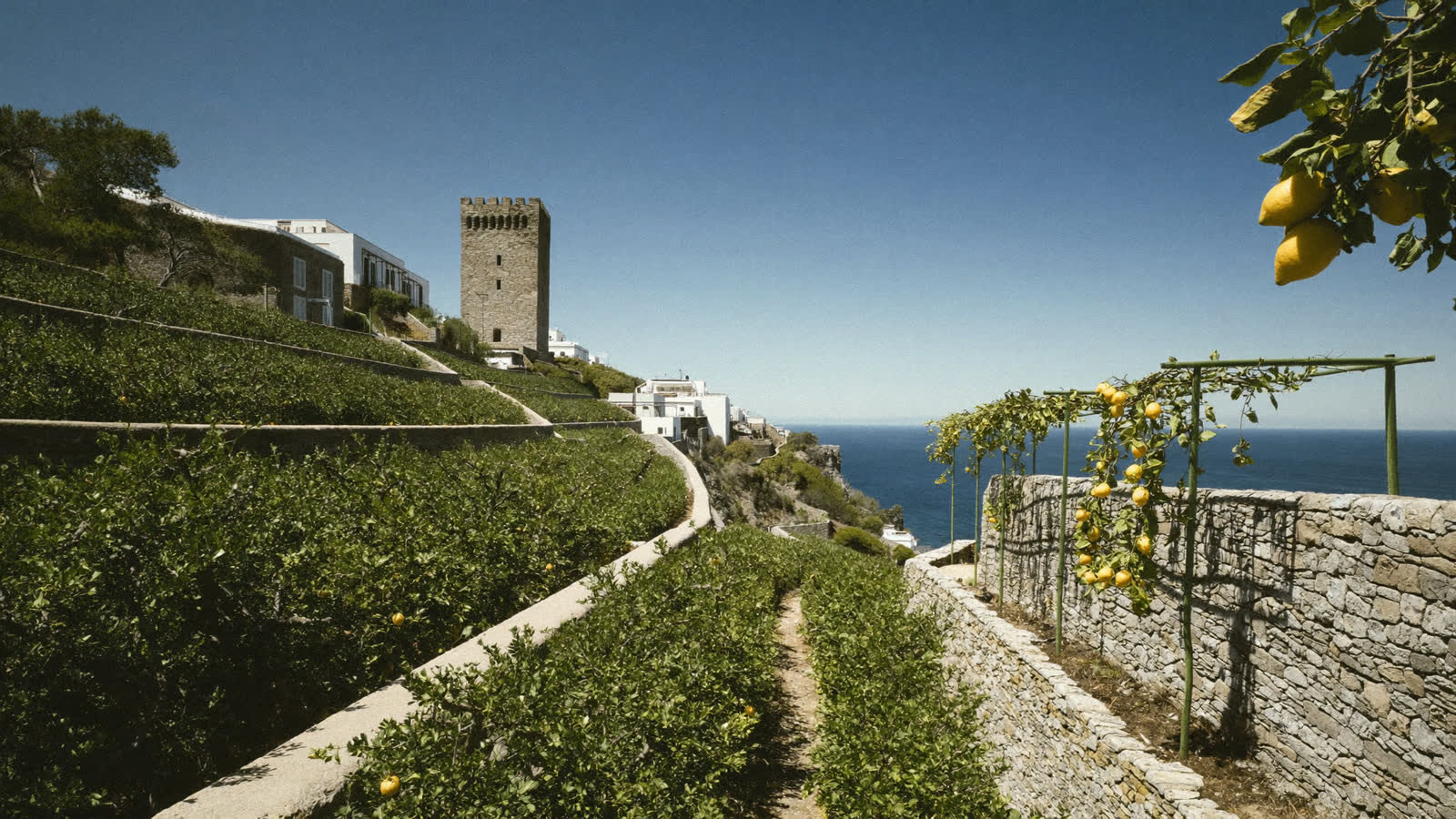
The street level matters as much as the stars. The coast's produce is specific and fiercely local: the sfusato lemon on its pergolas, Agerola's fiordilatte, and the sfogliatella Santa Rosa, invented by the nuns of Conca dei Marini and still made to their recipe. At Da Adolfo on Laurito beach the order is settled custom: mozzarella grilled on lemon leaves, whatever the boats brought in, and very cold white wine. Every serious table on this coast closes for winter; we hold season-opening reservations for clients each spring.
Order what the coast does best and nowhere else: scialatielli with seafood in Amalfi, the lemon in every register from granita to delizia al limone, and whatever the day boat landed, grilled without ceremony. The wine list to explore is Campanian — Fiano, Greco and the coast's own vertiginous vineyard bottlings — and the correct digestivo is a limoncello made from sfusato lemons, taken cold, once, and judged against every imitation you have ever been served.
Where is the luxury insider layer on the Amalfi Coast?
On the water, mostly. The private coast runs from boat-access beach clubs to a family Riva idling below Le Sirenuse, and it books by relationship rather than by platform. On the Amalfi Coast the private version is not hidden so much as unadvertised — it moves by boat, books by relationship, and treats the coast road as scenery rather than infrastructure. These are its fixtures.
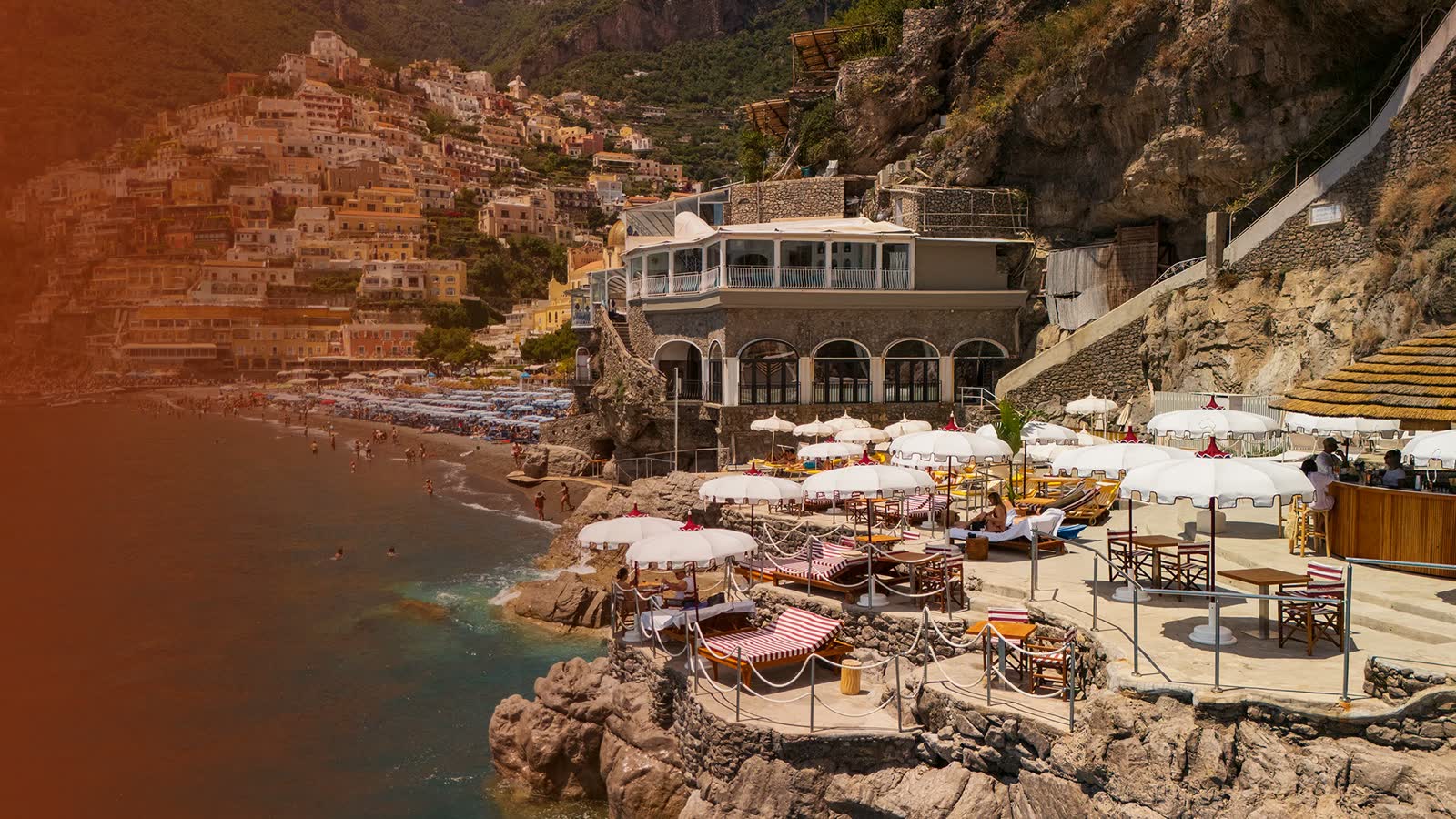
The bathing clubs. Positano's beach life is conducted from a lounger, reached by boat. Da Adolfo Map remains the cult lunch — take the shuttle boat with the red fish on its mast from Marina Grande, and book through the restaurant's own reservation system weeks ahead in high summer. Arienzo Beach Club Map, spread across its own cove east of town, is the polished, glamorous counterpart, while La Scogliera Map sits directly on the rocks facing Li Galli with full service to the lounger and three day packages that bundle lounger, table and boat into one booking. In Praiano, One Fire Beach Club Map takes the evening shift; across the water, La Fontelina seats you beneath the Faraglioni. The clubs run a shorter season even than the hotels, and the front-row loungers are allocated with the loyalty of theatre boxes — another argument for arriving with an introduction rather than a booking reference.
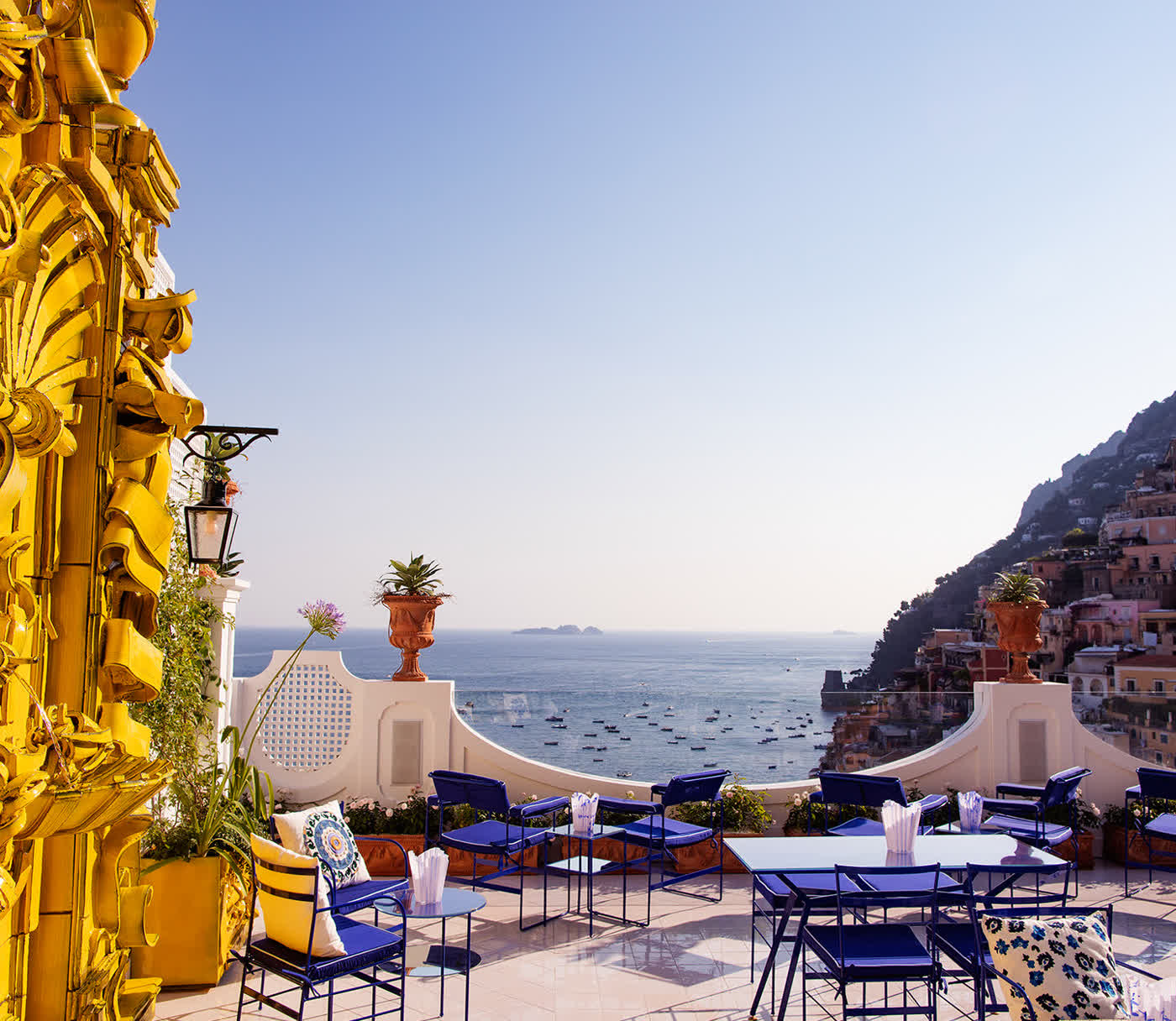
The aperitivo. Franco's Bar Map, the open-air terrace beside Le Sirenuse, is the institution: an old-fashioned, quality-first drinks list, no reservations, and the dome of Santa Maria Assunta framed below. Arrive at opening or accept the queue — both are part of the ritual.
Private shopping. Serious shopping here is by appointment and largely handmade. Emporio Sirenuse Map, the Sersale family's boutique on Piazza dei Mulini, is the definitive address — resortwear designed in-house alongside a finely chosen edit of sandals, including made-to-measure pairs cut while you wait. The pleasure of Positano shopping is that almost nothing here exists anywhere else; the frustration is that almost nothing is held in more than one size. Decide quickly. For anything beyond — jewellery from Capri, a tailor summoned to the villa — the request goes through your concierge, as it does on the French Riviera.
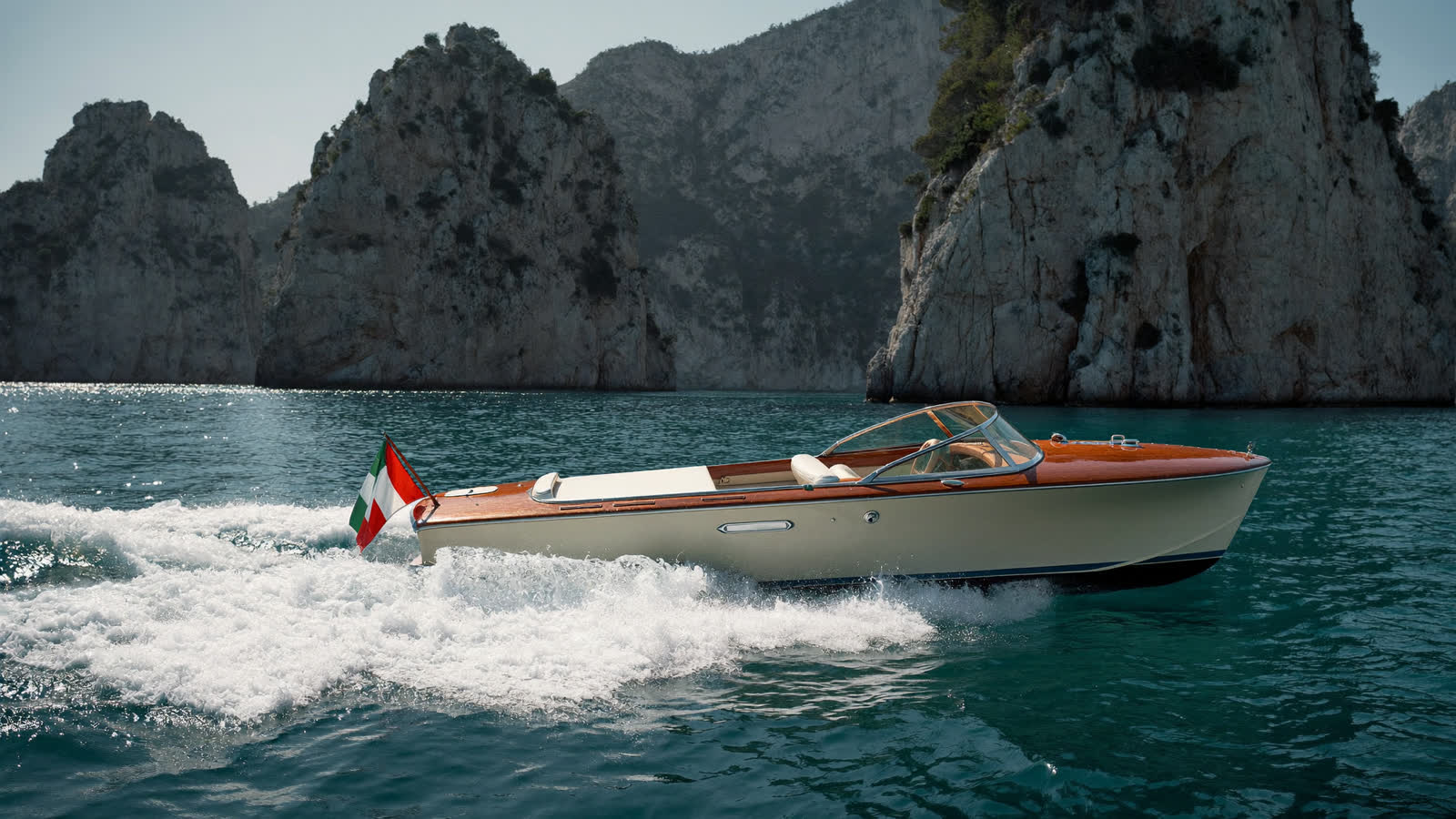
The water. Full-day private charters run from Positano from around €2,300 per boat for up to six guests, scaling through classic wooden gozzos to crewed motor yachts; Le Sirenuse keeps its own sporty Riva for guests, which tells you the correct way to travel here. Li Galli for the first swim, lunch on the water, Capri's grottoes in the afternoon, and the slow run home past Praiano as the cliffs turn amber. Multi-day cruises towards Ischia are the quieter, grander version of the same idea — the same logic we apply on Lake Como.
Every address in this guide can be reserved, sequenced and chauffeured for you — free, by your dedicated Dubai-based specialist.
Plan this journey with your free conciergePractical notes
Fly to Naples; from there it is the 40-minute helicopter or a car-and-boat combination to Positano. Pack for stairs — the coast is vertical, and lifts are a hotel amenity rather than a public utility. Book beach clubs and starred tables before arrival, weeks ahead in high summer, and let the boat, not the coast road, carry the itinerary. Every address above holds a place in our own book; the introductions are yours for the asking.
Timing the day matters more here than almost anywhere in Europe: the coast operates on a tide of day-trippers that floods mid-morning and ebbs at dusk, and every recommendation in this guide assumes you will move against it. Dress is polished-informal — linen by day, a collar at dinner in the starred rooms — and the evening air on the terraces asks for one layer more than you expect. Cash still matters in the smaller bars and at the beach clubs' jetties. Above all, resist the urge to see everything: the Amalfi Coast rewards depth over coverage, and the traveller who takes six addresses slowly leaves richer than the one who collects sixteen.
Every address above can be arranged, reserved and chauffeured for you — free, by your dedicated Dubai-based specialist.
Plan my Amalfi Coast journey