Where the World's Wealthiest Actually Go in Mauritius
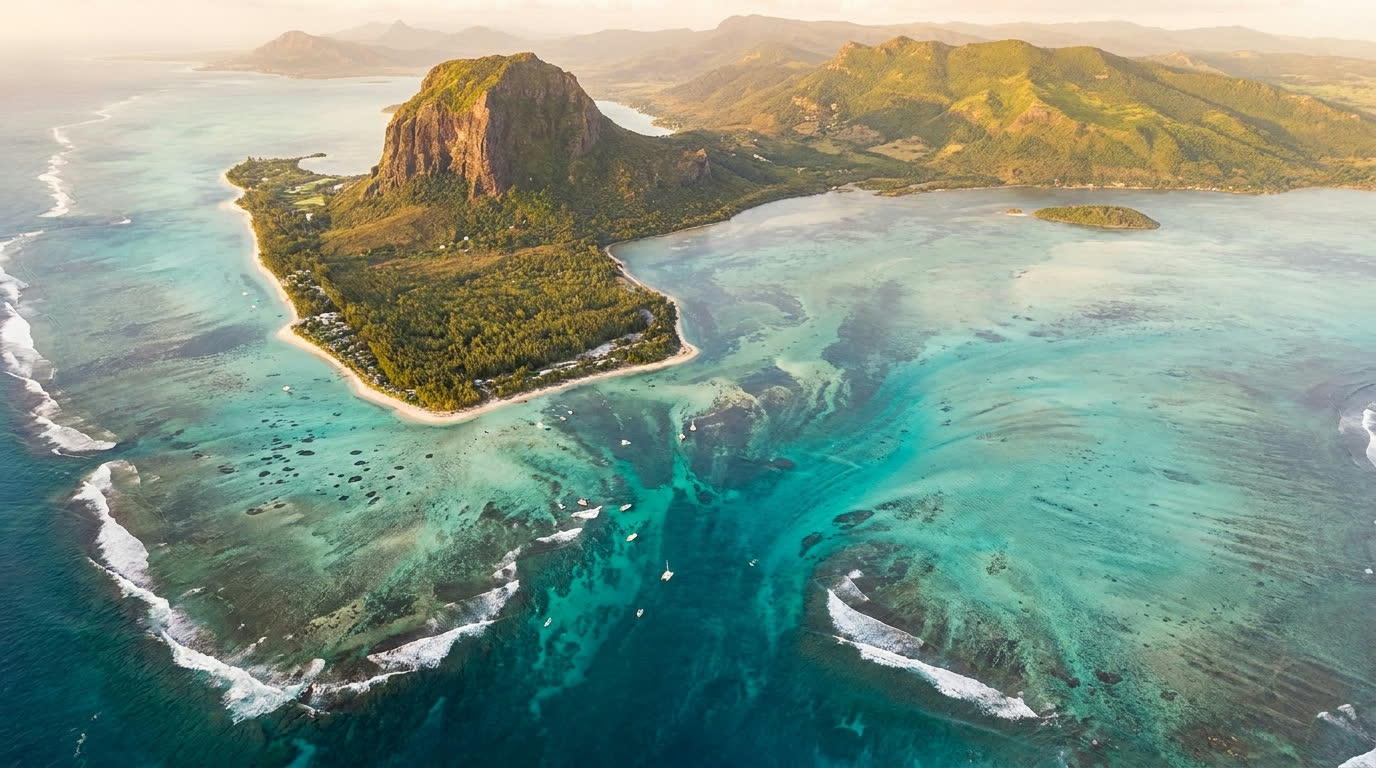
Mark Twain claimed heaven was copied from Mauritius, and the island has been dining out on the quote ever since. What the brochures undersell is the range: a volcanic interior of gorges and waterfalls, a Creole-Indian-Chinese-French food culture with genuine depth, and a hotel tradition older and more polished than the Maldives'. Six and a half hours from Dubai, zero time difference, no jet lag. For Gulf-based travellers it is the most efficient serious beach holiday on the map — which is why our Mauritius concierge page stays busy year-round.
The island's one real decision is which coast. Get that right and everything else follows.
What is Mauritius really like? The big adventures What to do day by day Where to stay The iconic spots What to eat The luxury insider layer
What is Mauritius really like?
Mauritius is a stable, English-and-French-speaking island democracy of 1.3 million, built by waves of African, Indian, Chinese and European arrival — a genuine creole culture rather than a resort with a flag. It suits honeymooners, families and golfers equally, which almost no destination manages, and it rewards the minority who leave the beach at least twice.
Geography does the sorting. The north around Grand Baie is the social coast: calm bays, restaurants, boutiques. The east — Belle Mare to Anahita — has the postcard beaches and catches the southeast trade winds, glorious from October to April, brisk in July. The wild southwest stacks Le Morne's UNESCO mountain, Tamarin's dolphins and surf, and Chamarel's hills into the island's most dramatic corner. The interior, which most visitors never meet, is sugar cane, sacred lakes and a gorge system full of endemic forest.
Seasons run opposite to the Gulf: May–November is austral winter, dry and 24–27°C — perfect touring weather, sea a degree or two cooler. December–January is hot, lush and festive. Cyclone risk concentrates late January to March; hotels handle it professionally, but first-timers should simply book around it.
Every address in this guide can be reserved, sequenced and chauffeured for you — free, by your dedicated Dubai-based specialist.
Plan this journey with your free conciergeWhat are the big adventures in Mauritius?
Kitesurfing at Le Morne, hiking the Black River Gorges, and blue-water fishing — Mauritius hides proper adventure behind its honeymoon reputation. All three are world-class by any measure, not merely resort-class.
Le Morne and the wind
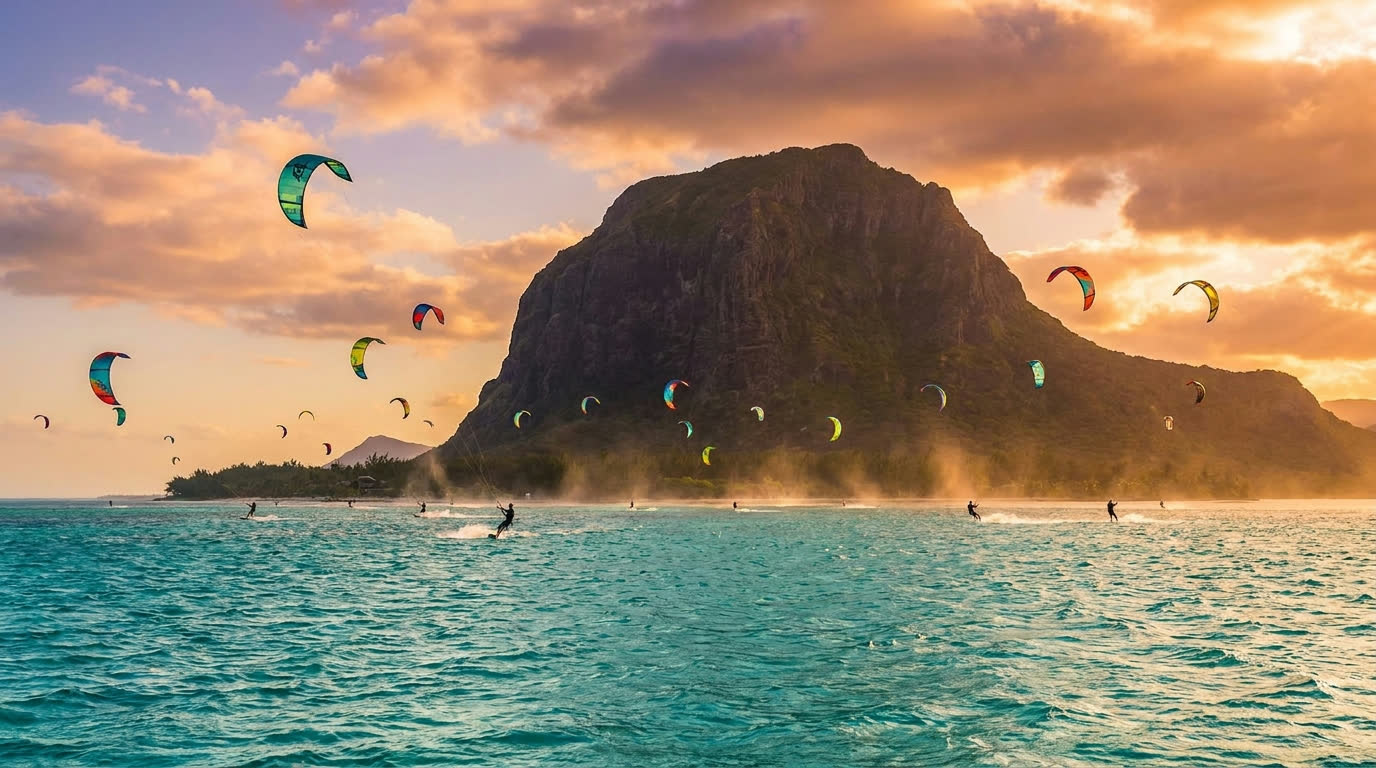
The Le Morne lagoon Map is one of the planet's great kitesurfing arenas: flat turquoise water inside the reef for learners, and One Eye — a barrelling reef wave with a global reputation — outside it for experts. June to September brings the most reliable wind. Lessons run off the public kite beach; we book private coaching with equipment delivered to your villa.
Black River Gorges
The national park protects the island's last great native forest — 60 kilometres of trails among black ebony, wild guava and screeching echo parakeets, a species conservation pulled back from nine birds in the wild. The Piton de la Petite Rivière Noire trail summits the island's highest point (828 m) in a half-day Map. Start early; cloud builds on the plateau by noon. The viewpoint kiosks sell nothing, so carry water — a detail every guide forgets to mention.
On and under the water
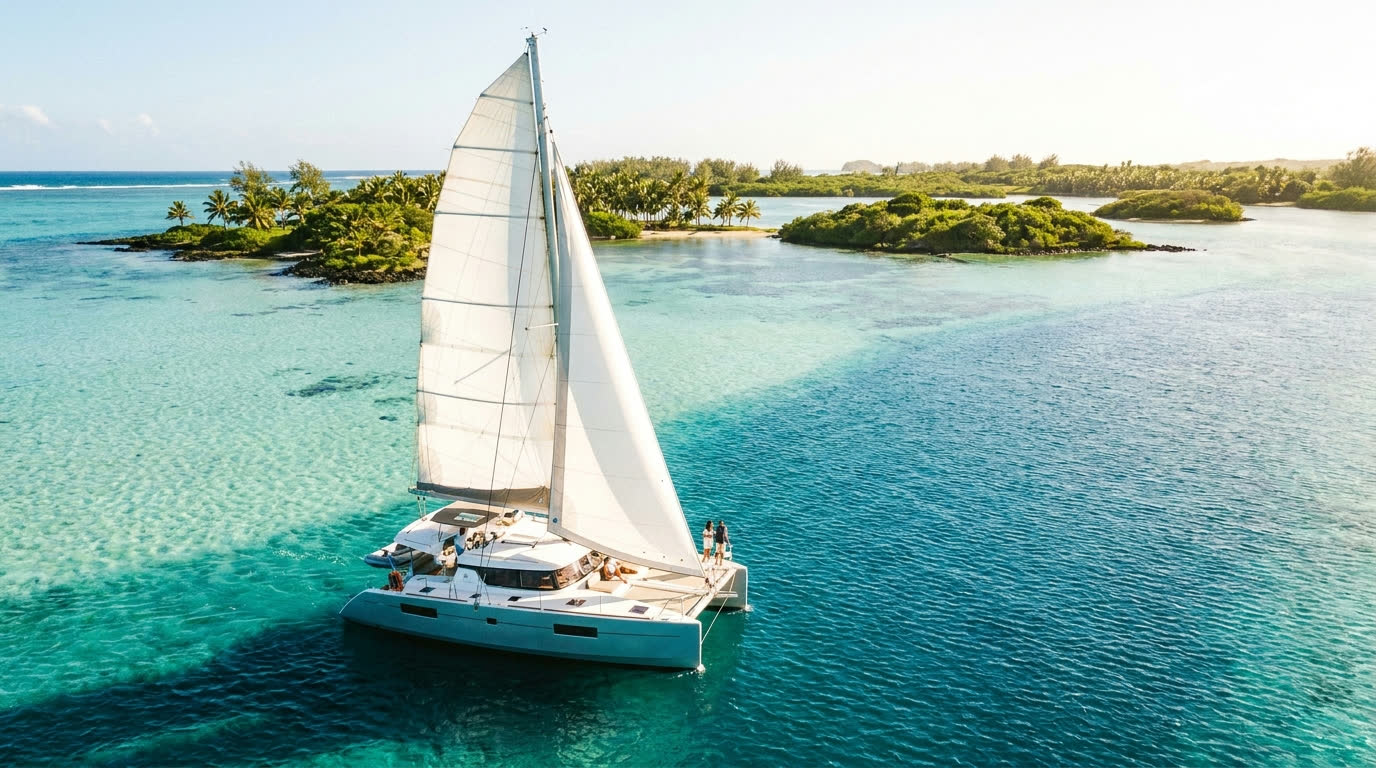
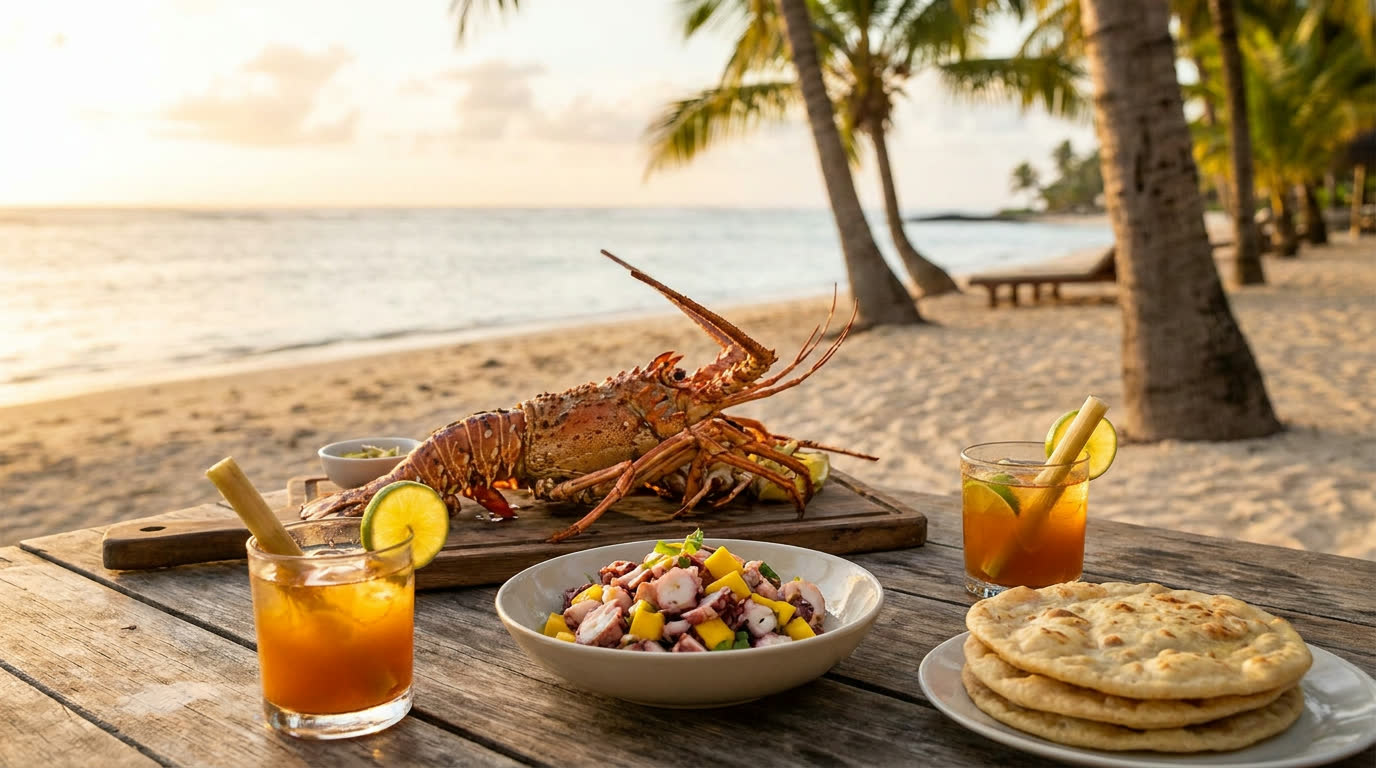
Marlin season runs November to April off the west coast, with Black River port the departure point for serious game boats. Divers get the Cathedral off Flic-en-Flac and coral gardens in the north. Gentler: swimming with wild spinner dolphins in Tamarin Bay at dawn — regulated, brief and unforgettable — and a catamaran day to Île aux Cerfs on the east coast with a grilled-lobster lunch aboard Map.
What should you do day by day in Mauritius?
Seven nights is the natural length; ten lets you split coasts. The working rhythm: resort mornings, one out-of-gate excursion every second day, sundowners always. Distances deceive — the island looks small but cross-island drives run 60–90 minutes, so cluster excursions by region.
For couples: the southwest day — Chamarel's coloured earths, the rum distillery long lunch, then Le Morne beach for the sunset the west coast owns. A private sandbank picnic dropped by boat. A spa afternoon; Mauritian hotels run some of the Indian Ocean's best therapists and charge less than the Maldives for them.
For families: Casela's safari park with its giant tortoises and ziplines Map, the catamaran day, undersea walks in the north, and the kids' clubs — Mauritius practically invented the luxury kids' club, and Beachcomber's remain the standard.
For golfers: two of the Indian Ocean's benchmark courses: Anahita's Ernie Els design and the Bernhard Langer layout on Île aux Cerfs, reached by the club's own boat Map. Book morning tee times; the trades pick up after lunch.
Where should you stay in Mauritius?
Mauritian hotelkeeping is a fifty-year craft tradition — service here outclasses most of the Mediterranean at half the rate. Choose by coast first, brand second.
| Property | Tier | Indicative from | Best for |
|---|---|---|---|
| Royal Palm Beachcomber, Grand Baie | Ultra | €900/night | The old-money benchmark; calmest bay on the island |
| One&Only Le Saint Géran | Ultra | €850/night | The legend on its own peninsula; best swimming beach |
| Constance Prince Maurice | Ultra | €700/night | Stilted suites, floating bar, 25,000-bottle cellar |
| Four Seasons Anahita | Luxury | €650/night | Villas with pools, Els golf, families done seriously |
| LUX* Grand Baie | Luxury | €550/night | Contemporary design and the north's restaurant scene |
Royal Palm Beachcomber Map
Sixty-nine suites on the island's most sheltered bay, staffed by people who have been there twenty years and greet returning guests by name — the repeat rate is the highest we know of anywhere. Water stays pool-flat even in July. Take a first-floor Palm suite for the breeze and book the beachfront grill for your first dinner; the palm-heart salad is the house classic.
One&Only Le Saint Géran Map
The grand dame of the east, alone on a private peninsula with a mile of beach and a lagoon on both sides. Post-renovation it runs young and glossy without losing the legend. The lagoon side stays calm when the ocean side has surf — families get both moods in one resort. Ask for the KOT-side suites near the point.
Constance Prince Maurice Map
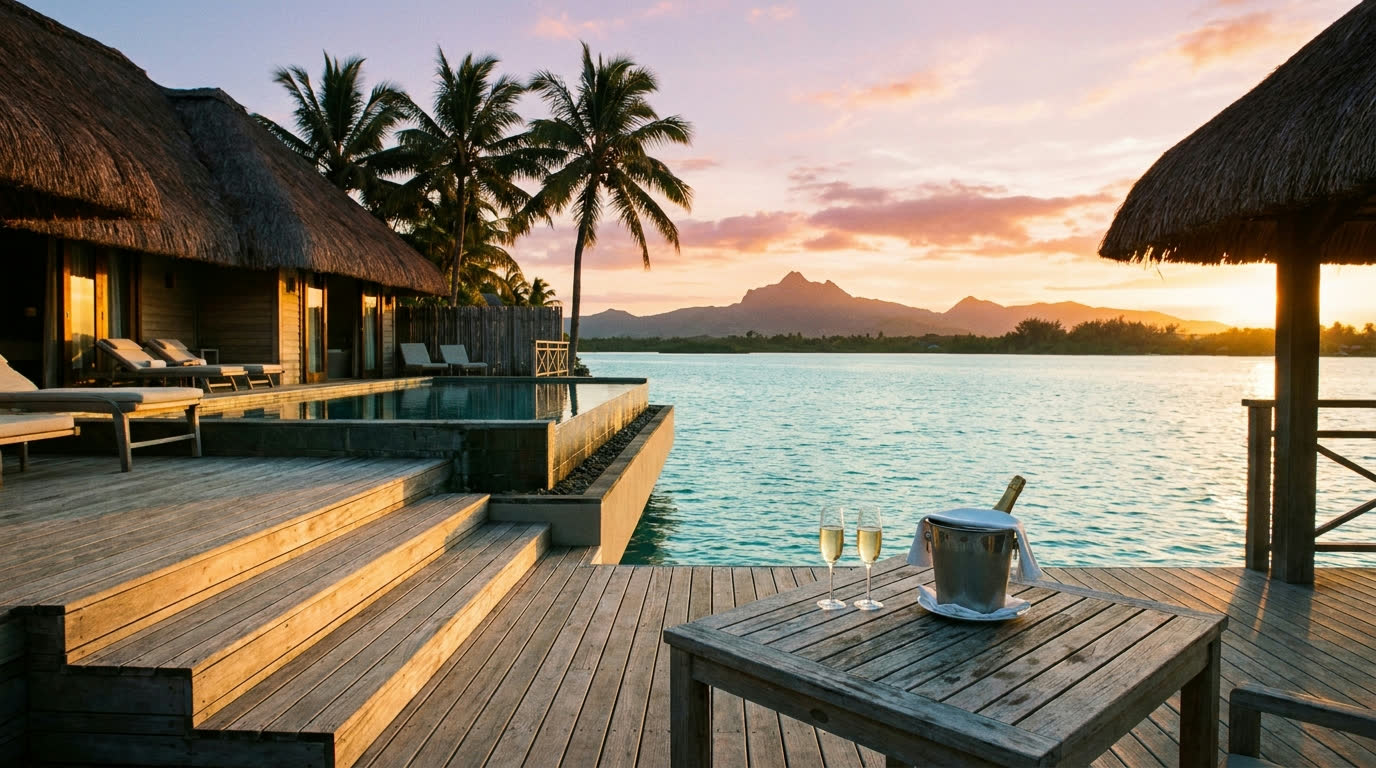
The romantic's pick: stilted suites over a fish reserve, a floating restaurant reached by walkway, and a wine cellar of some 25,000 bottles that hosts private dinners at a table among the racks. Quiet by design — children exist here but whisper. The barachois fishing lamps at night are the island's most photographed dinner view for a reason.
Every address in this guide can be reserved, sequenced and chauffeured for you — free, by your dedicated Dubai-based specialist.
Plan this journey with your free conciergeWhich iconic spots deserve your time?
Four: Le Morne, Chamarel, Pamplemousses and Port Louis's market — one per excursion day, each pairable with a memorable lunch nearby. That pairing rule is the difference between sightseeing and a good day out.
Le Morne Brabant Map
The 556-metre basalt monolith anchoring the southwest is a UNESCO site for sombre reasons — it sheltered escaped slaves, and the summit trail passes their memorial. The guided climb (compulsory for the upper section) takes three to four hours, starts at dawn, and ends with the island's definitive view: the lagoon's famous "underwater waterfall" illusion spilling off the shelf below. Not for vertigo sufferers. The beach below requires nothing but a towel.
Chamarel Map
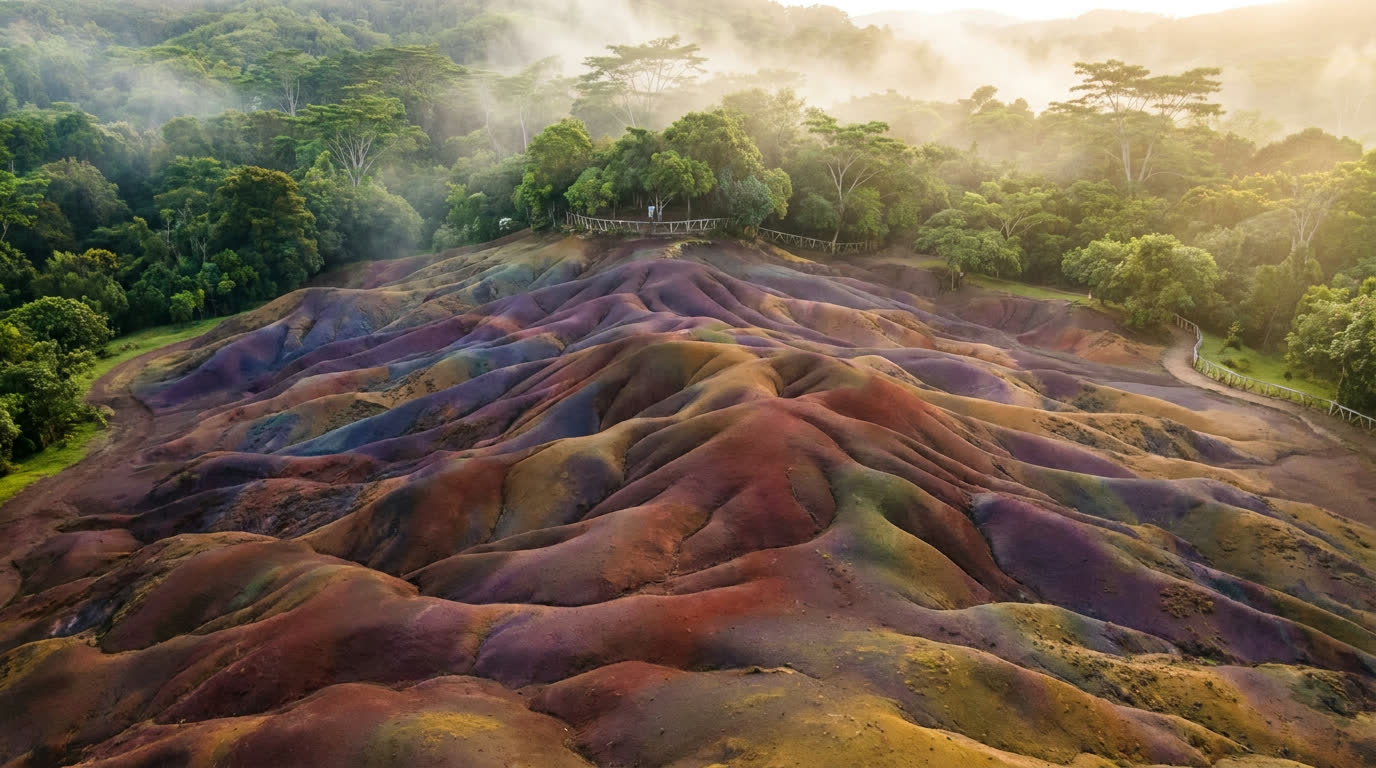
The Seven Coloured Earths — dunes of red, ochre and violet volcanic ash that refuse to mix — plus the island's tallest waterfall next door. Go before 10am for soft light and empty boardwalks. Then lunch: the Rhumerie de Chamarel distillery restaurant sits in its own cane fields and pours estate agricole rums with a proper Creole menu Map. Buy the aged rum at cellar door; airport prices run a third higher.
Pamplemousses Botanical Garden Map
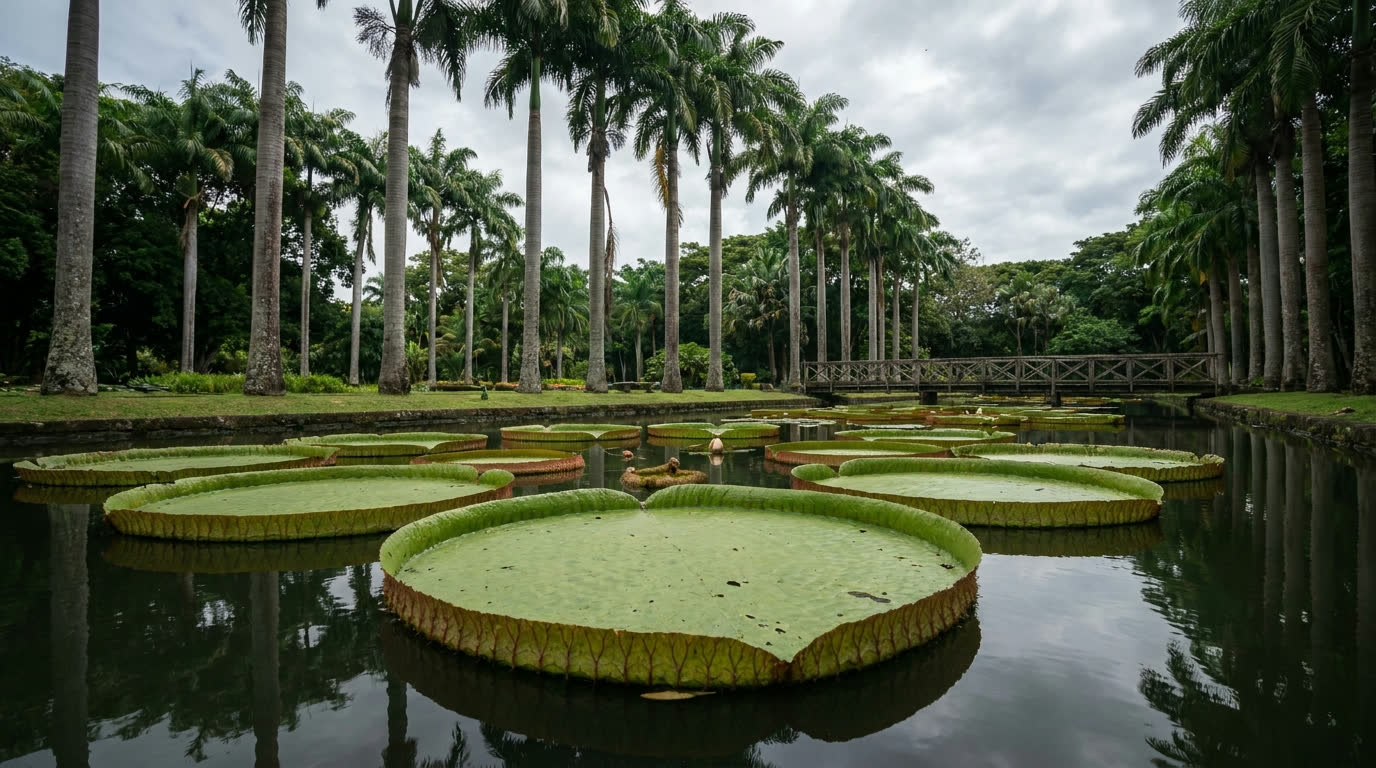
Founded 1770 and the oldest botanical garden in the southern hemisphere: giant Victoria amazonica lily pads, 85 varieties of palm, spice trees from the French East India era. An hour with a licensed guide (hire one at the gate; the labels alone won't carry you) pairs perfectly with the sugar-industry museum and its tasting room at L'Aventure du Sucre across the road.
Port Louis, briefly
The capital deserves half a day, not more: the Central Market's spice and street-food floors at 9am, the Chinatown fringe, the Blue Penny Museum for the world's most valuable stamps, then out before the midday heat. The Caudan Waterfront's shops are skippable; the market is not.
What should you eat in Mauritius?
Mauritian food is the island's most underrated luxury: French technique, Indian spice, Chinese wok discipline and Creole soul in one cuisine. The rule is simple — eat Creole outside the hotel, fine-dining inside it, street food at least once.
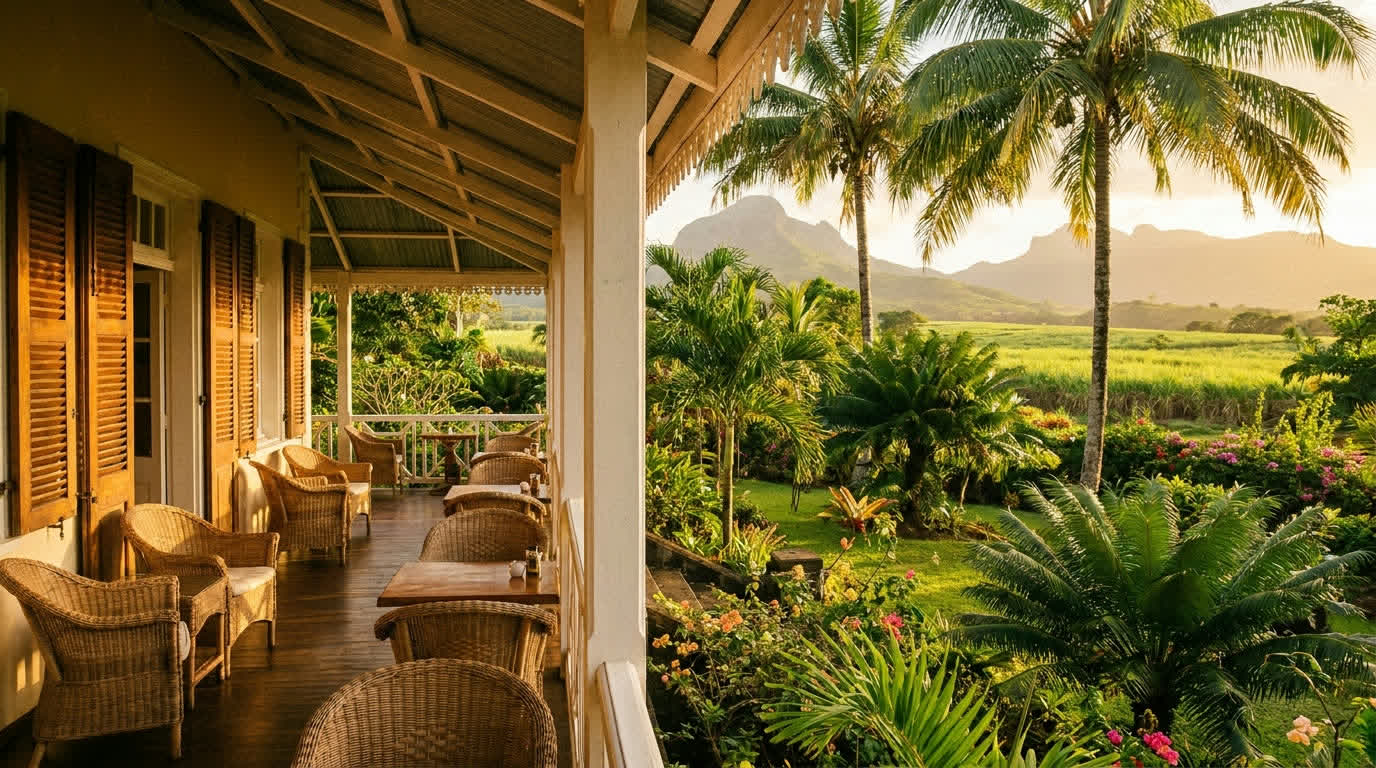
Start with the national street trinity: dholl puri (silken split-pea flatbreads folded around curry and chutney, best from the fought-over stalls of Port Louis and Rose Hill, a few rupees each), gateaux piments with morning tea, and boulettes — Sino-Mauritian dumplings in broth. Then the Creole table: octopus salad sharp with lime, wild-caught camarons (freshwater prawns) in red sauce, palm-heart "millionaire's salad", vindaye fish. Escale Créole in Moka, a family veranda restaurant, remains the benchmark home-cooking address Map — lunch only, book ahead.
For occasion dining: Le Château de Bel Ombre serves in a restored 19th-century plantation house above its own golf estate Map, and the top resorts import serious chefs seasonally — the Constance group's cellar dinners and Royal Palm's beachfront grill lead. Our honest note: the famous "romantic beach dinner" is worth doing exactly once; after that, the Creole verandas beat the torch-lit sand on flavour every time.
Where is the luxury insider layer in Mauritius?
Mauritius's insider layer is estates and water: private villas with staff, rum cellars, golf by boat and sandbanks reachable only by tender. Quieter than St Barts, better-staffed than the Maldives, and priced below both.
Private villas and seclusion
The serious private-stay stock clusters around Anahita's residences and the Bel Ombre estate in the south — four-to-six-bedroom villas with chef, butler and boat arrangements, ideal for multigenerational Gulf families who want privacy without resort compromise. Starlink-backed connectivity plus fibre means remote-working from a villa office overlooking the lagoon is genuinely frictionless; the island courts long-stay premium visitors with a dedicated premium visa for exactly this.
Rum, cigars and the cellar
Agricole rum is the island's connoisseur product: tastings and blending sessions at Rhumerie de Chamarel, and vertical tastings of aged expressions arranged privately. The Prince Maurice's wine cellar dinner — one table, sommelier, candlelight among the bottles — is the special-occasion booking of the island. Cigar service is hotel-led: the top resorts keep humidors and terrace-smoking is easy; pair a Havana with an XO agricole and the sunset does the rest.
Shopping and the water toys
Retail is modest and the better for it: local rum, vanilla and sugar variations, model ships (a 200-year-old craft tradition — buy from workshop showrooms, not beach stalls), and resort boutiques for the labels. The real spend goes on water: private catamaran charters with skipper and cook, sandbank picnics off the east coast, sunset cruises under Le Morne. Speed matters in booking, not in sailing — the best boats hold two weeks out in high season, and your concierge should be the one holding them.
Every address in this guide can be reserved, sequenced and chauffeured for you — free, by your dedicated Dubai-based specialist.
Plan this journey with your free conciergeEvery address above can be arranged, reserved and chauffeured for you — free, by your dedicated Dubai-based specialist.
Plan my Mauritius journey