The Tbilisi Little Black Book
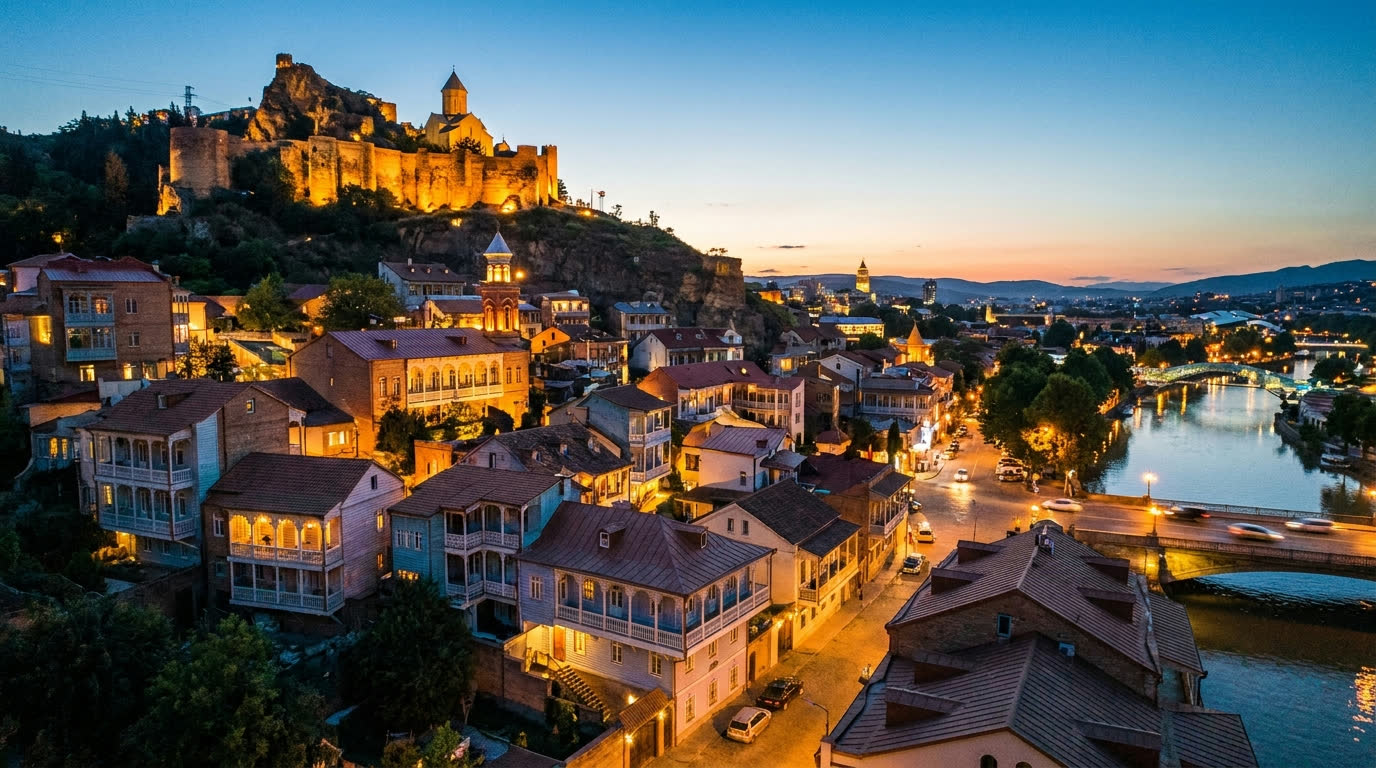
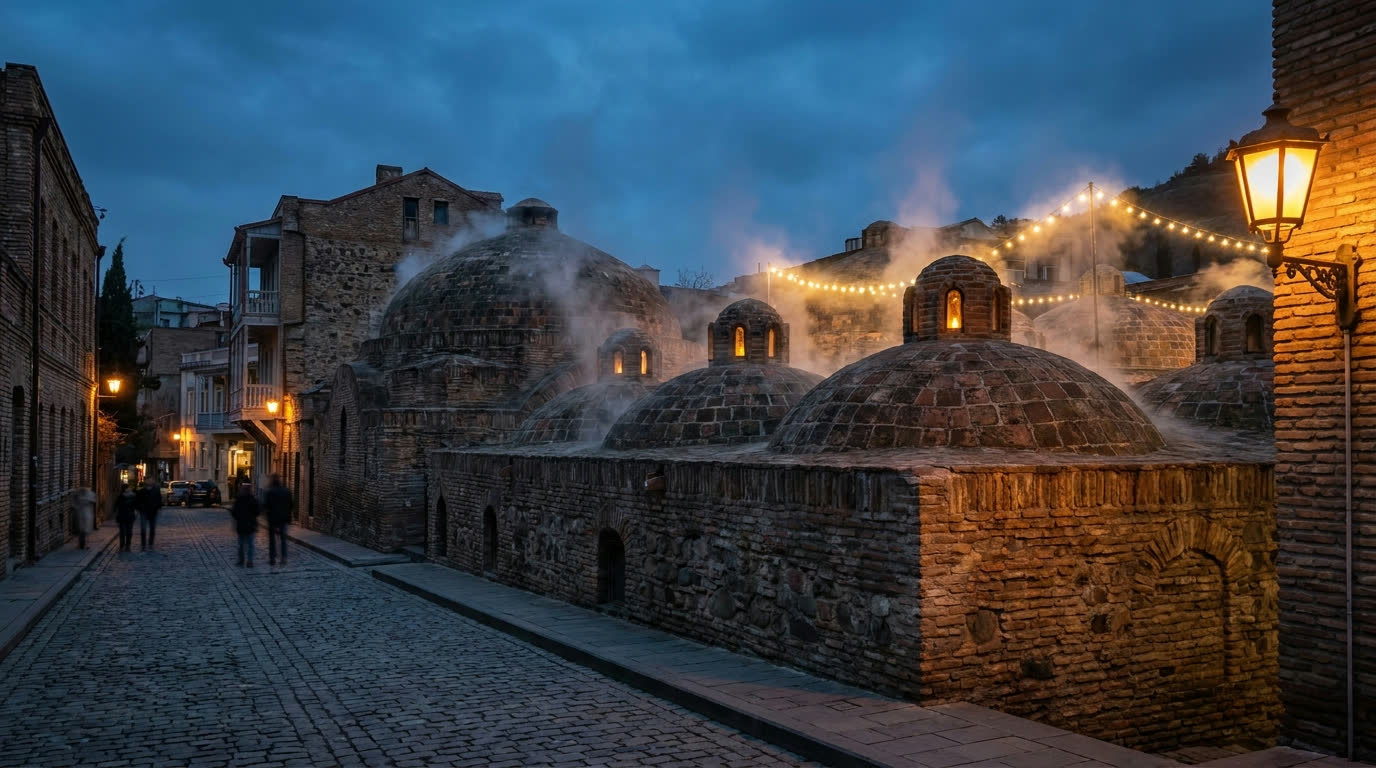
Tbilisi is what happens when a 1,500-year-old crossroads city gets rediscovered by design hotels before the prices catch up. Carved wooden balconies lean over cobbled lanes, sulphur steam rises off brick domes as it has since the fifth century, and a Soviet printing house now serves some of the best cocktails between Istanbul and Shanghai. Three and a half hours from Dubai, visa-free for most, and still — for now — a bargain at the top end.
The old warning applies: go before everyone does. Here is Tbilisi as we book it, plus the two excursions that make Georgia — the mountains and the wine.
What is Tbilisi really like? What are the big adventures? How should you spend your days? Where should you stay? Which iconic spots deserve your time? What should you eat and drink? Where is the luxury insider layer?
What is Tbilisi really like?
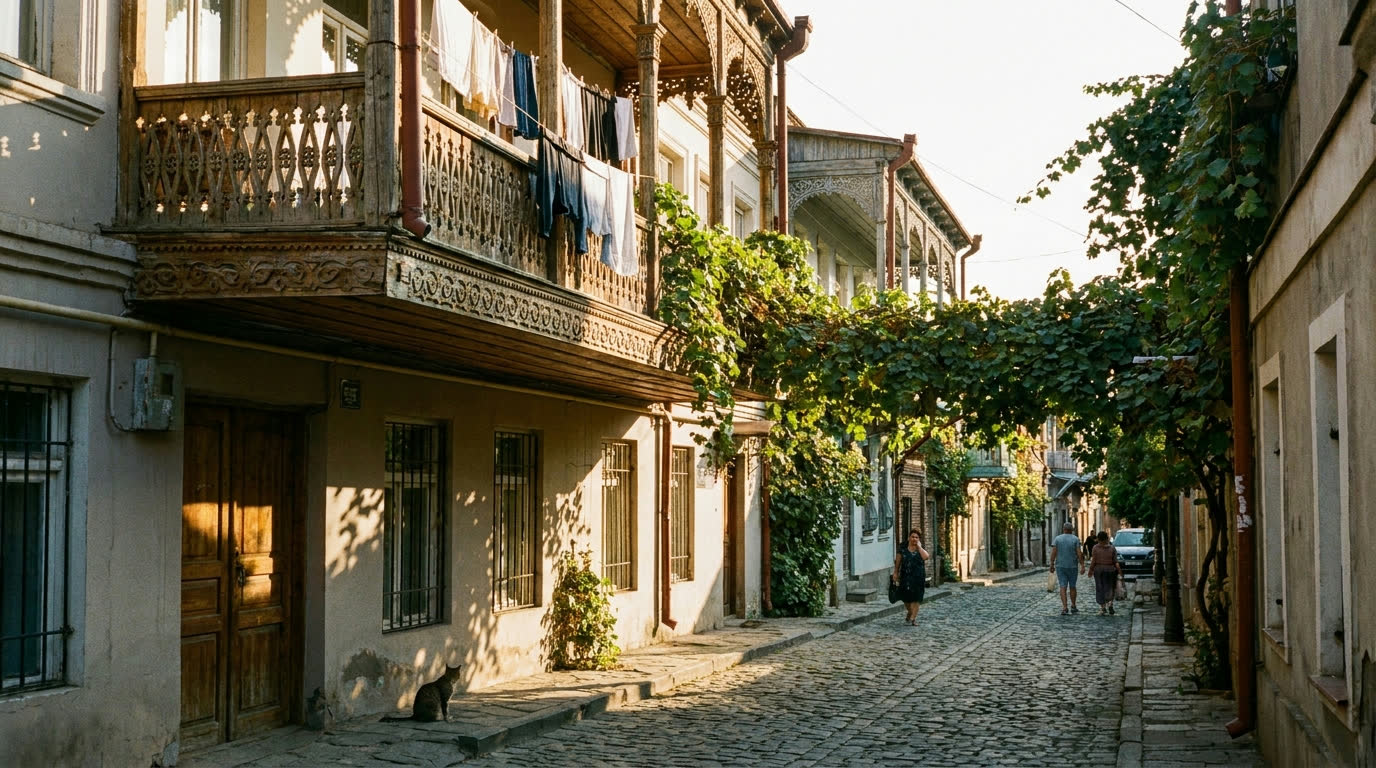
Tbilisi is a layered city that never bothered to tidy the layers: Persian bath domes beside Art Nouveau stairwells beside Soviet monumentalism beside glass bridges, all draped over a river gorge. The name comes from tbili — warm — for the sulphur springs the city was founded on, and warmth remains the operating principle: Georgians treat guests as literally sent from God (the proverb says so), and the hospitality is not a hotel amenity but a national reflex.
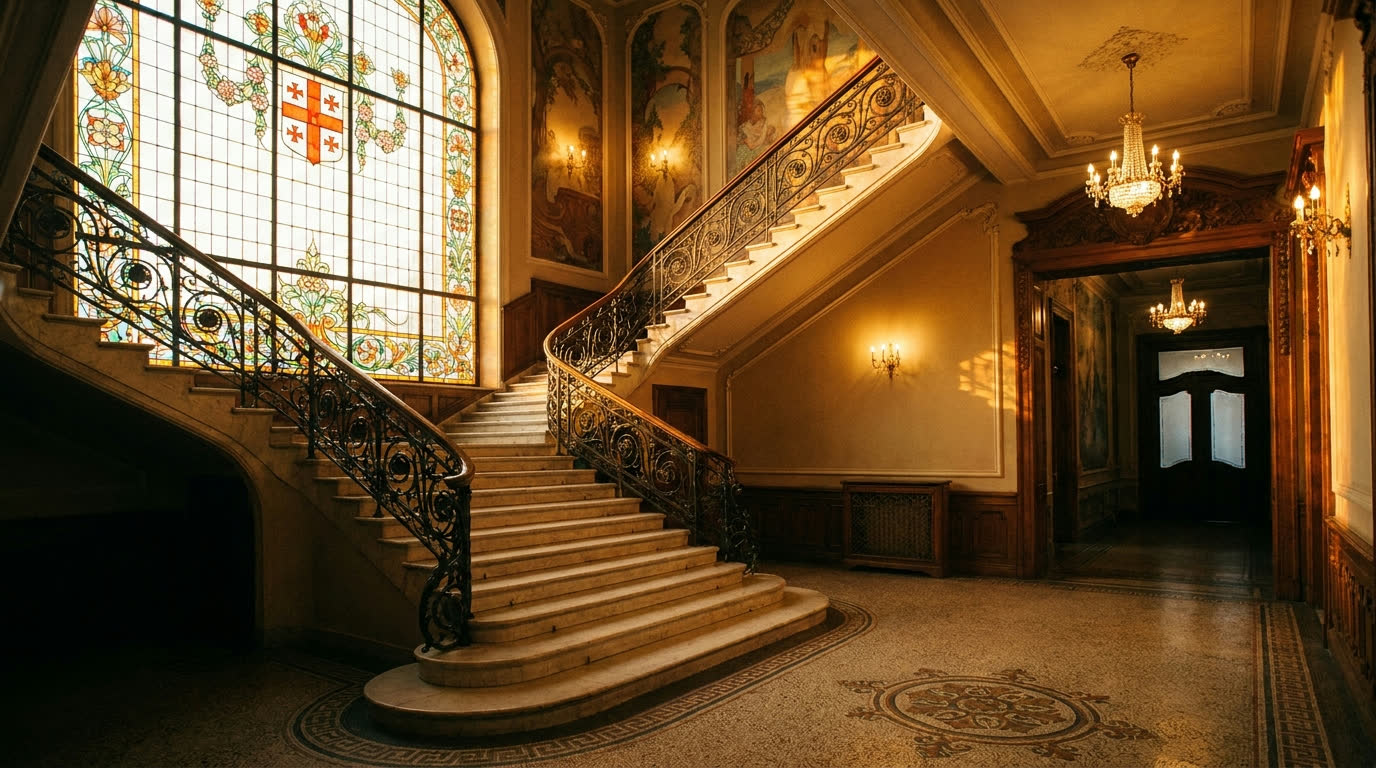
It suits travellers who rank food, wine and atmosphere over polish; couples, above all. It is not a luxury city in the marble-lobby sense — the glamour here is a crumbling stairwell repainted by an artist, a supper that becomes a toasting marathon, a bath under a fifth-century dome. Travellers who need everything seamless should calibrate; travellers who collect character will rank it with Lisbon and Mexico City among the decade's discoveries.
Seasons: May, June, September and October are the city at its best; late September adds the rtveli grape harvest in Kakheti, the single best week to be in Georgia. July and August run hot and the city empties uphill. Winter turns Tbilisi inward — baths, cellars, long suppers — which has its own argument.
One texture note that changes how you walk it: the courtyards. Sololaki and the old town hide their best interiors behind unmarked doors — shared balconied courtyards, painted entryways, spiral stairs. Walking with a local guide who knows which doors push open is the difference between seeing façades and seeing the city.
Three and a half hours from Dubai, wildly undervalued. We build the Tbilisi–Kazbegi–Kakheti arc weekly — free.
Plan my Tbilisi journeyWhat are the big adventures around Tbilisi?
Georgia is a small country with the Greater Caucasus stapled to its northern edge, which means genuine high-mountain drama sits three hours from your hotel — and the world's oldest wine region ninety minutes the other way.
Kazbegi and the Gergeti Trinity Church
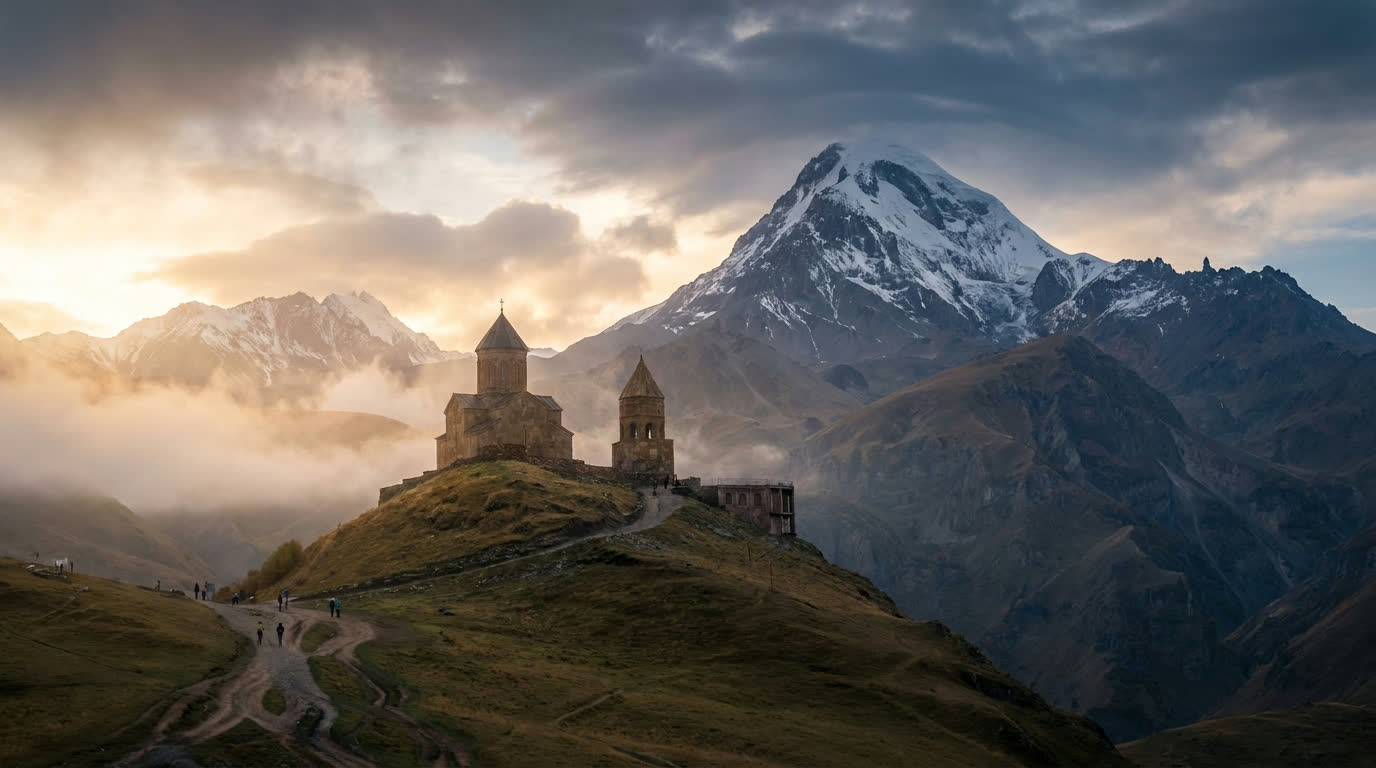
The Georgian Military Highway climbs past the Ananuri fortress and the Jvari Pass to Stepantsminda, where the fourteenth-century Gergeti Trinity Church Map stands on its hill against 5,047-metre Mount Kazbek. It is the Caucasus's defining image and it earns the drive. Go with a private driver at 7am, reach the church before the day-trip convoys, and take lunch at Rooms Hotel Kazbegi's terrace — the mountain filling the window wall. Summer adds day hikes to the Gveleti falls and Truso valley; winter makes the pass a snow spectacle (check conditions; it closes in storms).
Kakheti — the 8,000-year cellar
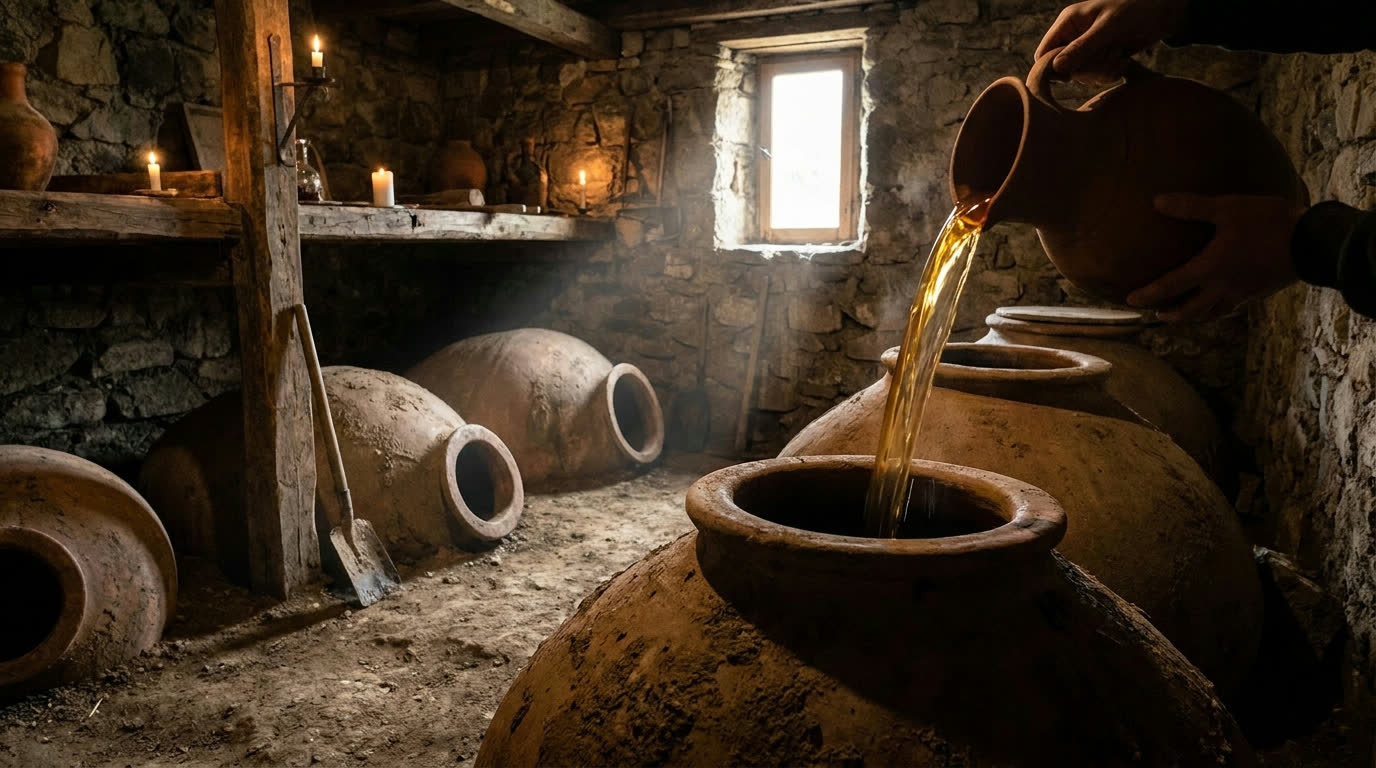
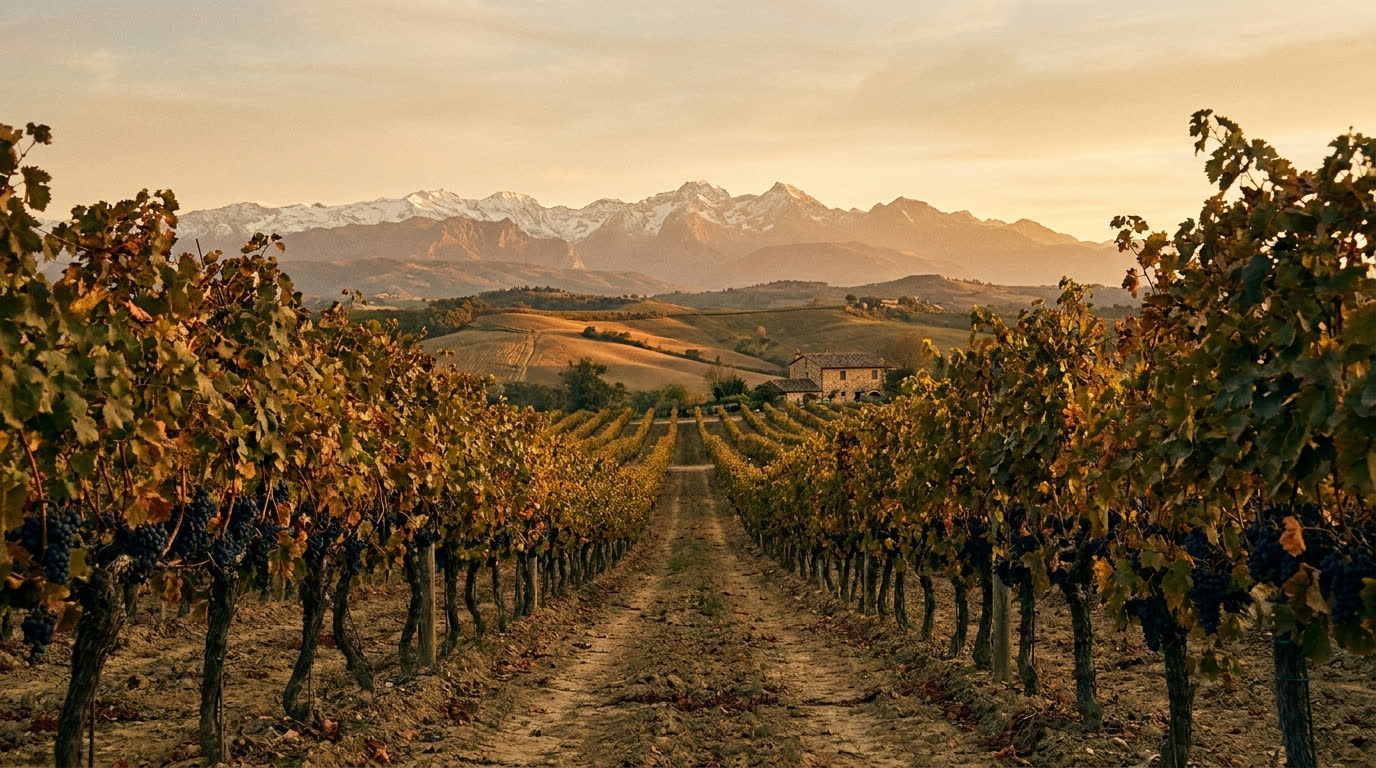
Ninety minutes east, Kakheti Map is where wine was most likely invented — eight millennia of continuous production, and the UNESCO-listed qvevri method still fermenting in buried clay. A private day (better: a night) covers a monastery cellar, a family marani where the vintner opens his own qvevri, and the town of Sighnaghi's walls at sunset over the Alazani valley with the Caucasus beyond. Late September's rtveli lets you pick, press and feast with the harvest.
The wilder cards
Paragliding over the Jvari Pass, day rafting on the Aragvi, and — for the ambitious — multi-day rides and treks in Tusheti, the roadless highland region open summer-only, which is as remote as Europe's edge gets. Uplistsikhe's cave city and Mtskheta's UNESCO cathedrals Map make gentler half-days.
How should you spend your days in Tbilisi?
Four nights covers the city and one excursion; six does the full arc — city, mountains, wine. The rhythm to adopt: slow mornings (Tbilisi wakes late), one anchor per day, and evenings surrendered to the table, because dinner here is the main event and it does not hurry.
Day one: old town on foot with a guide who opens courtyards — Narikala by cable car, the Juma mosque lane, Abanotubani's domes — then a private bath at dusk and the first khinkali. Day two: Sololaki and Vera — Art Nouveau stairwells, the flea market's Soviet silver at Dry Bridge Map, Stamba's café hour, dinner at Barbarestan. Day three: Kazbegi. Day four: Kakheti (or overnight there). Day five: Mtskheta morning, spa afternoon, the farewell supra. Day six: the Chronicle of Georgia's colossal steles Map on the way to the airport — the most cinematic send-off in the region.
Couples own this city: private baths, balcony suppers, cellar tastings. Families do better than expected — the funicular and its amusement park on Mtatsminda, the cable car, puppet theatre's famous clock, and mountains where teenagers finally look up from their phones. Timing detail: churches are working, not museums — women cover heads at the door (scarves provided), and Sunday liturgy with polyphonic chant is worth planning around rather than avoiding.
Logistics: the city core walks easily but hills are real; cars with drivers cost little and solve the mountain days entirely. Cash still matters at markets and family cellars. And book the good restaurants days ahead — Tbilisi's top tables are small and the secret is out.
Where should you stay in Tbilisi?
The Adjara Group's two Vera-district houses — Stamba and Rooms — define the city's hotel identity; Paragraph answers with conventional five-star polish on Freedom Square. Add the Kakheti estate for the wine leg and the shortlist is complete.
| Hotel | Tier | From (indicative) | Best for |
|---|---|---|---|
| Stamba Hotel | Ultra (character) | US$350/night | The design landmark — Soviet press turned icon |
| Paragraph Freedom Square | Ultra (polish) | US$300/night | Full five-star hardware, pool and spa, location |
| Rooms Hotel Tbilisi | Luxury | US$250/night | Stamba's calmer sister, best bar crowd |
| The Biltmore Tbilisi | Luxury | US$220/night | Tower views over Rustaveli, big-hotel comfort |
| Radisson Collection Tsinandali Estate (Kakheti) | Luxury | US$280/night | Vineyard estate stay for the wine leg |
Stamba — the reason design editors fly in
Stamba Map occupies a 1950s publishing house in Vera and kept the bones: raw concrete columns, five-storey library shelving, cinema-scale chandeliers, and rooms with brass tubs standing free by the windows. A vertical "space farm" grows the café's greens; the chocolaterie roasts its own. Ask for a top-floor Aviator room. It is the rare hotel that is genuinely the city's cultural centre — expect the lobby to out-interest half the sights.
Paragraph and the conventional tier
Paragraph Freedom Square Map, a Luxury Collection hotel, delivers what Stamba deliberately doesn't: a proper pool, a full spa floor, executive-lounge smoothness, and Freedom Square outside the door. The Biltmore's glass tower on Rustaveli Map gives the highest rooms in the old city's skyline. Rooms Tbilisi Map, next door to Stamba, keeps the industrial-romantic register at a lower volume, with the city's best hotel-bar crowd.
The Kakheti estate
The Radisson Collection Tsinandali Estate Map sits inside the historic Chavchavadze winery gardens — vineyard rows to the terrace, the estate's own cellars below, and a summer amphitheatre that hosts a serious classical festival. One night here turns the Kakheti day trip into the trip's highlight.
Stamba's best rooms and Tsinandali's vineyard views sell out around harvest. Tell us your dates early — free.
Plan my Tbilisi journeyWhich iconic spots deserve your time — and how do you see them properly?
Tbilisi's icons are small, close and best taken on foot at the soft ends of the day. None needs a timed ticket; several need the right hour.
Abanotubani — the sulphur baths
The brick domes of the bath quarter Map steam over the springs the city was founded on; Pushkin left a rave review in 1829 and the wall plaque still brags. Book a private room — the blue-tiled Chreli Abano Map is the ornate flagship — take the kisa scrub from the attendant (it removes a version of you; the replacement is better), and go at dusk when the domes glow. An hour costs less than a hotel massage and outranks most of them.
Narikala and the ridge
The fourth-century fortress Map rides the ridge above the old town — take the cable car up from Rike Park at golden hour, walk the walls past Kartlis Deda (Mother Georgia, sword in one hand, wine bowl in the other: the national position summarised), and descend on foot through the botanical garden's waterfall gorge.
The old town's working faith
Within three lanes: the Juma mosque where Sunni and Shia pray together, a synagogue, an Armenian cathedral and Georgian Orthodox churches — the crossroads city in miniature. Sioni Cathedral's Map evening chant, if you catch it, is the city's oldest sound. Across the river, the vast Sameba cathedral answers at millennium scale.
Dry Bridge and the Chronicle
The Dry Bridge flea market spreads Soviet cameras, medals, enamel and household silver every morning — go with a sharp eye and small bills; the good silver goes early. And the Chronicle of Georgia — Zurab Tsereteli's colossal stele monument on a hill north of town — is the empty, wind-blown, absurdly photogenic monument almost every visitor misses. Golden hour, on the airport run.
What should you eat and drink in Tbilisi?
Georgian food is the best cuisine most travellers have never eaten, and Tbilisi is its capital: walnut-thickened sauces, herbs by the fistful, cheese-filled breads that ended better-informed diets than yours, and a wine culture eight thousand years deep. Come hungry and cancel something.
The canon
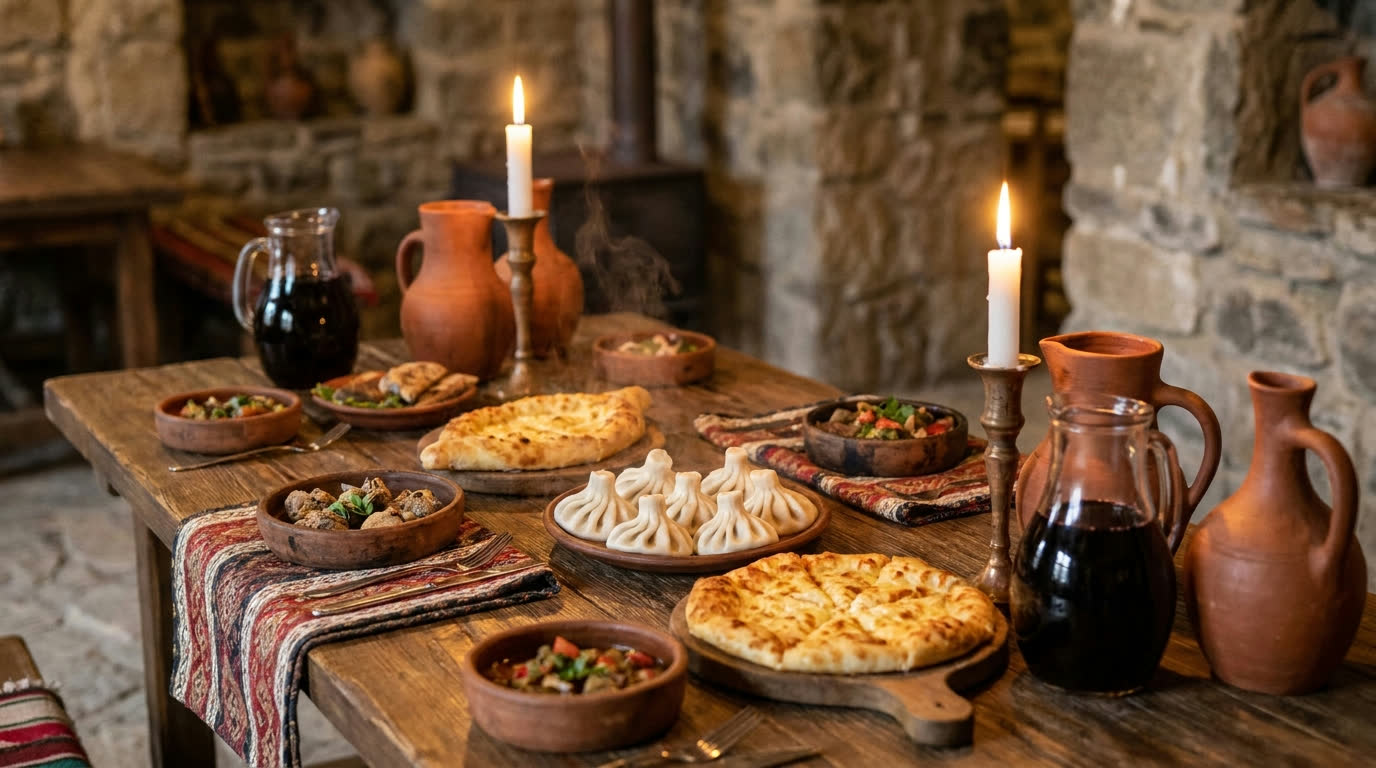
Khinkali — pleated soup dumplings, eaten by hand, broth first, topknot left on the plate as your scorecard. Khachapuri adjaruli — the bread boat with molten cheese, butter and a raw yolk stirred in at the table. Then the deep bench: badrijani nigvzit (walnut-stuffed aubergine), pkhali, mtsvadi grilled over vine cuttings, and lobio in clay pots. The supra — the formal feast, run by a tamada (toastmaster) through escalating toasts — is the culture's centrepiece; a private one, arranged with a good tamada, is the single most Georgian evening money can buy.
The tables
Barbarestan Map cooks from a 19th-century cookbook by Duchess Barbare Jorjadze, rediscovered at a flea market — a family-run room on Aghmashenebeli that has become the city's defining restaurant; book days ahead. Shavi Lomi Map (the Black Lion) does the modern-traditional register in a vaulted Sololaki house with a courtyard. Café Littera Map, in the Writers' House garden, is where chef Tekuna Gachechiladze's "new Georgian" began — the garden terrace on a summer night is the city's loveliest seat. Street level: the khinkali houses stay open late and the best baker's window in Sololaki sells shoti bread straight off the tone-oven wall.
The wine
Qvevri wine — fermented on skins in buried clay — is the tradition, and amber wine its signature: whites with tannin, colour and structure that pair with the walnut-heavy table like they evolved together, because they did. In town, the serious wine bars around Sololaki and Vera pour hundreds of small-producer bottles by the glass; ask for rkatsiteli amber and saperavi from a qvevri and follow the bartender from there. Then go to Kakheti and drink it standing over the vessel it was born in.
Where is Tbilisi's luxury insider layer?
Tbilisi's insider layer is not velvet rope — it is access to private versions of the city's own rituals, at prices that feel like a clerical error after Dubai or Paris.
The private bath, perfected
Beyond the walk-in rate: the ornate private rooms at the top bathhouses book out evenings, so we reserve ahead — largest room, masseur and kisa attendant, cold plunge, tea service. An hour and a half, door to door, for less than a Dubai blow-dry. It is the first thing we book on every Tbilisi itinerary and the thing clients mention first afterwards.
Cellars, marani and the tamada
The arrangeable layer of Georgian wine: private tastings in town with the country's best sommeliers, family marani visits in Kakheti where the vintner opens a qvevri for your table, vertical tastings at estates like Tsinandali, and — the crown — a private supra with a genuinely good tamada, whose toasts turn a dinner into a memory with a structure. Harvest week adds pressing grapes by foot, which no one regrets.
Courtyards, ateliers and the made things
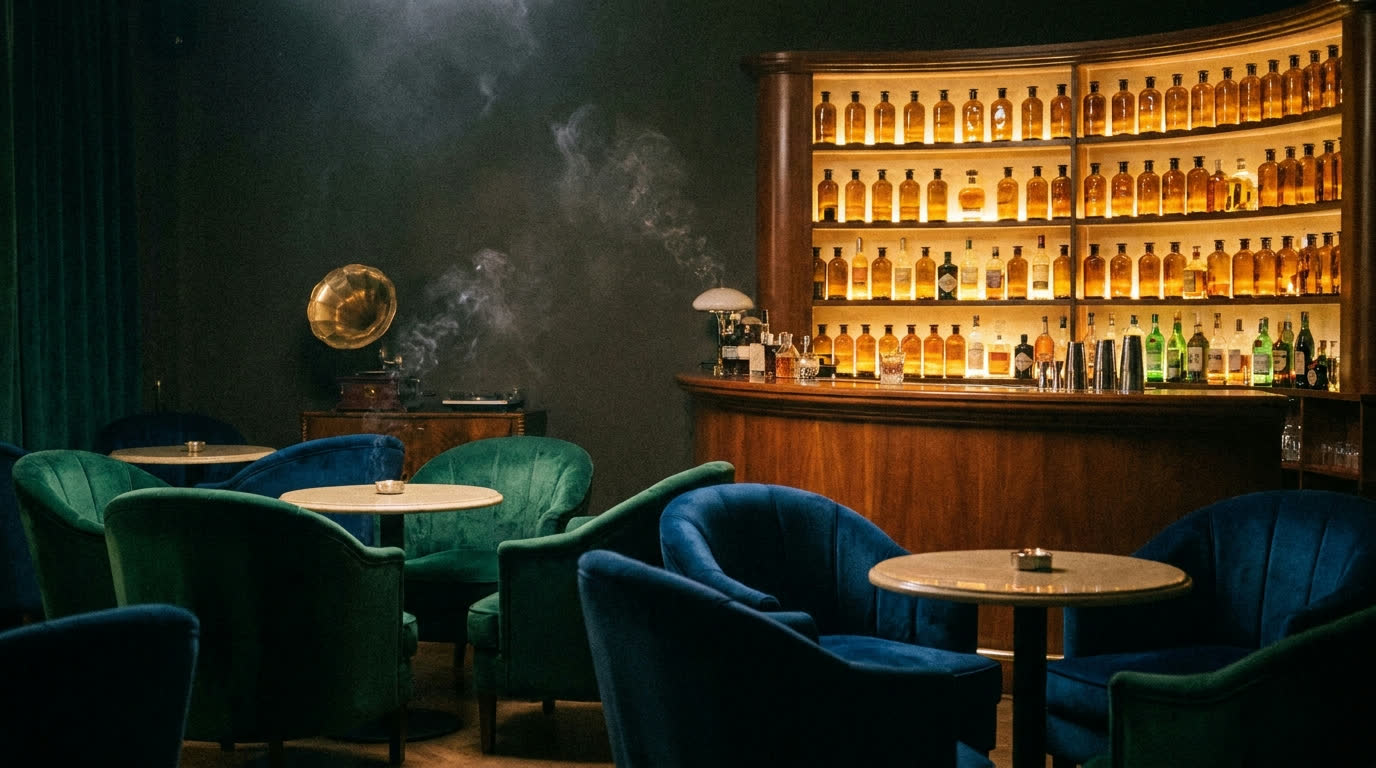
Private walks with architecture historians open the painted stairwells and courtyards; studio visits reach the city's enamel (minankari) jewellers, felt-makers and young fashion ateliers — Georgian designers have serious momentum, and the ateliers receive by appointment. At Dry Bridge, a dealer we trust pre-pulls the real Soviet-era silver and camera glass before you arrive. Cigar culture, for the record, is thin here — a few lounges and hotel humidors; this is a wine city, and it is right to be.
Mountains, privately
Private 4x4 days to Kazbegi with photographer-guides, heli-transfers when the pass jams in season, summer horse treks in Tusheti with camps carried ahead, and winter's growing ski scene at Gudauri — lift-served powder at prices Alpine skiers refuse to believe. The Caucasus is the region's last uncrowded great range; Tbilisi is its front door.
Practical close. Most nationalities — UAE citizens and residents included — enter visa-free for up to a year. Cards work in the city; carry lari for markets and village cellars. Dress modestly in churches (scarves at the door). Toasting etiquette: never toast with beer, and pace yourself — the tamada is running a marathon, not a sprint. Tbilisi pairs naturally with Baku or Istanbul for a Caucasus-to-Bosphorus arc, or stands alone as the Gulf's best-value long weekend. Ask us for the full Georgia route — city, mountains, wine, in six nights.
Every address above can be arranged, reserved and chauffeured for you — free, by your dedicated Dubai-based specialist.
Plan my Tbilisi journeyWant this as a fixed itinerary with pricing? See our Georgia tour packages from Dubai.