The Salalah Little Black Book
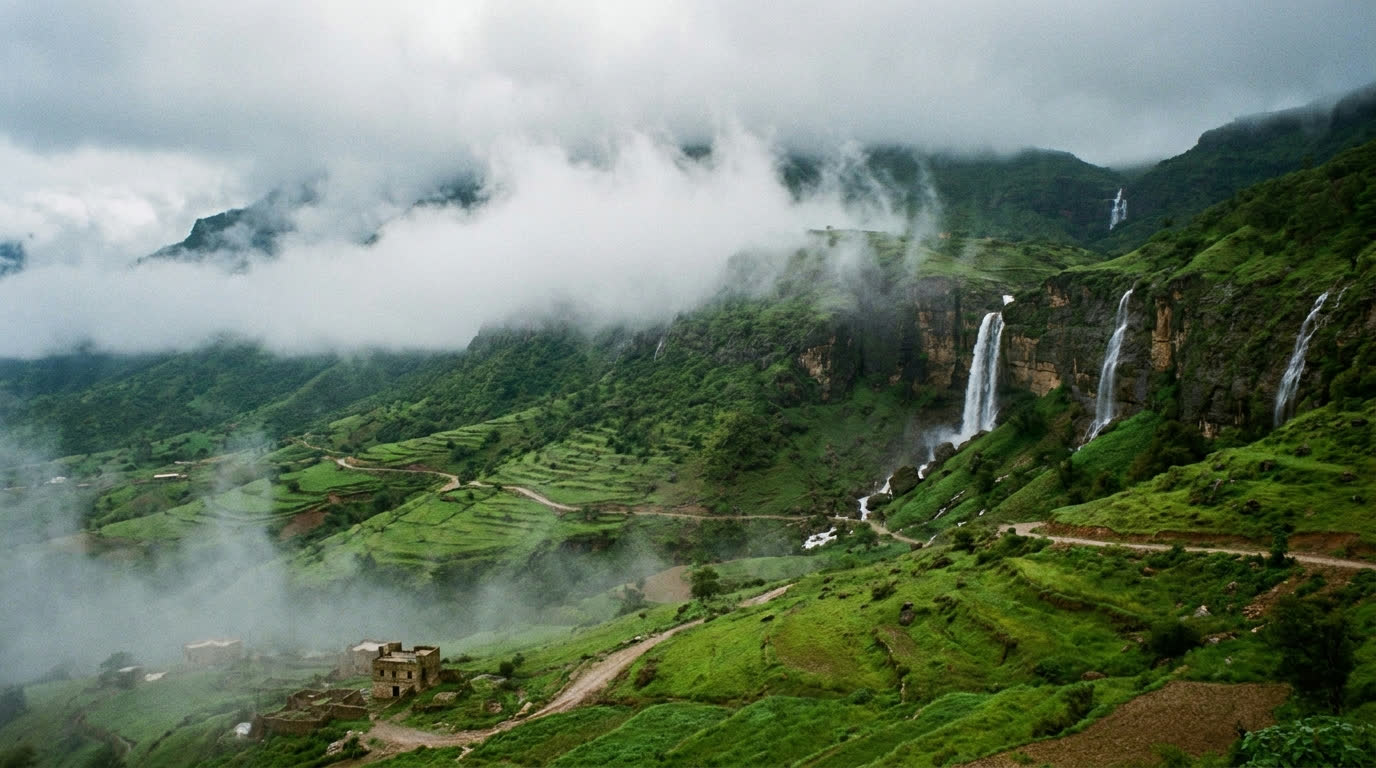
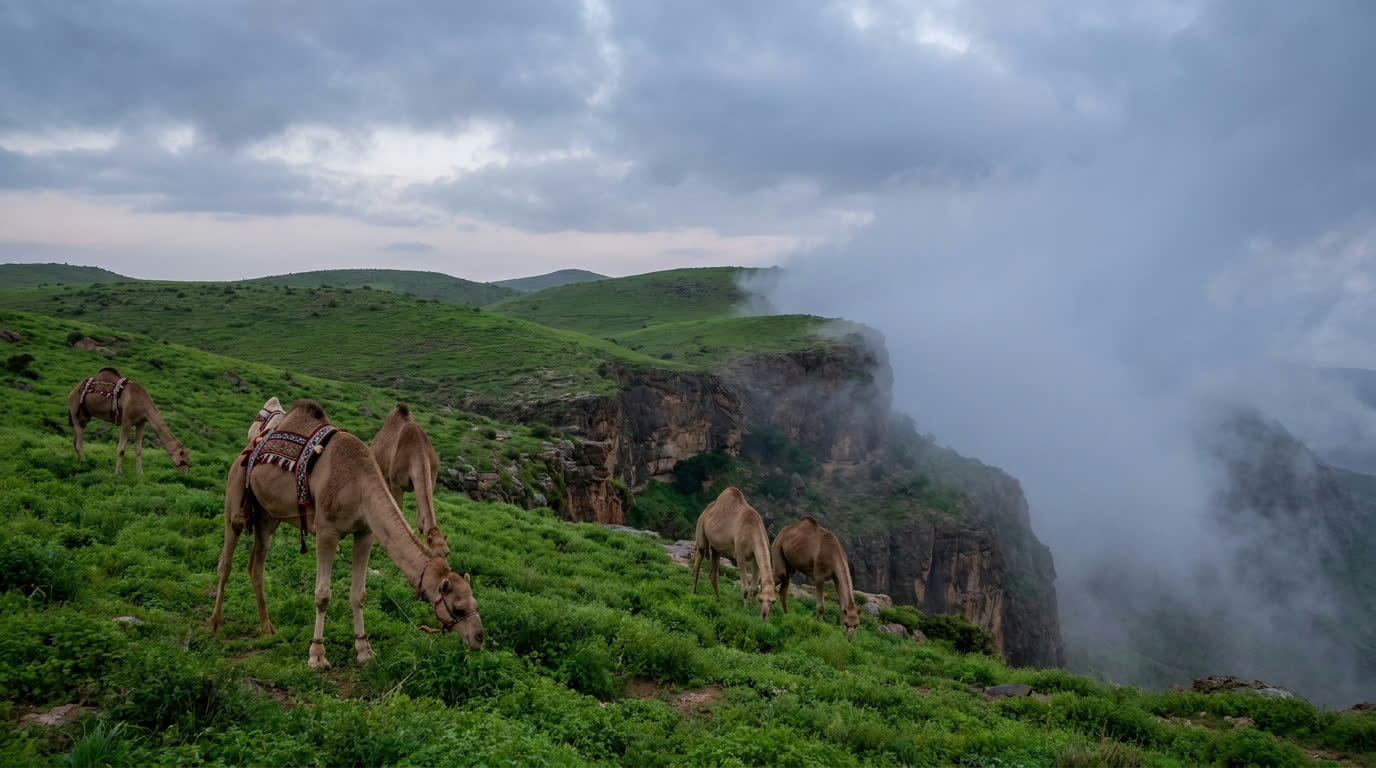
Every July, while Dubai bakes at 45°C, a corner of Arabia turns green. The Indian Ocean monsoon catches the mountains of Dhofar and holds there — mist on the jebel, waterfalls in the wadis, camels grazing meadows that would pass for Ireland — and the temperature sits at 25°C for ten straight weeks. Two hours' flight from Dubai. The Gulf has known about Salalah forever; the rest of the world is only now catching on.
This guide covers both Salalahs: the khareef spectacle, and the empty-beached, whale-watched dry season the crowds never see. We book them differently, and the difference is the whole game.
What is Salalah really like? What are the big adventures? How should you spend your days? Where should you stay? Which iconic spots deserve your time? What should you eat? Where is the luxury insider layer?
What is Salalah really like?
Salalah is Oman's second city and feels nothing like the Gulf: banana and coconut plantations line the coast road, frankincense smoke drifts from every doorway, and the pace is Indian Ocean rather than Arabian Gulf. Dhofar was the heart of the ancient incense trade — the wealth that built it sailed from here to Rome — and the region still carries itself with that older, unhurried confidence.
It suits families spectacularly in khareef (the Gulf's own summer escape), couples in the empty dry season, and anyone for whom "Arabia, but green" sounds like the contradiction worth flying for. What it is not: a nightlife or shopping destination. Salalah's luxury is landscape, seclusion and a pool villa with the mist rolling past — calibrate expectations accordingly and it over-delivers.
The two-season reality deserves honesty. In khareef, the famous wadis draw serious Gulf-holiday crowds at midday and the light is a permanent soft grey — atmospheric, not tropical-postcard. From October the mist lifts off green hills (the connoisseur's fortnight), and November to March gives cloudless 27°C days, empty white beaches and seas that host humpback and sperm whales. Same place, two different holidays.
One ground truth that shapes every day: distances are real and the rewards sit outside town. Wadi Darbat is 40 minutes, Mirbat an hour, the Fazayah beaches ninety minutes on mountain road. A capable driver-guide with a Land Cruiser is not a luxury here; it is the trip.
Two hours from Dubai, two entirely different seasons. Tell us your dates; we'll build the right Salalah — free.
Plan my Salalah journeyWhat are the big adventures around Salalah?
Dhofar is expedition country wearing a resort's clothes. The mountains, the world's emptiest desert and a wild coastline all start within an hour of your villa, and the best of each demands a 4x4 and an early alarm.
The khareef wadis
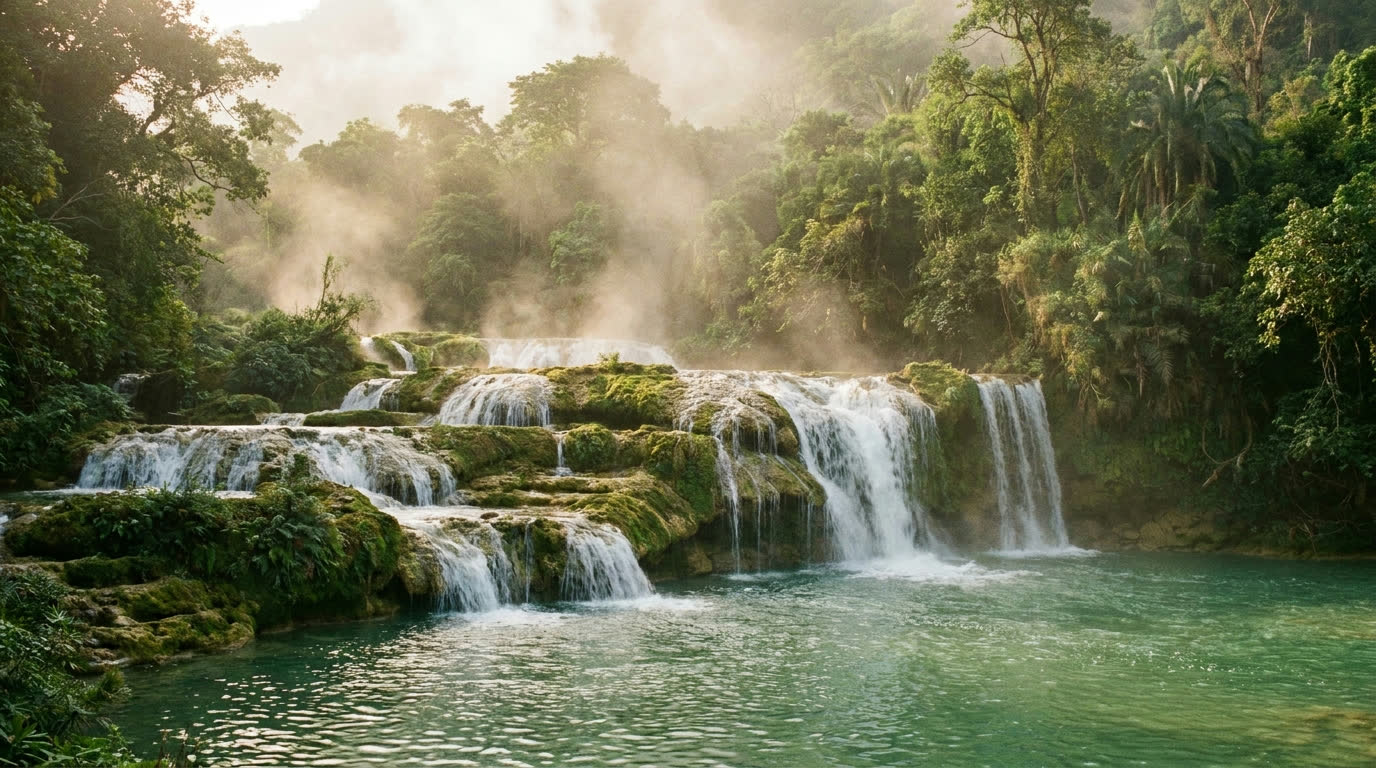
Wadi Darbat Map is the monsoon's showpiece — travertine terraces spilling waterfalls into a green lake, mist threading the trees. Go at 7am; by eleven in khareef it is a festival. Above it, the road climbs Jebel Samhan Map to a 1,000-metre cliff rim over the coastal plain — the sanctuary behind it shelters the Arabian leopard, unseen but usefully humbling. Ayn Khor and the anti-gravity road, Teeq Cave's sinkhole views: a private guide strings them into one unhurried mountain day.
The Empty Quarter
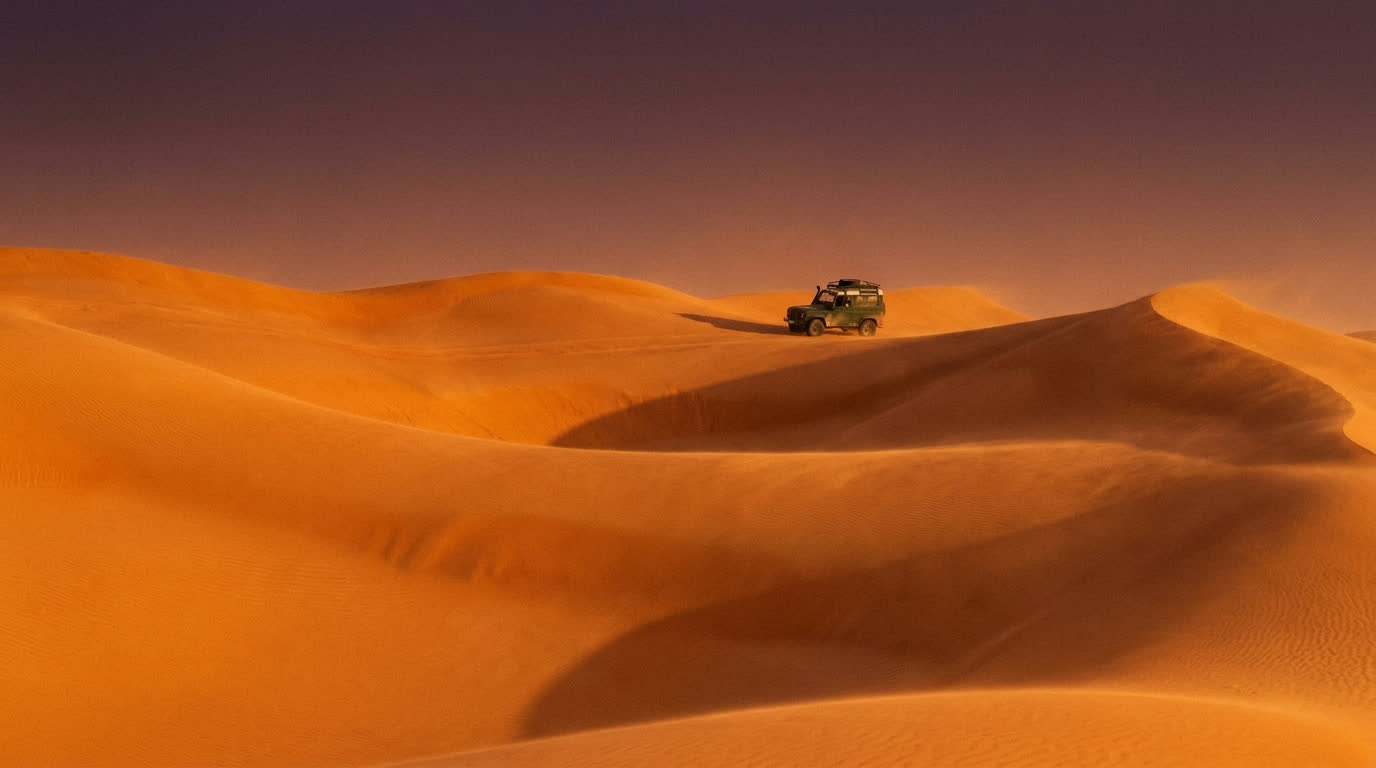
North of the mountains the Rub al Khali begins — the largest sand desert on earth — and Salalah is its most practical gateway. Day expeditions reach the dunes past the site of Ubar Map, the "Atlantis of the Sands" whose collapse into its own well passed into legend; overnight camps put you under a sky with zero light pollution between you and the Milky Way. This is proper expedition terrain — we use licensed desert operators only, two-vehicle minimum, and it is worth every precaution.
The wild coast
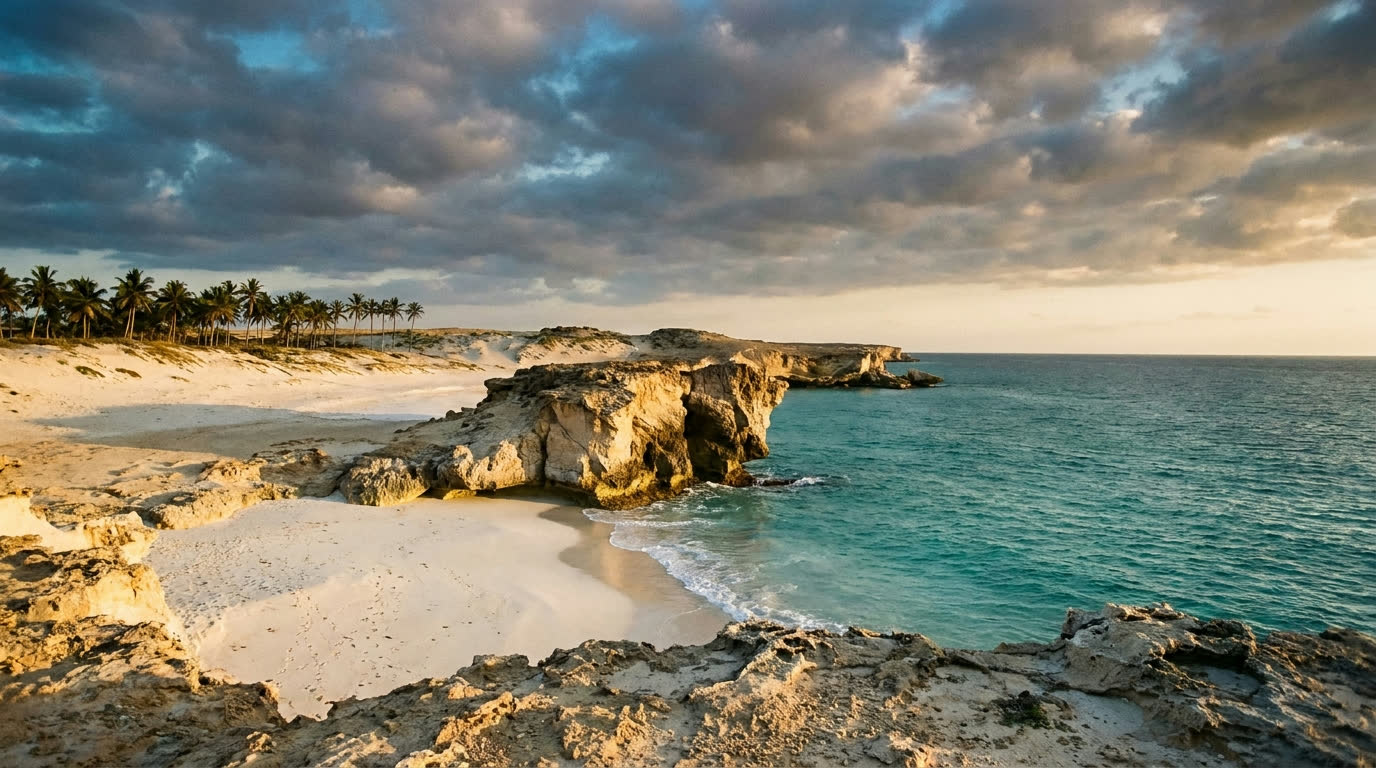
West of Mughsail the road switchbacks toward Yemen past the Fazayah beaches Map — white crescents under cliffs, reached by 4x4 track, frequently yours alone outside khareef. At Mughsail itself Map the blowholes fire seawater through the limestone shelf when the swell runs. Dry-season seas add dhow trips from Mirbat's old harbour, dolphins in the hundreds and, in winter, whales.
How should you spend your days in Salalah?
Four to five nights fits either season. The shape that works: one mountain or desert expedition day, one coast day, one heritage half-day, the rest surrendered to the villa — Salalah punishes over-scheduling as surely as the Maldives does.
Day one: arrive, villa, the Haffa souk Map at dusk for frankincense and the first proper Omani dinner. Day two: the mountain loop — Darbat early, Jebel Samhan, camel-meadow stops, fruit stalls on the way home. Day three: west coast — Mughsail's blowholes, the Fazayah track, sunset from the cliffs. Day four: Sumhuram and Al Baleed in the morning, sea afternoon (dhow, dolphins, or simply the pool). Day five: Empty Quarter, or nothing at all — the correct answer more often than not.
With children, khareef Salalah is a Gulf family's dream: paddle-boats on Darbat's lake, camels everywhere, fruit stalls with fresh coconuts opened by machete, and resort pools when the mist thickens. Couples should take the dry season: empty Fazayah picnics, private dhow sunsets, and the pool villa's plunge pool under November stars.
Logistics: flydubai's two-hour hop makes Salalah a genuine long-weekend play from Dubai — we send clients Thursday to Sunday routinely. UAE residents enter visa-free for short stays; most Western passports use Oman's easy e-visa. Book khareef villas months ahead — the Gulf empties into Salalah in August and the good pool villas go first.
Where should you stay in Salalah?
The luxury tier here is short and the choice is genuinely binary: Anantara's pool-villa polish beside the city, or Alila's design-led seclusion an hour east. Both are excellent; they are different trips.
| Hotel | Tier | From (indicative) | Best for |
|---|---|---|---|
| Al Baleed Resort Salalah by Anantara | Ultra | US$450/night | 88 private pool villas, beach + UNESCO park, best dining |
| Alila Hinu Bay | Luxury | US$350/night | Design seclusion on an empty bay near Mirbat |
| Salalah Rotana Resort | Refined | US$180/night | Hawana lagoons, families, value |
| Fanar Hotel & Residences | Refined | US$170/night | Hawana beachfront, apartment options for long stays |
Al Baleed by Anantara — the flagship
Al Baleed Map is Salalah's first true luxury villa resort: 136 keys of which 88 are private pool villas, laid between its own beach, a freshwater lagoon and the UNESCO Al Baleed Archaeological Park next door. Take a one-bedroom pool villa near the beach row; dinners rotate between Sakalan's Omani table (the shuwa — lamb slow-cooked underground — is the order) and Mekong's pan-Asian room. In khareef the resort runs at Gulf-family full; in January you will have the beach cabanas nearly to yourself.
Alila Hinu Bay — the hideaway
Alila Hinu Bay Map sits on an empty bay near Mirbat, an hour east of the airport: 112 bungalow-style rooms and villas in Alila's spare, stone-and-timber register, a spa that takes itself seriously, and Sea Salt restaurant over the water — order the shrimp curry and watch the bay go pink. Choose it for silence, design and the wild east coast at your door; accept the drive to the khareef wadis as the trade.
The Hawana tier
The Hawana Salalah development Map — Rotana's lagoon-laced resort and the Fanar's beachfront — covers the refined tier honestly: big pools, water sports, marina restaurants and apartment options that suit the month-long khareef escapes Gulf families increasingly book. Not couture, but well-run and priced accordingly.
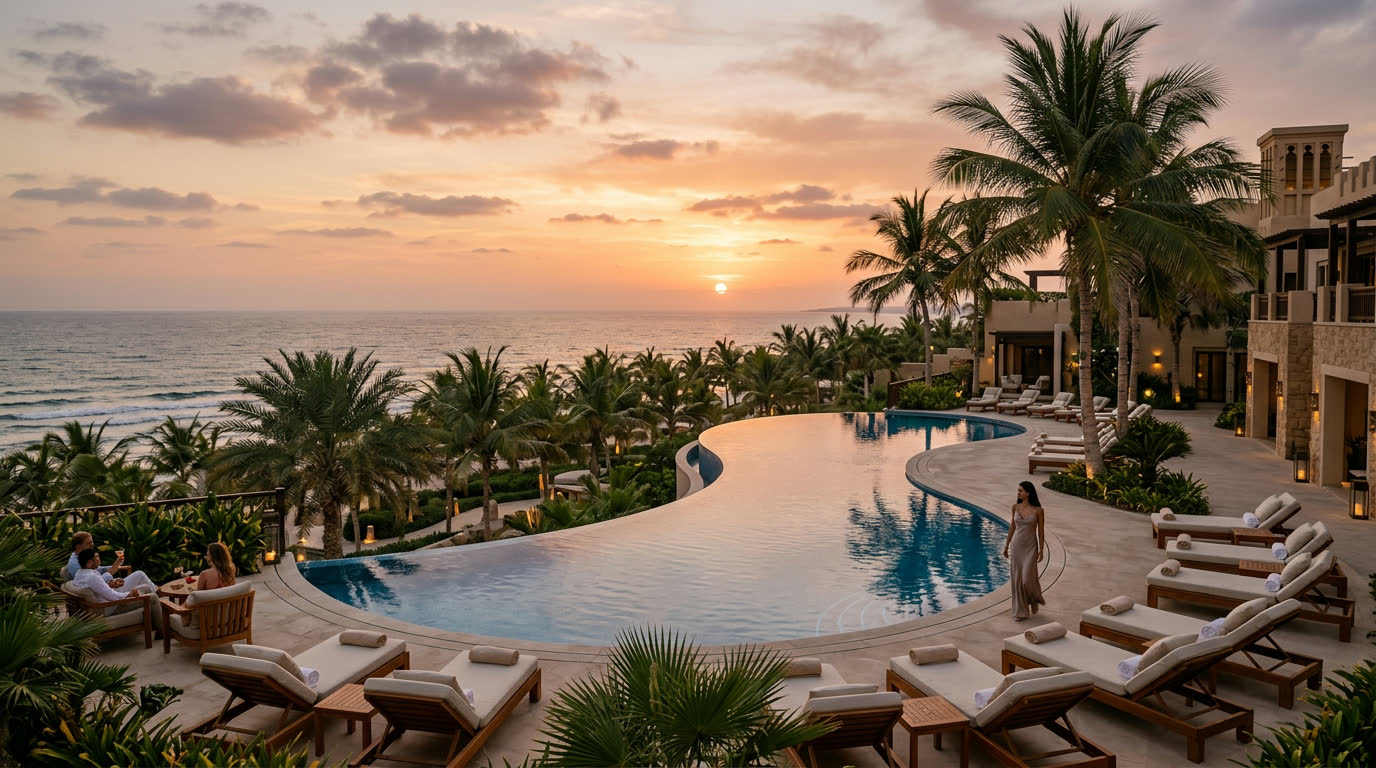
Khareef pool villas sell out months out. Tell us your dates now and we'll hold the right one — free.
Plan my Salalah journeyWhich iconic spots deserve your time — and how do you see them properly?
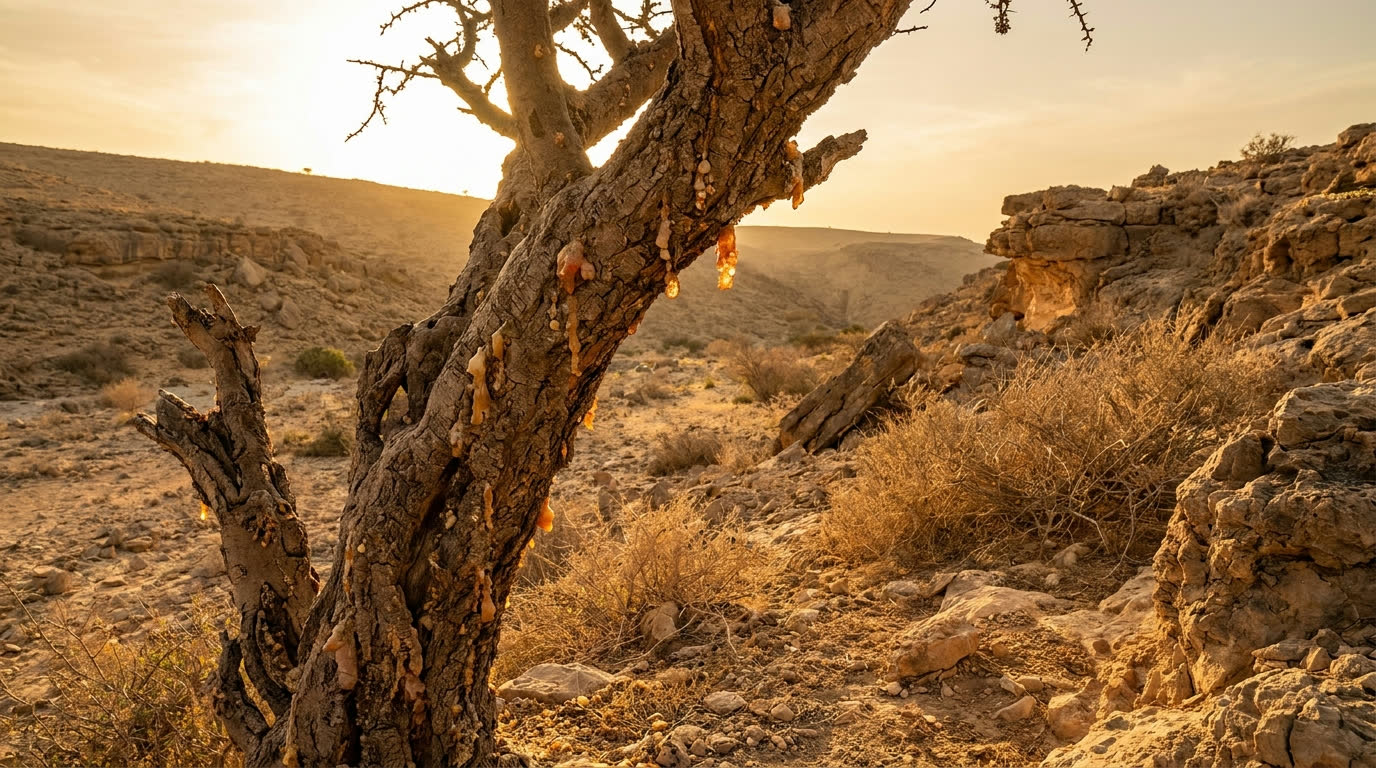
Dhofar's icons are ancient rather than tall: this coast shipped the Roman Empire's incense, and UNESCO lists the whole trade's infrastructure as the Land of Frankincense. The insider rule everywhere: early morning or golden hour, never khareef midday.
Al Baleed Archaeological Park
The ruins of medieval Zafar Map — the port that gave Dhofar its name — spread along a lagoon in the city itself, with the excellent Museum of the Frankincense Land inside the gate. Go at 5pm, walk the lit ruins at dusk, and let the museum's Maritime Hall reframe Oman as the sea power it was. Anantara guests are next door; everyone else is twenty minutes away.
Sumhuram and Khor Rori
On a hill over a blue lagoon east of town, Sumhuram Map was the ancient world's frankincense port — the walls still read their South Arabian inscriptions, and the khor below, cut off from the sea by a sandbar, hosts flamingos and absurd birdlife. Golden hour turns the whole site copper. Pair it with Wadi Darbat, directly upstream.
Wadi Dawkah and the frankincense trail
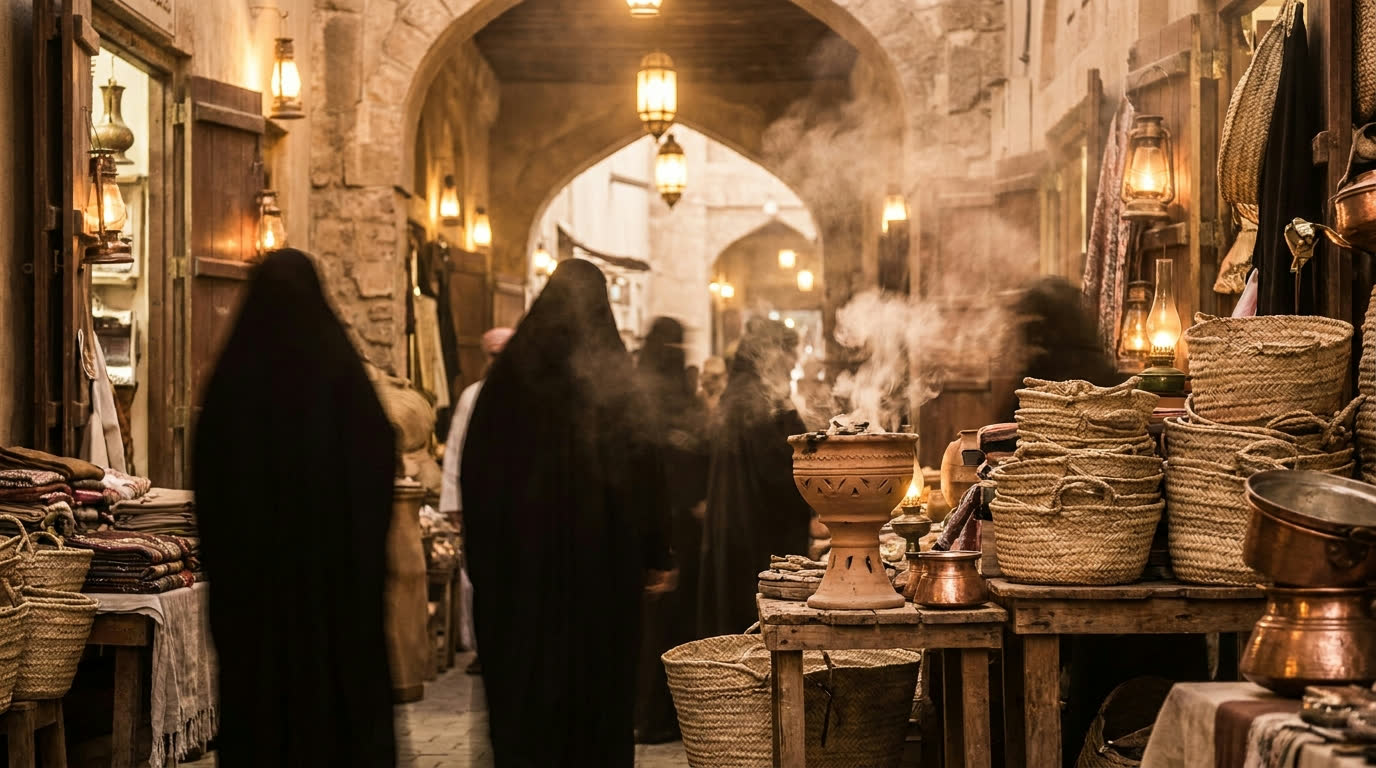
Forty minutes inland, Wadi Dawkah's Map protected groves of Boswellia sacra grow wild as they have for five thousand years. A guide who can score the bark and walk you through the grades — hojari silver, the world's finest, comes from these hills — converts a stop into the region's whole story. Buy your frankincense afterwards at the Haffa souk, from the women who grade it by hand, not at the airport.
Sultan Qaboos Mosque and the plantations
Salalah's grand mosque Map receives non-Muslim visitors on weekday mornings — serene, and rarely more than a handful of people. Then do the most Salalah thing possible: pull over on the plantation road and drink a machete-opened coconut among the banana palms, in Arabia.
What should you eat in Salalah?
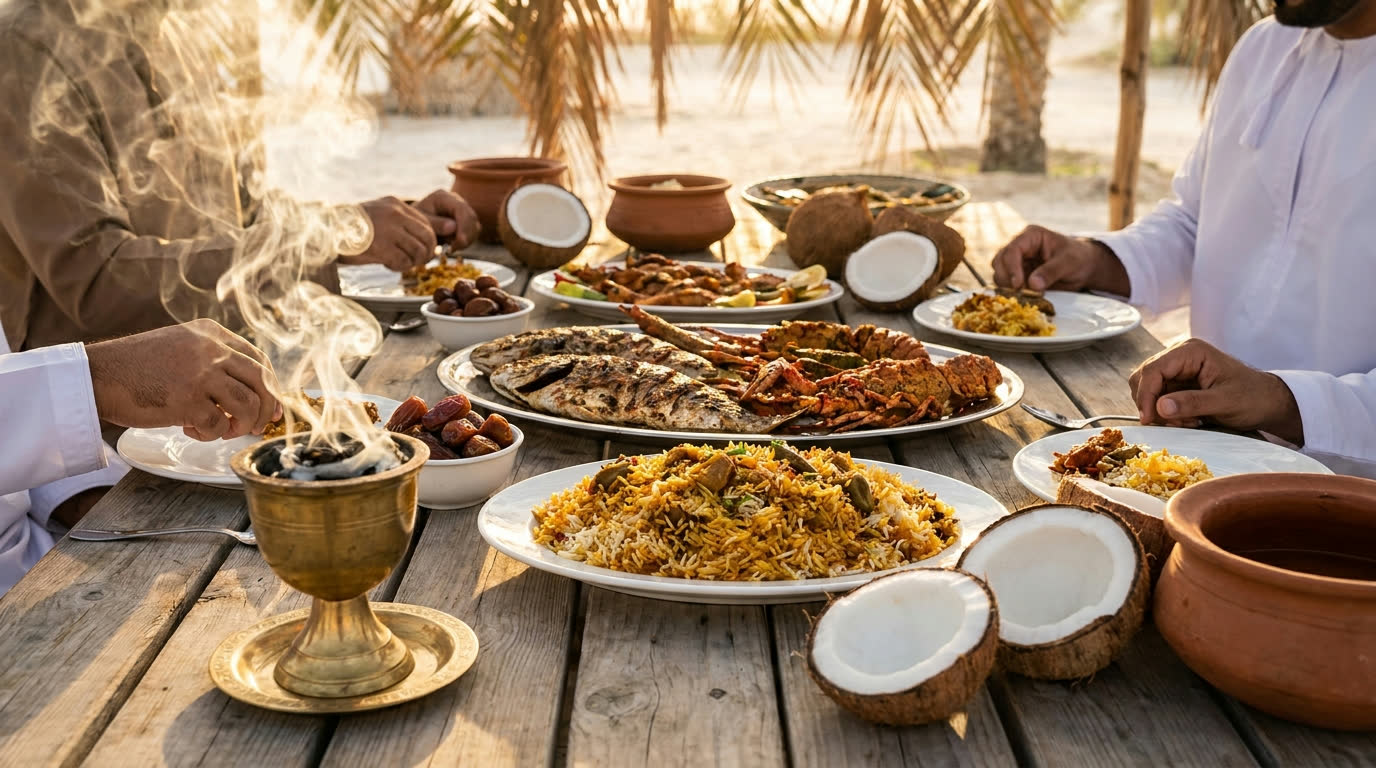
Dhofari food is Oman's most distinctive table — Indian Ocean trade cooked into Arabian tradition — and the best of it is eaten outdoors, off plastic tables, with the mist rolling past. Fine dining exists at the resorts; the region's soul is street-level and worth meeting there.
The khareef canon
Camel meshkak — skewers of camel meat in Dhofari spice, grilled over coals — is the monsoon's signature, eaten at the roadside grills of the Ittin plain Map in the fog with fresh Omani bread. The fruit stalls are the other institution: Dhofari bananas (small, honeyed, better than anything imported), papaya, guava, and coconuts opened while you wait. Shuwa — lamb marinated in date paste and spices, slow-cooked underground — appears at the resorts and at festival time; Sakalan at Anantara does the polished version.
The sea's table
Mirbat's harbour lands kingfish, lobster (in season) and the Arabian Sea's absurdly good tuna; the simple grills of Salalah's Dahariz corniche and the resort kitchens both trade on it. Sea Salt at Alila leans Asian over the water — the shrimp curry is the dish visiting chefs order twice. And everywhere: fresh juices, camel milk for the curious, and Omani halwa with kahwa (cardamom coffee) as the non-negotiable ending — accept it whenever offered; refusing is nearly a diplomatic incident.
The souk finish
The Haffa souk near the corniche sells the edible souvenirs that matter: hojari frankincense (chewed here like gum, brewed as tea), Dhofari honey from the jebel, dates by the kilo and the region's own bukhoor blends. Go at dusk when the incense smoke is thickest — the whole quarter smells like the ancient trade it is.
Where is Salalah's luxury insider layer?
Salalah has no beach-club scene and no maison boulevard — its insider layer is access and emptiness, arranged rather than bought at a door. Done right, it is the most private luxury within two hours of Dubai.
Private expeditions
The difference between Salalah's postcard and its masterpiece is a private Land Cruiser with the right guide: dawn starts that beat the khareef crowds to Darbat, the Fazayah tracks no tour bus attempts, Empty Quarter overnights with proper camp kitchens, and the mountain fruit-stall stops a convoy never makes. We keep vetted Dhofari guides on call — men who grew up on these jebels and know which meadow the camels cross at four.
The empty-season play
November to March is the connoisseur's Salalah: pool villas at soft rates, the Fazayah beaches genuinely deserted, dhow charters from Mirbat with dolphins in the bow wave and humpbacks beyond, and 27°C while Europe shivers. The same week that costs a scramble in August books itself in January. This is the season we quietly recommend to couples.
Frankincense, properly
Beyond the souk stalls: private grading sessions with Dhofari frankincense merchants, visits to the Wadi Dawkah groves with a harvester, and bespoke bukhoor blending — the Gulf's oldest luxury, at its source, for less than a Paris candle. It is the souvenir brief we enjoy most.
Seclusion and connectivity
The pool-villa resorts run fibre good enough for working weeks, and the Hawana apartments handle month-long khareef escapes for families staging out of the Gulf's heat. True seclusion is a dry-season villa at Hinu Bay with the whole khor to yourself — or the Empty Quarter camp, where the only network is the one overhead.
Practical close. Oman is conservative and courteous — dress modestly outside the resorts, ask before photographing people, and Friday mornings are quiet. The rial is strong (1 OMR ≈ 9.5 AED); cards work at resorts, cash rules the souk and fruit stalls. Khareef driving means fog on the jebel — another argument for the driver. Pair Salalah with Dubai as the two-hour contrast trip of the region, or ask us about the wider Oman arc through Muscat and the Hajar mountains.
Every address above can be arranged, reserved and chauffeured for you — free, by your dedicated Dubai-based specialist.
Plan my Salalah journeyWant this as a fixed itinerary with pricing? See our Oman tour packages from Dubai.