The Rome Little Black Book
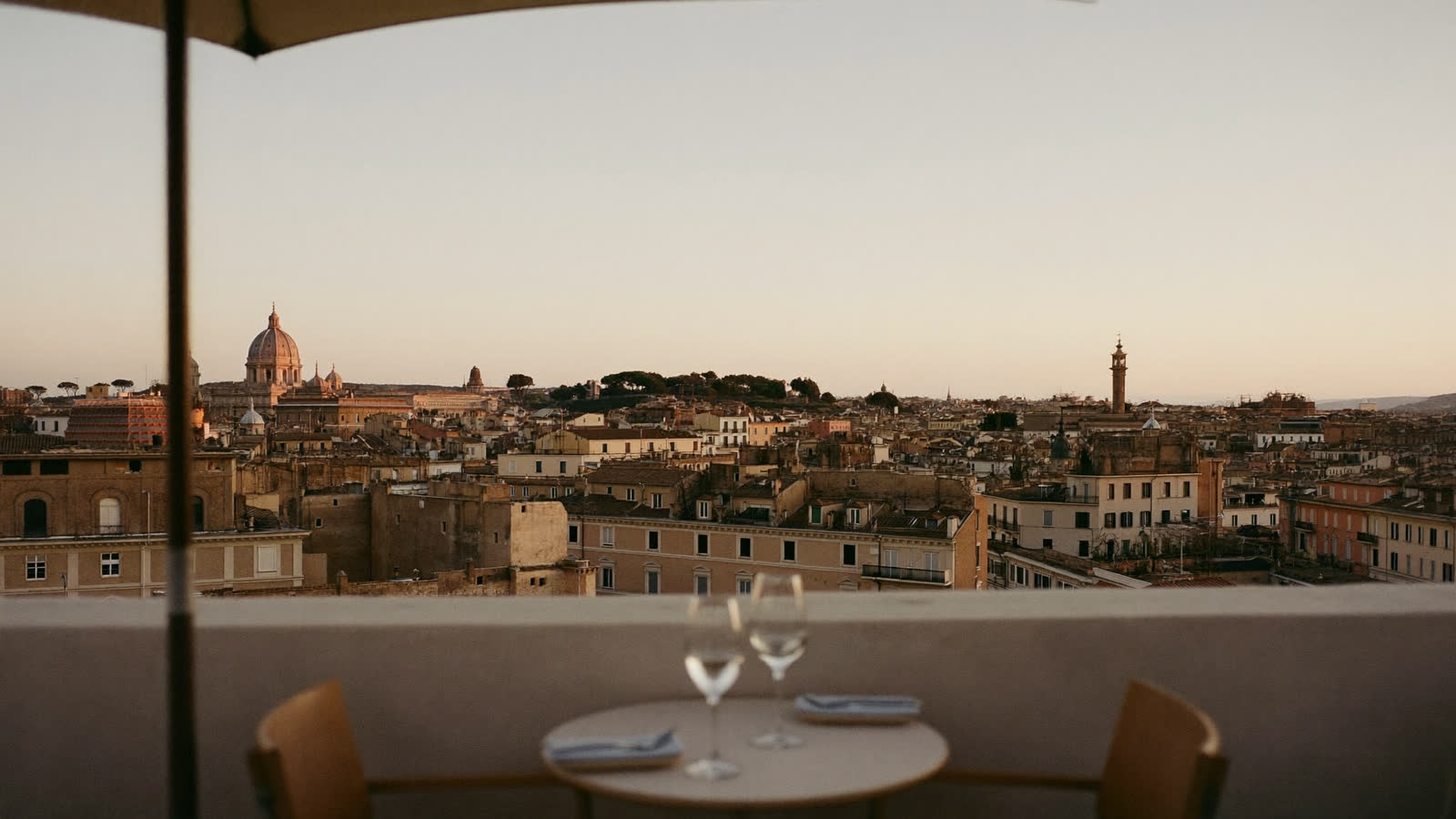
Rome rewards two kinds of traveller: the one seeing it for the first time, and the one who has stopped counting. For both, the city's luxury logic is identical — Rome is a queueing city for the unprepared and a private city for the arranged. The Sistine Chapel with two hundred strangers is a spectacle; the Sistine Chapel after hours, doors locked behind your group, is an experience people describe decades later. This file is about the second Rome. The Rome briefing page has the short version.
Everything below was verified this run against the current Michelin Guide, the hotels' own publications and live listings. It is a booking list, not a round-up.
What is Rome really like? What are the great Roman experiences? What should you actually do day to day? Where should you stay? How do you see the icons properly? What should you eat? Where is the luxury insider layer? Practical notes
What is Rome really like?
Rome is twenty-eight centuries deep and completely unembarrassed about any of them — a baroque church built into a pagan temple, a Renaissance palace over an emperor's stadium, scooters parked against walls older than most nations. No city carries time more casually, and no city punishes a rushed itinerary more surely. Rome is walked, sat in, eaten through — never "done".
The luxury city is compact: the Spanish Steps–Piazza del Popolo triangle holds the grand hotels and the shopping, the centro storico holds the icons, and everything connects on foot through streets that are themselves the attraction. A car in central Rome is a liability outside airport runs and evening transfers; good shoes are the real luxury purchase.
Seasons matter. April–June and September–October are the windows. August empties the Romans out and pours the world in. Winter — November to February — is the connoisseur's Rome: luminous low light, empty piazzas at breakfast, tables everywhere. And in any season, the city belongs to whoever is awake at 6.30am; more of this file's value lives in that sentence than any other.
One call and the desk builds your Roman file — suites, after-hours doors, tables, drivers. Free of charge.
Plan my Rome journeyWhat are the great Roman experiences?
Rome's great adventures are temporal: being inside the world's most visited rooms when nobody else is.
The Vatican, after hours
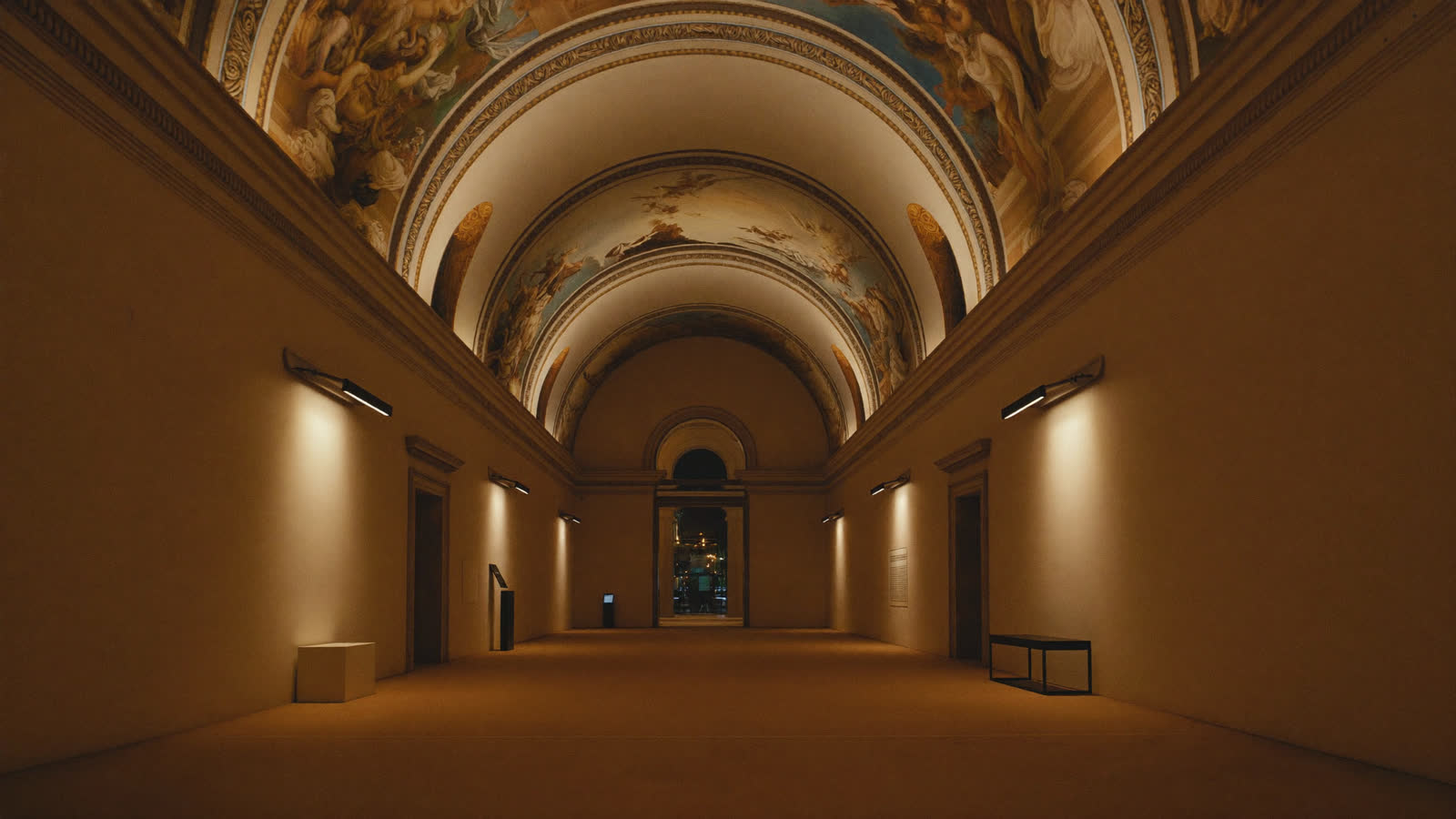
Private after-hours access opens the Vatican Museums Map outside public hours — the Raphael Rooms and the long galleries reserved for your group, ending with an unhurried, uninterrupted Sistine Chapel. Formats range from small-group evenings to fully private keys-of-the-museum arrangements. This is the booking clients thank us for years later; dates are limited and sell out — give the desk your travel window early.
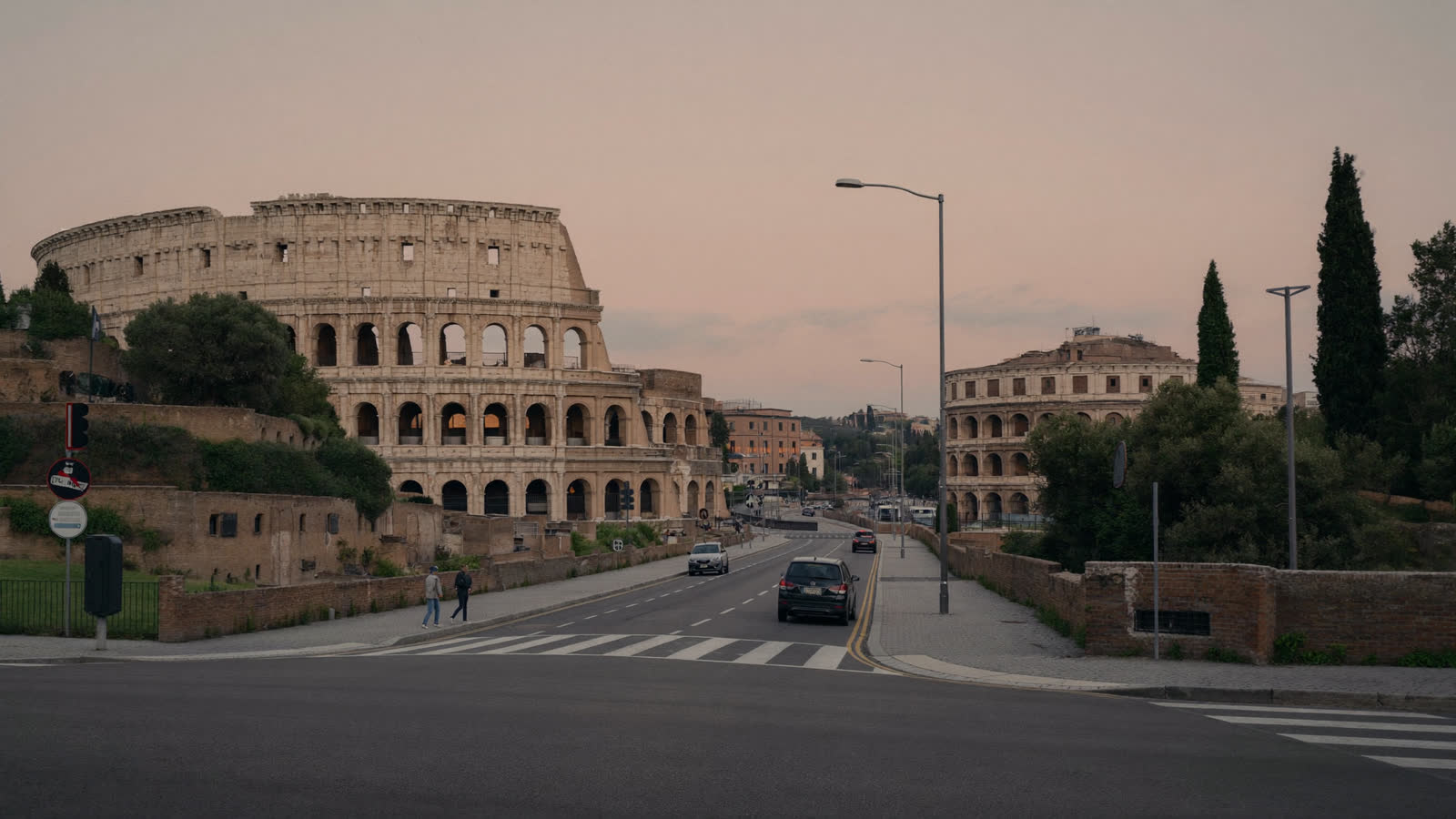
The Colosseum at dawn, underground included
First-entry and restricted-access tickets put you on the arena floor and in the hypogeum — the lift-shafts-and-cages underworld — before the day's 20,000 visitors arrive Map. Pair with the Forum and Palatine in the same morning, guide throughout; three hours, and Roman history reorganises itself permanently.
The high views
St Peter's dome climb at opening Map, the Janiculum terrace at sunset, and — the desk's favourite — a helicopter transfer or coastal run that reads the city's plan from above. For a gentler altitude, every grand hotel below has a rooftop; the trick is using a different one each evening.
What should you actually do day to day?
Four nights is the honest minimum; six lets Rome breathe. The working rhythm: one anchor per day — an after-hours visit, a gallery, a long lunch — walked to and from through different quarters. Cap the monuments at one serious site daily; Rome overdosed is Rome wasted.
For couples
- Morning: Borghese Gallery at its first slot (timed entry, book well ahead) — Bernini's marbles justify the alarm — then the gardens by golf cart or on foot.
- Afternoon: a private pasta-making session with a Roman cook, or the spa floors at the Bulgari and Cavalieri.
- Evening: aperitivo in the De Russie garden, dinner in Trastevere, and the Trevi Fountain Map at midnight when it finally empties.
For families
- The Colosseum with a gladiator-savvy guide is the best history lesson on earth; add the gladiator school on the Appian Way for under-12s who need to swing something.
- Villa Borghese's rowing lake, bikes and zoo absorb an afternoon Map.
- Ostia Antica — Rome's Pompeii, 40 minutes out — lets children climb an ancient city with a fraction of the crowds.
The day circuits
With a driver: the Castelli Romani hills for lunch above Lake Albano; Tivoli's Villa d'Este fountains and Hadrian's Villa Map; or the Etruscan tombs at Cerveteri. Each returns you to Rome by aperitivo hour, which is the correct deadline for everything in Italy.
Where should you stay?
Rome's top tier clusters around the Spanish Steps and the Tridente, with one resort outlier on Monte Mario. Choose by temperament: classic, contemporary, garden or grounds.
Hotel Hassler Roma — the classic
Privately run above the Spanish Steps, the Hassler Map is Roman grand hotellerie at its purest — world-class service, a Turkish bath, and Michelin-starred Imàgo on the sixth floor with the skyline as its far wall. Take a rooftop-side room; the view over the Steps is the postcard you came for.
Bulgari Hotel Roma — the contemporary
Opened 2023 in a monumental 1930s block on Piazza Augusto Imperatore, the Bulgari Map pairs Citterio-Viel interiors with a Bisazza-mosaic spa pool and Il Ristorante — Niko Romito upstairs. The jeweller's polish, applied to a whole building.
Hotel de Russie — the garden
Between Piazza del Popolo and the Steps, the De Russie Map hides a terraced secret garden that climbs the Pincio — the favourite of visiting stars for its discretion, and home to one of the city's best cigar corners. Garden-facing rooms only.
Rome Cavalieri — the resort with the stars
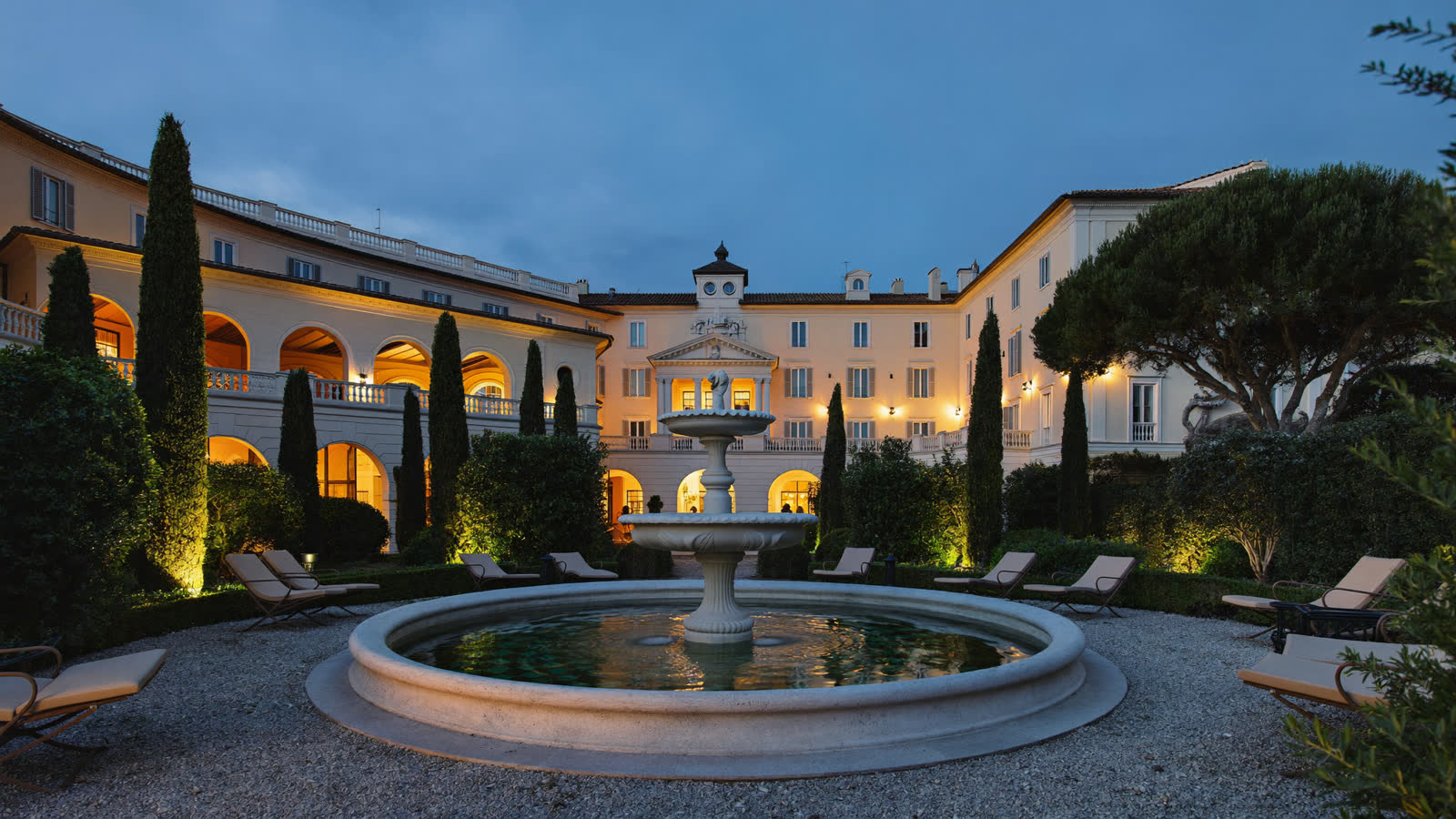
On Monte Mario above the city, the Cavalieri Map runs fifteen acres of gardens and pools, a museum-grade private art collection — Tiepolos in the lobby — and La Pergola's three stars on the roof. The family-and-pool play, and the only address where the city's best table is an elevator ride from bed.
| Hotel | Tier | District | Best for |
|---|---|---|---|
| Hotel Hassler Roma | Ultra | Spanish Steps | Classic grandeur, Imàgo, the view |
| Bulgari Hotel Roma | Ultra | Piazza Augusto Imperatore | Contemporary polish, spa, Niko Romito |
| Hotel de Russie | Ultra | Piazza del Popolo | The secret garden, discretion |
| Rome Cavalieri | Luxury | Monte Mario | Grounds, pools, families, La Pergola |
We hold direct relationships with these properties — preferred rates, upgrades where they exist, and the right room, not just a room.
Have the desk book my stayHow do you see the icons properly?
Rome's icons run on two clocks — the public one and yours. Timed entries, first slots and after-hours doors separate the two.
The Colosseum, Forum & Palatine
One ticket, one morning, one guide Map. First entry, arena floor and underground access as above; then walk the Forum downhill to the Capitoline for Marcus Aurelius and the view back across everything you just walked.
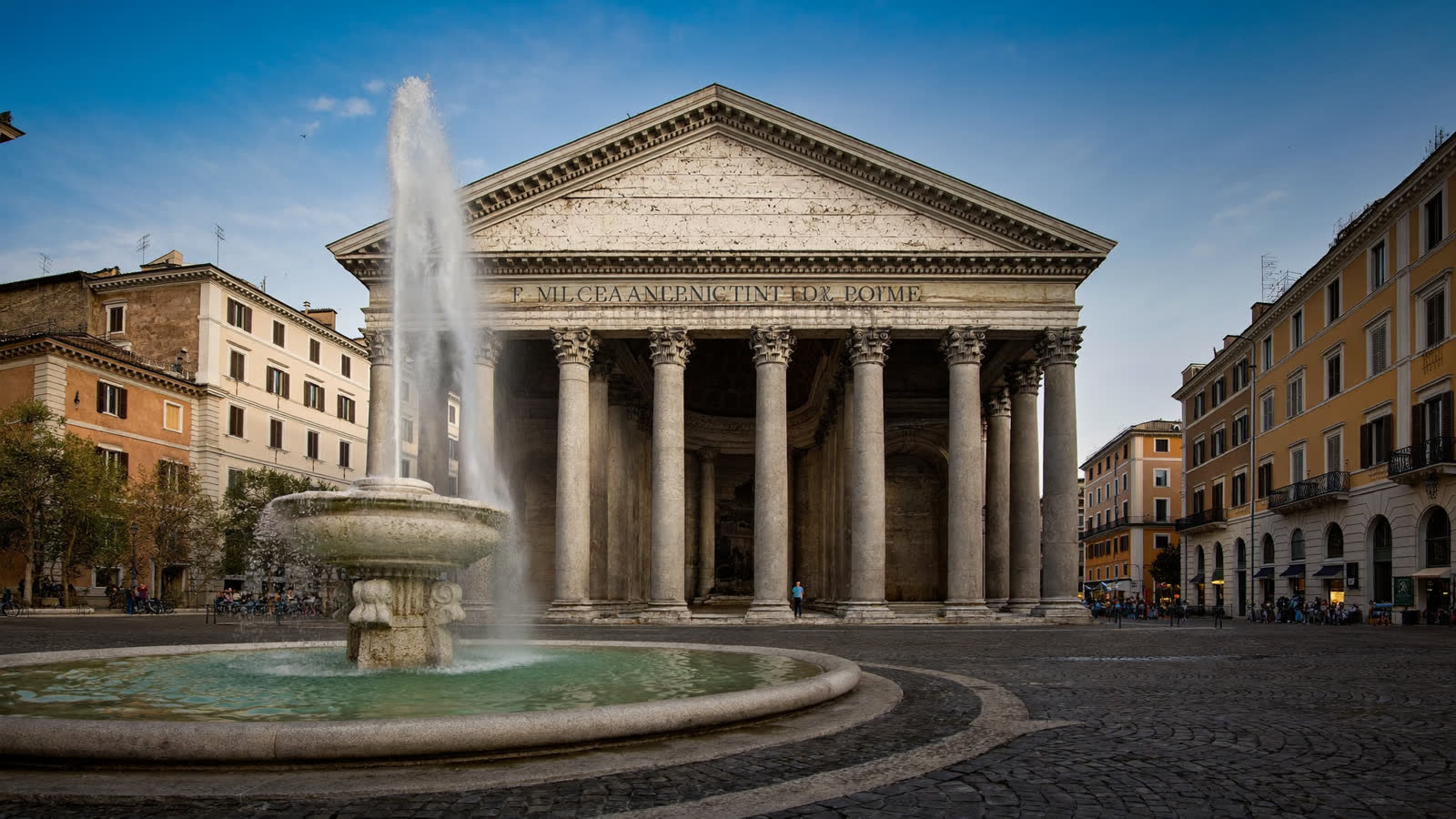
The Pantheon
The most perfect building standing Map — go at opening or in rain, when the oculus turns the floor to theatre. Entry is ticketed now; book the first slot and give it twenty unhurried minutes.
The Borghese Gallery
Two-hour timed windows keep the Borghese Map civilised — Bernini's Apollo and Daphne and Caravaggio's room in something like peace. The first slot of the day, private guide, then the park.
Trevi & the passeggiata circuit
The Trevi Fountain is a scrum by day and a wonder at midnight; the Spanish Steps Map reverse the trick — dawn only. Thread them into an evening passeggiata: Piazza Navona, the Pantheon lit, Campo de' Fiori, gelato in hand, no destination whatsoever.
What should you eat?
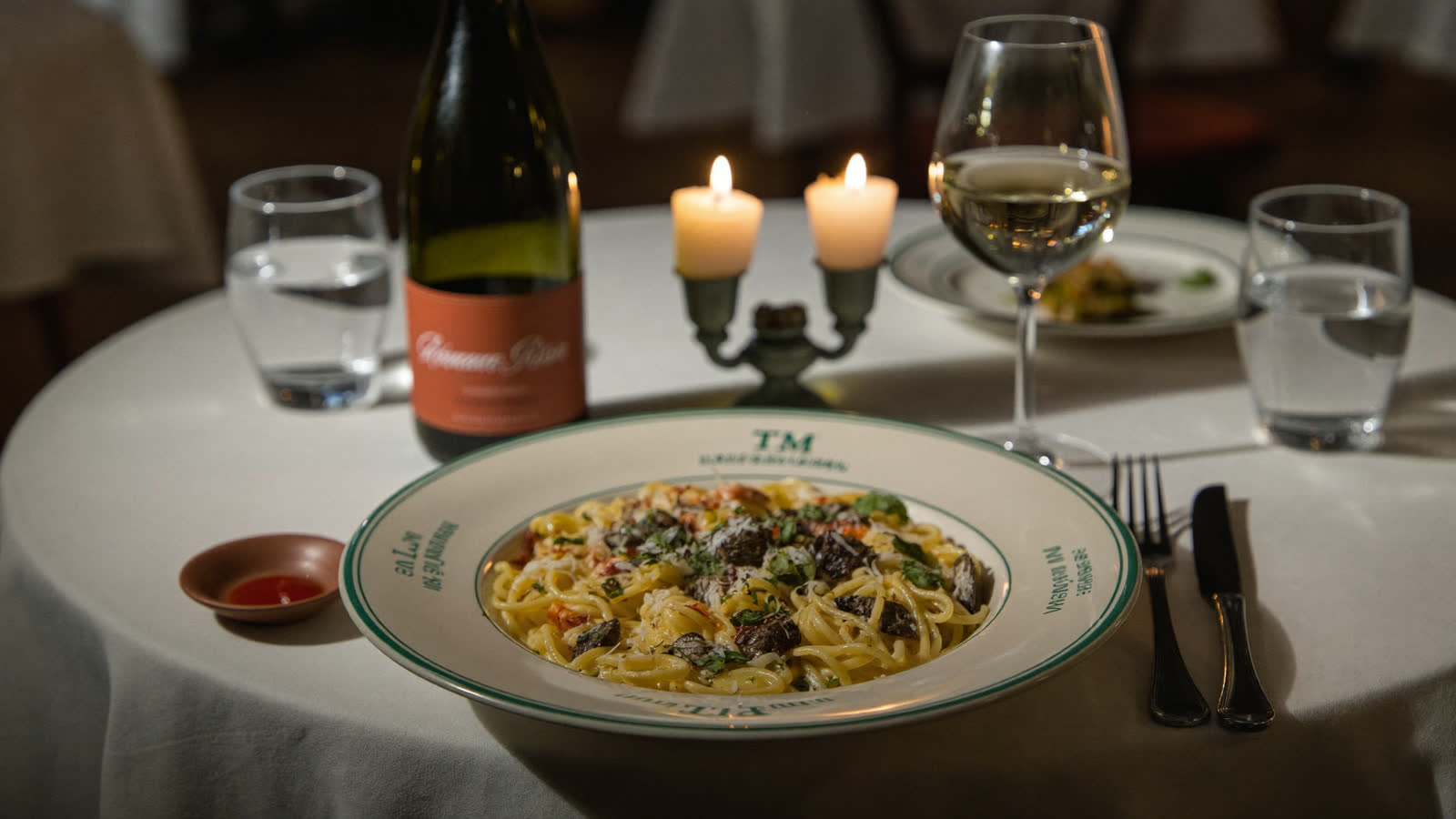
Rome's kitchen is a canon, not a scene: four pastas, a handful of Ghetto and Testaccio classics, and a top end that finally matches the city's setting. Order the canon in the trattorias and the ambition in the hotels.
The summit
La Pergola Map — Heinz Beck, three Michelin stars, a Wine Spectator Grand Award cellar and the whole city below the terrace — remains Rome's only three-star table and one of Europe's great occasions. Il Ristorante — Niko Romito at the Bulgari Map distils Italian classics with laboratory precision, and Imàgo at the Hassler pairs its star with the best dining-room view in the city.
The canon, done right
The four Roman pastas — cacio e pepe, carbonara, amatriciana, gricia — are the measure of any trattoria; our shortlist lives in the client file, but the rules travel: full room of Romans, short menu, guanciale not pancetta, and never, ever cream. In the old Ghetto Map, carciofi alla giudia — fried artichokes — in season are non-negotiable. Testaccio, the old slaughterhouse quarter, remains the city's most serious eating neighbourhood.
The daily rituals
Espresso standing at the bar (sitting doubles the price and halves the point), pizza al taglio by the etto from a proper forno, maritozzo con panna at breakfast, and gelato only where the pistachio is brown, not green. Aperitivo is a contract: 7pm, a Negroni or a spritz, and the day's plans renegotiated.
Where is the luxury insider layer?
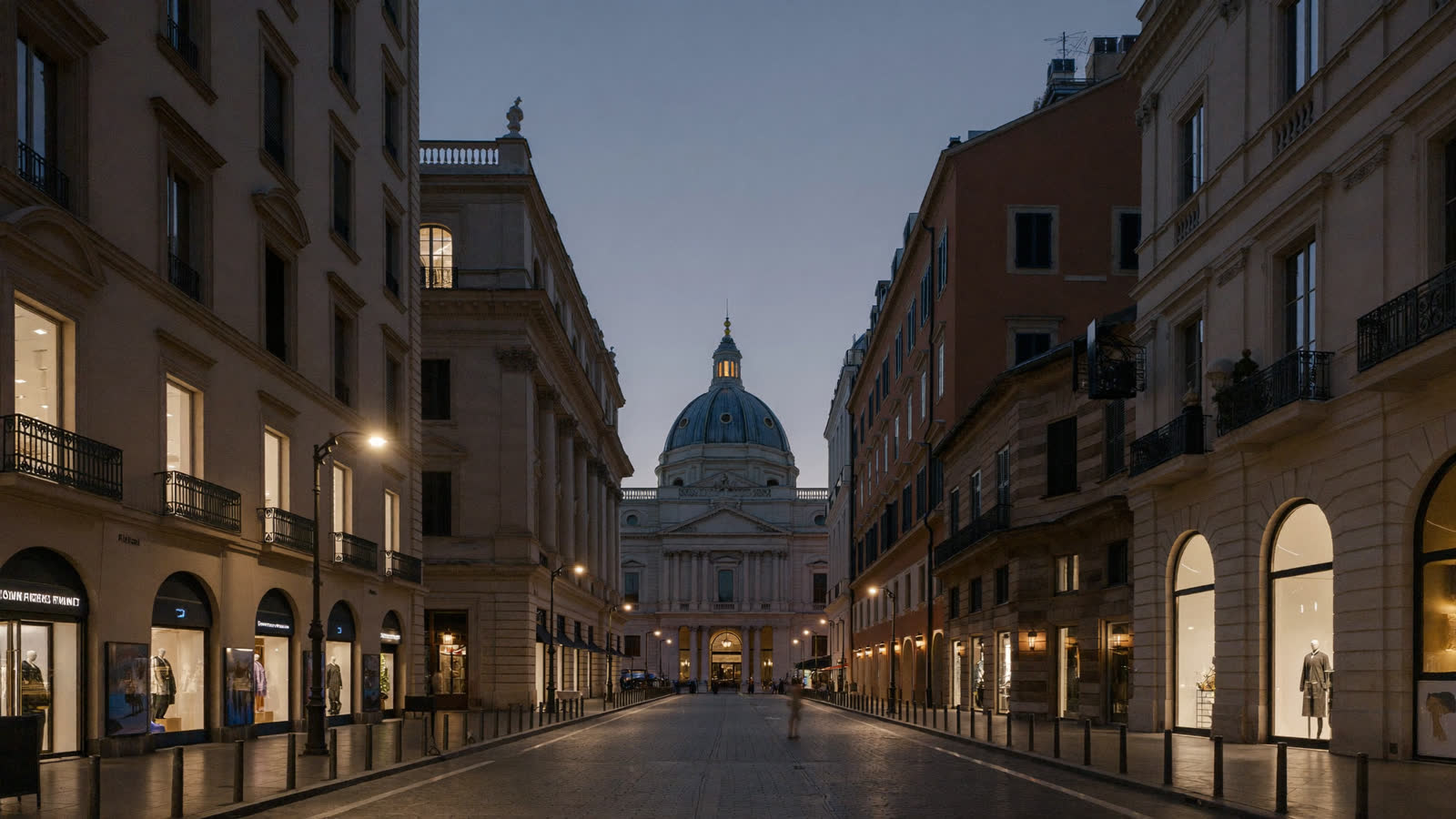
Rome's insider layer is appointment culture — ateliers, humidors, private galleries — wrapped in a city that pretends to be casual about all of it.
Private shopping
Via dei Condotti Map runs from the Corso to the Steps carrying Gucci, Prada, Valentino and Bulgari's 1905 mother-store — but the Roman move is by appointment: private salons at the maisons, the bespoke shirt-makers and shoemakers in the streets behind (the Tridente's side streets hide ateliers that dress cardinals and film stars alike), and chauffeured shopping mornings our desk arranges with doors opened before the crowds. Add the antiquari of Via del Babuino and Via Margutta for the pieces that go home in a crate.
Cigars & nightcaps
The Cavalieri's cigar lounge beside La Pergola — Émile Gallé glasswork, 19th-century paintings, a 25-page drinks list — is the city's most complete smoking room Map. The De Russie's garden cigar corner handles the Cuban ritual with Stravinskij Bar cocktails alongside, and the Aleph's Cognac Lounge covers the after-dinner brief downtown. For the bottle-aged nightcap without smoke: the Hassler's Palm Court and the Bulgari's terrace bars.
Access & the long game
Beyond the Vatican, Rome's private-access layer runs deep: early-entry Borghese, the Palazzo Colonna's Friday-only galleries, private openings of palazzi still in family hands, and archaeologist-led descents into the Mithraic temples under San Clemente. These are relationship bookings — exactly what a concierge is for — and several combine into a single "private Rome" day that outclasses any public itinerary.
The wider swing
Rome pairs with the Amalfi Coast (75 minutes by train to Naples, then the coast road) or Tuscany; Gulf clients often run London–Rome–Amalfi as one European arc. The desk builds the connections — cars, trains, boats — so the seams disappear.
Practical notes
Emirates flies Dubai–Rome Fiumicino nonstop in about six hours. UAE passport holders enter the Schengen area visa-free; other nationalities need a Schengen visa — apply early in summer season, and our desk manages the paperwork with your booking.
Movement: walk the centre, use the desk's driver for evenings and day trips, and take the Leonardo Express or a car for FCO. Cards work everywhere; carry small cash for espresso bars. Dress codes are real at churches — covered shoulders and knees, St Peter's enforces them — and Romans dress for dinner; you should too.
Book in this order: the after-hours Vatican, the hotel, Borghese and Colosseum timed entries, La Pergola, then nothing else. Leave the rest of Rome unscheduled — it has been improvising successfully for twenty-eight centuries and will organise your evenings better than any plan.
Every address above can be arranged, reserved and chauffeured for you — free, by your dedicated Dubai-based specialist.
Plan my Rome journey