The Riyadh Little Black Book
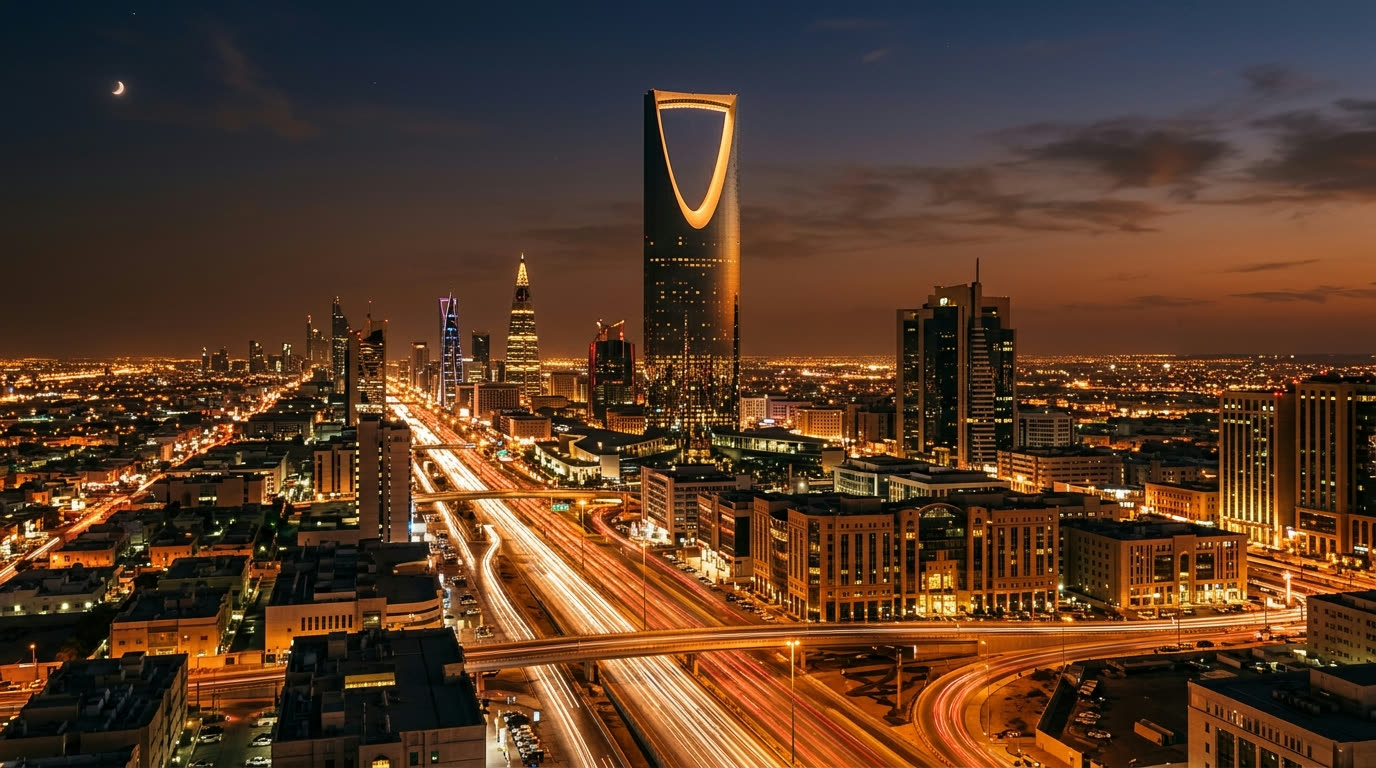
Riyadh is the most changed city in our book. Five years ago it was a business stopover; today it holds a restored UNESCO capital at Diriyah, a dining district that fills with the city's establishment every evening, and a hotel bench deep enough to argue over. It rewards curiosity and punishes old assumptions in equal measure — and from Dubai it is a two-hour hop, which makes it our most bookable "new" destination. The working list follows, alongside our Riyadh destination page.
Everything below was verified against the hotels, Diriyah's official programme and this season's guides in July 2026.
What is Riyadh really like? What are the big adventures? How should you spend your days? Where should you stay? Which iconic spots deserve your time? What should you eat? What is the luxury insider layer?
What is Riyadh really like?
Start with the geography: a Najdi oasis city on a desert plateau, walled and mud-built within living memory, now a seven-million-person capital spending historic sums on its own reinvention. The old austerity has loosened — cinemas, concerts, mixed dining rooms, a Formula E race — but the city's grammar is still Najdi: majlis hospitality, dates and gahwa (cardamom coffee) before business, family at the centre of everything.
It suits the curious traveller, the business visitor extending a trip, and Gulf-based families who want heritage without a long-haul flight. It is not a resort city; you come for the culture, the food and the desert, not for a pool week. Alcohol is not served — the mocktail programmes at the top hotels are genuinely inventive — and Fridays start slow.
Season is everything. November to March is glorious: cool nights, terrace dinners, the Riyadh Season calendar at full volume. Summer belongs to the malls and the after-dark city.
Two hours from Dubai and changing by the quarter. Our desk keeps the Riyadh list current — free.
Plan my Riyadh journeyWhat are the big adventures in Riyadh?
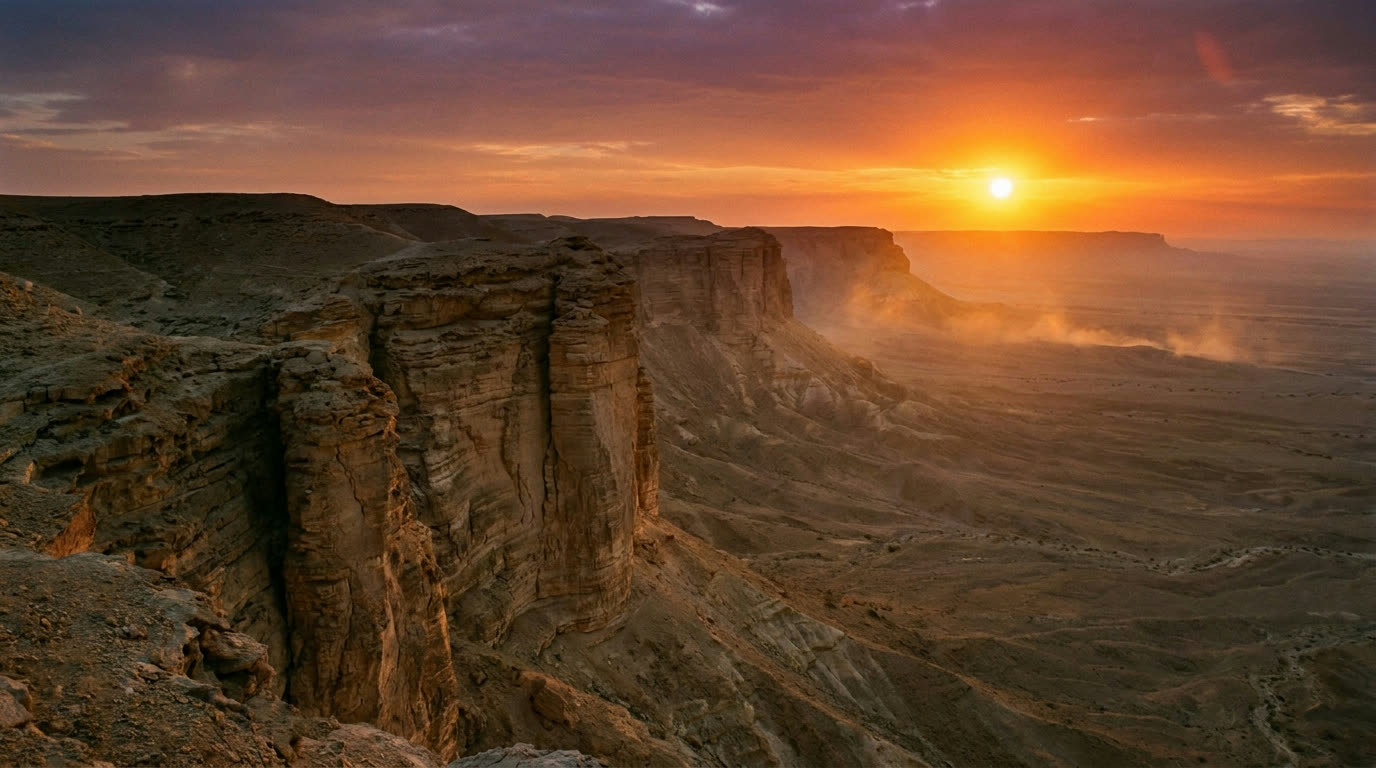
The marquee day trip is the Edge of the World — Jebel Fihrayn, where the Tuwaiq Escarpment breaks in sheer cliffs above a plain that was seabed millions of years ago. Private 4×4 tours run from the city (about 90 minutes each way, from roughly US$280 per small group); the route crosses camel-crossed desert and ends on a rock finger you walk out onto with nothing but air below. Time it for the final two hours before sunset, carry more water than seems sensible, and let the guide handle the off-road section — rental sedans do not make it. Map
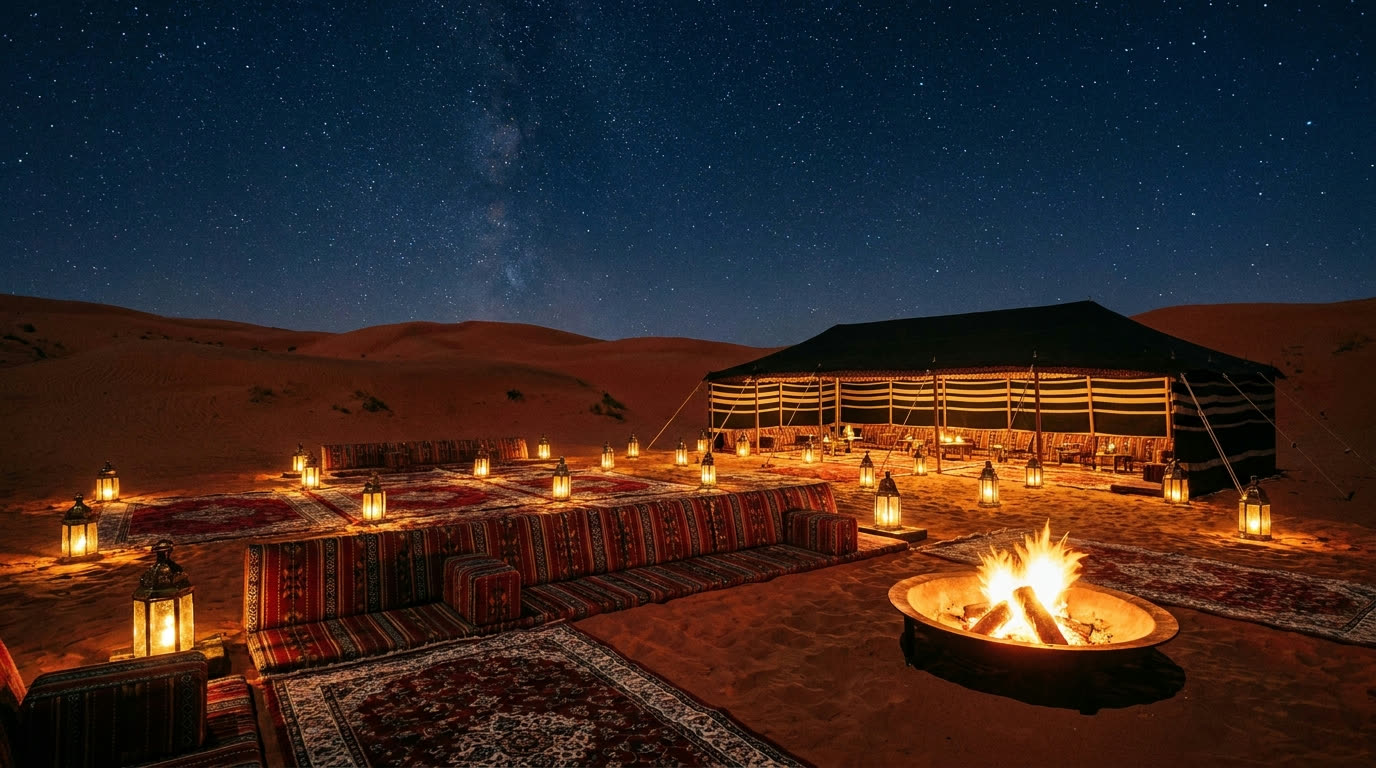
Closer in, the red dunes off the Thumamah road host the Gulf's classic desert programme — dune drives, sandboarding, camel rides — upgraded at the private camps into something better: a majlis under the stars, fire-cooked dinner, falconry displays arranged on request. Map Wadi Hanifah, the 120 km valley threading the city's western edge, gives the gentle counterpoint: restored parklands, palm farms and evening walking paths through Diriyah's back door. Map
In season, add the spectacle layer: Diriyah's E-Prix weekend turns the citadel into a racetrack backdrop, and Riyadh Season's headline events sell arena nights that did not exist here a decade ago.
How should you spend your days in Riyadh?
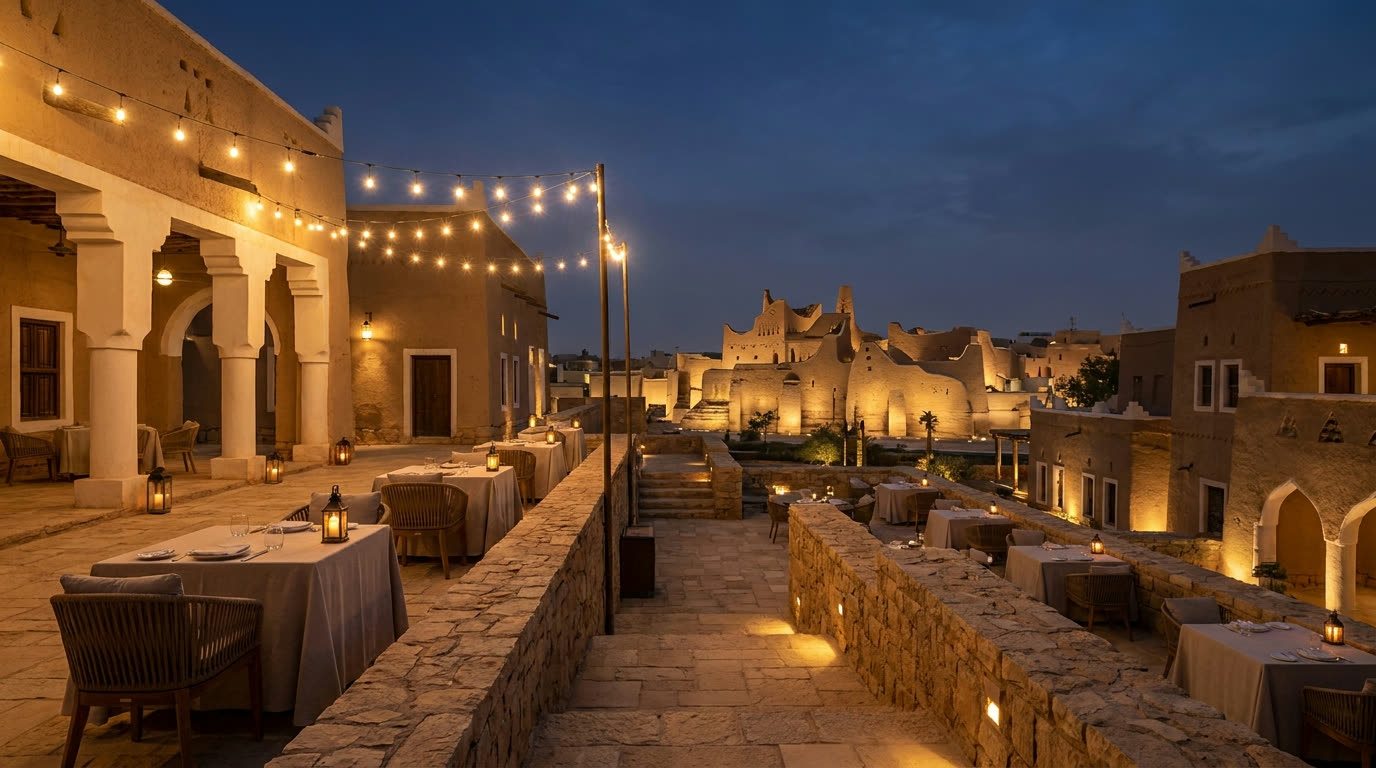
Three nights does the city well. Day one: the National Museum in the morning — the Gulf's best-told history, two hours minimum — then Masmak Fortress and the old Deira souq district before an early hotel evening. Map Day two: Diriyah. A guided At-Turaif tour in the late afternoon light, the Diriyah Gallery for the sweep of 1,400 years, then dinner on the Bujairi Terrace facing the floodlit citadel — the single best evening the capital offers. Day three: the Edge of the World, returning for a farewell dinner in the tower districts.
Families add Boulevard World and the King Abdullah Park fountains — Riyadh Season's family programming is vast in winter — and the camel market at Thumamah for something unfiltered. Couples should take the desert-camp night and a spa afternoon; the hammams and spas at the palace hotels are the region's most generous by square metre.
One logistical truth: distances are highway-scale and traffic peaks hard at 5pm. Build the day around one district at a time, with a driver who waits.
Where should you stay in Riyadh?
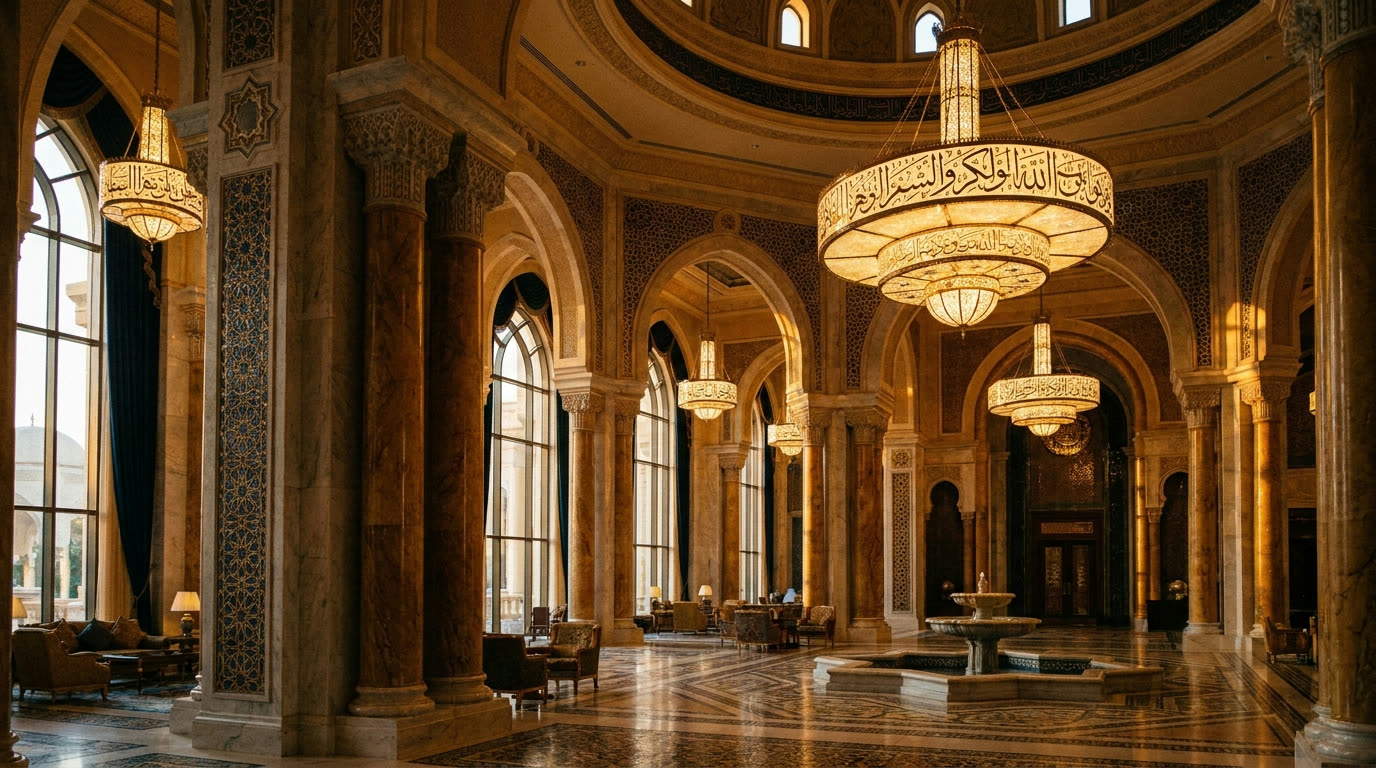
The Ritz-Carlton, Riyadh (Ultra)
The palace: 52 acres of gardens built to receive kings, chandeliered halls, an indoor pool of Roman ambition and suites that host actual state guests. Stay here for the sense of occasion; ask for a garden-facing room. ritzcarlton.com Map
Four Seasons Hotel Riyadh at Kingdom Centre (Luxury)
The city machine, occupying the capital's most recognisable tower since 2003: Café Boulud (Daniel Boulud's French table), direct mall access and the steadiest service in town. The business-and-first-visit base. fourseasons.com/riyadh Map
The St. Regis Riyadh (Luxury)
Butler service, the alcohol-free signature Bloody Mary, Jackie's Greek-American dining room and the Stella Sky Lounge with its shisha crowd and DJ. The society address. marriott.com Map
Bab Samhan, a Luxury Collection Hotel — Diriyah (Luxury)
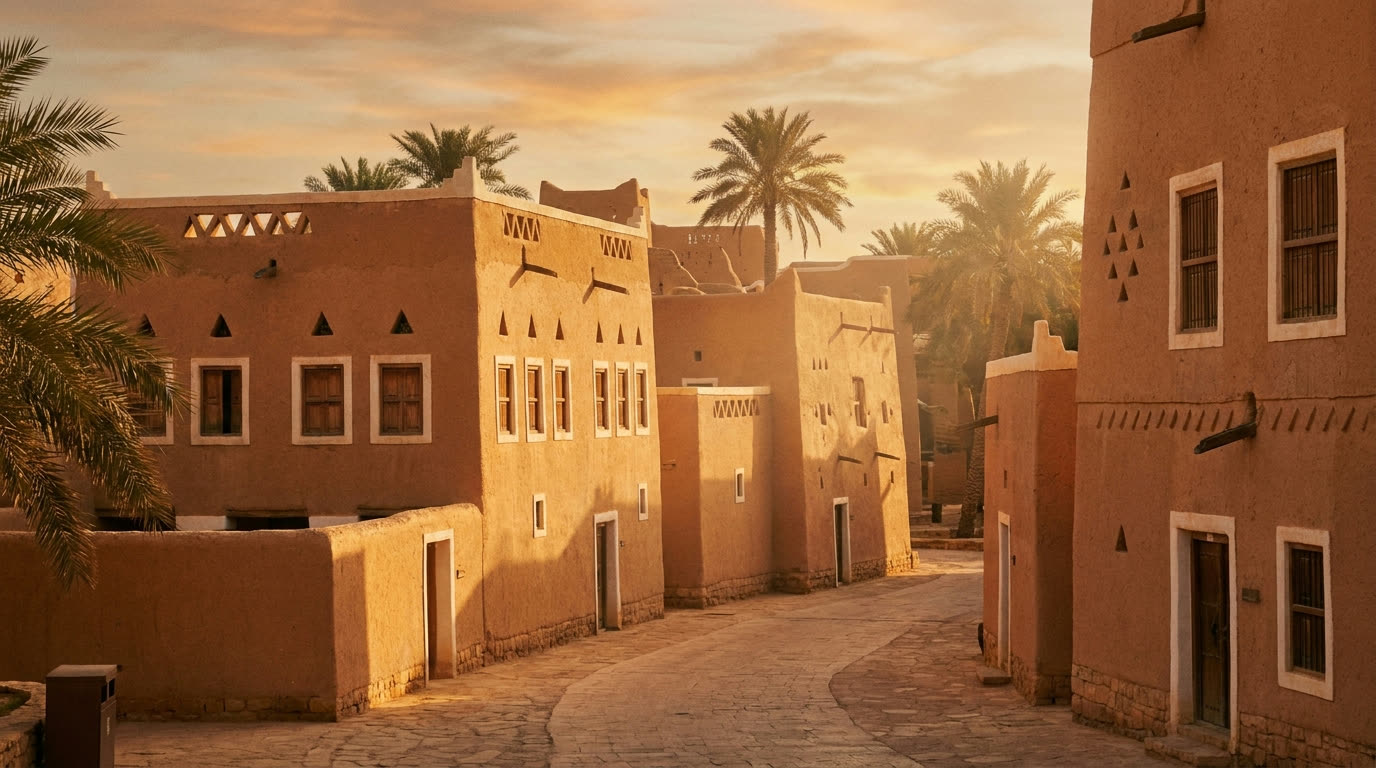
The first hotel inside historic Diriyah, its rooms echoing Najdi mud-brick and palm-roof craft, steps from At-Turaif and the Bujairi terraces. For the heritage-led stay, nothing touches it. diriyah.sa Map
Mansard Riyadh, a Radisson Collection Hotel (Refined)
Haussmann-styled roofs and a row of chocolatiers and perfume ateliers out front, ten minutes from the financial district. The design-led alternative. Map
| Hotel | Tier | District | Best for |
|---|---|---|---|
| The Ritz-Carlton, Riyadh | Ultra | Diplomatic Quarter side | Palace occasion, gardens |
| Four Seasons at Kingdom Centre | Luxury | Olaya | Tower views, Café Boulud |
| The St. Regis Riyadh | Luxury | King Fahd Road | Butlers, society scene |
| Bab Samhan (Luxury Collection) | Luxury | Diriyah | Heritage immersion |
| Mansard Riyadh | Refined | North Riyadh | Design, boutiques |
Riyadh Season weekends and Diriyah's tables book out fast in winter. Dates first; we hold the rest — free.
Plan my Riyadh journeyWhich iconic spots deserve your time?
At-Turaif, Diriyah
The UNESCO-listed first Saudi capital: Salwa Palace's mud-brick mass, the Traditional Architecture Gallery, lanes restored with original Najdi technique. Take the official guided tour at golden hour — the self-led route misses the stories that make it land. diriyah.sa Map
Masmak Fortress
The 1865 clay fort whose 1902 capture began the modern kingdom — the spearhead lodged in its door is the origin story in one object. Thirty minutes, mornings. Map
The National Museum
Two floors from prehistory to unification, superbly curated. The single best orientation to the country, and mercifully cool in any season. Map
Kingdom Centre Sky Bridge
The 99th-floor bridge across the tower's famous aperture — go at dusk and watch the city's grid light up to the horizon. Map
What should you eat in Riyadh?
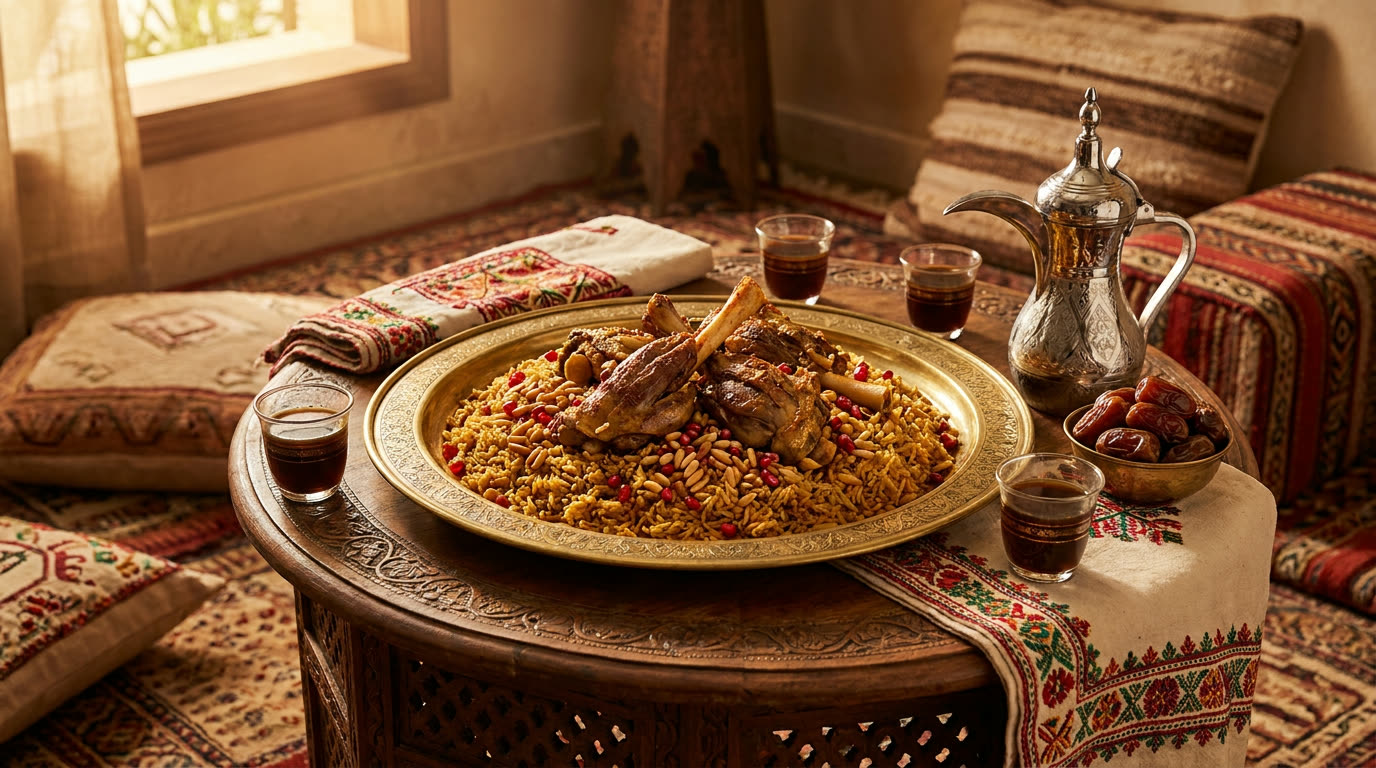
Start Najdi. Kabsa — spiced rice with lamb or chicken, the national table's centre — plus jareesh, margoog and hot mandi from the traditional houses; the mid-century institutions around the old city still serve them floor-seated, and every Saudi colleague has a fierce opinion about which. Dates and gahwa open every meeting and most meals; accept both, always, and take the cup with your right hand.
The new capital dines at Bujairi Terrace, where a curated row of international and Saudi fine-dining rooms faces the lit walls of At-Turaif — book a citadel-view table at sunset and the setting does half the work. Map In the towers, the hotel rooms carry the top end: Café Boulud at the Four Seasons for Daniel Boulud's French repertoire, Jackie at the St. Regis for the Greek-American room with the buzz, and the Ritz-Carlton's dining halls for occasion dinners. Map
Between them sits the city's real energy: a home-grown restaurant generation — modern Saudi kitchens, specialty coffee at obsessive standard (Riyadh's café scene now rivals anywhere in the region), and dessert culture taken entirely seriously. Trust the queue outside a camel-milk ice-cream window at midnight; the city eats late.
What is the luxury insider layer in Riyadh?
Riyadh's insider layer is access and introductions, Gulf-style. At Diriyah, the guided At-Turaif tours can be arranged privately with a historian, paired with after-dark gallery time when the day crowd is gone; in season, the E-Prix and headline events carry hospitality tiers that our desk books through the official channels weeks ahead. The desert camps upgrade to full private buyouts — your own majlis, chef and falconer — which is how Saudi hosts actually entertain, and the model worth copying.
Shopping splits three ways: VIA Riyadh's cinema-and-maisons complex and the Kingdom Centre's luxury floors for the international houses, with private-shopping suites bookable through the hotels; the ateliers at Mansard for perfume and chocolate; and the souqs — Deira for antiques, oud and honest carpets — for the finds. Map Oud and bakhoor deserve a session with a specialist blender: the capital's perfume culture is the world's deepest, and a custom blend is the souvenir that outlasts everything.
Majlis culture answers the cigar brief — private lounges and hotel terraces host the after-dinner hour, shisha stands in for the humidor at the sky lounges, and the St. Regis's Stella crowd shows how the city socialises. Connectivity is excellent citywide; for working stays the tower hotels' club floors function as serviced offices with better coffee. The one rule that matters: dress modestly in heritage districts, and let your host pour the gahwa.
Riyadh is the Gulf's most interesting work in progress, and the window where it still feels undiscovered is closing. Pair it with Abu Dhabi for a Gulf heritage circuit, or read our other Journal guides — then go before everyone else does.
Every address above can be arranged, reserved and chauffeured for you — free, by your dedicated Dubai-based specialist.
Plan my Riyadh journey