Pamukkale for the Ultra-Discerning: The Cotton Castle, Done Properly
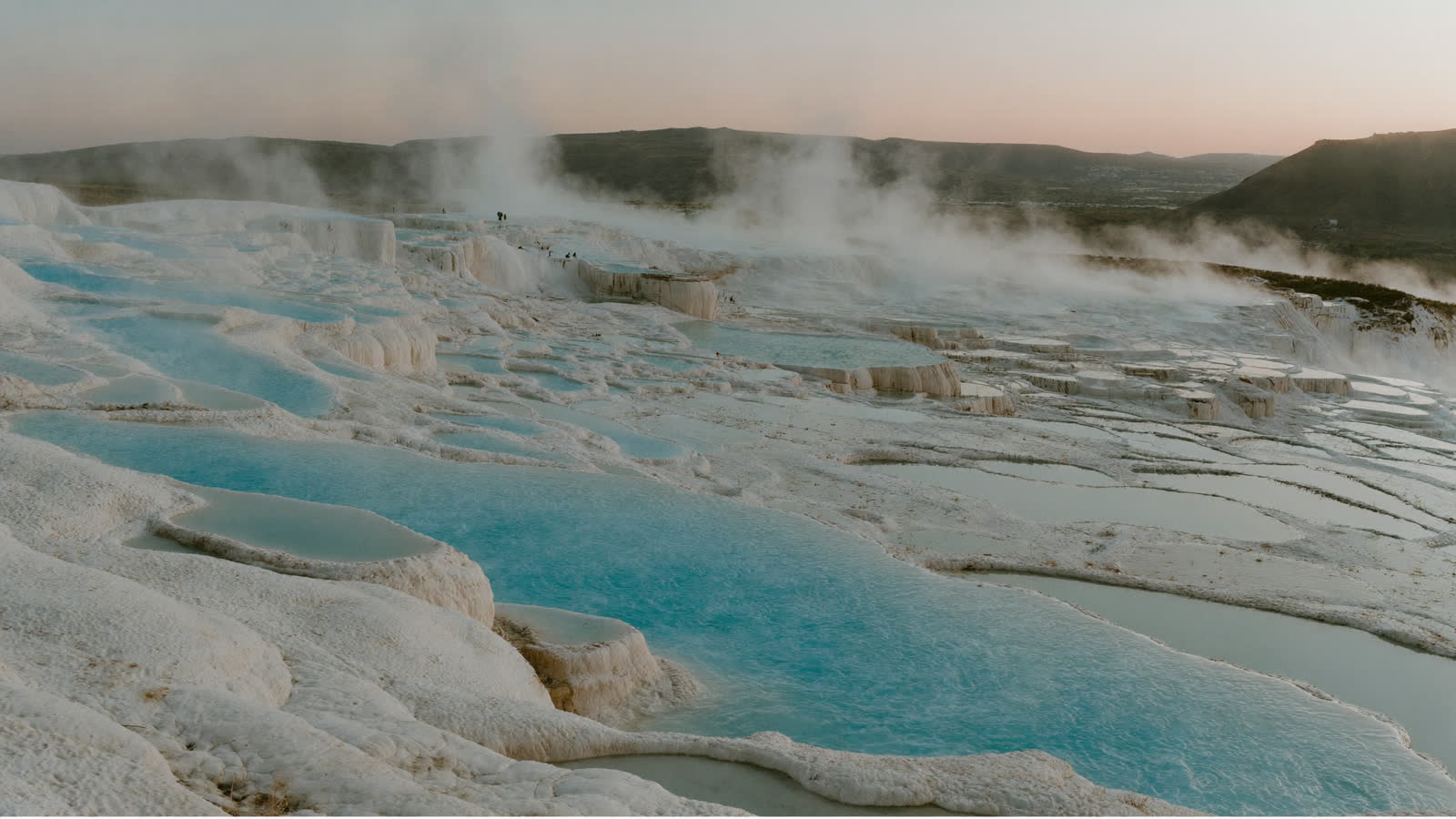
Pamukkale is on every list of natural wonders and almost nobody sees it properly. The day-trip coaches arrive from the coast at 10am, shuffle two hours in the heat, and leave — while the travellers who stayed the night had the frozen white cascades to themselves at dawn, swam over Roman columns in thermal water, and watched the terraces turn rose-gold at sunset from an emptying plateau. The difference is one night and a plan. This file is the plan; the Pamukkale briefing page holds the short version.
Every fact below was verified this run — 2026 site hours, fees and the Antique Pool's reopening included. It is a working file, not a postcard.
What is Pamukkale really like? What are the great Pamukkale adventures? What should you actually do day to day? Where should you stay? How do you see the icons properly? What should you eat? Where is the luxury insider layer? Practical notes
What is Pamukkale really like?
Pamukkale is a geological accident that became a spa town twice — once for the Romans, once for us. Calcium-rich thermal water has spilled over a hillside for millennia, freezing into the white travertine cascades the Turks call the Cotton Castle, and the ancient world built the healing city of Hierapolis on the plateau above. Today's village at the base is small and functional; the neighbouring hamlet of Karahayit, with its red iron-tinted springs, holds the thermal resorts.
This is not a see-and-be-seen destination, and that is its luxury. There are no beach clubs, no boutiques, no scene. What Pamukkale sells is the double hit of natural spectacle and deep antiquity, plus genuinely therapeutic water — and it sells it best to travellers who sleep nearby and work the site's opening hours like professionals.
Two seasonal notes from the desk. Summer bakes: the white terraces reflect heat like a mirror, and barefoot walking (mandatory on the travertines) gets genuinely hot by late morning. April–June and September–October give warm water, soft light and thinner crowds. And winter has a secret: steam rises off the warm pools into cold air, the site is nearly empty, and the thermal hotels come into their own.
One call and the desk builds your western Türkiye file — flights, drivers, thermal suites, balloons, Aphrodisias. Free of charge.
Plan my Pamukkale journeyWhat are the great Pamukkale adventures?
Pamukkale's adventures happen in the air and in the water — and both are timed to sunrise.
The sunrise balloon
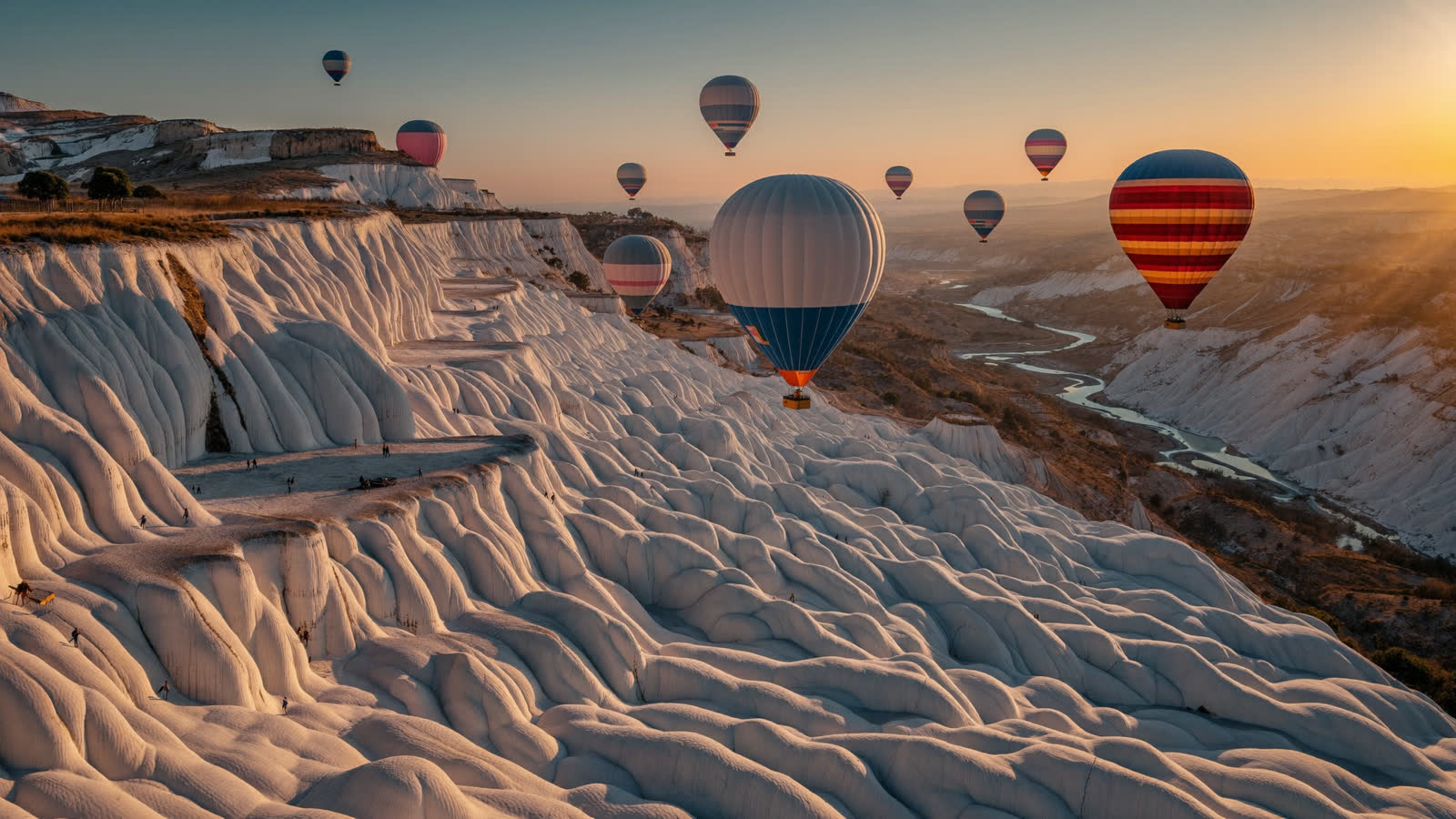
Balloon flights lift off at first light and drift over the white cascades, the Hierapolis plateau and the green Lycus valley — at about EUR 120 per person in 2026, a fraction of Cappadocia's prices for a spectacle only slightly smaller Map. Flights are weather-dependent; we book the first morning of a two-night stay so a cancellation has a second chance. Dress warmly — the basket is cold until the sun clears the ridge.
Paragliding the terraces
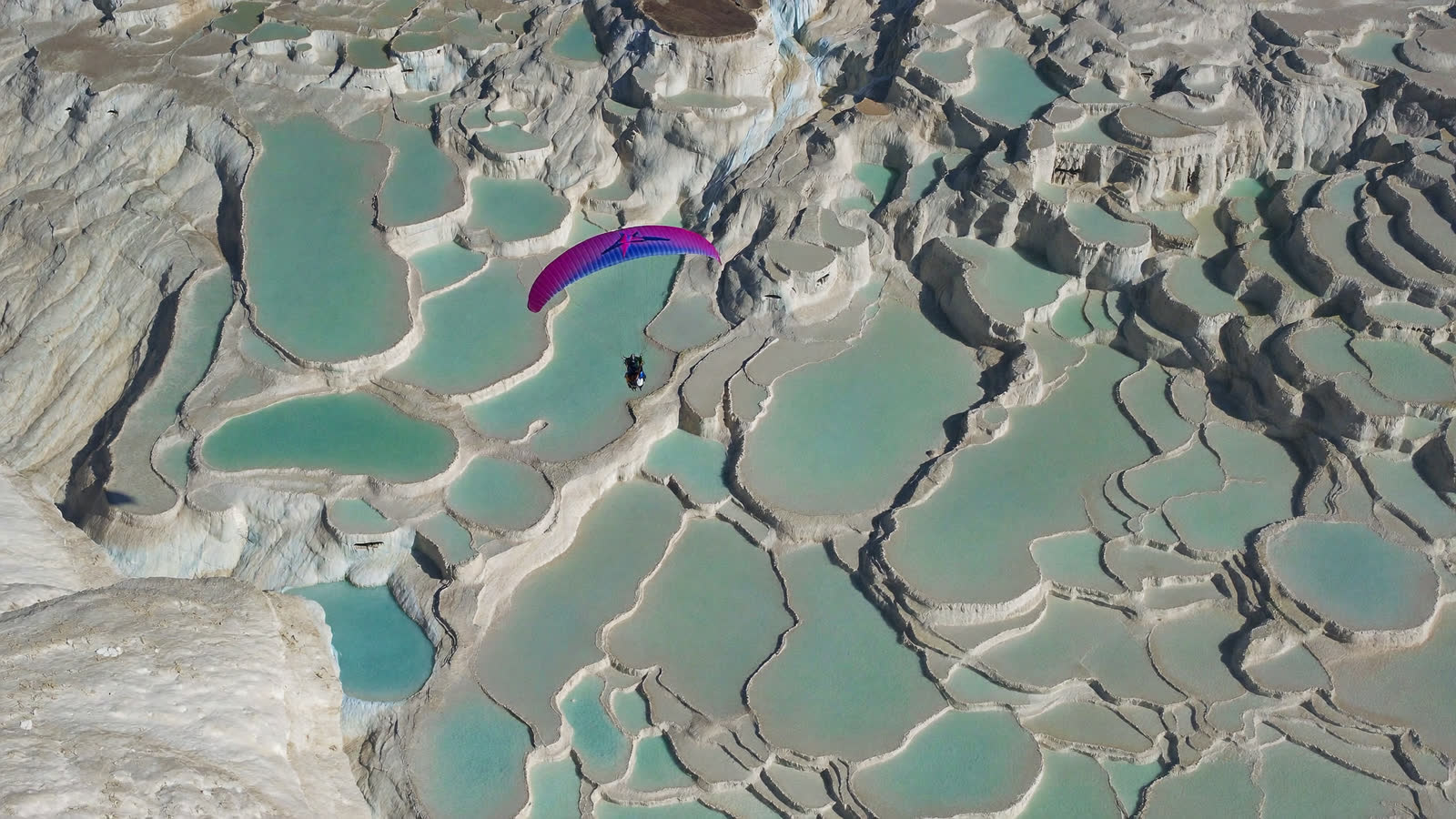
Tandem paragliding runs from the ridge above the site, soaring the length of the white terraces before landing near the base — the more visceral aerial option, and the photographs are absurd. Operators fly mornings and late afternoons; the desk books the sunset slot for photographers.
The thermal circuit
The water itself is the third adventure: the public travertine channels (barefoot, shallow, milky-blue), the Antique Pool's column-strewn spring, and the mineral pools of the Karahayit hotels — white calcium water at the site, red iron water in the village. A full day moving between all three is the region's real spa ritual.
What should you actually do day to day?
Two nights is the correct stay — one feels rushed, three needs the Aphrodisias day. The pattern: site at dawn, spa through midday heat, site again or a drive in the afternoon.
The ideal 48 hours
- Day one, dawn: balloon flight, then breakfast at the hotel.
- Day one, morning: enter the site from the upper (south) gate by car, walk Hierapolis while it is cool — theatre first — then swim the Antique Pool before the coaches reach it.
- Day one, afternoon: thermal spa block at the hotel; return at 6pm to walk the travertines barefoot into the sunset.
- Day two: Aphrodisias (90 minutes each way, half a day on site), Laodicea on the return if energy holds.
For families
- The travertine channels are a giant shallow paddling landscape — children need nothing else all morning.
- The Antique Pool's "swim over 2,000-year-old columns" pitch lands on every age; keep swim shoes handy.
- Hotel pools in Karahayit are warm year-round — the rare destination where the spa works for children too.
Timing the site
Summer hours run 6.30am–9pm; winter 8am–6pm. The coach window is roughly 10am–4pm. Build your day as the mirror image of that window and you will share one of the world's most photographed places with almost nobody.
Where should you stay?
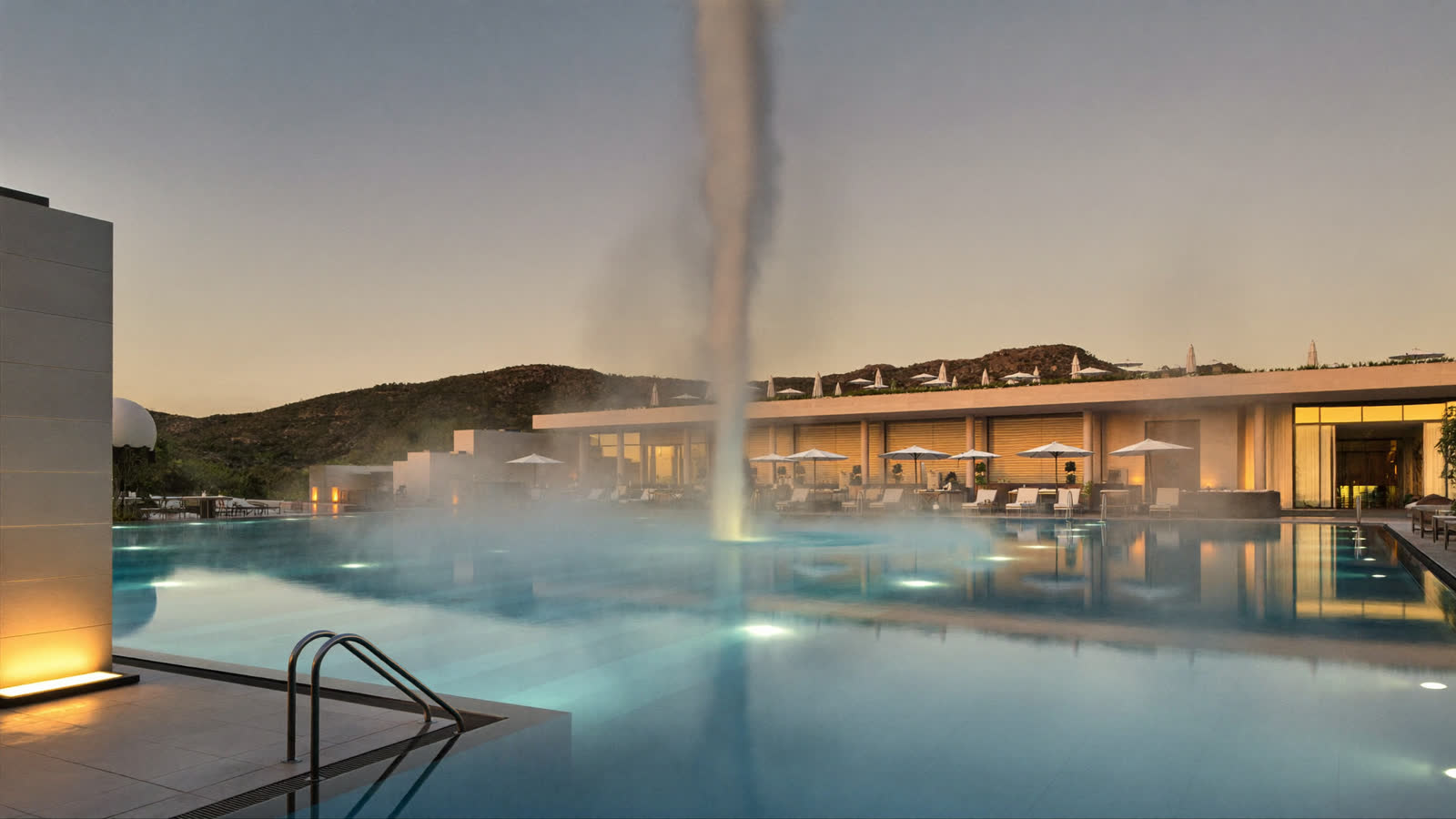
The honest brief: Pamukkale has no palace hotel, and pretending otherwise serves nobody. What it has is a cluster of serious thermal resorts in Karahayit, five minutes from the site — and the right room in the right one, with a private in-room thermal pool, delivers exactly what this destination is for.
Doga Thermal Health & Spa — the spa engine
Doga Thermal Map in Karahayit runs the most complete health-and-spa operation in the region — thermal pools, treatment floors, a proper health-club setup — a five-minute walk from Karahayit's red travertines. Our default booking for couples here.
Spa Hotel Colossae Thermal — the private-pool play
Colossae Map is the address for the tier that matters: suites with private in-room thermal pools, 24-hour room service, and grounds built around its own spring. Book the private-pool category or don't bother.
Richmond Pamukkale Thermal — the established resort
The Richmond Map is the region's long-running resort standard — large thermal pool complex, reliable service, family-friendly. Pam Thermal in Karahayit completes the shortlist for pure water quality.
| Hotel | Tier | From (indicative) | Best for |
|---|---|---|---|
| Spa Hotel Colossae Thermal | Refined+ | On request | Private in-room thermal pools |
| Doga Thermal Health & Spa | Refined+ | ~USD 130 | The full spa/health programme |
| Richmond Pamukkale Thermal | Refined | On request | Families, big thermal pool complex |
| Pam Thermal (Karahayit) | Refined | On request | Water quality purists |
For clients who want true five-star sleep, we route Pamukkale as a two-night arc inside a wider Türkiye itinerary — palace hotels in Istanbul or the Antalya coast before and after — and treat Karahayit as the spa interlude it is. Ultra-luxury here is access and timing, not thread count.
We hold the region's suite inventory and the drivers who know the south gate — tell us your dates and the file arrives built.
Have the desk book my stayHow do you see the icons properly?
One ticket (about EUR 30 in 2026) covers the travertines and Hierapolis; the Antique Pool swim adds about EUR 6. The site has three gates — the strategy is to enter high, work down, and keep the barefoot terrace walk for golden hour.
The travertines
The white cascades Map are walked barefoot along a designated channel — shoes in hand, water milky-blue underfoot. Go at opening or after 6pm; midday is hot, crowded and flat-lit. The lower pools photograph best looking up the hillside with low sun raking the terraces. It is slippery exactly where it looks slippery.
Hierapolis
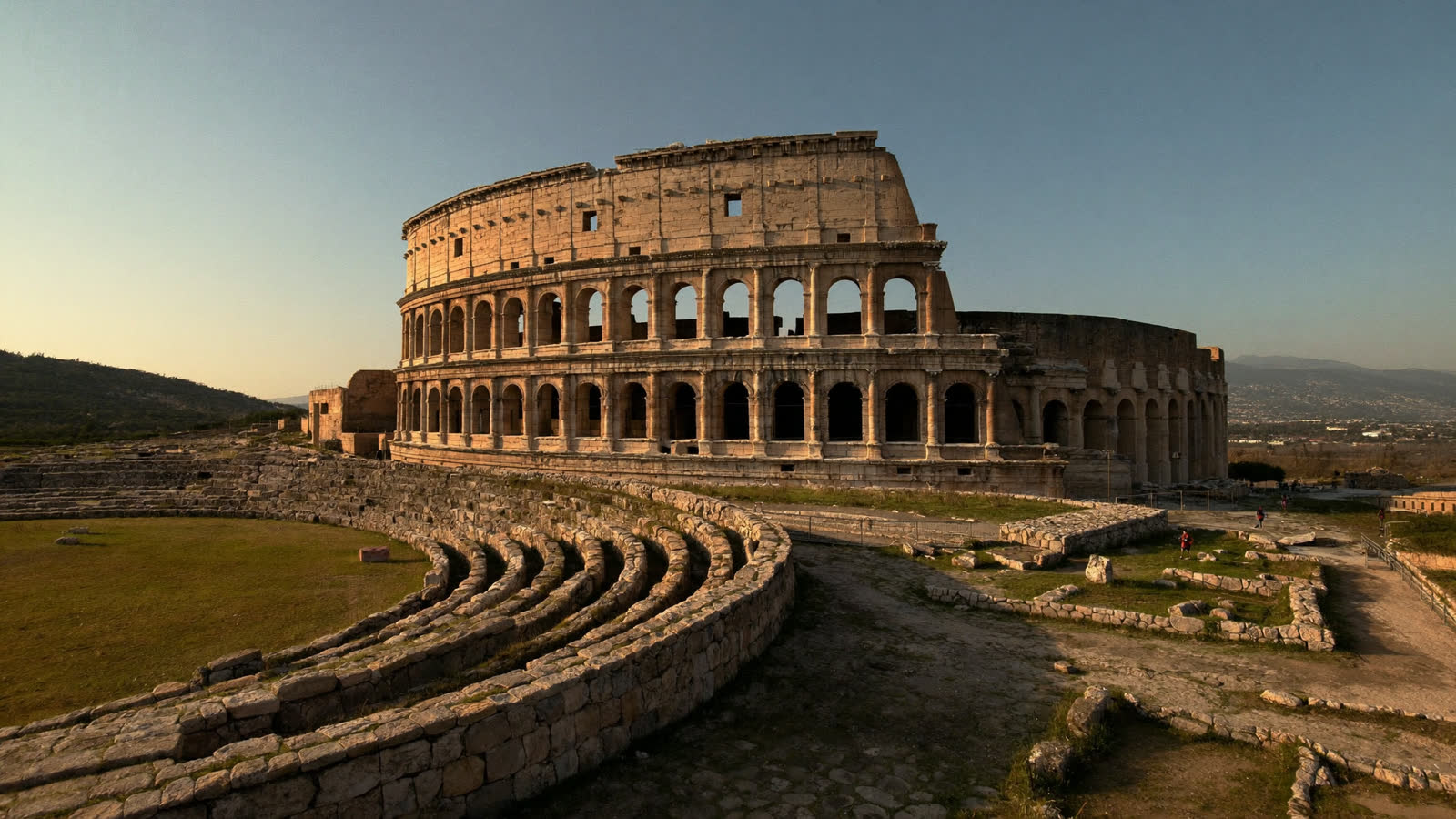
The sacred city above Map deserves two unhurried hours: the restored Roman theatre with its sculpted stage building is among Anatolia's finest; the necropolis stretching north is one of the ancient world's largest cemeteries; the Plutonium — the "gate to hell" whose toxic spring vapours killed sacrificial animals — is a genuinely strange piece of history. A licensed private guide transforms all of it.
The Antique Pool
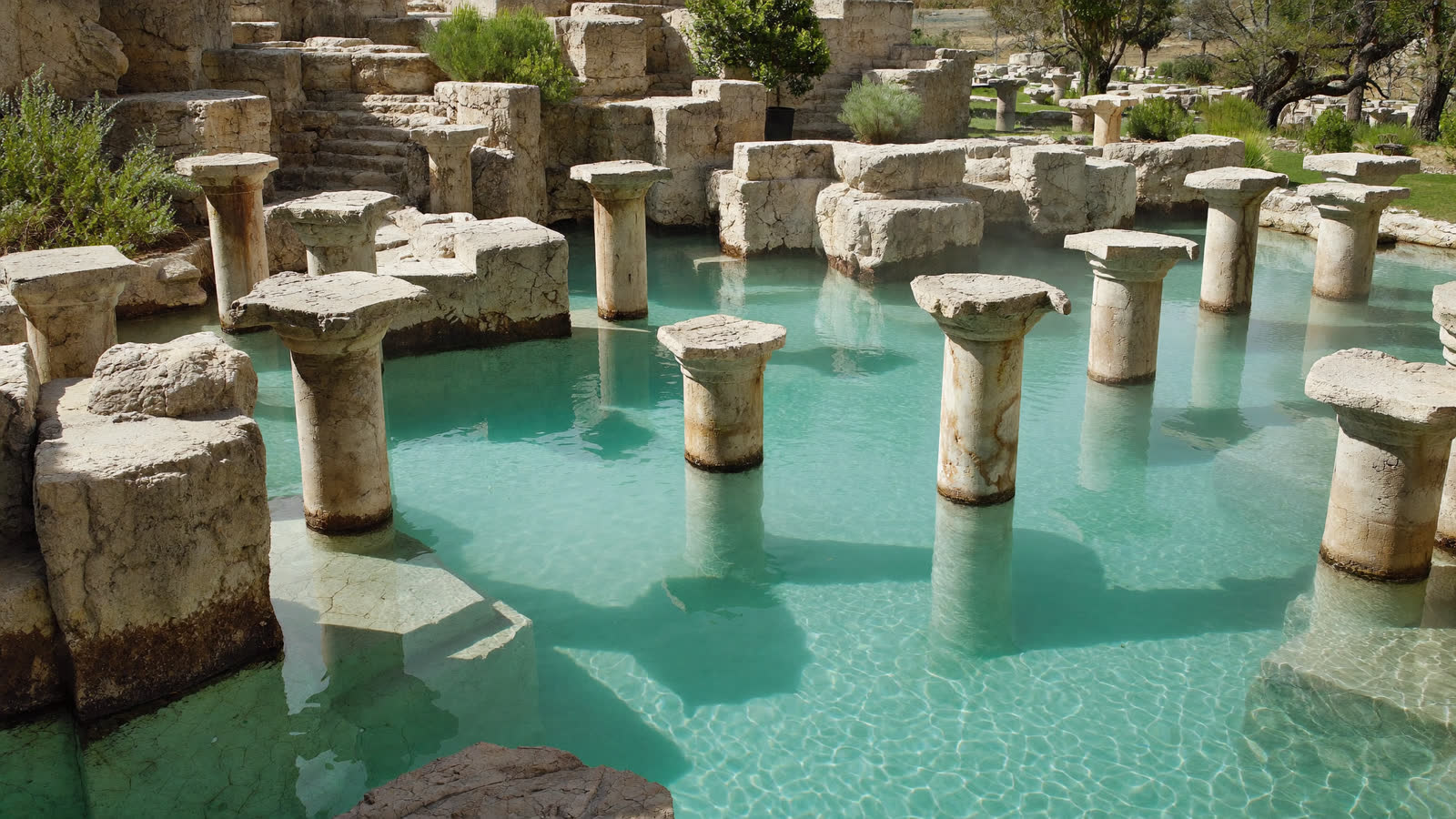
Cleopatra's Pool Map — reopened in 2026 after restoration — is the site's singular experience: warm, gently fizzing spring water over a jumble of fluted marble columns toppled by earthquakes centuries ago. Swim it at opening or in the last hour. Lockers and changing rooms exist; bring your own towel and swim shoes.
Karahayit's red travertines
Five minutes north, Karahayit Map runs the same geology in iron-oxide red — small, ten minutes, and the contrast photograph completes the set.
What should you eat?
Pamukkale's table is Aegean-Anatolian village cooking, and taken on its own terms it is one of the trip's quiet pleasures — this is not a Michelin destination and does not pretend to be.
The regional plate
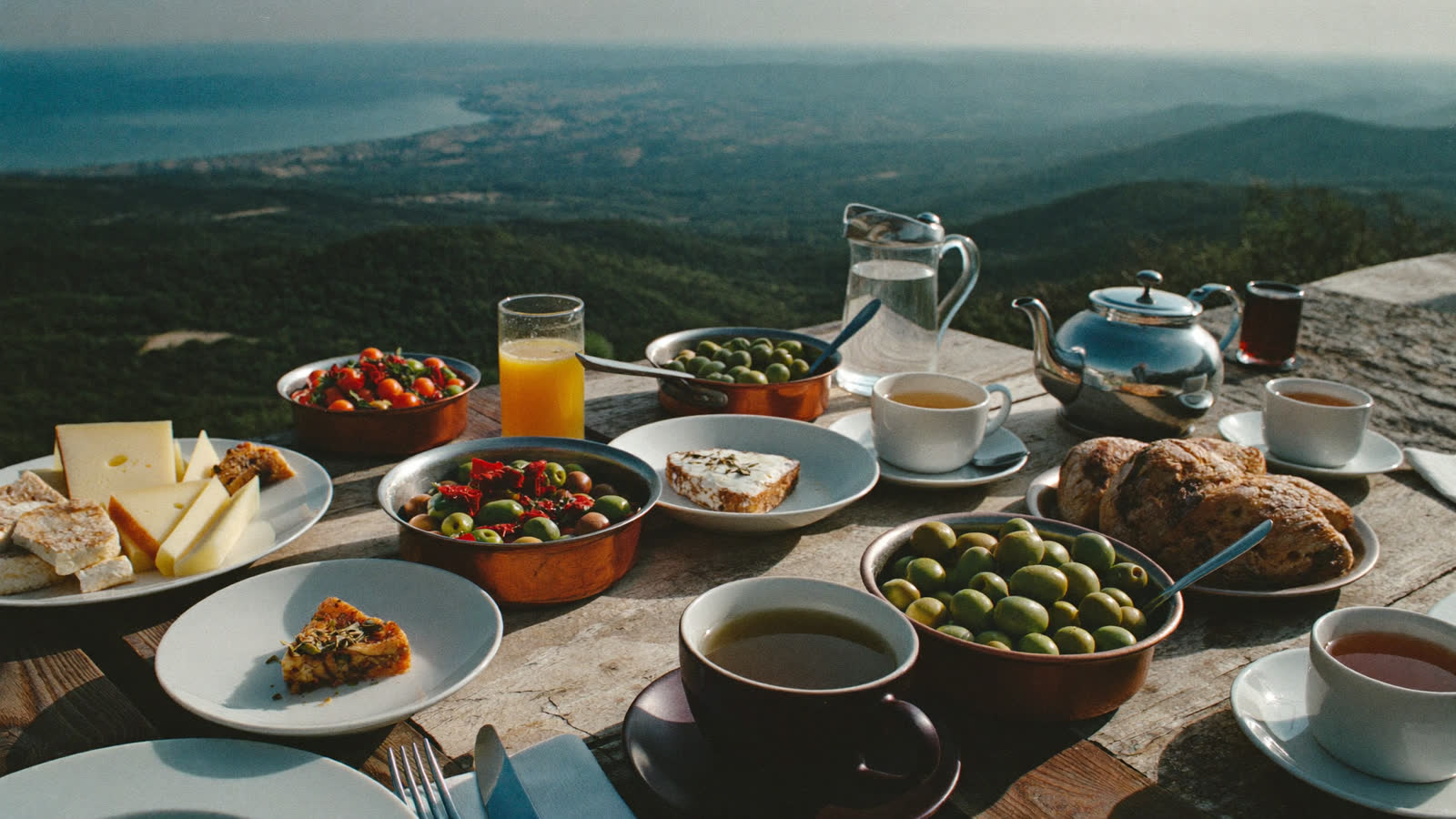
Denizli's countryside feeds the table: slow-cooked lamb tandır, gözleme rolled and griddled to order, village breakfasts of olives, honeycomb, clotted kaymak and a dozen white cheeses, and the Aegean's olive-oil vegetable meze. The local kebab tradition — Denizli kebabı, oven-roasted lamb served simply on flatbread — is the dish to seek out in town Map.
How we book it
The best dinners here are arranged, not discovered: a terrace table at your hotel facing the illuminated travertines, or a private village-house dinner our ground team sets up in the Lycus valley — bread from the tandır oven, the family's own olive oil, nobody else. Tell the desk which night.
What to drink
The Aegean hinterland grows serious grapes; ask for Turkish labels from Denizli and the Aegean — the local Çal district has made wine since antiquity. Fresh pomegranate juice at the site gates, çay always, and the thermal water itself — locals drink the Karahayit spring for its mineral content, though we suggest trusting the hotel's advice on that one.
Where is the luxury insider layer?
Pamukkale's insider layer is access, timing and the sites nobody adds — the things a ground team delivers and a coach tour cannot.
Aphrodisias — the connoisseur's site
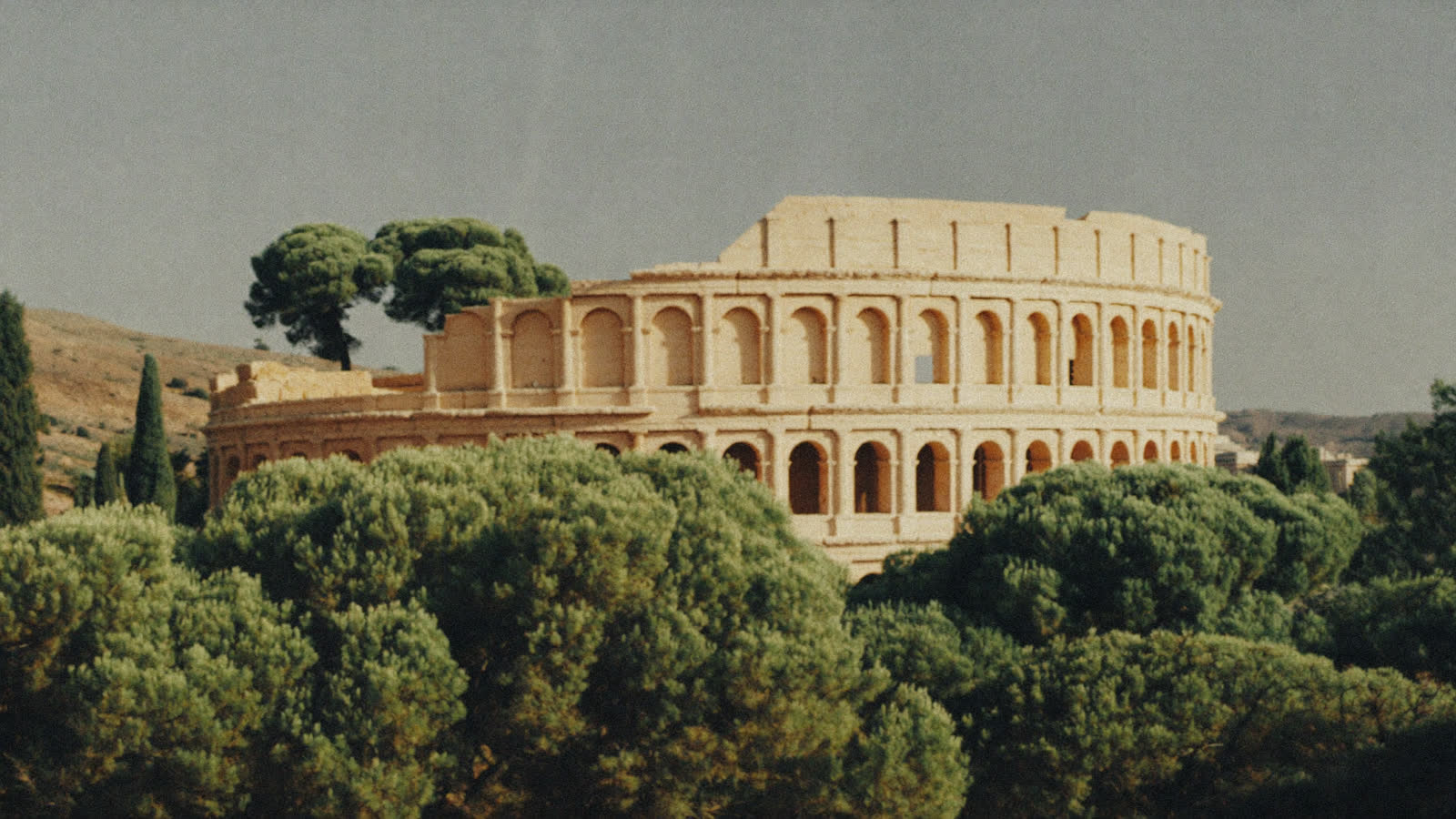
Ninety minutes southeast, Aphrodisias Map is the day that separates travellers from tourists: a UNESCO-listed city of marble with a 30,000-seat stadium — the best-preserved in the classical world — the Sebasteion's carved reliefs, and a sculpture museum of world rank. It receives a fraction of Ephesus's traffic. Go mid-morning with a private guide and lunch in the village; you will have the stadium to yourselves for whole minutes at a time.
Laodicea & the deep-cut circuit
Laodicea Map — one of the Seven Churches of Revelation, under active excavation with colonnaded streets re-erected — sits ten minutes from Denizli and thirty from your hotel. The truly thorough add Colossae's unexcavated mound. Between them, the Lycus valley holds a full second day of antiquity most visitors never learn exists.
Private access & the photographer's file
Our ground team arranges licensed private guides for dawn entry at the south gate, vehicle transfers between gates so the walk always runs downhill, and — for photography clients — the timing sheet that matches each terrace group to its best light. Drone rules over the site change; we confirm current permissions per date rather than guessing.
The wider swing
Pamukkale slots naturally into a western Türkiye arc: Istanbul's palaces, then Denizli, then either the Antalya coast (3.5 hours by road) or Bodrum's marinas. As a two-night interlude between coast and city, it is the single highest-yield detour in the country.
Practical notes
Fly Dubai–Istanbul (about 4.5 hours), connect to Denizli Çardak (DNZ, one hour), then 50 minutes by road to Pamukkale — we run the whole chain with a driver holding a name board at DNZ. The road alternative from the Antalya coast is 3.5 hours through honest mountain scenery.
Carry lira for the village; the site and hotels take cards, and site fees are quoted in euros. Pack swim shoes, a hat, and a dry bag for phones on the terraces. UAE passport holders enter Türkiye visa-free; other nationalities check e-visa rules per passport.
Book in this order: the two hotel nights, the balloon (first morning), the Antique Pool day, Aphrodisias with guide and driver. Then hold to the golden rule that organises this entire file: be on the travertines when the coaches are not.
Every experience above can be arranged, reserved and chauffeured for you — free, by your dedicated Dubai-based specialist.
Plan my Pamukkale journey