The Langkawi Little Black Book
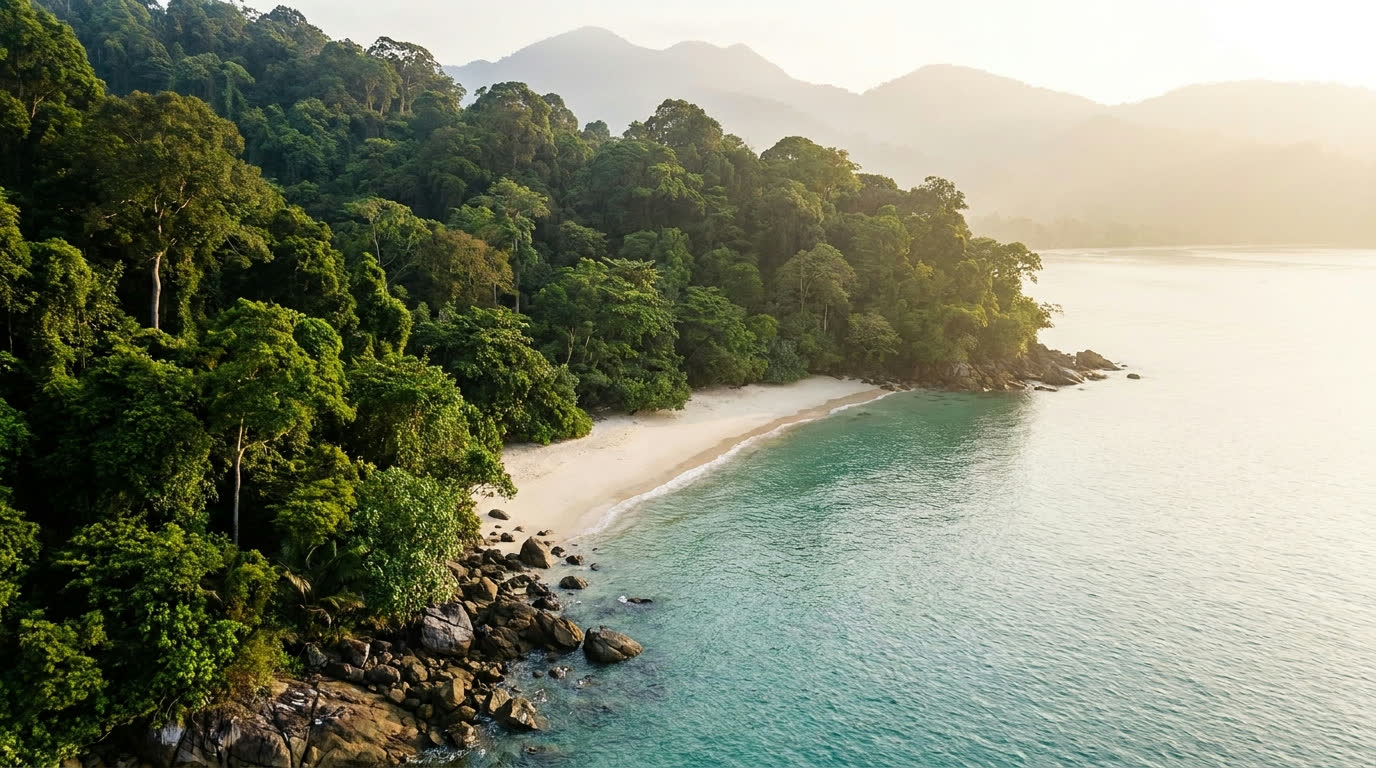
Most tropical islands sell you a beach. Langkawi sells you a rainforest that was already ancient when the Himalayas were forming — and then adds the beach. Hornbills cross the breakfast terrace. Monkeys audit the minibar arrangements. The sea stays bathwater-warm all year.
Seven hours from Dubai with one easy connection, Langkawi has quietly become our favourite answer to "somewhere green, somewhere quiet, somewhere the phone stops mattering". This is the island file from our Langkawi desk — and if you are weighing Indian Ocean alternatives, read it against our Seychelles guide.
What is Langkawi really like? What are the big adventures? What should you do day to day? Where should you stay? Which iconic spots deserve your time? What should you eat in Langkawi? Where is the luxury insider layer?
What is Langkawi really like?
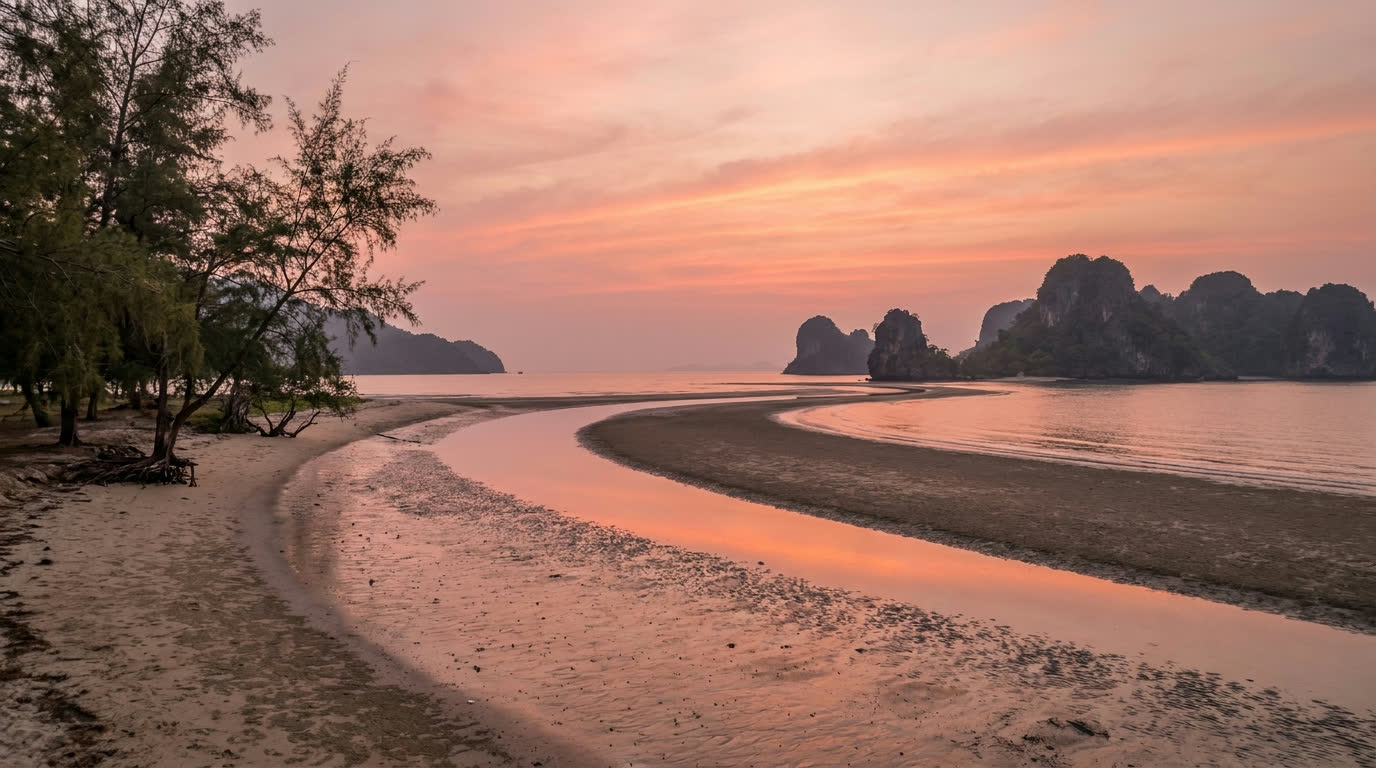
Langkawi is a 99-island archipelago off Malaysia's northwest coast, and the main island wears three different characters. The northwest — Datai Bay and the Machinchang range — is primeval: rainforest estimated at ten million years old, UNESCO Geopark limestone, resorts hidden so deep in canopy you hear them before you see them. The north — Tanjung Rhu — is the postcard: casuarina-backed white sand facing limestone islets. The southwest — Pantai Cenang — is the busy strip, and the correct amount of time to spend there is one dinner.
The island is rural Malaysia underneath the resorts: rice paddies, water buffalo, night markets that rotate villages through the week. Nothing here hustles. Even the eagles — the island is named for them — ride thermals like they have nowhere in particular to be.
Who suits it? Couples and families who want genuine nature with genuine comfort, at prices notably gentler than the Maldives for a higher biological dividend. Divers should look elsewhere; the Andaman here is calm and green rather than gin-clear. This is a canopy-and-bay island, not a reef island, and it is honest about it.
The practical detail that matters: resort geography is destiny. Datai Bay to Tanjung Rhu is 40 minutes by winding road; Cenang is 30 more. Choose one base and stay put — the island rewards depth, not circuits.
Every address above can be arranged, reserved and chauffeured for you — free, by your dedicated Dubai-based specialist.
Plan my Langkawi journeyWhat are the big adventures?
Three: the mangrove labyrinth at Kilim by private boat, the Machinchang ridge by cable car and canopy walk, and the rainforest itself with a naturalist who can make a strangler fig into an hour you remember. All are half days; none needs fitness.
Kilim Karst Geoforest Park
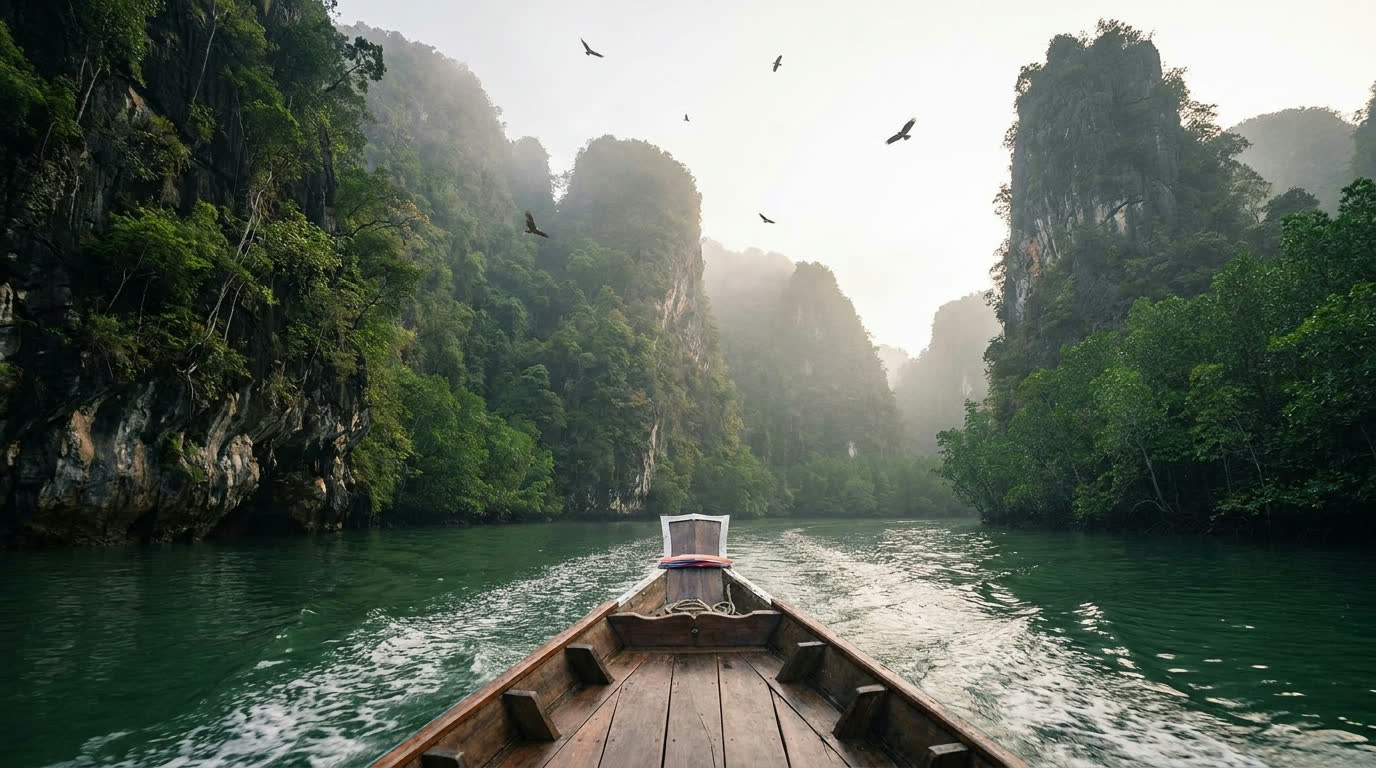
The island's northeast corner Map is a drowned limestone labyrinth: mangrove channels between cliffs, cave systems, macaques fishing at low tide, Brahminy kites overhead. Charter a private boat with a Geopark-licensed guide at 8am — the tour-boat flotillas start around ten — and insist on skipping the eagle-feeding stops, which the Geopark authorities discourage for good ecological reasons. Two to three hours, and the best wildlife morning on the island.
The SkyBridge & Machinchang
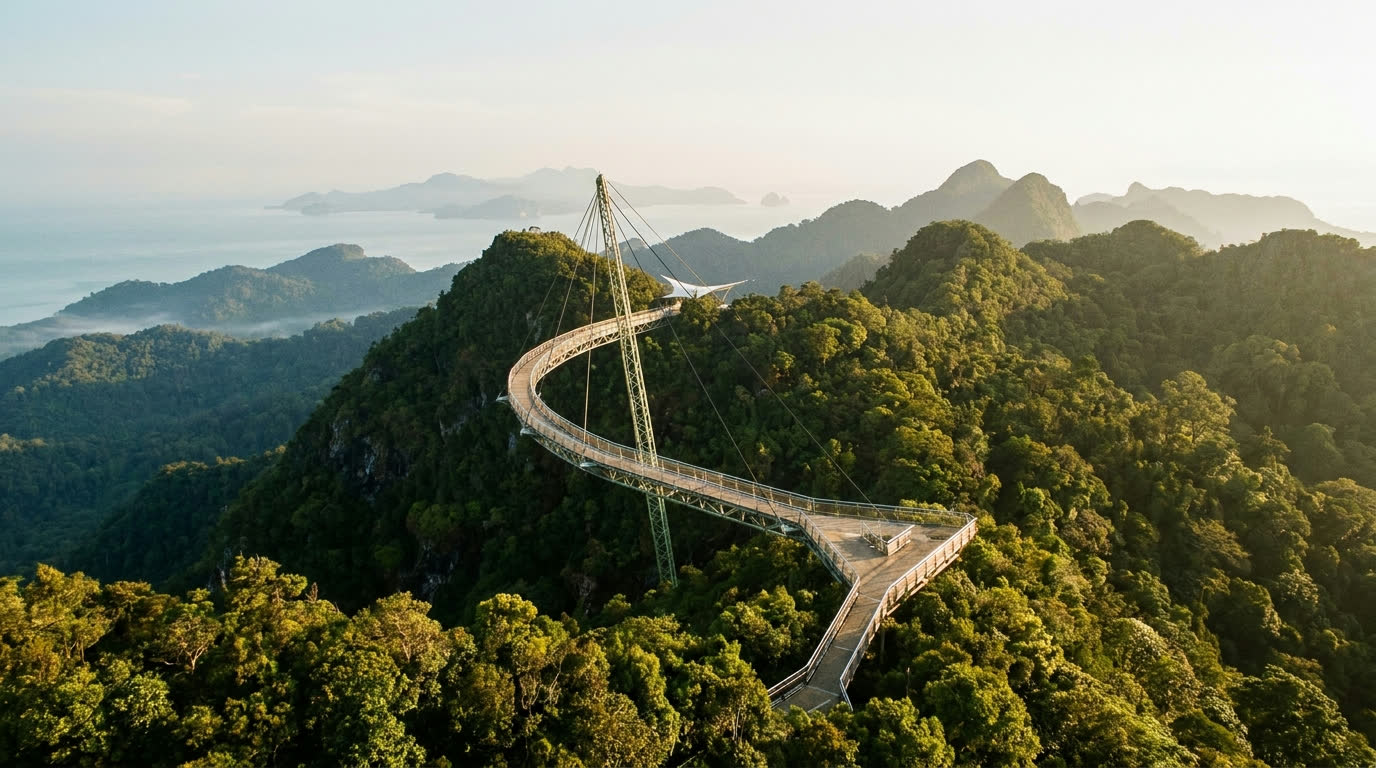
The Langkawi SkyCab Map climbs Machinchang's 550-million-year-old sandstone to the curved SkyBridge hanging 100 metres above the forest — on a clear morning you see Thailand. Buy the premium gondola to skip queues, go at opening, and check the weather window; clouds swallow the summit by afternoon in wet season.
The rainforest, read properly
The Datai and the Ritz-Carlton keep resident naturalists, and their guided walks — dawn birding, night safaris for colugos and slow lorises — turn the backdrop into the main event. The Datai's nature centre programme is the island's benchmark; book the small-group dawn walk on your first morning and the rest of the stay makes more sense.
What should you do day to day?
Langkawi days are two-act structures: one gentle excursion in the morning, then the bay from noon. Five nights is the right length; a week if the villa has its own pool and you intend to use it seriously.
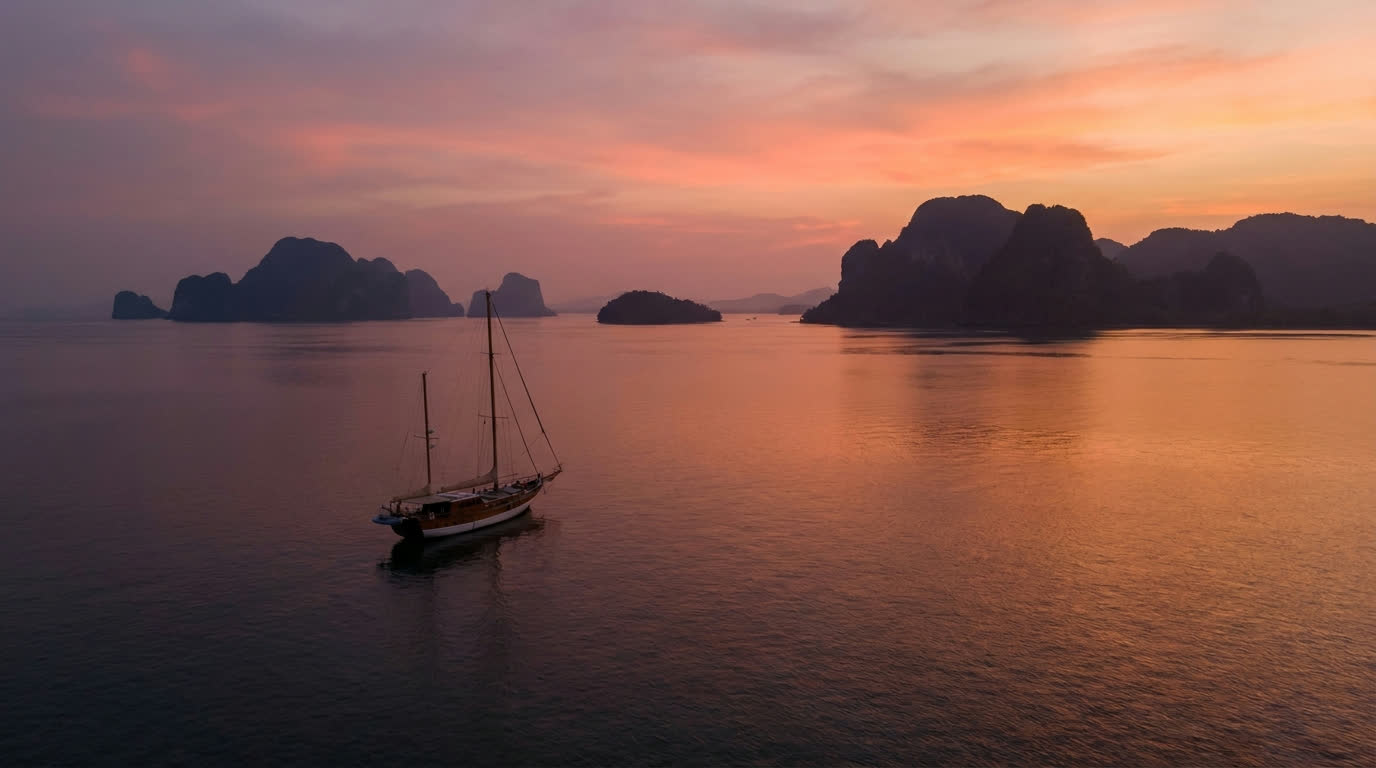
The rotation: Kilim one morning, SkyBridge another, a third for the island hop to Pulau Dayang Bunting — the freshwater Lake of the Pregnant Maiden inside a limestone island Map — and a fourth for doing nothing at all, which the island considers a legitimate activity. Sunset belongs on the water: the yacht-charter operators out of the southern marinas run evening sails with the limestone islands going black against orange.
For families: the cable car, the mangrove boat (children treat it as a real-life jungle cruise, correctly), and the resorts' kids' programmes — Four Seasons' nature-focused one is particularly good. For couples: a private sandbank picnic arranged by the resort, the spa double-session, and Kayuputi at sunset. The night markets — a different village each evening Map — are the local texture: go hungry, bring small notes, eat the satar and the apam balik.
Where should you stay in Langkawi?
Four resorts, four coves, four philosophies — and the island's luxury map is essentially complete once you know them. The Datai is the icon, Four Seasons owns the best beach, St. Regis the best table, Ritz-Carlton the newest polish.
| Resort | Tier | Setting | Best for |
|---|---|---|---|
| The Datai Langkawi | Ultra | Ancient rainforest, Datai Bay | Nature, the icon |
| Four Seasons Resort Langkawi | Ultra | Tanjung Rhu beachfront | Beach, families |
| The St. Regis Langkawi | Luxury | Private cove near Kuah | Dining, suites, butlers |
| The Ritz-Carlton Langkawi | Luxury | Rainforest cove, southwest | Villas, seclusion |
The Datai Langkawi
The Datai Map is one of Asia's reference resorts: Kerry Hill architecture dissolving into old-growth canopy, with Datai Bay — a regular on world's-best-beach lists — at the bottom of the hill. Take a Rainforest Pool Villa if the point is immersion, a Beach Villa if it is the bay. Dinner at The Gulai House, reached by a jungle path with lanterns, is the island's most atmospheric table. Book the dawn nature walk before you unpack.
Four Seasons Resort Langkawi
Four Seasons Map spreads Moorish-Malay pavilions along Tanjung Rhu's mile of sand — the island's best swimming beach, backed by casuarinas and facing the karst islets. The beach villas with private pools are the family sweet spot, and the adult quiet pool solves the school-holiday equation. The spa, in its own bamboo-shaded compound, is a destination in itself.
The St. Regis & The Ritz-Carlton
The St. Regis Langkawi Map compresses the grand-suite-and-butler formula into a private cove ten minutes from the airport — with Kayuputi over the water as its ace. The Ritz-Carlton Langkawi Map stacks rainforest villas down to its own beach on the southwest coast; the over-water spa pavilions are the argument for choosing it.
Rainforest or beachfront? Our specialists match the cove to the trip — and hold the villas that actually face the sunset.
Design my stay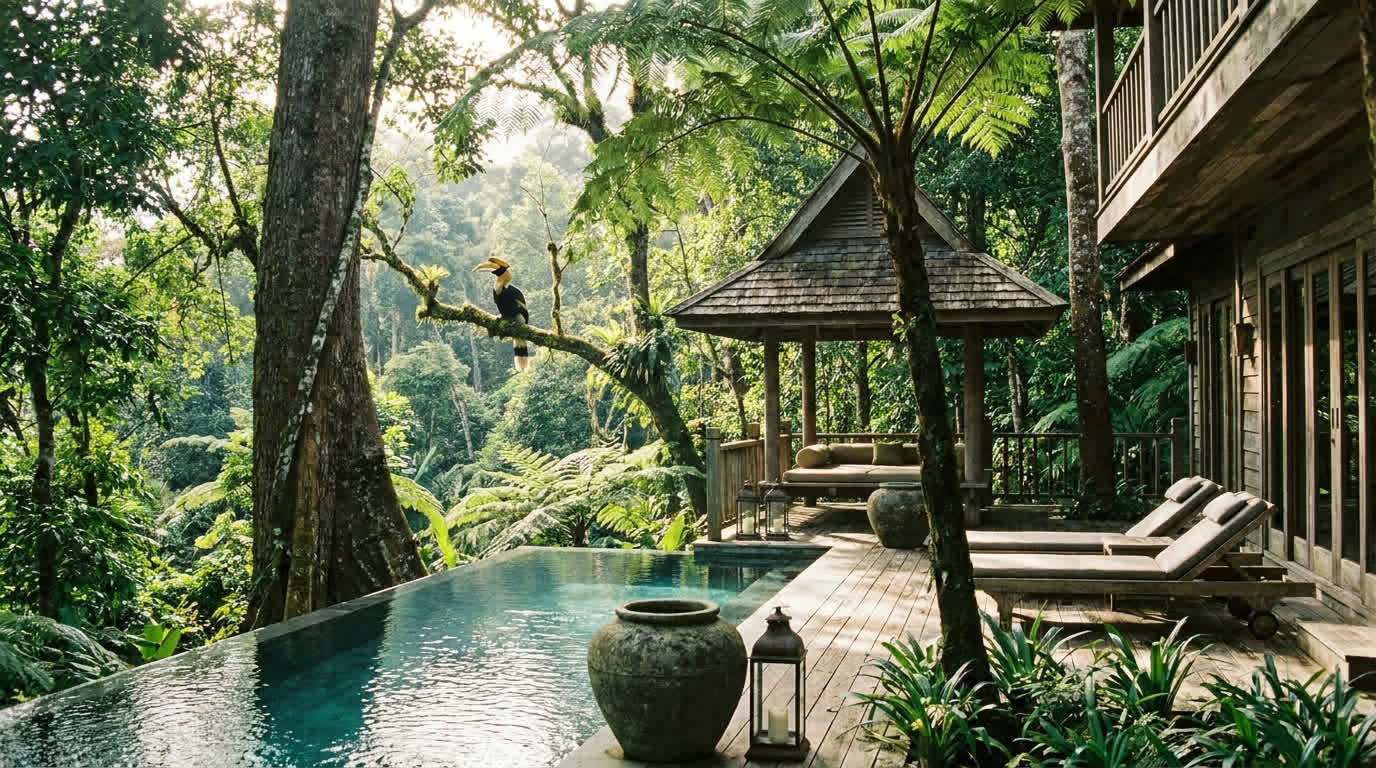
Which iconic spots deserve your time?
Langkawi's icons are natural rather than built, and the ranking is simple: Datai Bay, Tanjung Rhu, the SkyBridge, Kilim, and the Dayang Bunting lake. Each has one right hour and one wrong crowd, and the resorts' boats and cars solve most of it.
Tanjung Rhu & Datai Bay
Tanjung Rhu Map at low tide extends into sandbars you can walk far out onto — go at dawn when the karst islands float on pink water. Datai Bay Map is effectively private to its two resorts; the sea here is calmest May to September. Neither needs anything from you except presence.
Eagle country
The island's name likely derives from helang — eagle — and the Brahminy kites and white-bellied sea eagles are everywhere once you look up. The best viewing is from the water in Kilim, not the concrete Eagle Square statue in Kuah Map, which is a photo stop at most, best seen from the deck of a departing yacht.
Telaga Tujuh — Seven Wells
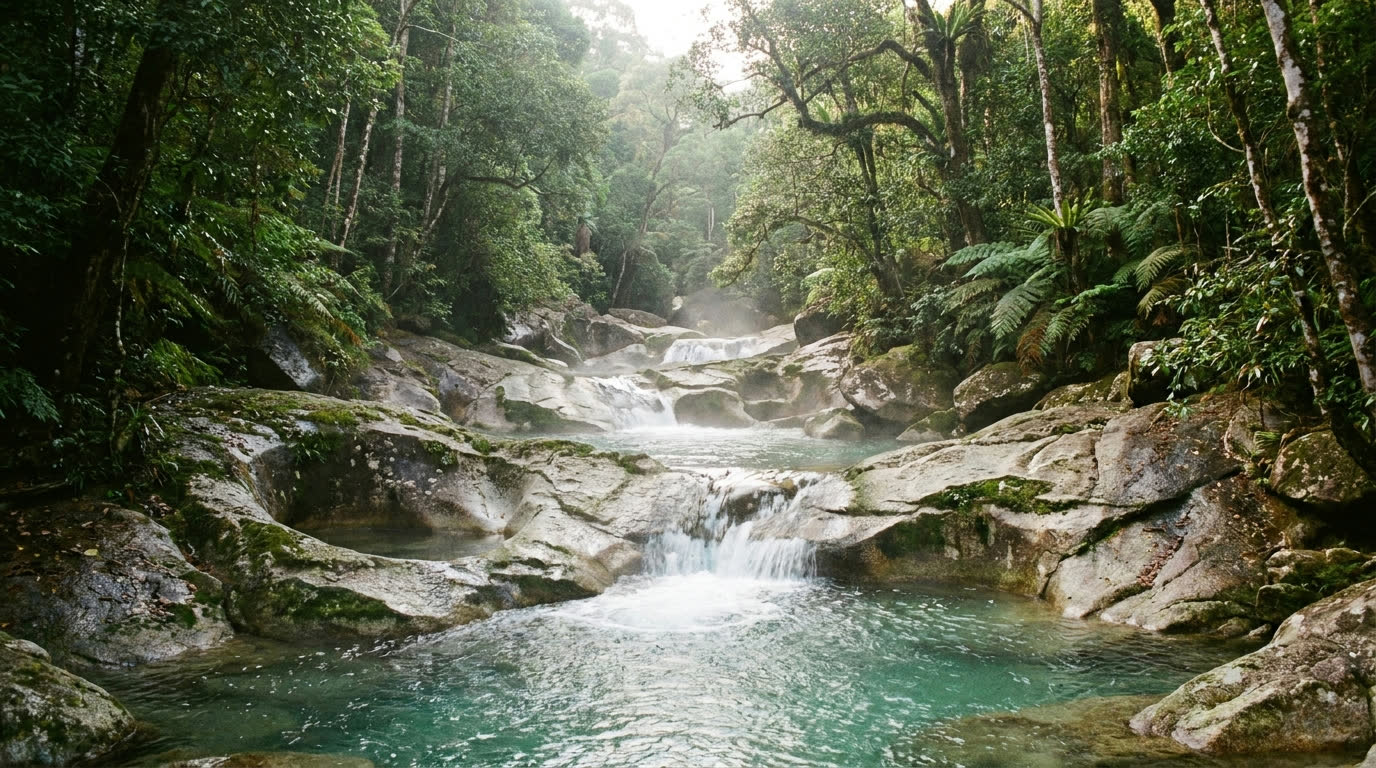
Behind the cable-car station, the Seven Wells waterfalls Map cascade through smooth granite pools you can sit in — a 15-minute forest climb that most cable-car visitors skip, which is precisely its charm. Go in the morning before the day heats; the dusky langurs in the trees above are part of the deal.
What should you eat in Langkawi?
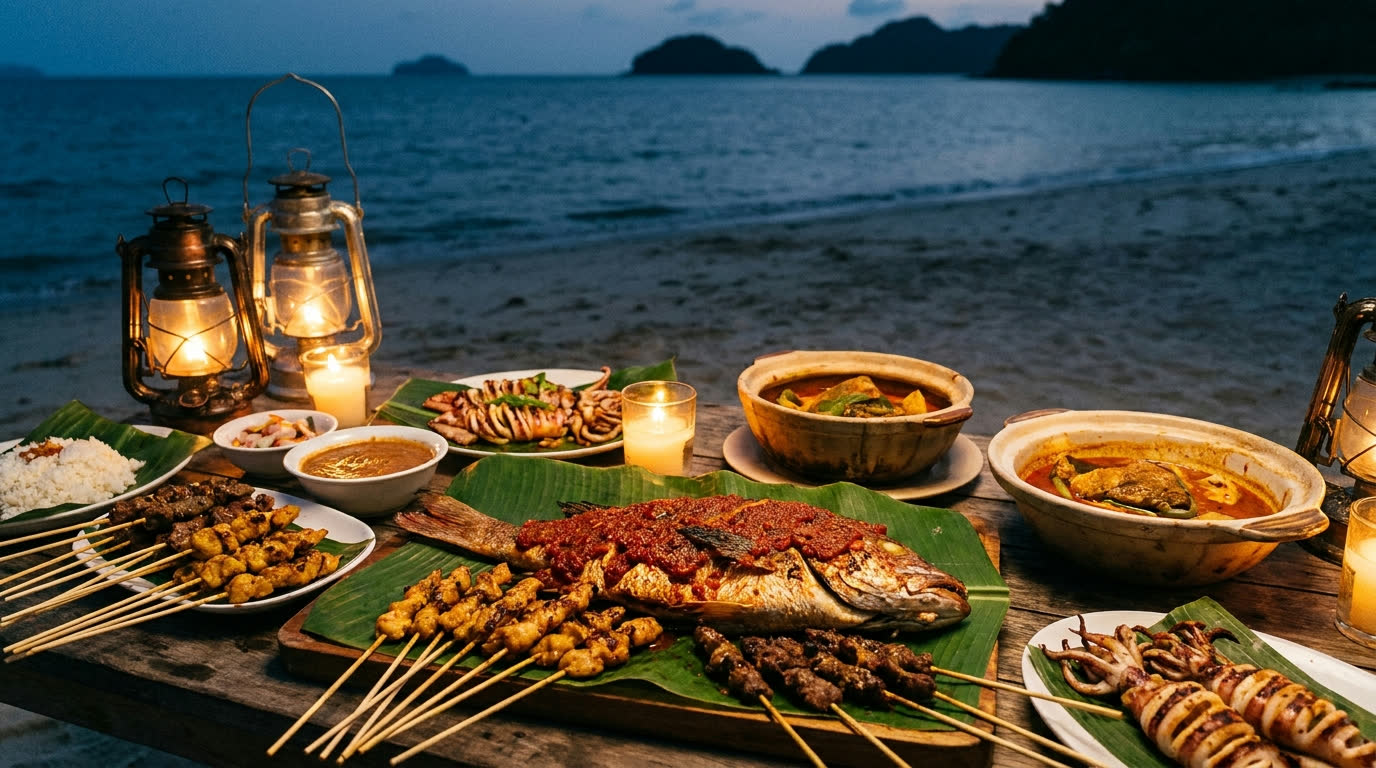
The island eats Malay with Thai and Indian accents: laksa sharp with tamarind, satay off charcoal, whole fish in sambal, roti canai for breakfast if you have any sense. The resort tables handle the refined register; the night markets handle the true one. Do both, alternating.
The destination tables
Kayuputi at The St. Regis Map is the island's headline dinner: an over-water pavilion styled as an art collector's beach house, Asian-fusion tasting menus, and a sunset the resort rightly brags about. Book the western rail. The Gulai House at The Datai Map serves Malay and Indian classics — the beef rendang and the tandoor breads — in an open-sided timber house deep in the trees; the lantern walk in is half the memory. At Four Seasons, Ikan-Ikan does Malay seafood barefoot-elegant by the beach.
Island institutions
The night market rotation is the local kitchen: Thursday at Bohor Tempoyak, Saturday at Kuah, each village taking its turn. Eat laksa Kedah, grilled stingray, apam balik off the griddle. For a sit-down local lunch, the long-running seafood houses of Pantai Cenang and Kuah do chilli crab and butter prawns without ceremony — ask your driver for his current favourite and trust him; ours has been right three years running.
Duty-free logistics
Langkawi's island-wide duty-free status makes wine and spirits a fraction of mainland prices — rare for the region. Stock the villa on arrival day at the Kuah emporia Map, because resort wine lists price at resort logic. Your driver knows this errand well; it is the island's universal first-day ritual.
Where is the luxury insider layer?
Langkawi's private layer is quiet by design: chartered water, buyout-scale villas, and spas built where the jungle does the soundproofing. Nobody comes here for a scene; they come here to be unreachable in comfort, and the island is exceptionally good at it.
The water, chartered
Private yacht and catamaran charters run from the southern marinas — Telaga Harbour and Royal Langkawi Yacht Club Map — for sunset sails, island-hopping to the Dayang Bunting group, or full-day runs to empty sandbars with lunch aboard. The archipelago's 99 islands mean a competent skipper can always find you a beach with nobody on it. That sentence is the whole Langkawi pitch, really.
Spa & wellness
Three of the island's spas justify the flight alone: The Datai's rainforest treatment pavilions beside a running stream, the Ritz-Carlton's over-water treatment rooms, and the Four Seasons' bamboo-walled compound with its Yogyakarta-lineage therapists. Book the long treatments for late afternoon, when the cicadas start; the jungle provides the soundtrack the city spas fake.
Seclusion & working stays
For full disappearance, the top villas do what private islands do at half the logistics: The Datai's Villas with pools deep in canopy, the Ritz-Carlton's Villa Mutiara tier, and — for buyouts — the private-estate rentals around Datai and Tanjung Rhu that come staffed. Resort connectivity is strong enough for working stays; the rainforest villas at The Datai have hosted more than one quiet month-long remote-working retreat we have arranged.
Cigars & evenings
Evenings are low-key by design: the St. Regis bar keeps the island's most serious drinks programme (and accommodates cigar smokers on the terrace — ask the butler), The Datai's bar does single malts over the canopy, and the correct nightcap venue is your own villa deck, duty-free bottle open, geckos commentating. Langkawi does not do late; it does early mornings instead, and after the first Kilim dawn you will understand the trade.
Langkawi's genius is restraint. It never overbuilt, never chased the party crowd, and kept its ten-million-year-old asset intact. Give it five nights, one cove and a naturalist's dawn walk, and it gives back the rarest resort commodity: actual quiet.
Every address above can be arranged, reserved and chauffeured for you — free, by your dedicated Dubai-based specialist.
Plan my Langkawi journey