The Kyoto Little Black Book: Temples, Kaiseki and the Quiet Hours
Kyoto was Japan's capital for a thousand years and never quite forgave Tokyo for taking the job. What remains is the densest concentration of beauty in Asia: seventeen UNESCO sites, sixteen hundred temples, the last working geiko districts, and a food culture that treats a June pea with the gravity other cities reserve for caviar. It is also, at the famous sites at the famous hours, extremely crowded. The whole art of Kyoto is timing. Our Kyoto concierge page holds the summary; what follows is the method.
The method fits in one line. Dawn and dusk belong to you; ten-to-four belongs to the tour buses; plan accordingly.
What is Kyoto really like? The big adventures What to do day by day Where to stay The iconic spots What to eat The luxury insider layer
What is Kyoto really like?
Kyoto is a working city of 1.4 million that happens to be custodian of Japan's classical culture — tea, incense, textiles, court cuisine, garden design — all still practised at professional depth by families in their tenth generation. It rewards slow, curious travellers and couples above groups; it flattens itinerary-maximisers, because its best moments refuse to be scheduled tightly.
Etiquette is the entry fee and it is light: shoes off where indicated, voices down in temples, no photographs of geiko and maiko without consent (Gion's private lanes now enforce this with fines), cash still useful at small shops and shrines. Nobody expects you to be Japanese. Everyone notices whether you try.
Seasonality is close to tyranny. First week of April, the Kamo river turns into a pink corridor; mid-November, the temple gardens burn crimson. Those fortnights price and book like Formula One weekends. May and October deliver ninety per cent of the beauty with half the elbows, and winter — bare gardens, kaiseki at its most austere, the odd snowfall on Kinkaku-ji — is when the connoisseurs come. Summer is humid, saved by the riverside kawadoko dining platforms up in Kibune.
Every address in this guide can be reserved, sequenced and chauffeured for you — free, by your dedicated Dubai-based specialist.
Plan this journey with your free conciergeWhat are the big adventures around Kyoto?
Kyoto's adventures are gentle but real: mountain-to-village walks, river gorges and the northern countryside. Three earn a place on a first itinerary.
Kurama to Kibune
Thirty minutes north by the little Eizan railway, a two-hour forest trail climbs over Mount Kurama — birthplace of reiki, temple halls strung up the mountainside — and drops into Kibune, a one-lane village over a rushing stream Map. In summer, restaurants build kawadoko platforms directly over the water and serve lunch above the current. Finish at Kurama Onsen's outdoor bath if your knees vote for it.
The Hozu river and Arashiyama
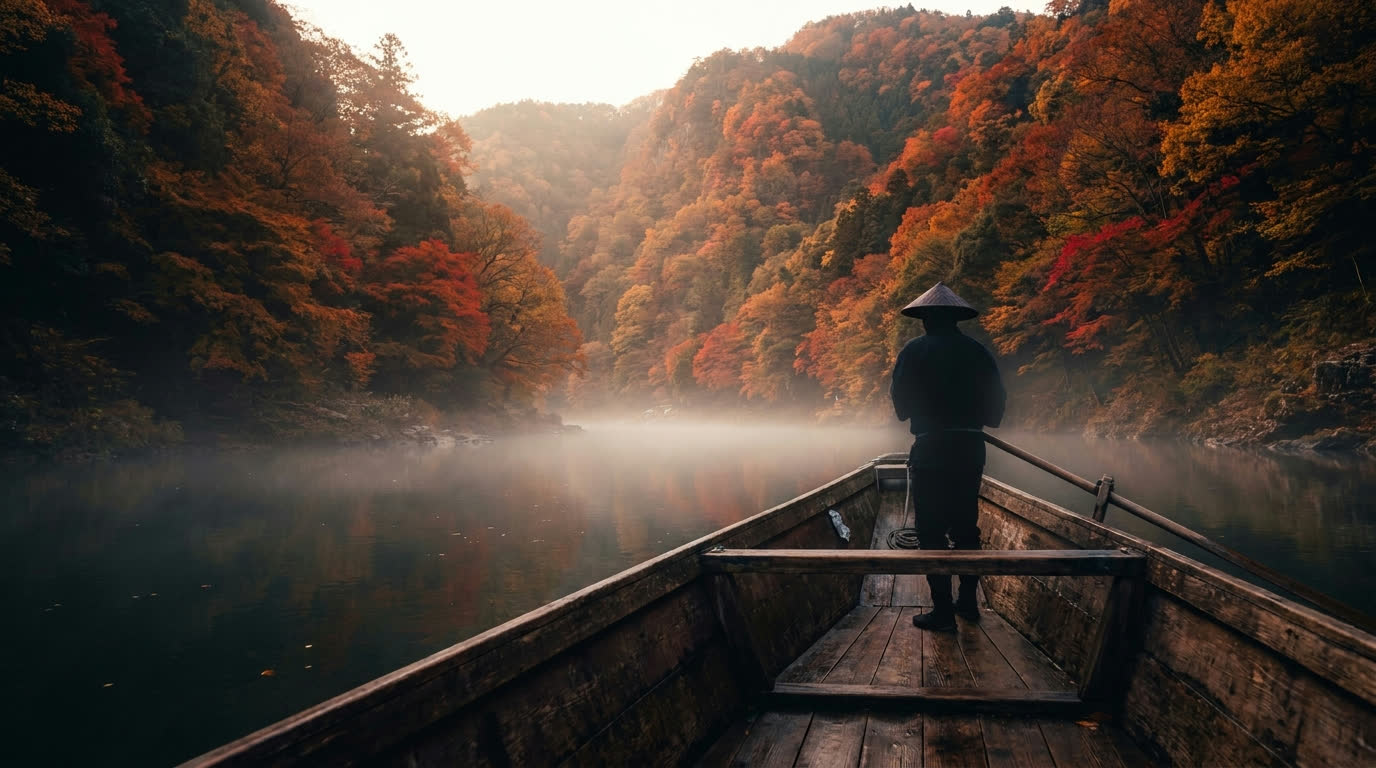
Traditional flat-bottomed boats run the Hozugawa gorge from Kameoka down to Arashiyama — two hours of forested rapids, herons and boatman banter Map. Pair it with the Sagano scenic railway up the same gorge in open carriages. In autumn this is the single best half-day in the region; book the first boat.
By bicycle
Kyoto is flat, gridded and courteous — the best cycling city in Japan. The Kamo river path runs traffic-free from the northern suburbs to the station; an e-bike morning covering the Philosopher's Path, Ginkaku-ji and Nanzen-ji beats any coach tour ever devised. We arrange guided rides with temple entries pre-sequenced.
What should you do day by day in Kyoto?
Four nights minimum; five lets you breathe. Structure each day as one dawn set-piece, one deep visit, one crafted evening — never more than three temples in a day, or they blur into one long verandah.
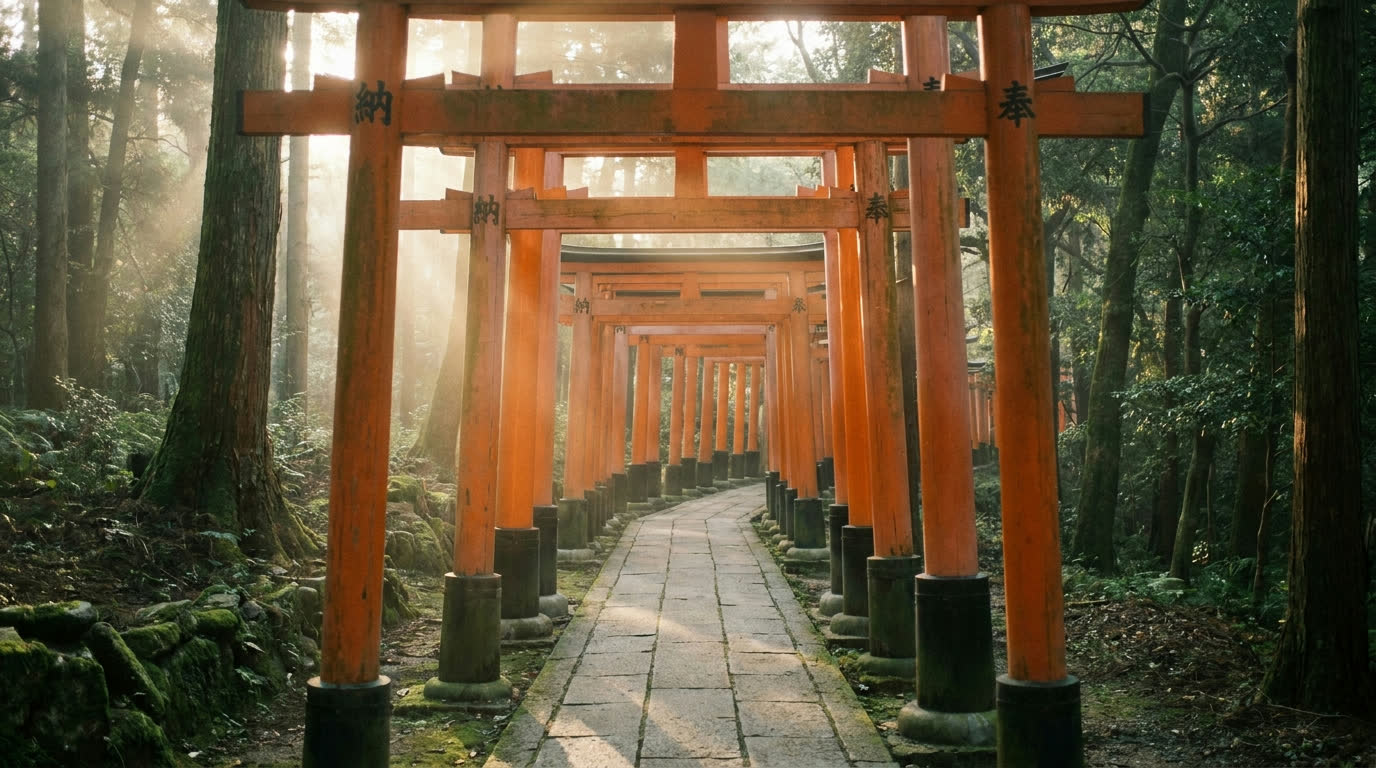
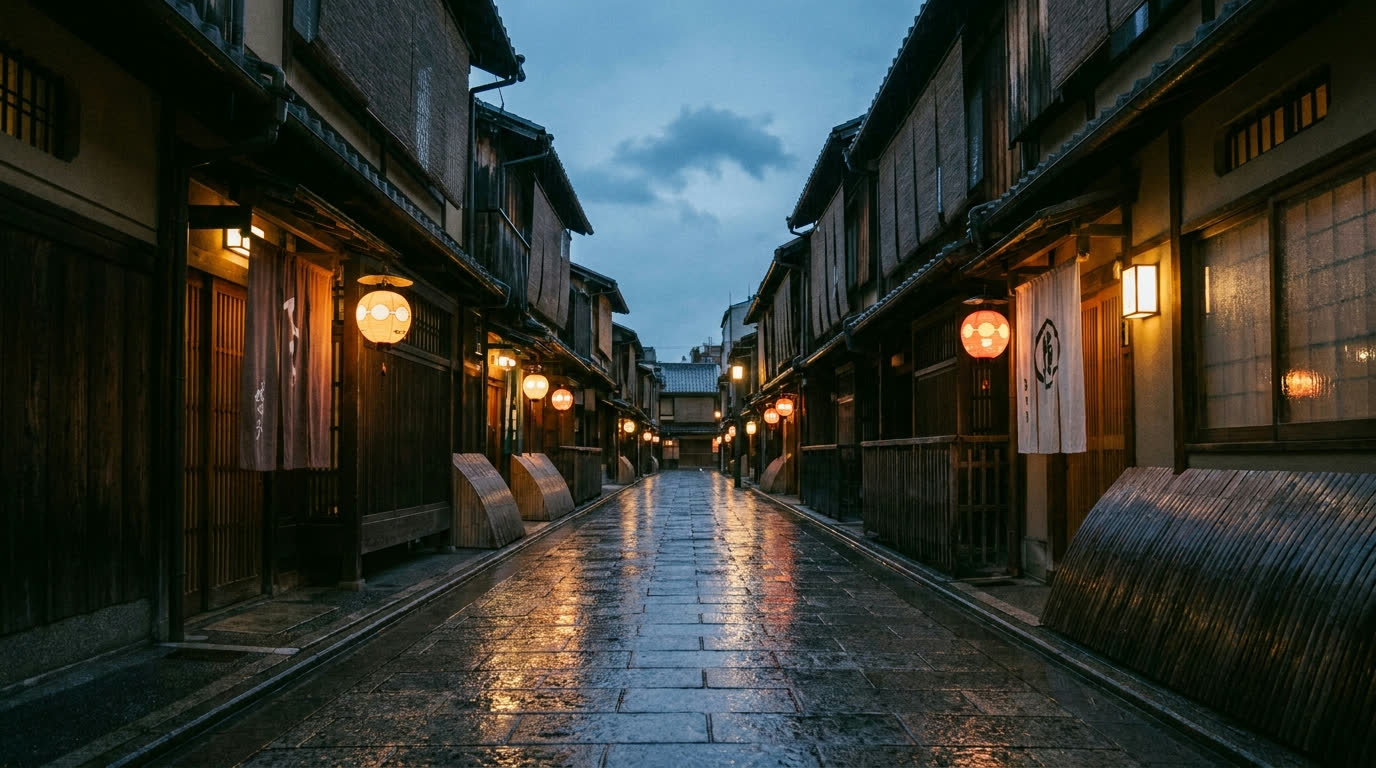
Day one: Fushimi Inari at 6:30am (below), then south to Tofuku-ji's Zen gardens. Afternoon tea ceremony with a private master. Evening walk through Gion as the lanterns come on.
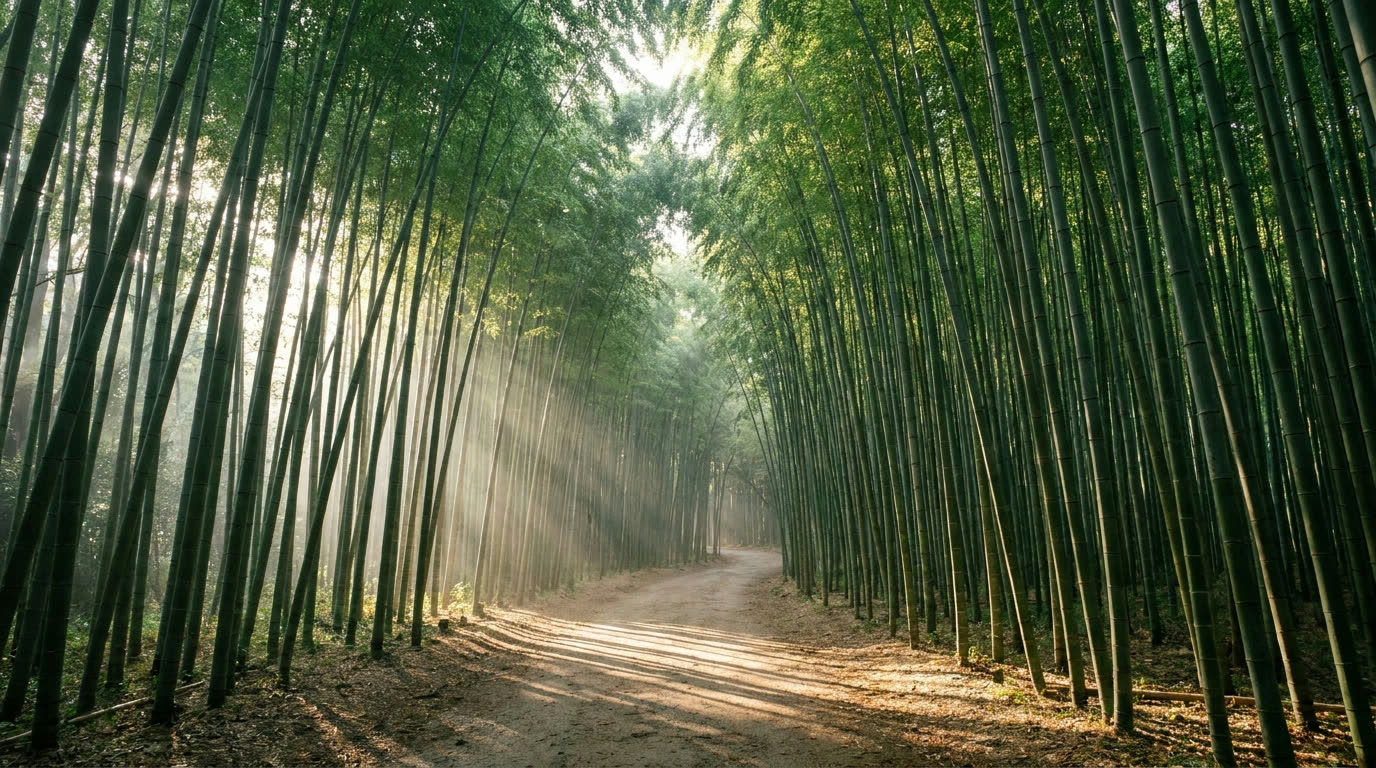
Day two: Arashiyama before 8am — bamboo grove, then Okochi Sanso villa (the garden the crowds skip; entry includes matcha) Map — Hozu boat or Tenryu-ji, kaiseki dinner.
Day three: the northwest set: Kinkaku-ji at opening, Ryoan-ji's rock garden while the tour groups are still at Kinkaku-ji, lunch of yudofu near Daitoku-ji, whose sub-temples hold the city's most severe and beautiful Zen gardens. Day four: Kurama–Kibune walk or a Nara day trip (the great Buddha and the bowing deer, 45 minutes away).
With children: the Arashiyama monkey park, the railway museum, ninja and samurai experience classes, and Nishiki Market's skewers-and-sweets crawl keep under-twelves genuinely engaged. Ryokan dinners test young patience; book those nights in hotels instead.
Where should you stay in Kyoto?
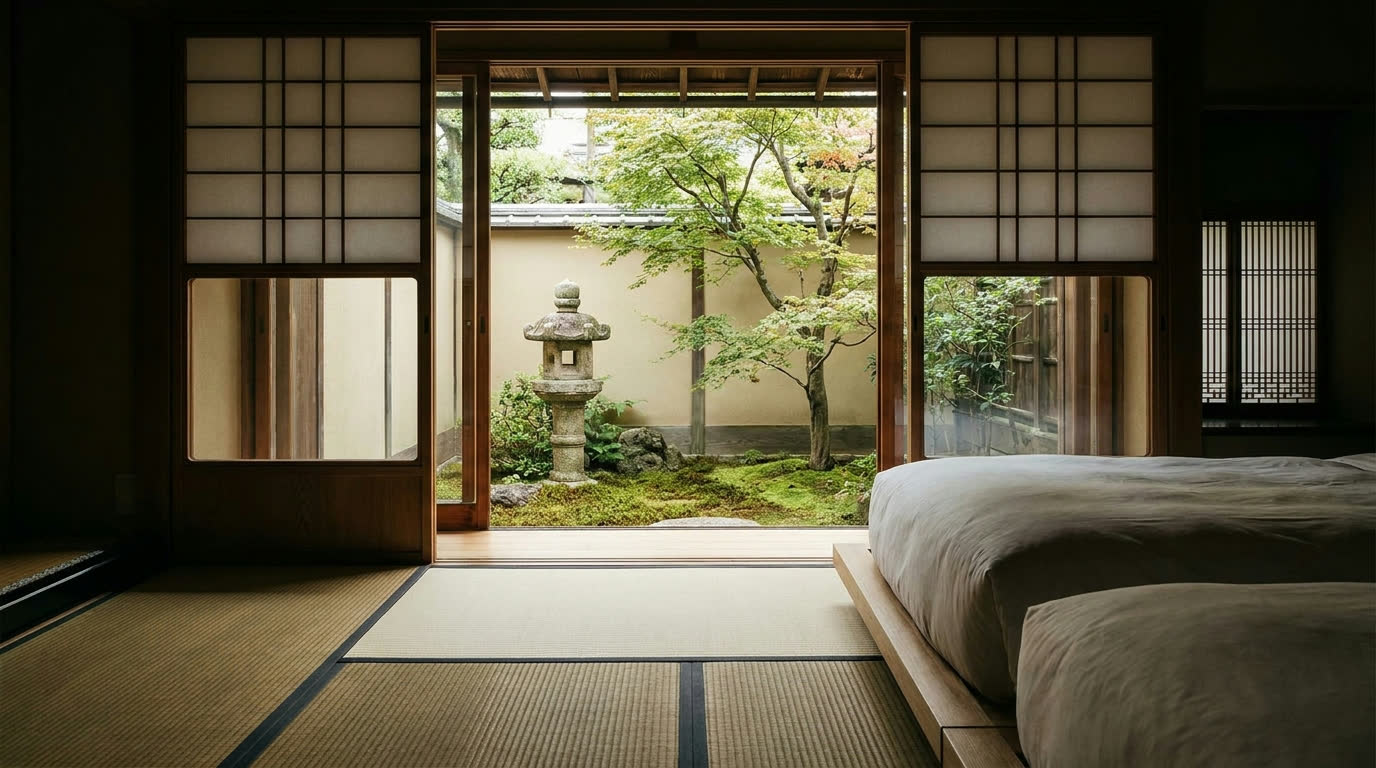
Split the stay: an international-grade hotel for the bulk, one or two ryokan nights for the depth-charge. Hotels cluster along the Kamo river and Higashiyama edges; the great ryokan hide in the centre behind unmarked doors.
| Property | Tier | Indicative from | Best for |
|---|---|---|---|
| Aman Kyoto | Ultra | ¥250,000/night | Secret moss garden in the northern forest |
| Hoshinoya Kyoto | Ultra | ¥180,000/night | Boat-access riverside ryokan at Arashiyama |
| Tawaraya Ryokan | Ultra | ¥120,000/night | The 300-year-old benchmark of Japanese hospitality |
| Four Seasons Kyoto | Luxury | ¥150,000/night | 800-year-old pond garden, best pool in town |
| The Ritz-Carlton Kyoto | Luxury | ¥160,000/night | Kamo riverfront, families done properly |
Aman Kyoto Map
Hidden in a forest garden below Mount Hidari Daimonji, on land once meant for a textile magnate's estate — mossy stone paths, minimalist pavilions, an onsen bath house among the maples. It feels rural and is eight minutes from Kinkaku-ji. Take the dawn walk the hotel offers to the Golden Pavilion before opening; that alone justifies the rate.
Hoshinoya Kyoto Map
You arrive by private boat up the Oi river to a 100-year-old former villa pressed against the Arashiyama gorge. Twenty-five rooms, water traffic for scenery, incense-blending classes at dusk. After the day-trippers leave, the gorge belongs to the hotel. The corner Tsukihashi rooms hear the river all night.
Tawaraya Map
Eighteen rooms, three centuries, no website — the ryokan by which all others are judged, host to everyone from Hirohito to Steve Jobs. Your maid remembers how you took tea yesterday. Cedar tubs, a private garden per room, kaiseki in-room at 6:30 sharp. We book it through our Japan partners; lead time matters more than money.
Every address in this guide can be reserved, sequenced and chauffeured for you — free, by your dedicated Dubai-based specialist.
Plan this journey with your free conciergeWhich iconic spots deserve your time?
All of the famous four — Fushimi Inari, Kinkaku-ji, Kiyomizu-dera, the bamboo grove — plus two the buses miss. The difference between magical and miserable at each is purely o'clock.
Fushimi Inari Taisha Map
Ten thousand vermilion torii climbing a sacred mountain, open 24 hours, free forever. At 6:30am you walk alone through tunnels of orange light with only the stone foxes watching; at 11am you queue to take a photograph of somebody else's photograph. Climb past the Yotsutsuji viewpoint — 90% of visitors turn back before it — and the upper loop is silent even in April.
Kinkaku-ji Map
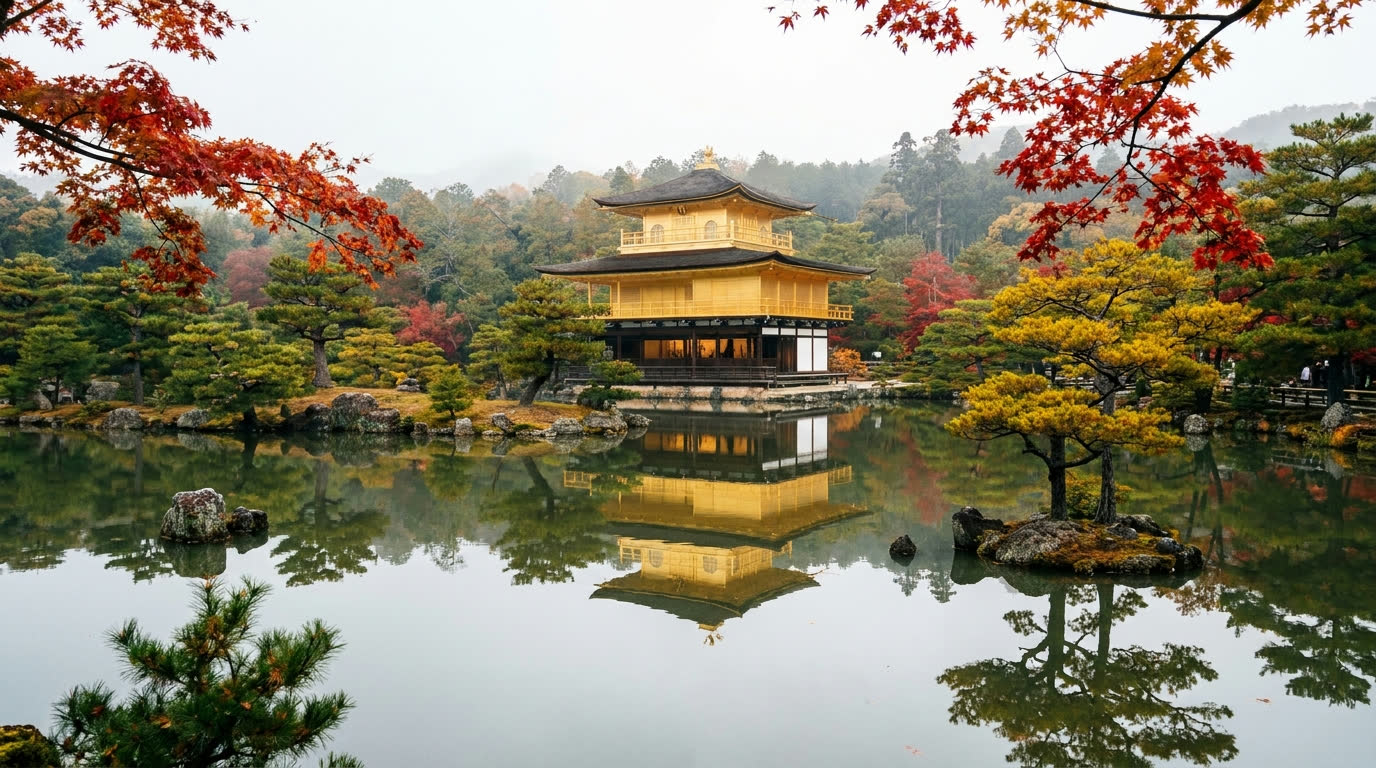
The Golden Pavilion is exactly as advertised — two floors of gold leaf doubled in a mirror pond. Be at the gate at 9:00 opening and walk directly to the pond's far viewpoint; you get the reflection still, before feet stir the koi. Twenty minutes suffices. Pair with Ryoan-ji's fifteen-stone garden ten minutes away, where the point is what isn't there.
Kiyomizu-dera and the Higashiyama lanes Map
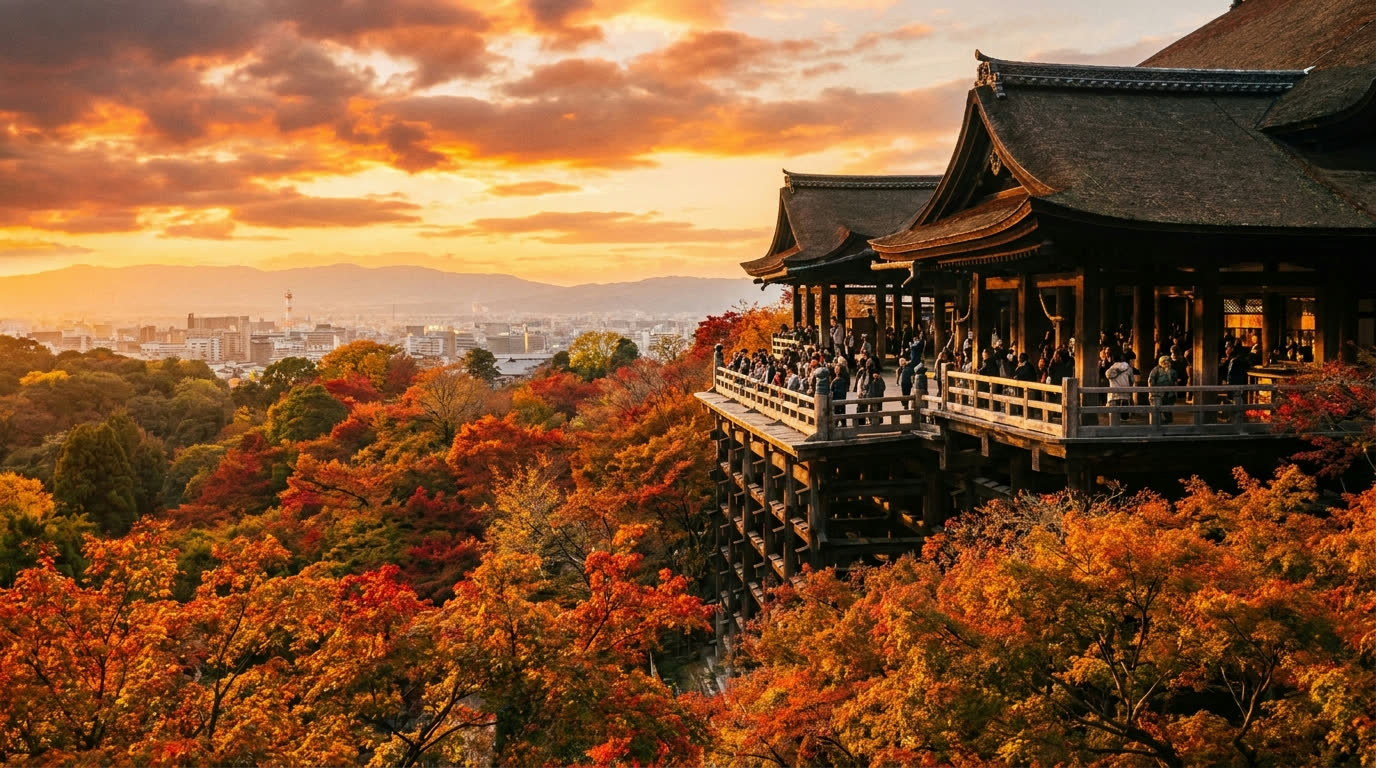
The great wooden stage juts over a maple valley with the city beyond — built without a single nail, rebuilt after fires for twelve centuries. Come for the last hour before closing when the light goes amber and the school groups have gone, then walk down through the preserved Sannenzaka and Ninenzaka lanes as the shops shutter. During the spring and autumn illuminations the temple reopens after dark; the night stage is worth rearranging dinner for.
The quiet two
Shisen-do, a poet's hermitage where you sit on tatami and listen to a bamboo water-hammer knock Map; and Daitoku-ji's sub-temple gardens, where tour buses cannot physically park. Both deliver the Kyoto people fly for, with nobody in it.
What should you eat in Kyoto?
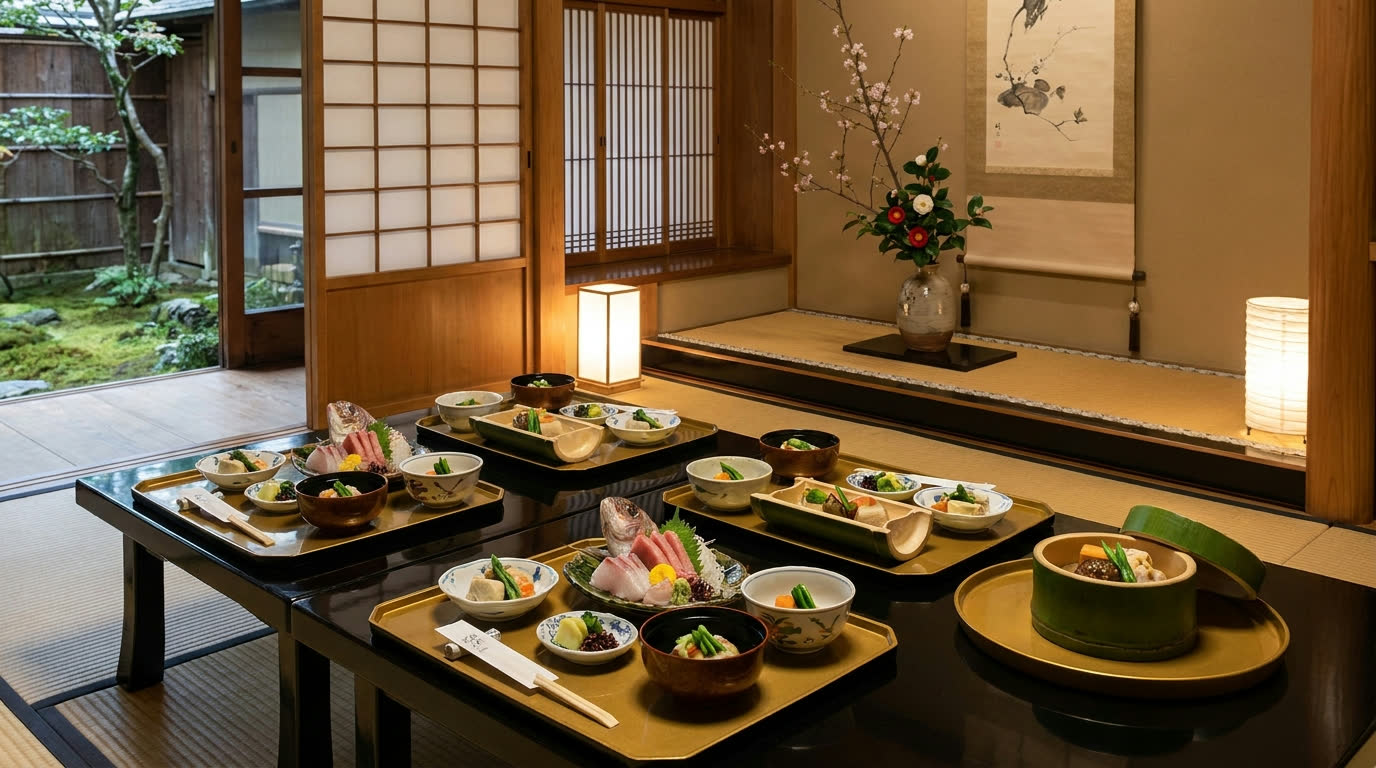
Kyoto invented kaiseki — the seasonal multi-course meal that became the grammar of fine dining worldwide — and still cooks it best. Around it: tofu refined to silk, matcha everything, and a market street that has fed the city for four centuries.
The benchmark tables: Hyotei Map, three Michelin stars and roughly 450 years old, began feeding pilgrims outside Nanzen-ji and still serves its famous soft-boiled egg in a garden of private tea houses. Kikunoi Honten Map, chef Yoshihiro Murata's flagship below Kodai-ji, is the other pillar — book the counter if your party is two, a tatami room if four. Both need weeks of lead time and a concierge who knows the reservation desks by name. For tempura, Endo Yasaka in Gion; for beef, Kyoto wagyu over charcoal at Mouriya or a one-counter teppan room your concierge will argue for.
Then eat low. Nishiki Market Map at 10am for tamagoyaki, pickles and soy-milk doughnuts. Yudofu — simmered tofu — done properly at Okutan by Nanzen-ji, in a garden, for a fraction of kaiseki money and half its philosophy. Our opinion, freely given: one three-star kaiseki is essential, two is diminishing returns; spend the second evening at a counter izakaya on Kiyamachi's canal instead, ordering whatever the chef is proudest of.
Where is the luxury insider layer in Kyoto?
Kyoto's insider layer is access to people: the tea master, the geiko house, the tenth-generation craftsman. None of it is on sale at the door; all of it opens through the right introduction, which is precisely our trade.
The tea room and the ozashiki
A private tea ceremony with a practising master — not a demonstration, a proper temae in a working chashitsu, explained as it happens — resets how you see every garden and bowl for the rest of the trip. Deeper still is a private ozashiki evening: dinner in a Gion teahouse with a geiko and maiko, dances, drinking games and conversation through an interpreter. Teahouses operate on introduction only; we arrange it through established houses, and it remains the single most-requested booking on our Japan desk.
Private shopping, the craft version
Kyoto's luxury retail is craftsmanship with a doorbell. Kaikado Map has hand-seamed tea caddies since 1875 — buy one, and the shop will service it for generations. Ippodo has blended tea since 1717; ask for a guided tasting at the counter. Add Shoyeido for incense, Aritsugu in Nishiki for knives forged for the imperial kitchens (they engrave your name while you wait), and a private atelier visit to a Nishijin silk weaver, arranged by appointment. Serious kimono and textile-art acquisition gets a specialist dealer and our escort; export paperwork included.
After dark, and the practicalities
Kyoto's bar culture is small and exquisite — whisky highballs and dead-quiet mixology in rooms seating eight along Kiyamachi and behind Gion. Smoking has largely moved outdoors or vanished; cigar lounges are a Tokyo sport, so leave that expectation at home. Connectivity is flawless (5G, hotel Wi-Fi to video grade everywhere above), and true seclusion is a half-day away in Miyama's thatched-roof valley or a temple shukubo stay. One logistics note that saves grief: taxis are excellent but scarce at peak bloom — we build private cars into every Kyoto itinerary from March 25 to April 10, no exceptions.
Every address in this guide can be reserved, sequenced and chauffeured for you — free, by your dedicated Dubai-based specialist.
Plan this journey with your free conciergeEvery address above can be arranged, reserved and chauffeured for you — free, by your dedicated Dubai-based specialist.
Plan my Kyoto journey