Where the World's Wealthiest Actually Go in Kuala Lumpur
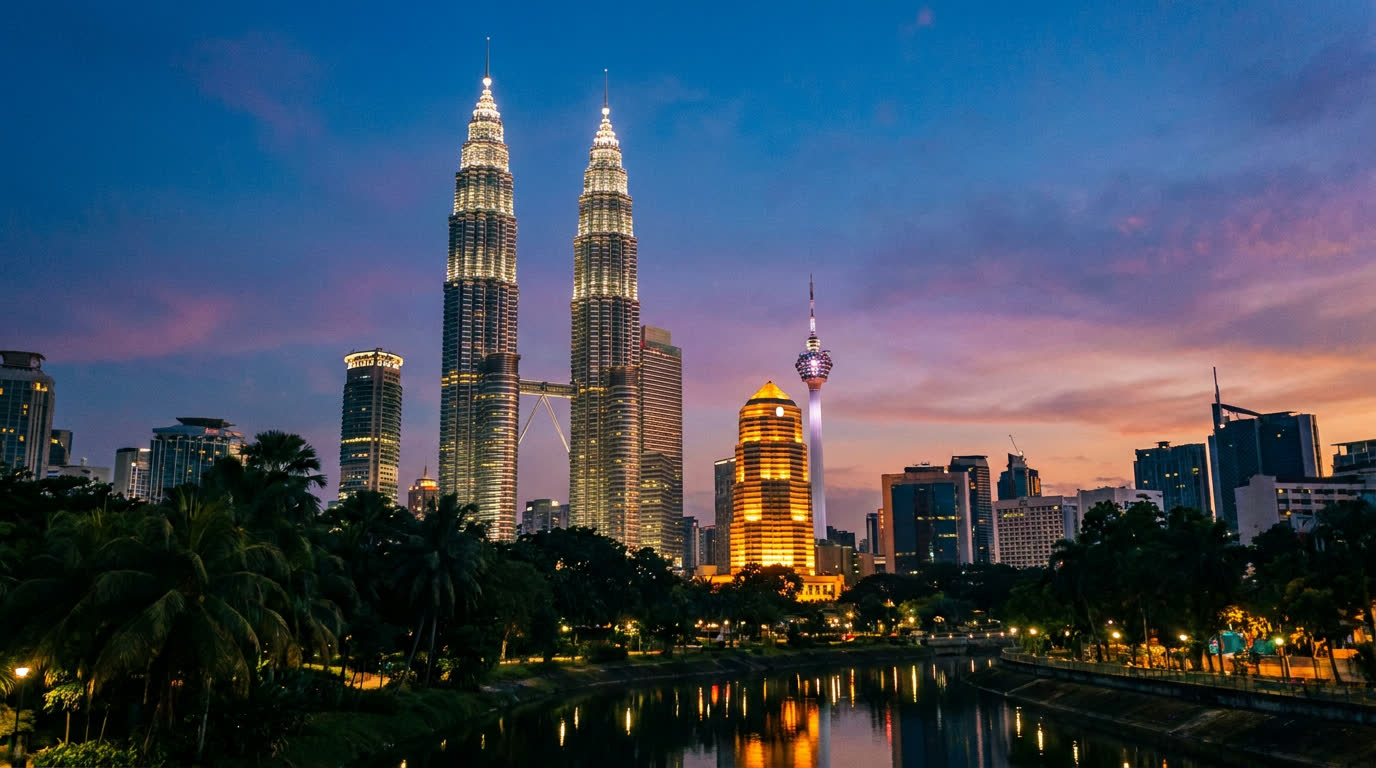
Kuala Lumpur is the most underpriced luxury city in Asia, and the people who know it prefer you didn't find out. Suites beside the Petronas Towers cost a third of Singapore's rates. A two-Michelin-star tasting menu runs less than a mid-range London dinner. The malls rival Dubai's, the street food embarrasses most capitals, and a primary rainforest older than the Amazon starts twenty minutes from the city centre.
Seven hours from Dubai, no jet lag worth naming, and everything below bookable through your concierge. This is KL done at the level it quietly operates on.
What is Kuala Lumpur really like? What are the big adventures? How should you spend your days? Where should you stay? Which iconic spots deserve your time? What should you eat? Where is the luxury insider layer?
What is Kuala Lumpur really like?
KL is three cultures running one city — Malay, Chinese and Indian — and the braid shows everywhere: a mosque, a Taoist temple and a Hindu shrine within one block, three scripts on the street signs, three cuisines arguing at every mealtime. It suits travellers who rank food and shopping above beaches, families who want ease, and anyone stitching together a Malaysia-and-beyond itinerary — KLIA connects the whole region cheaply and well.
The climate is equatorial and non-negotiable: 30-something degrees, humid, with a thunderstorm most afternoons that arrives like scheduled theatre around four and clears by six. Build days accordingly — outdoors before noon, malls or spa mid-afternoon, rooftops after the rain, when the air turns washed and the skyline lights come up.
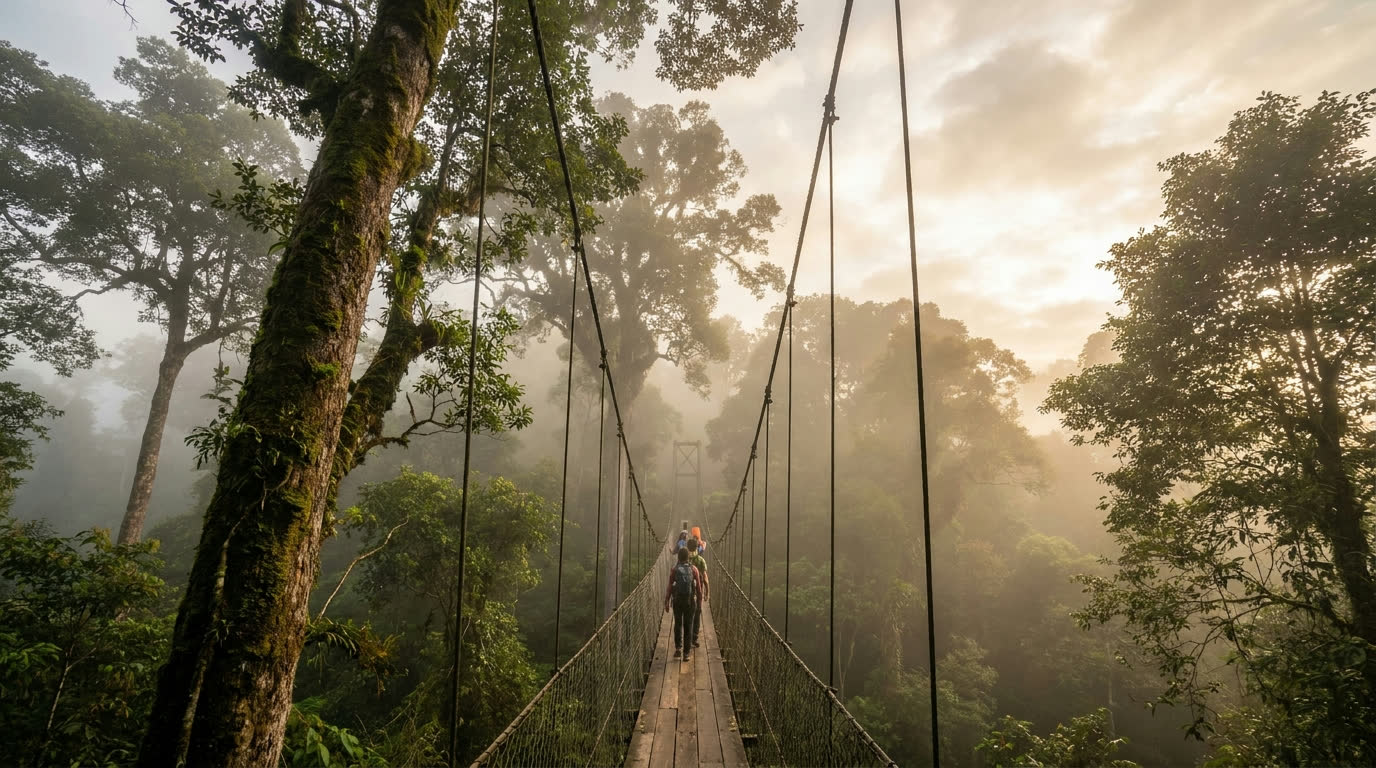
What first-timers misjudge is the scale of the green. This is a city with a primary rainforest reserve inside its limits and jungle ridges visible from most hotel windows; the KL Forest Eco Park's canopy walk hangs 200 metres from the base of the KL Tower. The other surprise is civility: English is fluent everywhere, Grab cars arrive in three minutes and cost pocket change, and the five-star service culture runs deep — Malaysia staffs half the luxury hotels of the Gulf, and at home the same hospitality has more room to breathe.
One local rhythm worth adopting: breakfast is the social meal. The kopitiam ritual — kaya toast, soft eggs, white coffee — or a banana-leaf nasi lemak eaten before 9am puts you inside the city's day rather than observing it.
KL rewards inside knowledge more than most cities. Ours is yours — free, from your dedicated specialist.
Plan my Kuala Lumpur journeyWhat are the big adventures around Kuala Lumpur?
KL's adventures are vertical and green: limestone caves, rainforest canopies and tea-planted highlands, all within ninety minutes of your suite. None requires fitness heroics; all require early starts, because the equatorial light and the coach crowds both punish the late.
The rainforest canopy
The Forest Research Institute Malaysia (FRIM) Map, twenty minutes northwest, protects a century-old research forest with a canopy walkway strung through the dipterocarp giants. At 7:30am you walk it in mist, gibbon calls carrying across the valley. In town, the KL Forest Eco Park Map gives the compressed version — a canopy bridge through the city's last primary forest fragment, skyscrapers framed between trees.
Batu Caves before the crowds
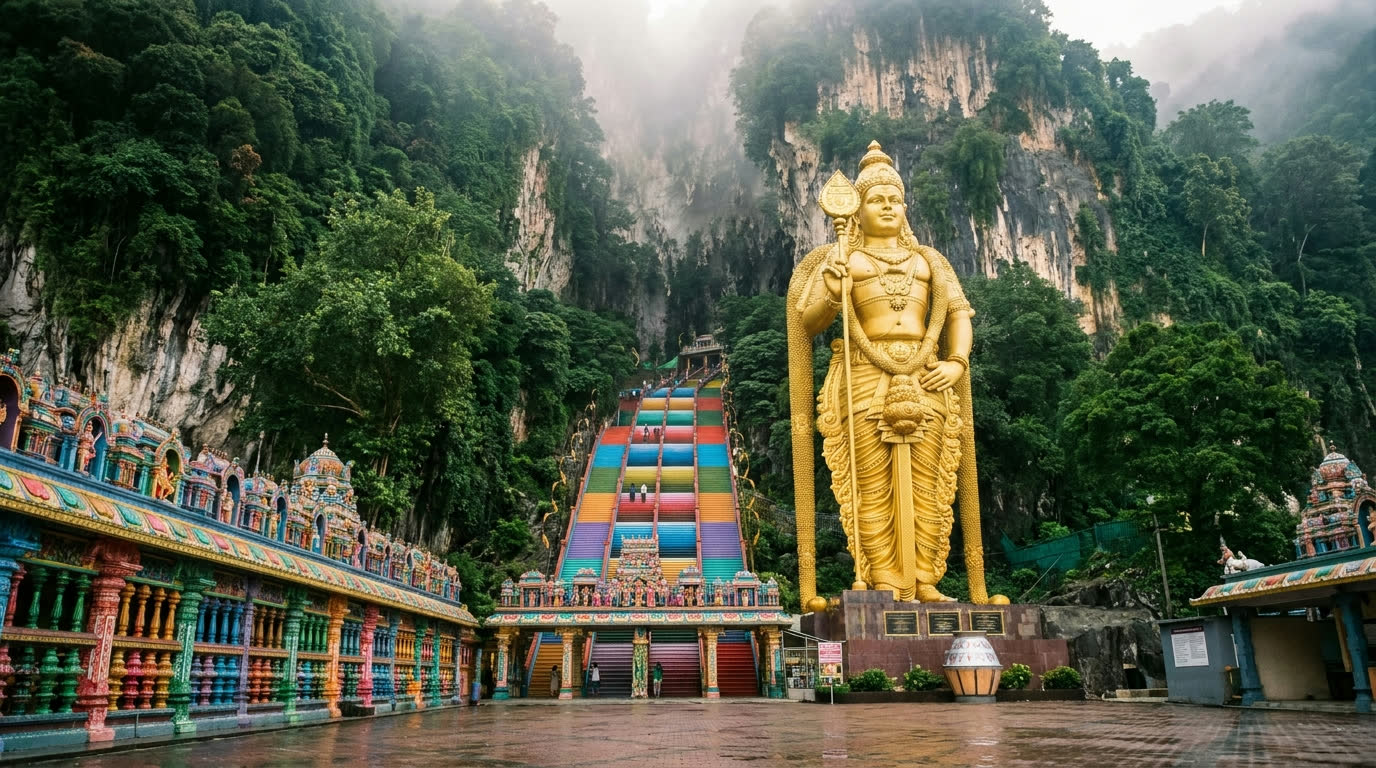
The 272 rainbow-painted steps up to the limestone cathedral of Batu Caves Map belong to pilgrims at dawn and tour groups by ten. Go at 7am: the golden Murugan statue catching first light, macaques waking on the balustrades, the temple cave cool and echoing. During Thaipusam (January/February) the site hosts one of the world's most intense Hindu festivals — spectacular, and strictly for those briefed on what they will see.
The highlands
The Cameron Highlands' tea terraces sit three hours north — go for a night, not a day, and take the dawn walk through the BOH plantation rows above the cloud line Map. Closer, Genting Highlands is KL's mountain playground — cable car, casino, theme park — best treated as a family half-day. Helicopter charters out of the city centre shortcut both and give you the Klang Valley's jungle ridges from above.
Further afield
KL is Malaysia's hub, and the add-ons are the country's best argument: Langkawi's rainforest resorts (55 minutes' flight), Penang's street-food capital (45 minutes), and Borneo's orangutans (2.5 hours). We rarely send clients to KL alone; the city plus one island or jungle leg is the natural shape of the trip.
How should you spend your days in Kuala Lumpur?
Three full days does the city properly; five lets you add the highlands or a Penang food day. The template: one icon each morning, lunch somewhere serious, mall or spa through the storm hours, rooftop and dinner after.
Day one: Petronas Towers at the 9am slot, KLCC Park walk, lunch in Suria, afternoon across the Pavilion–Starhill circuit, evening at Bar Trigona then dinner in Bukit Bintang. Day two: Batu Caves at 7am, Thean Hou Temple Map, Merdeka Square and the colonial district, teatime at a heritage kopitiam, hawker crawl at night. Day three: FRIM canopy at opening, Islamic Arts Museum Map — one of the world's great collections, inexplicably uncrowded — then the tasting-menu dinner you booked weeks ago.
With children: Aquaria KLCC beneath the convention centre, the Petrosains science centre inside the towers, Sunway Lagoon's waterpark twenty minutes out, and the KL Bird Park's free-flight aviary. Teenagers rate the Batu Caves monkeys above everything. Couples should claim a rooftop pool for the post-storm hour and book the Thean Hou Temple at dusk when the lanterns switch on — KL's most photogenic fifteen minutes.
Logistics: traffic is real but navigable — Grab everywhere, or a hotel car for the day at rates that make it silly not to. KLIA sits 50–60 minutes south; the KLIA Ekspres train does it in 28 when the highway clogs. Dress light, carry a layer for the arctic mall air-conditioning, and never schedule anything outdoors for 4pm.
Where should you stay in Kuala Lumpur?
Stay in KLCC unless you have a reason not to — the towers, the park, the malls and the best bars sit within a ten-minute radius. Bukit Bintang puts you in the shopping and street-food thick; Sentral suits one-night connections. The value is the story: these rates buy a different tier of hotel than they would almost anywhere else.
| Hotel | Tier | From (indicative) | Best for |
|---|---|---|---|
| Four Seasons Hotel Kuala Lumpur | Ultra | US$320/night | Beside the towers, Bar Trigona, pool deck views |
| Mandarin Oriental Kuala Lumpur | Ultra | US$250/night | KLCC Park frontage, club lounge, classic service |
| The St. Regis Kuala Lumpur | Ultra | US$280/night | Butler service, art collection, Sentral connections |
| The RuMa Hotel & Residences | Luxury | US$180/night | Boutique design, ATAS dining, rooftop infinity pool |
| EQ Kuala Lumpur | Luxury | US$170/night | Sky pool and Sabayon views, polished modern rebuild |
| Villa Samadhi | Refined | US$150/night | Adults-only lagoon-pool hideaway, resort in the city |
Four Seasons — the address
The Four Seasons Map rises directly beside the Petronas Towers — ask for a Towers-view room and the icons fill your window from bed. Bar Trigona downstairs, with its stingless-bee honey cocktails, has ranked among Asia's best bars for years; the pool deck at dusk frames the towers between frangipani.
Mandarin Oriental and The St. Regis — the classics
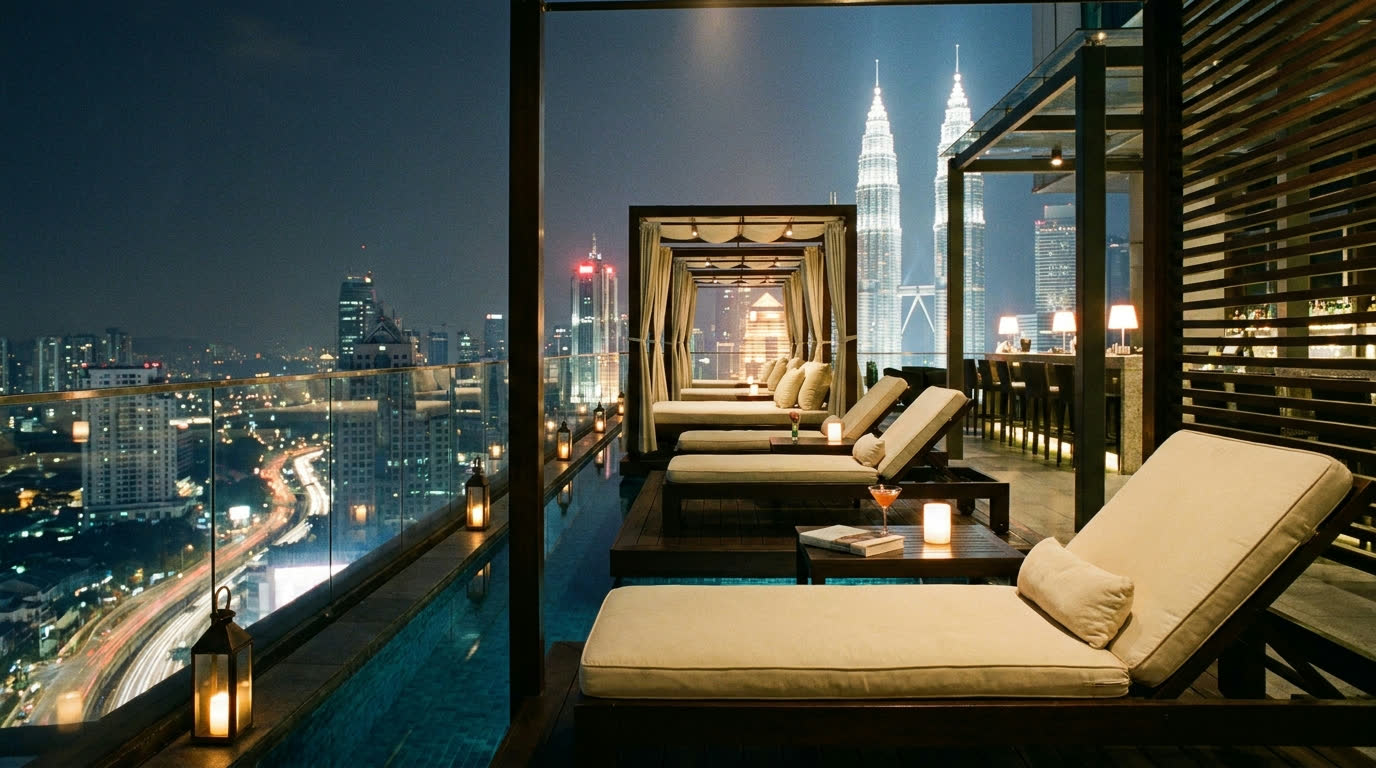
The Mandarin Oriental Map fronts KLCC Park itself — the twin towers rise over the infinity pool, and the club lounge remains one of Asia's best-run. The St. Regis Map answers from Sentral with butlers, a serious private art collection and the city's grandest afternoon tea.
The RuMa, EQ and Villa Samadhi — the characters
The RuMa Map is the design lover's pick — tin-mining and timber heritage reworked into a 253-key boutique, ATAS on the seventh floor, an infinity pool aimed at the towers. EQ Map rebuilt the old Equatorial into a glass tower whose Sky51 bars own the sunset. Villa Samadhi Map hides an adults-only lagoon-pool compound in the embassy quarter — timber, lanterns, silence — a resort smuggled into the city.
Tower-view categories are booked unevenly — some are bargains, some are theatre. We know which. Ask us.
Plan my Kuala Lumpur journeyWhich iconic spots deserve your time — and how do you see them properly?
KL's icons split between the vertical and the sacred, and the operating rule is the same for both: first slot of the day, tickets in hand before you fly.
Petronas Twin Towers
The 452-metre twins Map remain the world's tallest twin towers and its most graceful — César Pelli's Islamic-geometry plan reads best from KLCC Park's far fountain at night. Skybridge-and-observation tickets sell timed via the official site; take the 9am slot. The contrarian view: the best view of KL is from the KL Tower's open deck Map — because the Petronas Towers are in it.
Merdeka Square and the colonial district
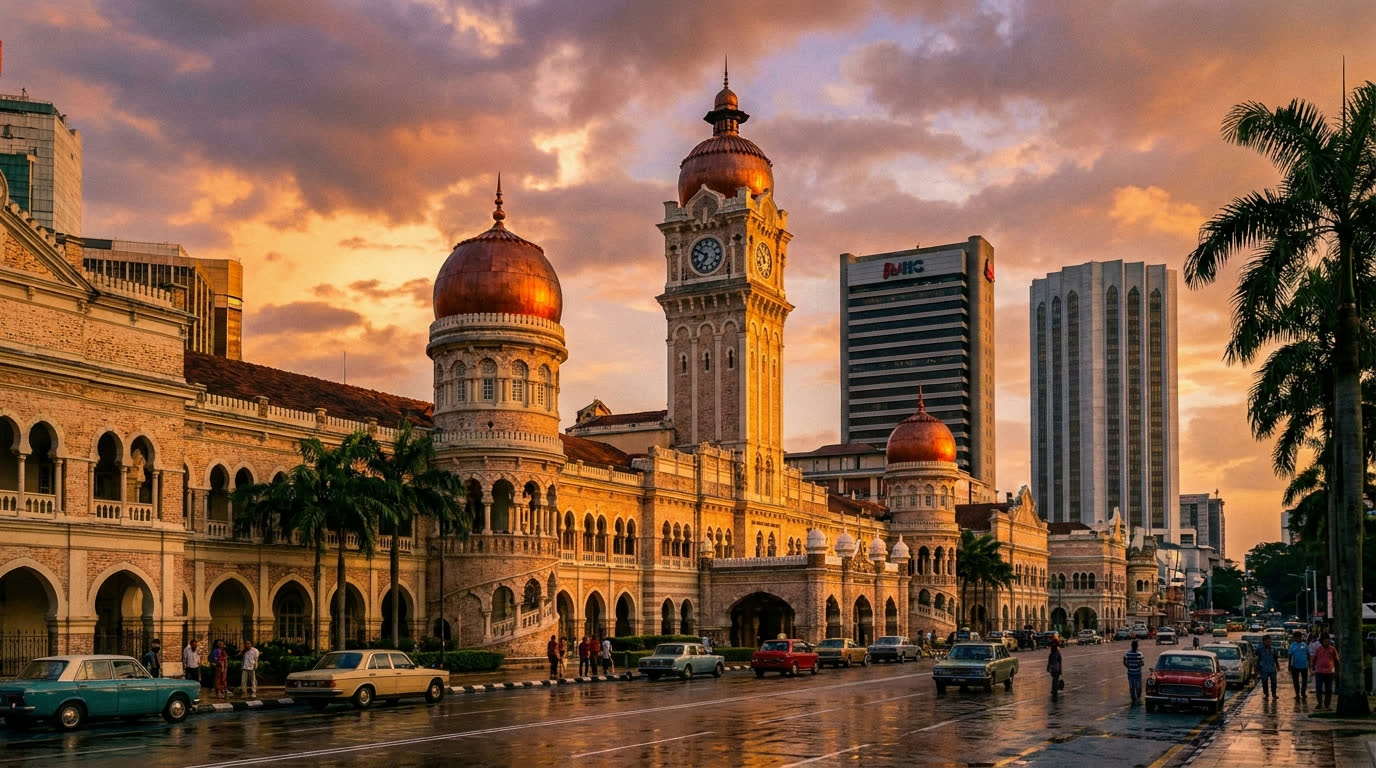
The 1890s city survives around the old cricket padang: the Sultan Abdul Samad Building's copper Moorish domes Map, the Tudor-revival club, the river confluence that named the city ("muddy estuary" — KL keeps its founders' honesty). Golden hour gilds the domes; a heritage-walk guide turns the square into the whole story of Malaya in ninety minutes.
Thean Hou Temple
The six-tiered Chinese temple on Robson Hill Map is the city's most beautiful building at dusk, when hundreds of lanterns light and the skyline glitters behind the dragon-carved eaves. Weekday evenings are near-empty; Chinese New Year is gloriously the opposite.
The Islamic Arts Museum
Beside the National Mosque, the Islamic Arts Museum Malaysia holds Southeast Asia's finest collection — Ottoman ceramics, Mughal jewellery, a room of scale-model mosques — in serene, empty galleries. For Gulf-based travellers especially, it reframes familiar art through a Malay lens. Two hours, ideally after the Batu Caves morning.
What should you eat in Kuala Lumpur?
KL might be the best-fed city per ringgit on earth. The 2026 Michelin Guide for KL and Penang runs to 151 establishments — one two-star, eight one-stars, 58 Bib Gourmands — but the guide only formalised what Malaysians always knew: this is a country that judges you by where you eat, not what you paid.
The fine end
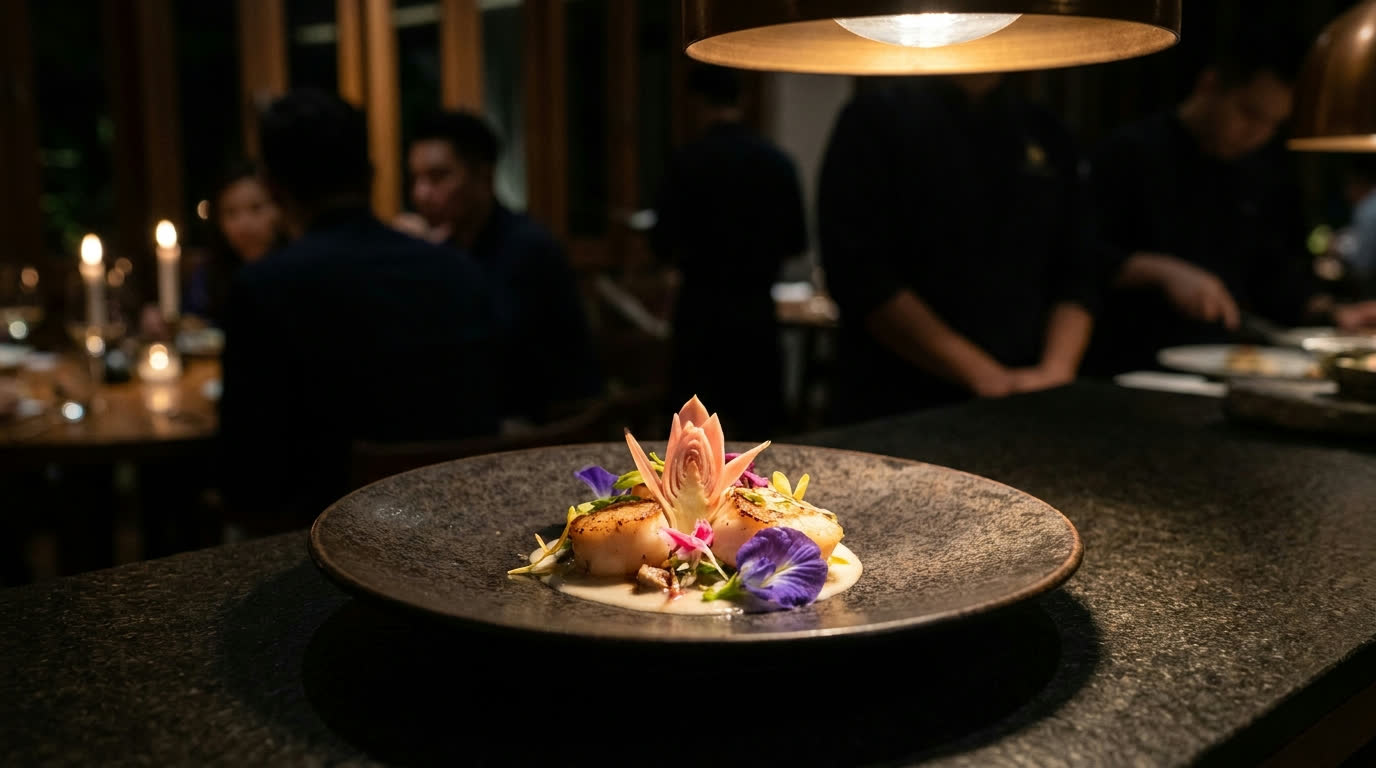
Dewakan Map is the flag-bearer: chef Darren Teoh's two-star, Green-starred tasting menu built on indigenous Malaysian ingredients — jungle fruits, fermented durian, wild pepper — that exist in no other fine-dining room on earth. Book weeks ahead. His new opening Bidou took the guide's Opening of the Year award. The newly starred pair — Akar and Terra Dining Map, both in TTDI — do elegant, ingredient-led contemporary Malaysian at prices that would be starters elsewhere. And Bar Trigona at the Four Seasons remains the drinks pilgrimage: cocktails built on trigona (stingless bee) honey from the bar's own hives.
The street canon
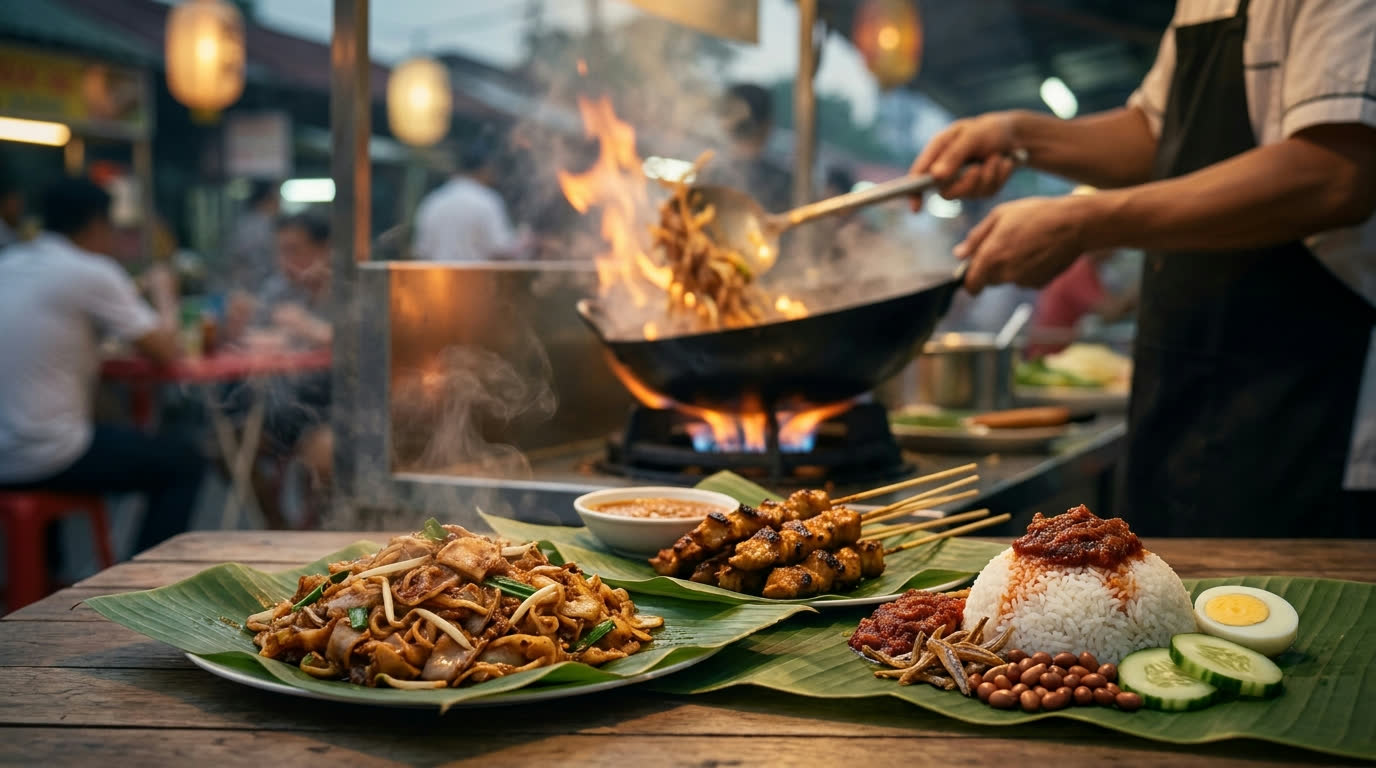
Non-negotiables: nasi lemak in Kampung Baru at breakfast — the coconut rice, sambal and fried anchovy argument that defines the city; char kway teow and grilled fish on Jalan Alor Map after dark; banana-leaf rice in Brickfields, eaten with the right hand like everyone around you; and bak kut teh — peppery pork-rib tea — in Klang if you make the pilgrimage. A guided night hawker crawl with a local food writer is the single best three hours a first-timer can spend in KL; we arrange them routinely.
The kopitiam hour
Heritage coffee shops still anchor mornings: kaya toast cut in half-inch slabs, eggs barely set, white coffee pulled between jugs. The old shophouse kopitiams around Petaling Street do it with seventy years of patina. Go once and you will go daily.
Where is Kuala Lumpur's luxury insider layer?
KL's insider layer is retail-and-rooftop shaped: a mall circuit that rivals Dubai's at gentler prices, whisky rooms with skyline views, and the region's best-value private services — drivers, tailors, spa suites — booked in ringgit.
The shopping circuit
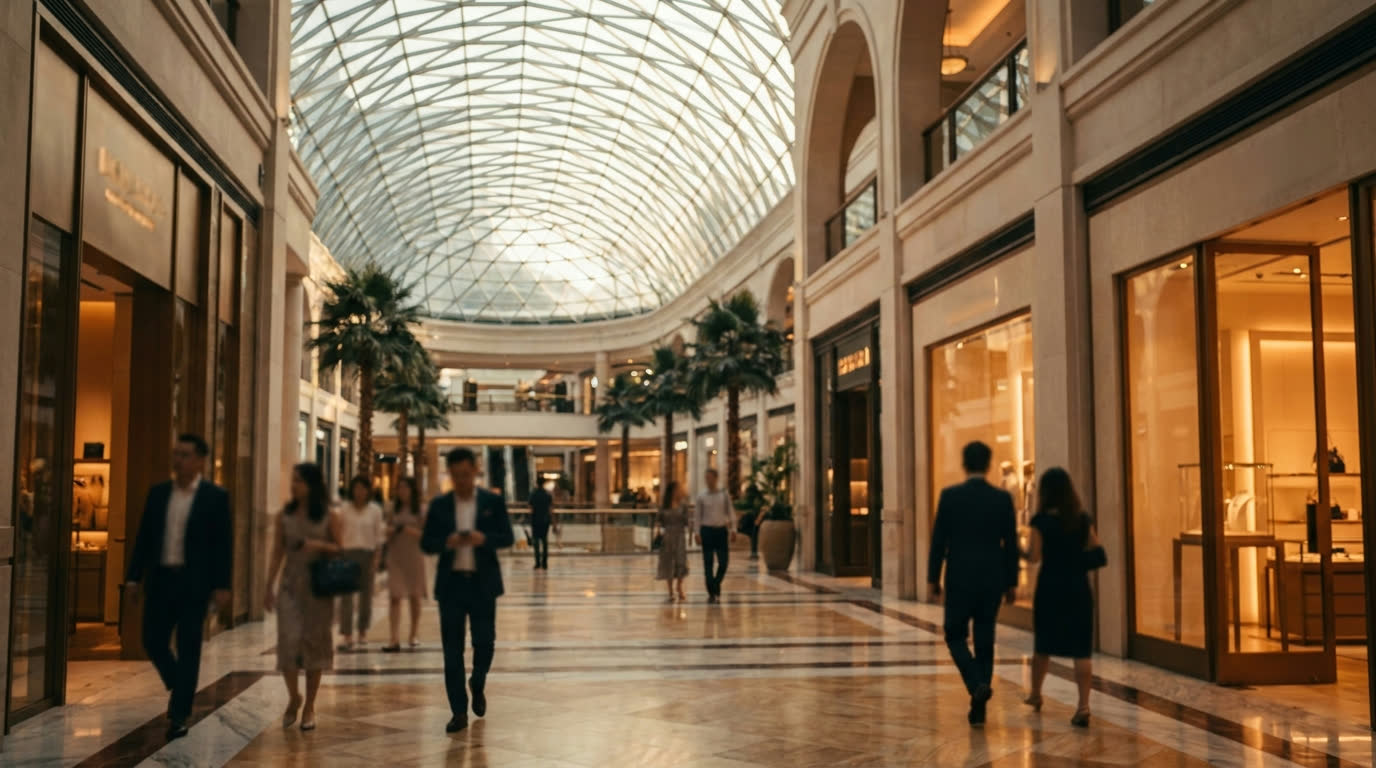
Pavilion KL Map in Bukit Bintang is the luxury flagship — every maison, a dedicated watch-and-jewellery precinct, and concierge services that arrange hands-free delivery to your hotel. The Starhill Map next door, remodelled into a gallery-like adjunct, keeps the serious horology floors — KL is one of Asia's better cities for watch allocation conversations. The Exchange TRX Map, the newest of the trio in the financial district, layers a rooftop park over its luxury floor. Suria KLCC at the towers' feet completes the circuit. Bespoke tailoring survives here too — KL's Indian-Muslim tailoring houses cut suits in days at prices between Hoi An and Hong Kong.
Rooftops, whisky and cigars
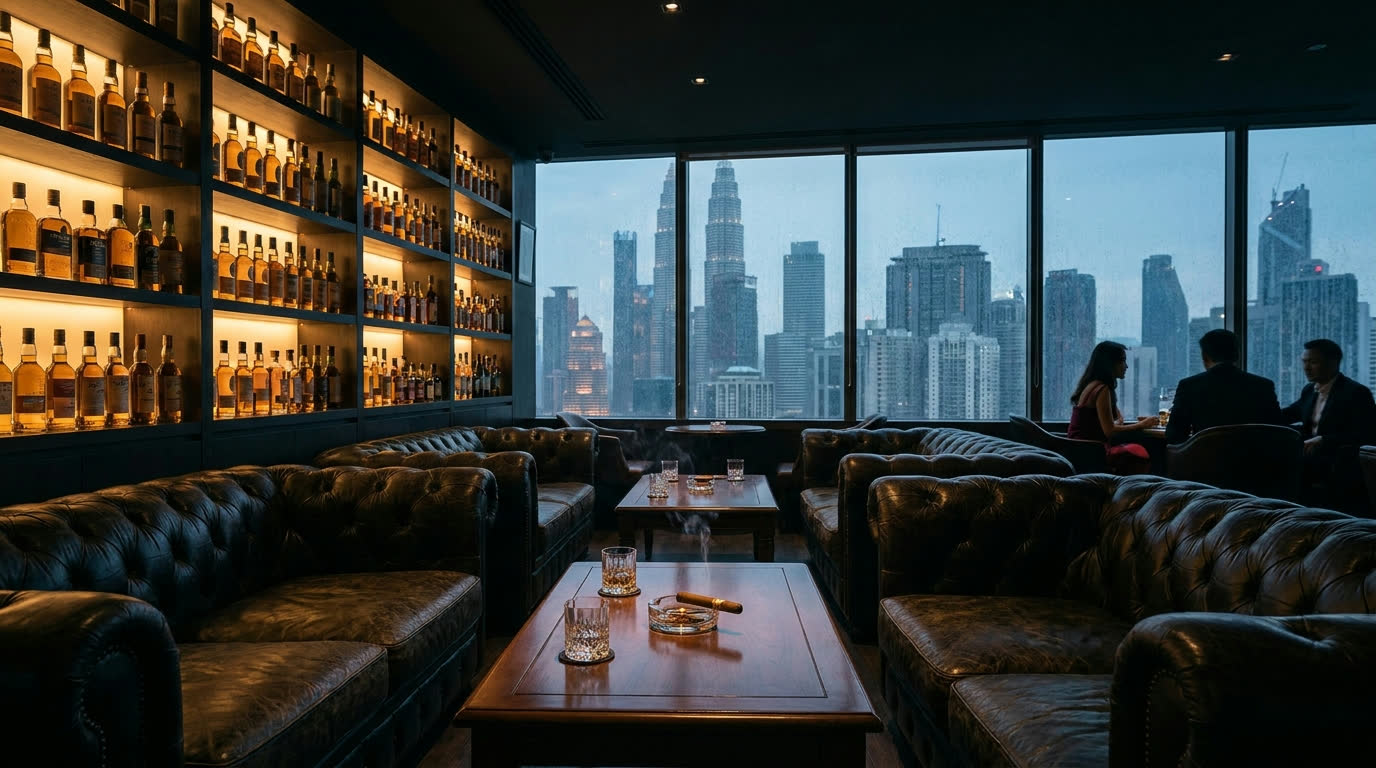
The post-storm rooftop hour is KL's cocktail institution: Marini's on 57 Map looks the Petronas Towers level in the eye and keeps a dedicated cigar lounge beside its whisky bar; the Sky51 decks at EQ and the Banyan Tree's Vertigo Map give the open-air versions. Serious whisky rooms cluster in Bukit Bintang and Bangsar; several five-star hotels keep humidors and terrace smoking — ask, and the right lounge appears.
Wellness at KL prices
The spa arbitrage is real: the flagship hotel spas — the Mandarin Oriental's and the RuMa's UR Spa among them — deliver Gulf-standard treatment menus at half Gulf rates, and appointments hold even in season. Traditional Malay urut massage is the local speciality worth requesting by name.
Seclusion and connectivity
KL works unusually well as a remote-working base — fast fibre, English-speaking everything, service apartments attached to five-star towers (the Four Seasons and St. Regis residences among them) for month-long stays at rates that embarrass other capitals. For seclusion, Villa Samadhi's lagoon compound in town or a Langkawi rainforest villa 55 minutes' flight away close the loop. Helicopter transfers and private jets stage from Subang's Skypark Map, twenty minutes from KLCC — the region's quiet business-aviation hub.
Practical close. Tipping is not expected but appreciated — round up. Dress modestly at mosques and temples (sarongs lent at the door). Alcohol is freely served in hotels and licensed venues; Friday afternoons slow the government quarter. Ninety-day visa-free entry covers UAE passports; most Western and GCC passports enter freely too. Pair KL with Bali, Koh Samui or Penang's food streets — or ask us to build the full Malaysia arc, city to rainforest to island.
Every address above can be arranged, reserved and chauffeured for you — free, by your dedicated Dubai-based specialist.
Plan my Kuala Lumpur journey