Where the World's Wealthiest Actually Go in Jaipur
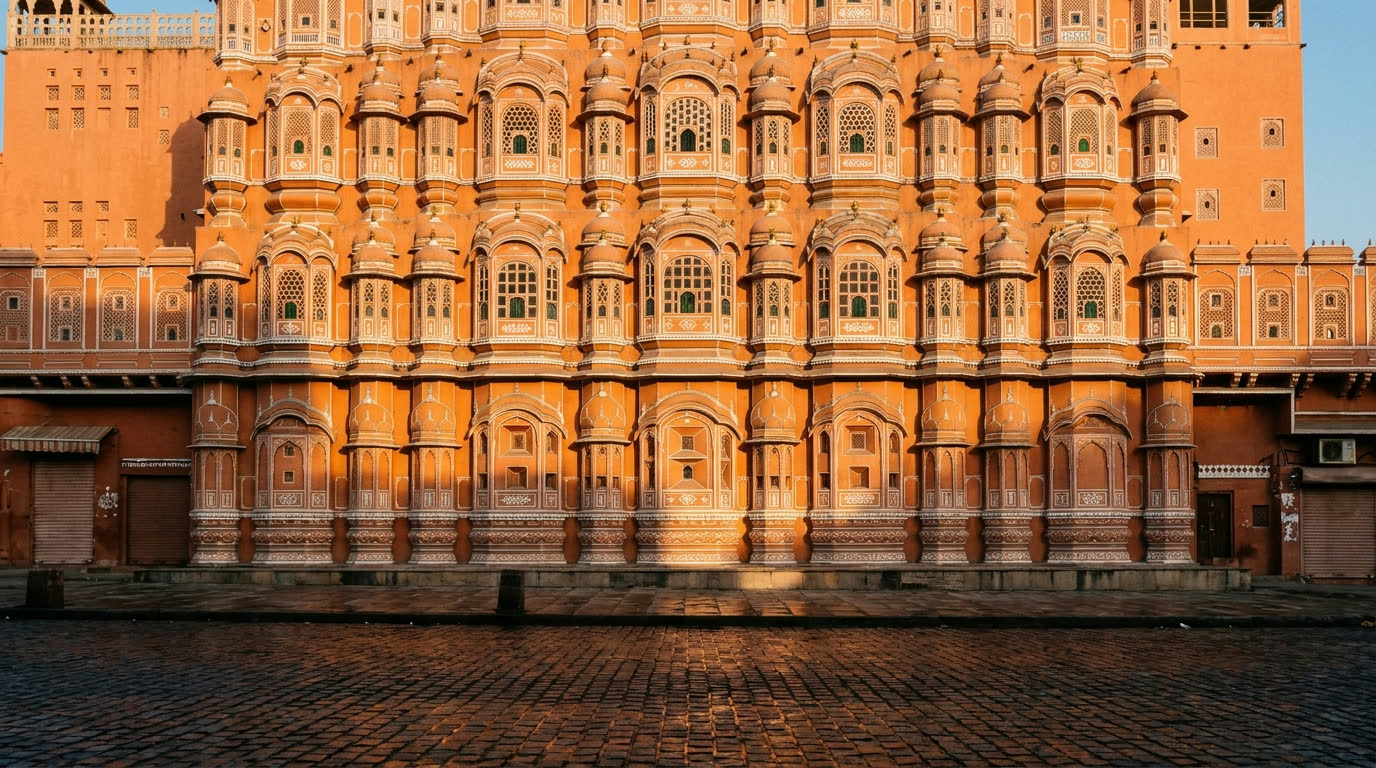
Jaipur was planned in 1727 and painted pink in 1876, and it has been receiving guests in style ever since. This is the city where you sleep in an actual palace, buy emeralds from families who have cut them for nine generations, and drink a gin cocktail in a blue dining room that half the design world has photographed.
India rewards planning more than any destination we sell, and Jaipur is where most of our clients start. Below is the current file from our Jaipur desk — read it with our Abu Dhabi guide if you are joining the Dubai–India circuit, and note that flight time from the UAE is barely three hours.
What is Jaipur really like? What are the big adventures? What should you do day to day? Where should you stay? Which iconic spots deserve your time? What should you eat in Jaipur? Where is the luxury insider layer?
What is Jaipur really like?
Jaipur is a rare thing: a planned city that kept its soul. Maharaja Jai Singh II laid it out on a nine-square grid — wide avenues, uniform facades, a royal quarter at the centre — and the plan still works. Inside it, the bazaars have specialised by street for three hundred years: jewellers here, dyers there, bangle-makers on their own lane. Commerce as choreography.
The pink is real and it is maintained; the old city repaints in the same terracotta wash by regulation. What photographs cannot carry is the sound — temple bells, gem-cutters' wheels, the evening pigeon-scatter off Hawa Mahal — or the fact that the royal family still lives in the City Palace, which keeps the whole place feeling inhabited rather than curated.
Who suits Jaipur? Aesthetes, shoppers and families, in that order of obviousness. It is India at its most legible: compact, confident, gorgeous, with the country's best hotel stock per square kilometre. It is also still India — vivid, loud, occasionally chaotic at street level — which is exactly why the palace-hotel model works: full immersion by day, absolute calm by evening.
Practical note from years of client feedback: the winter evenings are genuinely cold. From December to February, pack for 8°C nights — the palace courtyards at dinner are magical and chilly in equal measure, and the shawl the hotel offers you is not decorative.
Every address above can be arranged, reserved and chauffeured for you — free, by your dedicated Dubai-based specialist.
Plan my Jaipur journeyWhat are the big adventures?
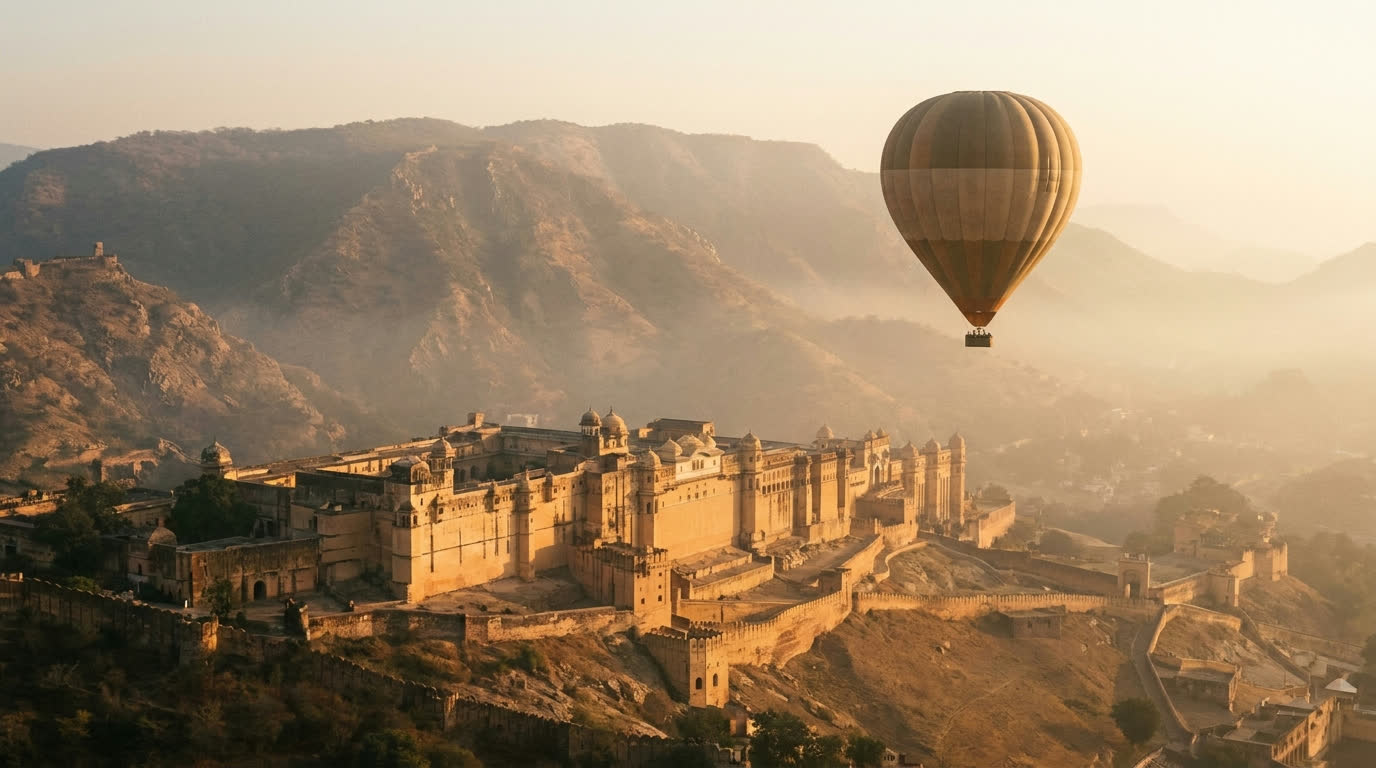
Jaipur's adventures are aerial and equestrian: a balloon over the Amber valley at dawn, the forts strung along the Aravalli ridge, and the countryside an hour out where rural Rajasthan carries on regardless. All three fit inside a standard stay.
Ballooning over Amber
In season (roughly September to mid-June, weather permitting), licensed operators fly sunrise hot-air balloon routes over the Amber–Jaipur countryside — drifting past hilltop ramparts, stepwells and waking villages with the Aravallis going gold. It requires a 5am start and forgiving winds. It is worth both. We book the private-basket option and have the car meet the landing site with breakfast.
The fort ridge
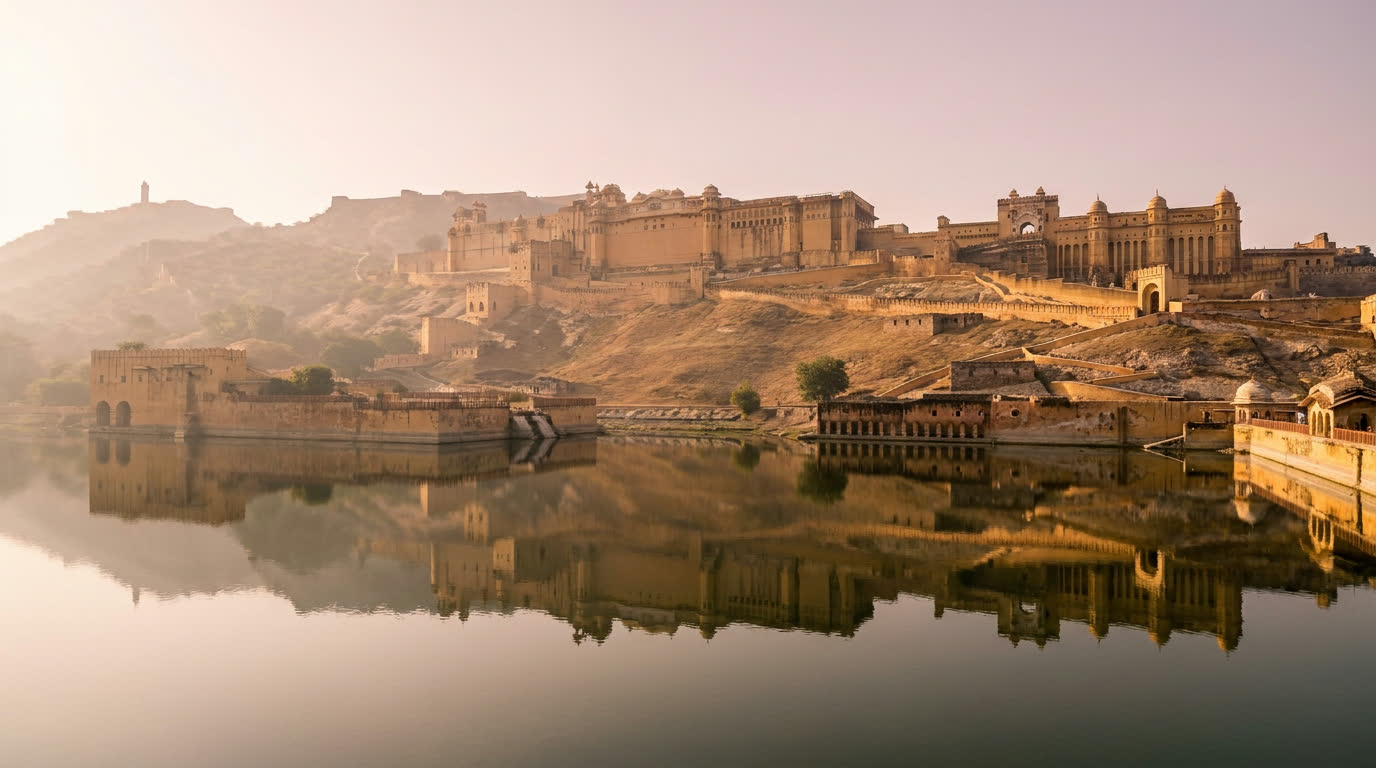
Amber is the headline, but the ridge holds three forts. Jaigarh Map, the military elder brother above Amber, keeps the Jaivana — one of the largest wheeled cannons ever cast — and almost no crowds. Nahargarh Map hangs directly over the city and owns the sunset; the terrace overlooking the pink grid at 6pm is the picture everyone came for. Do Amber at dawn, Jaigarh late morning, Nahargarh at dusk. One day, properly sequenced.
Rural Rajasthan
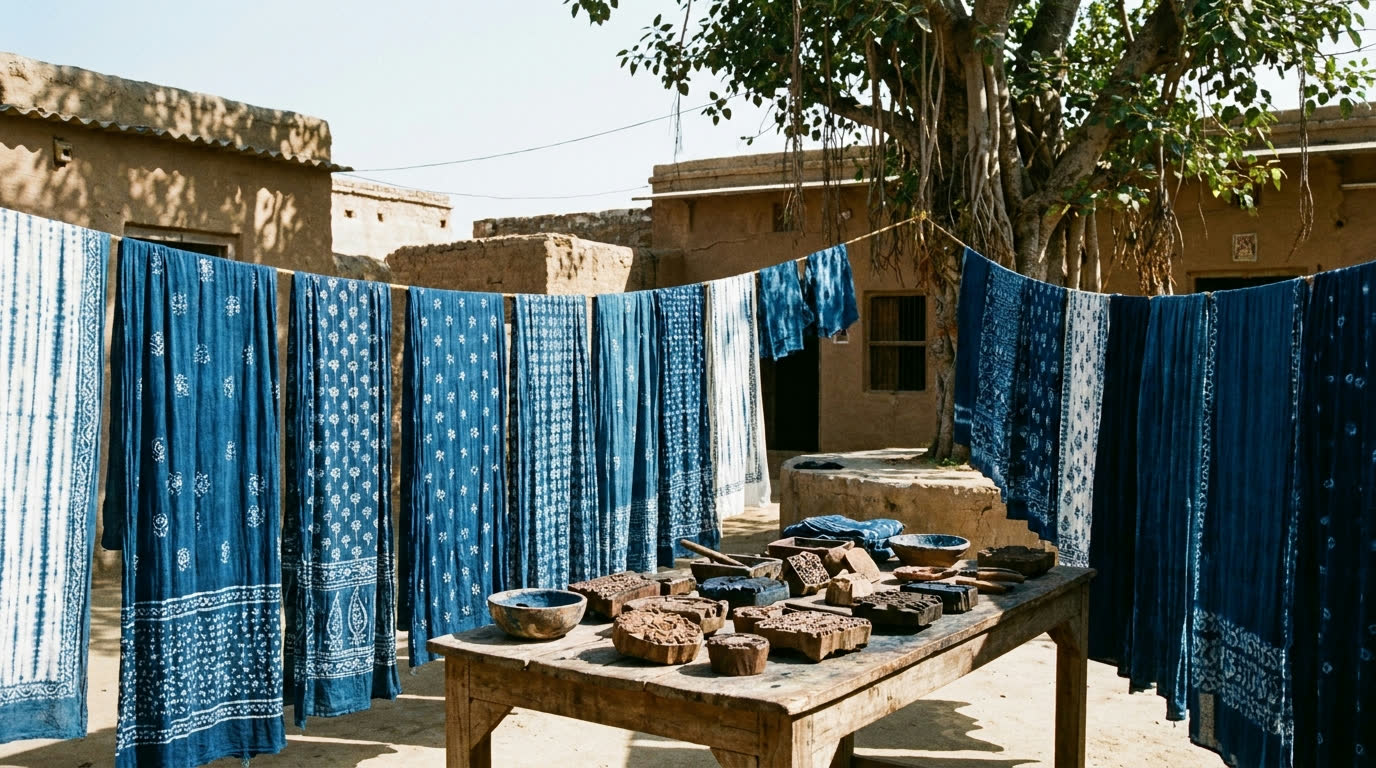
An hour out, the block-printing villages of Bagru and Sanganer Map open their courtyards to visitors who arrange it: indigo vats, drying fields of printed cotton, fourth-generation printers who will let you ruin a tea towel yourself. For wildlife, Ranthambore's tigers are three hours south — we treat that as an add-on night, not a day trip.
What should you do day to day?
Three days covers Jaipur's essentials without hurry; the structure that works is forts one day, old city the next, craft and leisure the third. Mornings start early everywhere — by 10am the light hardens and the coaches arrive.
The old-city day runs City Palace Map at opening, Jantar Mantar's monumental astronomical instruments next door Map, then the bazaars on foot with a guide who knows the workshops behind the shopfronts. Hawa Mahal Map is best photographed from the café terraces opposite at 7am — and better understood from inside, which almost nobody bothers to do.
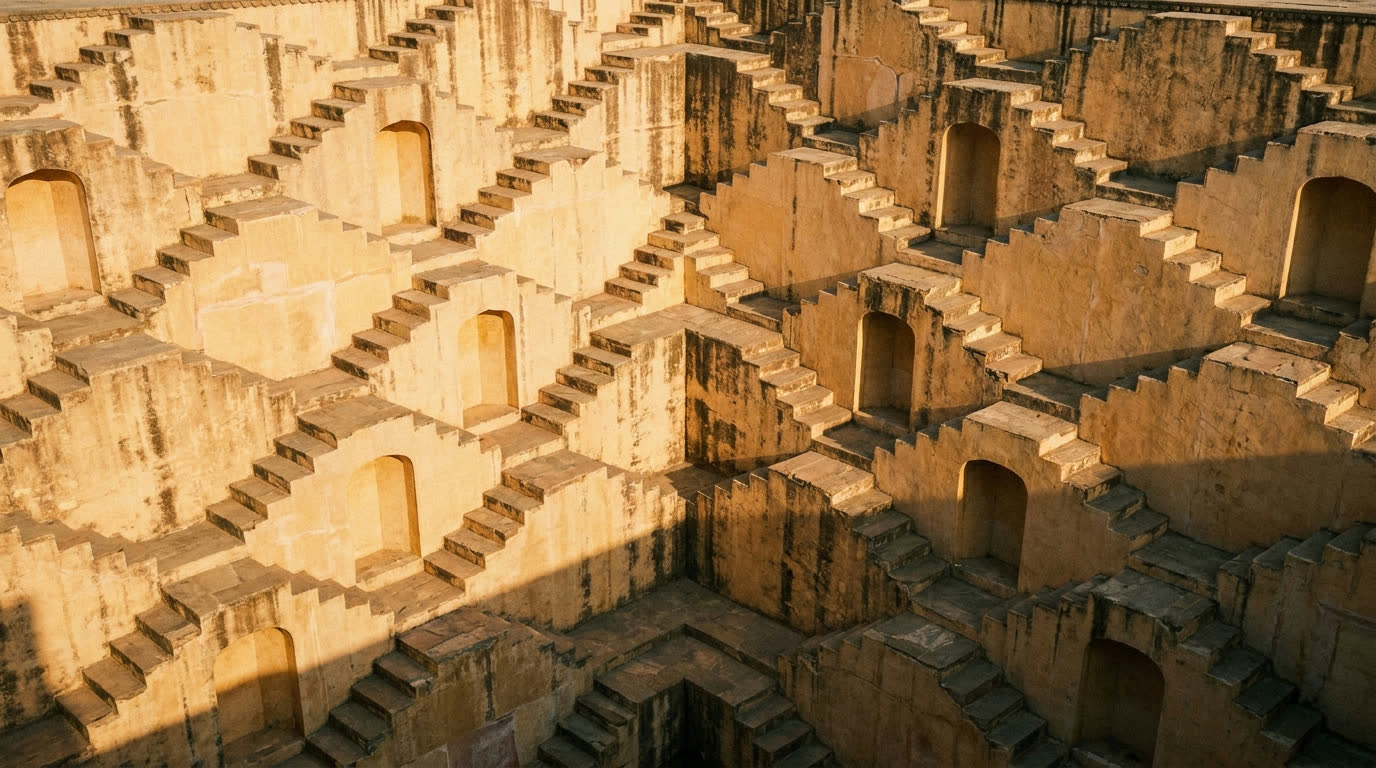
For families: the stepwell at Panna Meena ka Kund Map, kite-flying from the hotel lawns (Jaipur is India's kite capital; January's festival fills the sky), and Chokhi Dhani's village-fair evenings for younger children. For couples: a private table in a palace courtyard, the Nahargarh sunset, and a morning at the ateliers commissioning something — a rug, a miniature painting, a pair of jootis — that arrives in Dubai six weeks later carrying the whole trip inside it.
Where should you stay in Jaipur?
Jaipur's hotel question is the best kind: palace or garden? Rambagh Palace is the city's ceremonial heart and Rajvilas its serene counterweight; the ideal week does two or three nights in each. The heritage havelis fill the romantic middle.
| Hotel | Tier | Setting | Best for |
|---|---|---|---|
| Rambagh Palace (Taj) | Ultra | Former royal residence, city gardens | The full palace experience |
| The Oberoi Rajvilas | Ultra | 32-acre garden estate, city edge | Calm, spa, service |
| Raj Palace | Luxury | 18th-century palace by the old city | Heritage maximalism |
| Samode Haveli | Refined | Painted haveli, old-city orbit | Character, value |
| Rajmahal Palace RAAS | Luxury | Art-deco royal guesthouse | Design lovers, intimacy |
Rambagh Palace
The maharaja's residence until 1957, now the Taj flagship Rambagh Palace Map: 47 acres of lawns patrolled by peacocks, marble corridors, and the Polo Bar hung with the house team's actual trophies. Dinner at Suvarna Mahal, the gilded former ballroom, is the city's grandest room. Ask for a Palace room facing the Mughal gardens, and take the evening heritage walk with the house butlers — the anecdotes are the product.
The Oberoi Rajvilas
Rajvilas Map spreads 32 acres of gardens around an 18th-century Shiva temple that still holds evening aarti — the priest's bell across the lawns at dusk is the hotel's signature moment. Rooms cluster in courtyards; the luxury tents with private gardens are the smart booking. The spa, in a restored haveli, is the best in Rajasthan, and the Rajwada Library Bar does a nightcap among lithographed maharajas.
The heritage tier
Raj Palace Map is the 1727 palace turned museum-hotel, all mirrored suites and dynastic portraits. Samode Haveli Map, the in-town haveli of the Samode family, pairs painted dining rooms with a courtyard pool and rates that leave budget for the gem houses. Rajmahal Palace RAAS Map — the art-deco royal guesthouse that hosted Queen Elizabeth II and Jackie Kennedy — is the design-world favourite, wallpapered floor to ceiling.
Palace first or garden first? Our specialists sequence the stay and hold the courtyard tables before you land.
Design my stay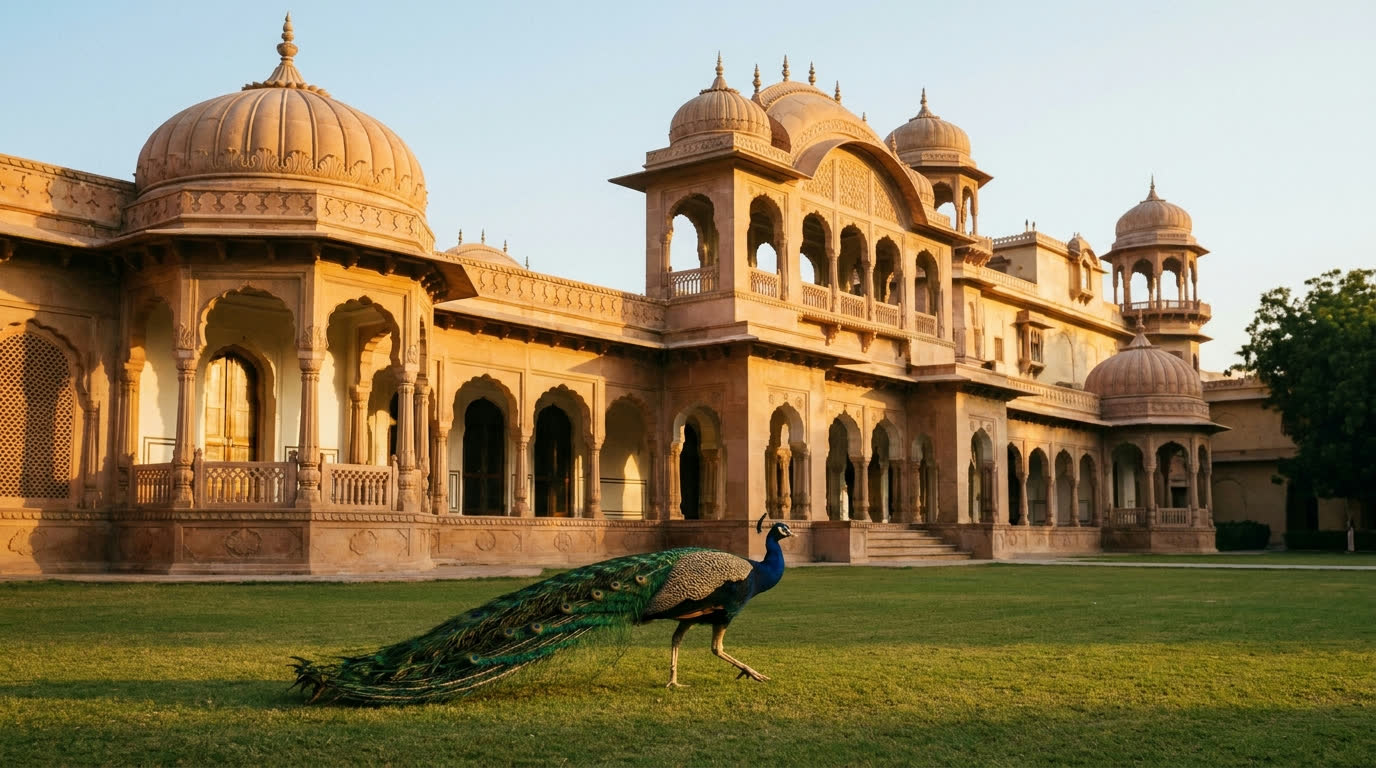
Which iconic spots deserve your time?
Amber Fort, the City Palace, Jantar Mantar, Hawa Mahal and the Nahargarh sunset — five fixtures, each with a private angle that changes it completely. The theme across all of them: go early, book access, and let a scholar-guide carry the story.
Amber Fort
The fort Map opens early and the first hour is the visit: the Ganesh Pol gateway without a queue, the Sheesh Mahal's thousand mirrors catching the low sun, the ramparts walking themselves down to Maota Lake. Go up by jeep. Skip the elephants — the welfare picture is contested, and the jeep is faster anyway. Allow two hours plus Panna Meena ka Kund, the geometric stepwell in Amber town, on the way down.
City Palace, beyond the ticket
The public courts — Mubarak Mahal's textiles, the armoury, the two silver urns that carried Ganges water to England — reward ninety minutes. The insider version is the paid royal-access tour into Chandra Mahal, the seven-storey residence where the family still lives: the Chhavi Niwas blue room from every design magazine sits on this route, not the public one. Arrange it in advance; numbers are capped daily.
Jantar Mantar & Hawa Mahal
Jantar Mantar is an 18th-century observatory of monumental instruments — including the world's largest stone sundial, accurate to two seconds — and it is meaningless without a guide and marvellous with one. Hawa Mahal's honeycomb of 953 windows was built so royal women could watch the street unseen; climb inside for the reverse view, then take the facade from the rooftop cafés opposite with the morning sun on it.
What should you eat in Jaipur?
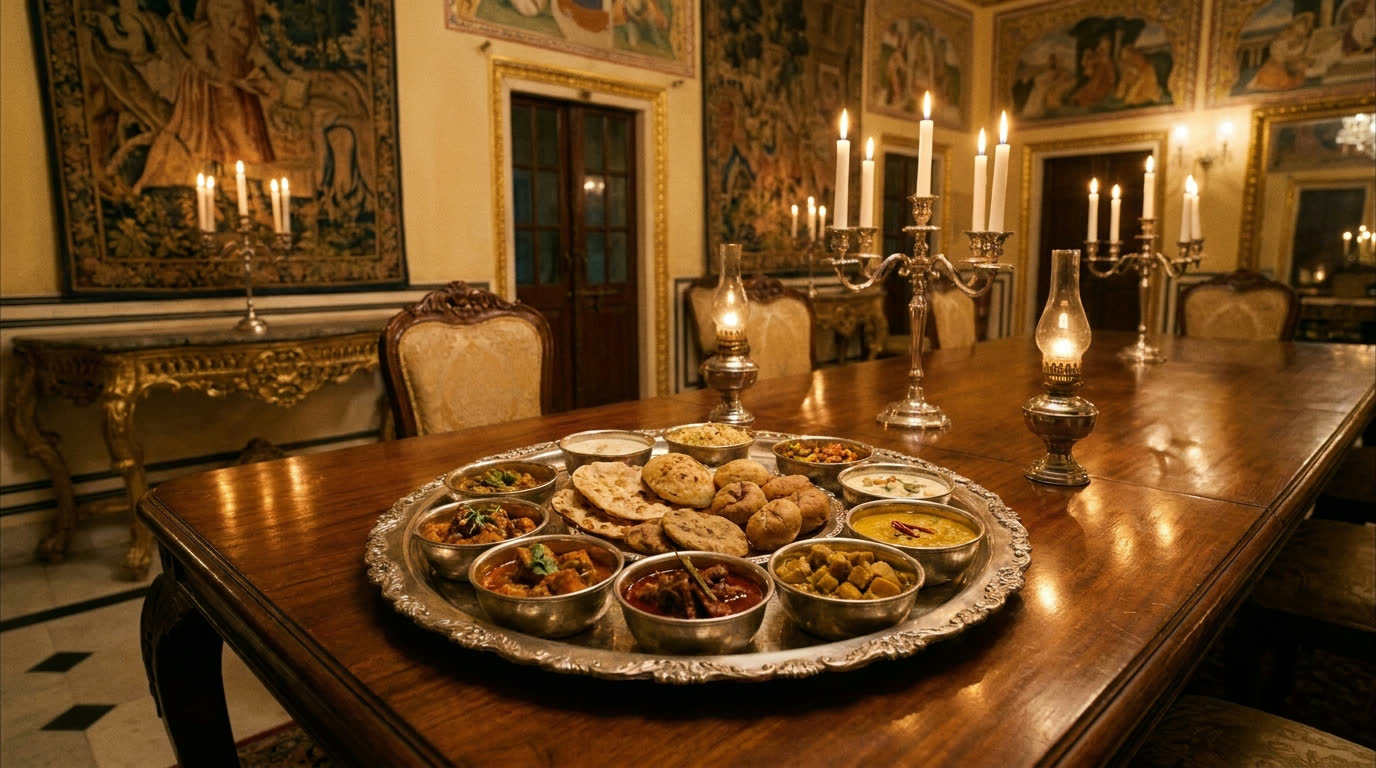
Rajasthani cooking is desert cuisine made regal: laal maas (fiery slow-cooked mutton), dal baati churma, gatte ki sabzi, and a sweets tradition — ghewar above all — that the city takes as seriously as its gems. The top tables are in the palaces; the soul is in the bazaar.
The grand tables
Suvarna Mahal at Rambagh Palace Map serves royal-recipe thalis under gilded ceilings in the former ballroom — order the Rajasthani thali and let the sommelier argue for the pairing. At Rajvilas, Raj Mahal reworks regional India with Oberoi precision, and dinner by the torch-lit pool is the romantic set piece. 1135 AD Map, inside Amber Fort's Jaleb Chowk, does silver-thali royal dining in a mirrored salon — touristic, yes, and still the best-placed dinner in Rajasthan; book the Sheesh Mahal room.
The fashionable set
Bar Palladio bar-palladio.com Map in the Narain Niwas gardens is the blue-lacquered Italian fantasy that relaunched Jaipur's evening scene — negronis under tented ceilings, every surface painted. Come at dusk when the lanterns go on. Its sibling Villa Palladio on the Amber road extends the fantasy in red and white. Baradari at City Palace covers the smart lunch near the sights.
Bazaar level
LMB (Laxmi Misthan Bhandar) in Johri Bazaar Map has sold sweets since 1954 — the ghewar and the paneer ghewar are the order, boxed for the flight home. Pyaaz kachori from Rawat Map is the breakfast the city actually eats. Lassi comes in a clay cup from Lassiwala on MI Road — the original stall, not its neighbouring imitators, a distinction locals police fiercely.
Where is the luxury insider layer?
Jaipur's private layer is the workshop and the vault: gem houses that receive by appointment, printing ateliers that open their tables, and palace rooms that unlock with the right introduction. This is the best shopping city between Milan and Tokyo, and it rewards preparation like nowhere else.
The gem houses
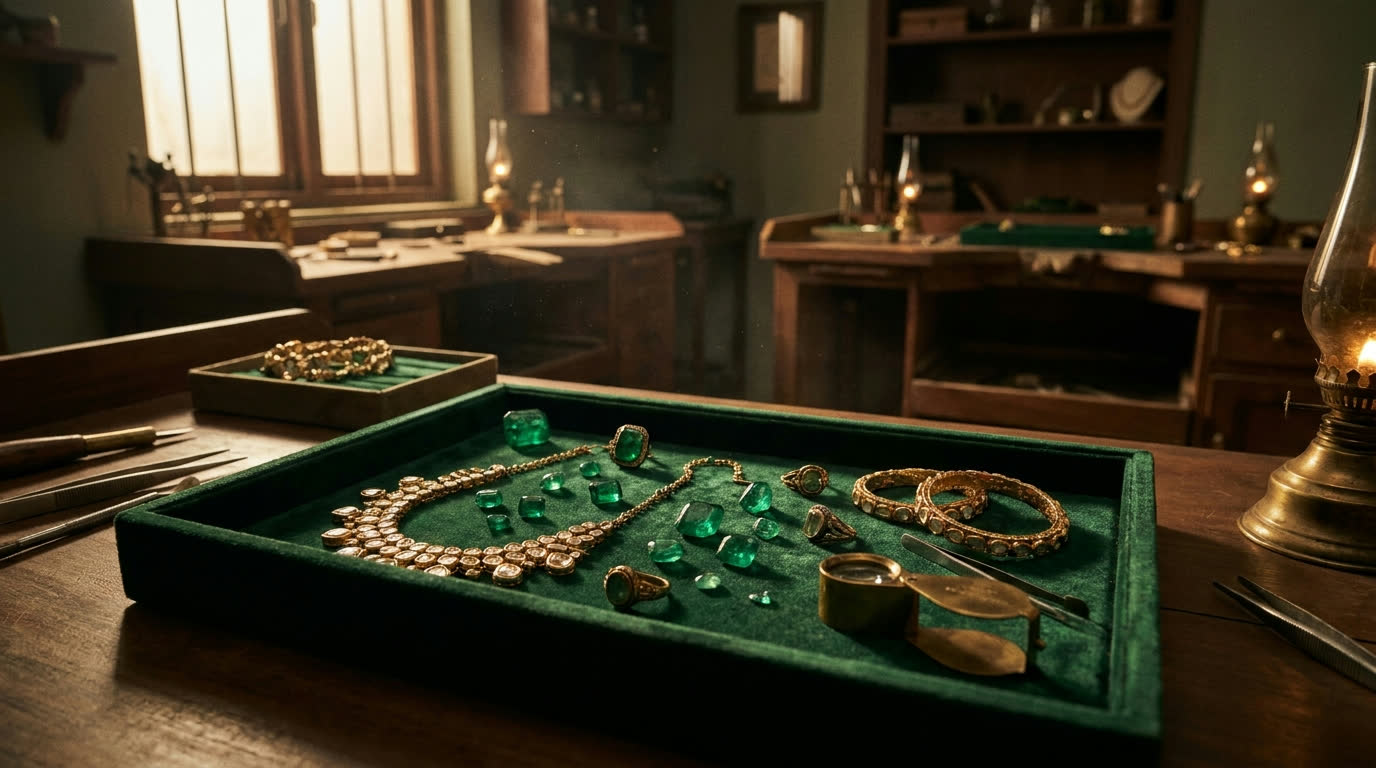
Jaipur has cut coloured stones since the 18th century and remains a world capital of emerald cutting. The legendary address is Gem Palace on MI Road Map — jewellers to maharajas and museums since 1852, where the back rooms hold pieces the front room only hints at. Around Johri Bazaar Map, established houses work meenakari enamel and kundan settings to commission. The rules: buy with certification, agree export paperwork before falling in love, and go by introduction — the serious rooms open differently for a known name. That introduction is precisely our job.
Ateliers & private shopping
Block-print studios in Bagru and Sanganer take private commissions; city showrooms like the long-established textile houses off MI Road will run bespoke table linen and quilts to your measurements within the week. Blue pottery, miniature painting and hand-bound stationery each have their master workshops — an atelier morning with the right fixer replaces a suitcase of souvenirs with three things you will keep for decades.
Evenings & the smoke-friendly rooms
The Polo Bar at Rambagh Map is the city's clubbable room — whiskies, trophies, deep armchairs — and the palace terraces accommodate cigar smokers graciously; ask the butler rather than the menu. Bar Palladio holds the fashionable end of the evening. For the full production, a private dinner can be set in a fort courtyard or a haveli rooftop with musicians — booked through the hotels or through us, ideally two weeks out.
Seclusion & working stays
Rajvilas is the connectivity-and-calm choice: villa-tier rooms, garden acreage, and city access without city noise. For a full retreat, Samode Palace — the family's fort-palace an hour north — takes buyouts, and the December wedding season proves its logistics weekly. Jaipur's own pace is the real amenity: nothing here starts before nine except the forts, and nothing good happens in a hurry.
Jaipur sends people home changed in a specific way: they start commissioning things. The city's argument — that beauty is a craft economy, not a price point — is hard to unhear. Give it three days, take the introductions seriously, and leave luggage space for what follows you home.
Every address above can be arranged, reserved and chauffeured for you — free, by your dedicated Dubai-based specialist.
Plan my Jaipur journey