The Hoi An Little Black Book
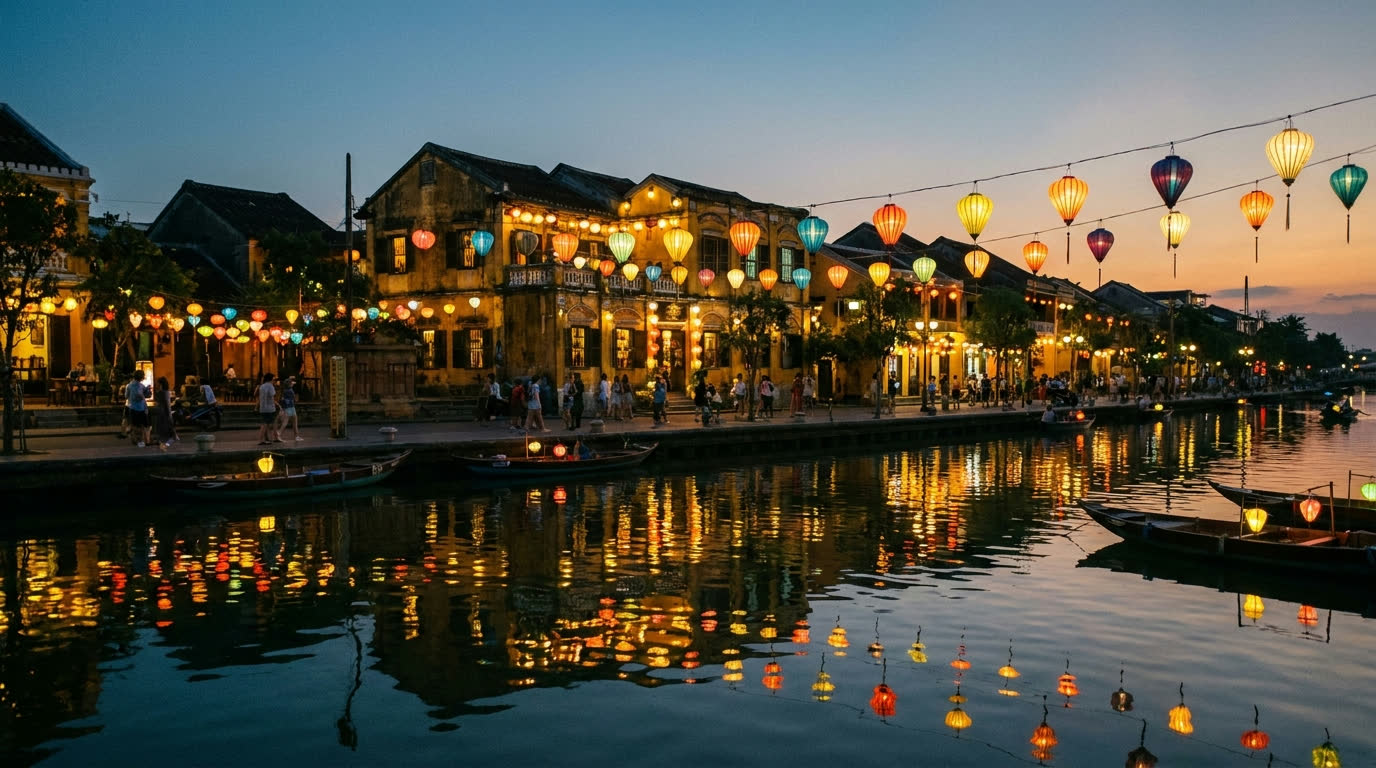
Hoi An is small, and that is the whole point. A fifteenth-century trading port on the Thu Bon river, preserved almost intact — yellow shophouses, silk lanterns, a Japanese bridge — with Vietnam's best beach resorts twenty minutes away and its finest tailors on every second corner. Nowhere else in Asia packs this much into a town you can walk end to end in twenty minutes.
The luxury play here is contrast: mornings in the old town before the day-trippers arrive from Danang's cruise terminal, afternoons behind the walls of a beachfront pool villa. Get the timing right and Hoi An feels private. Get it wrong and you share a UNESCO site with six thousand people at 4pm.
What is Hoi An really like? What are the big adventures? How should you spend your days? Where should you stay? Which iconic spots deserve your time? What should you eat? Where is the luxury insider layer?
What is Hoi An really like?
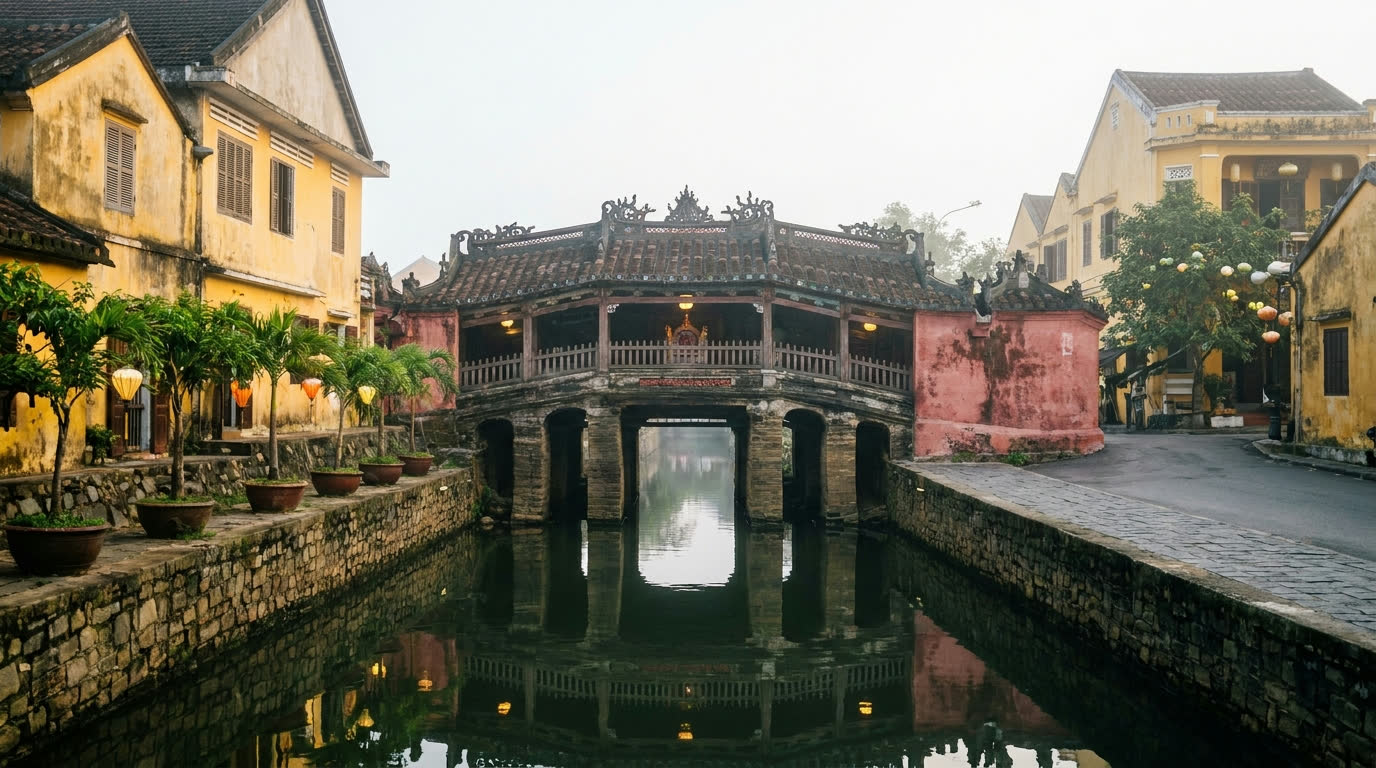
Hoi An runs on two clocks. From dawn until about 9am the old town belongs to itself — market boats unloading on the river, tailors opening shutters, the Japanese bridge empty in soft light. From late morning it becomes one of Asia's most visited heritage sites, and by late afternoon the lanes are shoulder to shoulder. The travellers who love Hoi An are the ones who learned to live on the first clock.
It suits couples above all — this is arguably Vietnam's most romantic town — but families do well too, thanks to the beach resorts, bicycle-flat countryside and cooking classes children genuinely enjoy. The town is a UNESCO World Heritage Site frozen around its 18th-century golden age, when Japanese, Chinese and European merchants traded silk and ceramics here; the assembly halls and clan houses they left behind are still working temples, not museum sets.
Seasonality matters more here than almost anywhere we send clients. February to May is the sweet spot. October and November bring typhoon-season rains that flood the riverside streets most years — locals move furniture upstairs with practised calm, and boats replace bicycles on Bach Dang street. Dramatic to see; not what you want mid-holiday.
A detail that recalibrates expectations: the old town closes to cars permanently and to motorbikes for much of the day, which makes it one of the very few places in Vietnam where crossing the street requires no act of faith. The soundscape — bicycle bells, boat engines, temple bells — is half the luxury.
Thinking about central Vietnam? Your dedicated specialist will time every hour of it around the crowds — free.
Plan my Hoi An journeyWhat are the big adventures around Hoi An?
The marquee experiences radiate outward: a ruined temple sanctuary in the jungle, an island marine reserve offshore, and one of the world's great coastal drives to the north. All three work as private half-days from a beach villa base.
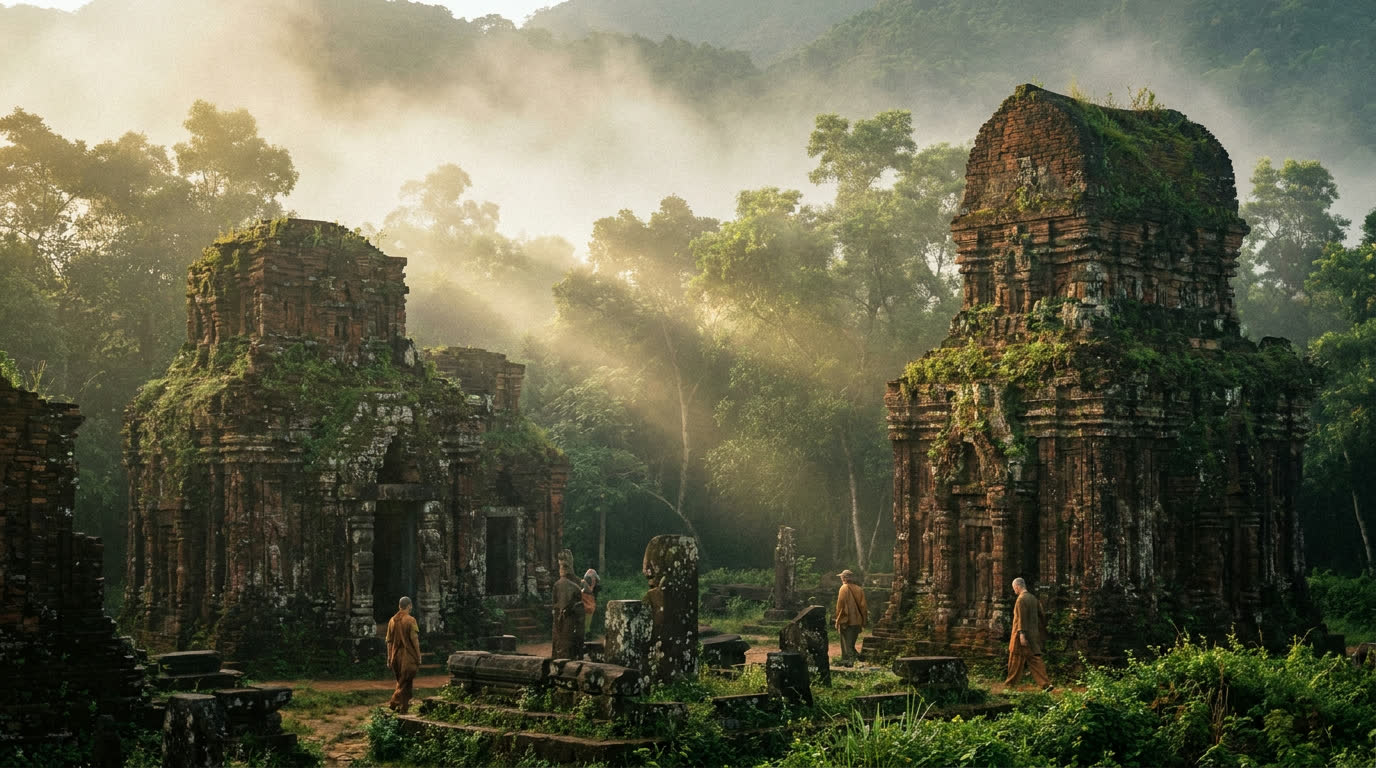
My Son at dawn
My Son Map was the spiritual capital of the Cham civilisation for nine centuries — red-brick tower temples in a mountain-ringed valley, an hour inland. Arrive for opening (typically 6am) and you walk the sanctuary in mist, alone but for the birds; by 9am the coaches arrive and the spell is gone. Take a guide who reads the Sanskrit steles and Shiva iconography. The B-52 craters among the ruins tell the site's second, sadder story — much of My Son was destroyed in a single week of 1969.
The Cham Islands
Eight granite islands 45 minutes offshore Map form a UNESCO biosphere reserve — snorkelling over coral gardens, a fishing village lunch, empty coves. Public speedboats churn out day-trippers by the hundred; charter privately, leave at 7:30am, and you have Bai Chong beach to yourselves until the fleet arrives at eleven. Seas run March to September; the islands close in rough season.
The Hai Van Pass
North of Danang the mountains fall into the sea, and the road over them Map — the "Pass of Ocean Clouds" — is the drive Top Gear made famous. Do it as a chauffeured loop to Hue's imperial citadel and tombs, or in an open-top vintage jeep with photo stops at the French and American-era gun emplacements on the summit. Clear mornings only; the pass earns its name by noon.
Gentler: paddies, basket boats and the river
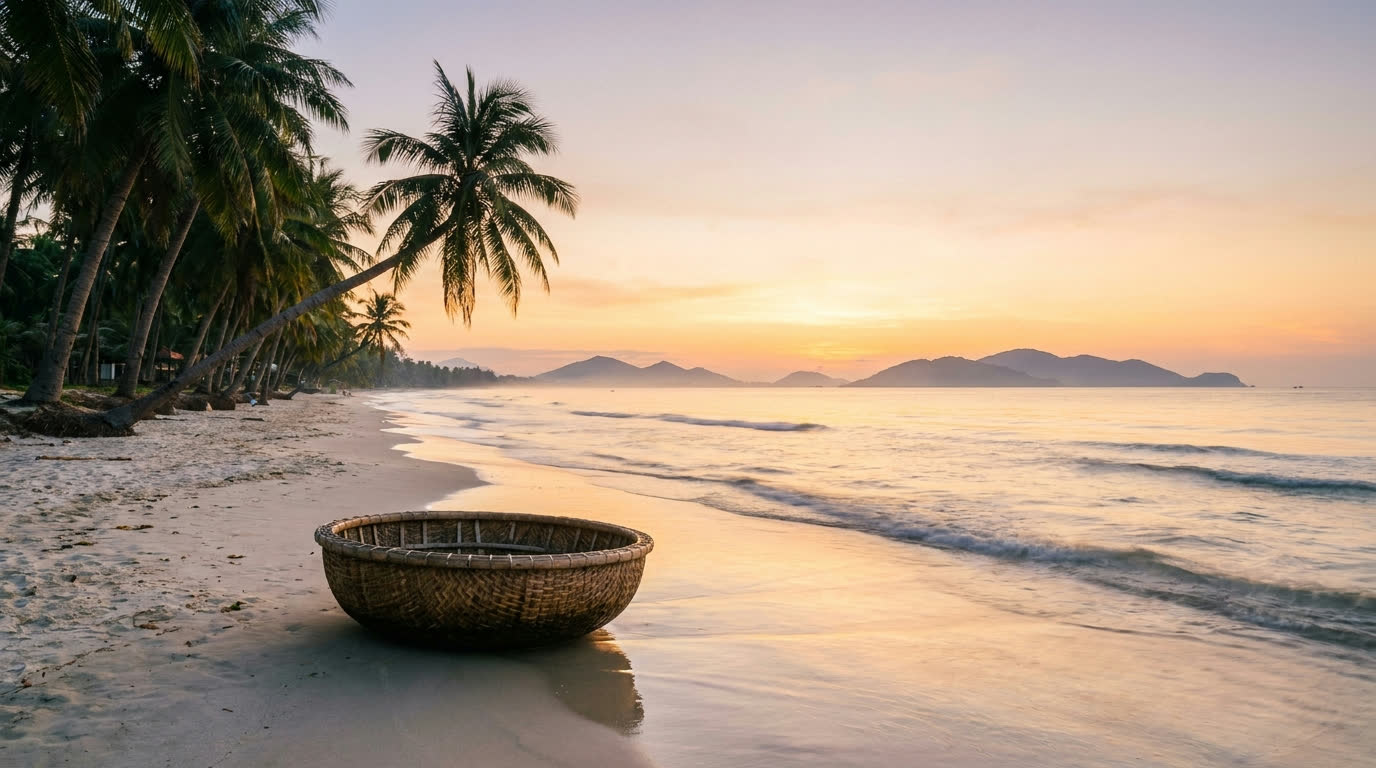
Ballooning has not reached Hoi An; the local adventures are low and slow. Cycle the levee paths through Tra Que herb village and Cam Thanh's water-coconut channels, take a sunrise photography boat on the Thu Bon with the net fishermen, or learn the absurd, joyful art of paddling a round bamboo basket boat. Children take to all three instantly.
How should you spend your days in Hoi An?
Four to five nights is right: two on the town, the rest on the beach and the excursions. The governing rule — old town early or late, never mid-afternoon — shapes everything below.
Day one: old town at 7am with a historian guide — the Tan Ky and Duc An merchant houses, the Fujian and Cantonese assembly halls, the bridge — then first tailor fittings before lunch at Morning Glory. Villa afternoon. Return at 6pm for the lanterns and dinner. Day two: My Son at dawn, Tra Que village Map by bicycle at golden hour, second fitting. Day three: Cham Islands charter or a full villa-and-spa day. Day four: Hai Van Pass and Hue, or a cooking class that begins in the central market at 6:30am when the produce boats land. Day five: final fittings, beach, night flight from Danang.
Families should anchor at a beach resort and treat town as evening outings — the lantern-making workshops and basket boats absorb children completely, and every resort pool below is toddler-friendly. Couples should buy the town's quietest hour deliberately: a private breakfast on a heritage-house balcony above the lanes, arranged with notice, watching the town wake beneath you.
Logistics: Danang International Airport Map is 45 minutes from the old town and connects through Ho Chi Minh City, Hanoi, Bangkok and Singapore. There is no ride-hailing chaos here — but book a hotel car anyway; the difference is a cold towel and a driver who knows the flood-season detours.
Where should you stay in Hoi An?
The choice is structural: beachfront resort (Ha My or An Bang beaches, 10–20 minutes out) or riverside in town. Our default for first-timers is the beach with town evenings — the resorts run shuttle boats and cars late enough that you sacrifice nothing.
| Hotel | Tier | From (indicative) | Best for |
|---|---|---|---|
| Four Seasons Resort The Nam Hai | Ultra | US$750/night | Beachfront pool villas, the region's benchmark |
| InterContinental Danang Sun Peninsula | Ultra | US$550/night | Monkey-forest hillside drama, La Maison 1888 |
| Anantara Hoi An Resort | Luxury | US$250/night | Riverside in town, colonial verandas |
| Hoiana Hotel & Suites | Luxury | US$220/night | Golf (Robert Trent Jones Jr course), big-resort polish |
| La Siesta Resort & Spa | Refined | US$130/night | Gardens between town and beach, superb value |
| Victoria Hoi An Beach Resort | Refined | US$150/night | Direct sand on Cua Dai, family ease |
Four Seasons Resort The Nam Hai — the benchmark
The Nam Hai Map holds a Forbes five-star rating for the eighth consecutive year and Vietnam's best-resort titles besides. One-bedroom villas sit in lotus-pond gardens; the pool villas add a private lap pool and butler. The raised sleeping platform under a lacquered canopy divides guests — ask for a villa on the beach row and decide for yourself at sunrise. NAYUU, its omakase counter, flies fish in from Japan twice a week.
InterContinental Danang Sun Peninsula — the spectacle
Forty minutes north on the Son Tra peninsula Map, Bill Bensley's four-tiered fantasy tumbles down a jungle hillside to a private bay — funicular between levels, endangered red-shanked douc langurs in the trees, and La Maison 1888 at the bottom. Choose it for the setting; choose the Nam Hai for Hoi An itself.
In town and in between
Anantara Hoi An Map is the old town's best address — low colonial buildings on the riverbank, a ten-minute lantern-lit stroll from the bridge; book a Deluxe River View balcony. Hoiana Map, twenty minutes south, adds the region's best golf. La Siesta Map and Victoria Map cover the refined tier without compromise on service — central Vietnam's hospitality runs deep at every price.
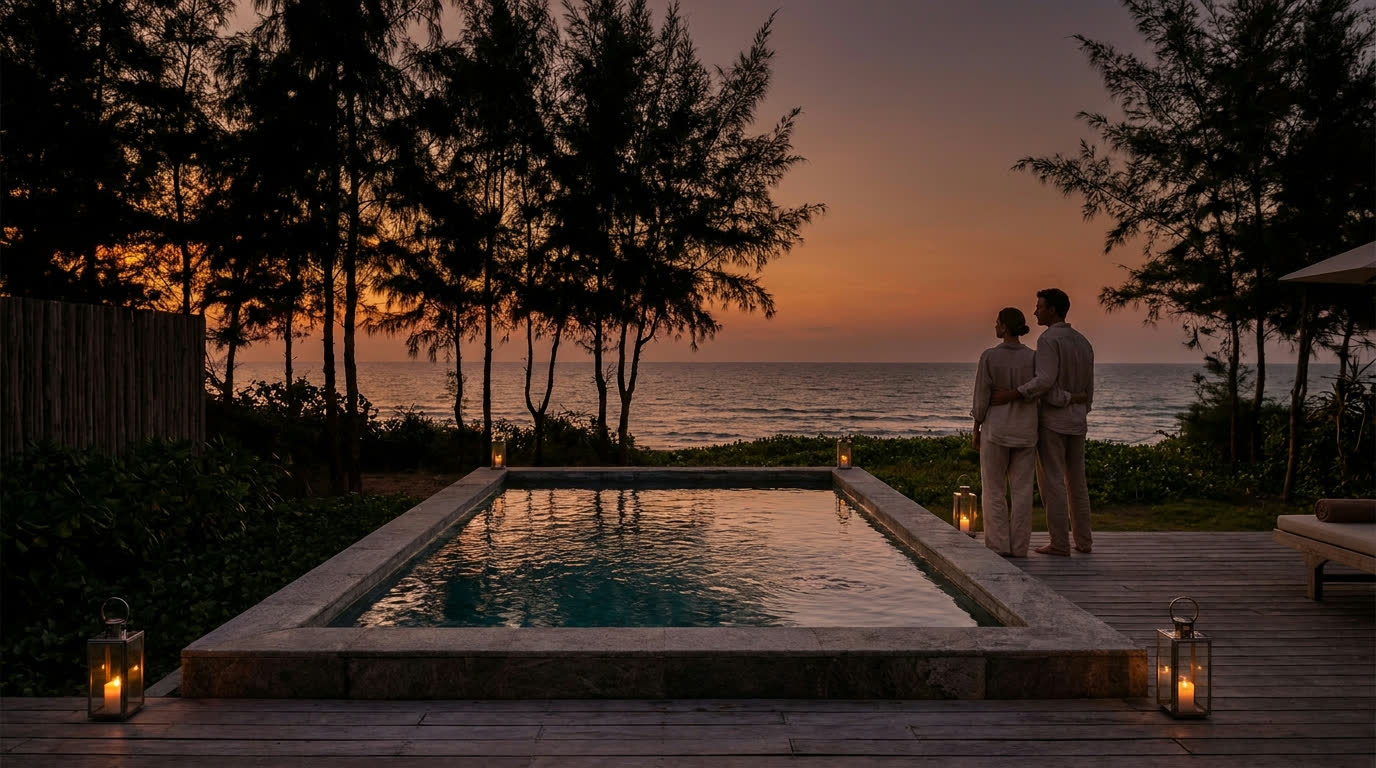
Villa categories at the Nam Hai vary more than the rate card admits. Ask us which row to book — free.
Plan my Hoi An journeyWhich iconic spots deserve your time — and how do you see them properly?
Hoi An's icons are compact and close together; the variable is never distance but hour. The old-town entrance ticket (a modest fee that funds preservation) admits you to a choice of heritage houses and halls — pick fewer, earlier.
The Japanese Covered Bridge
Built by the town's Japanese merchant community around 1590, the bridge Map — with its small temple mid-span and monkey and dog guardian statues — emerged from a painstaking three-year restoration in 2024. Photograph it from the west bank at 6:30am; cross it before 8am. It appears on the 20,000-dong note, which makes for the cheapest souvenir comparison shot in Asia.
The merchant houses and assembly halls
Two houses and one hall suffice: Tan Ky House Map, seven generations in the same family, its beams marked with flood heights; Duc An House for the bookshop-turned-revolutionary-safehouse story; and the Fujian Assembly Hall Map, whose incense spirals burn for weeks over the courtyard. A private historian guide converts these from pretty interiors into the town's actual biography.
The full-moon lantern festival
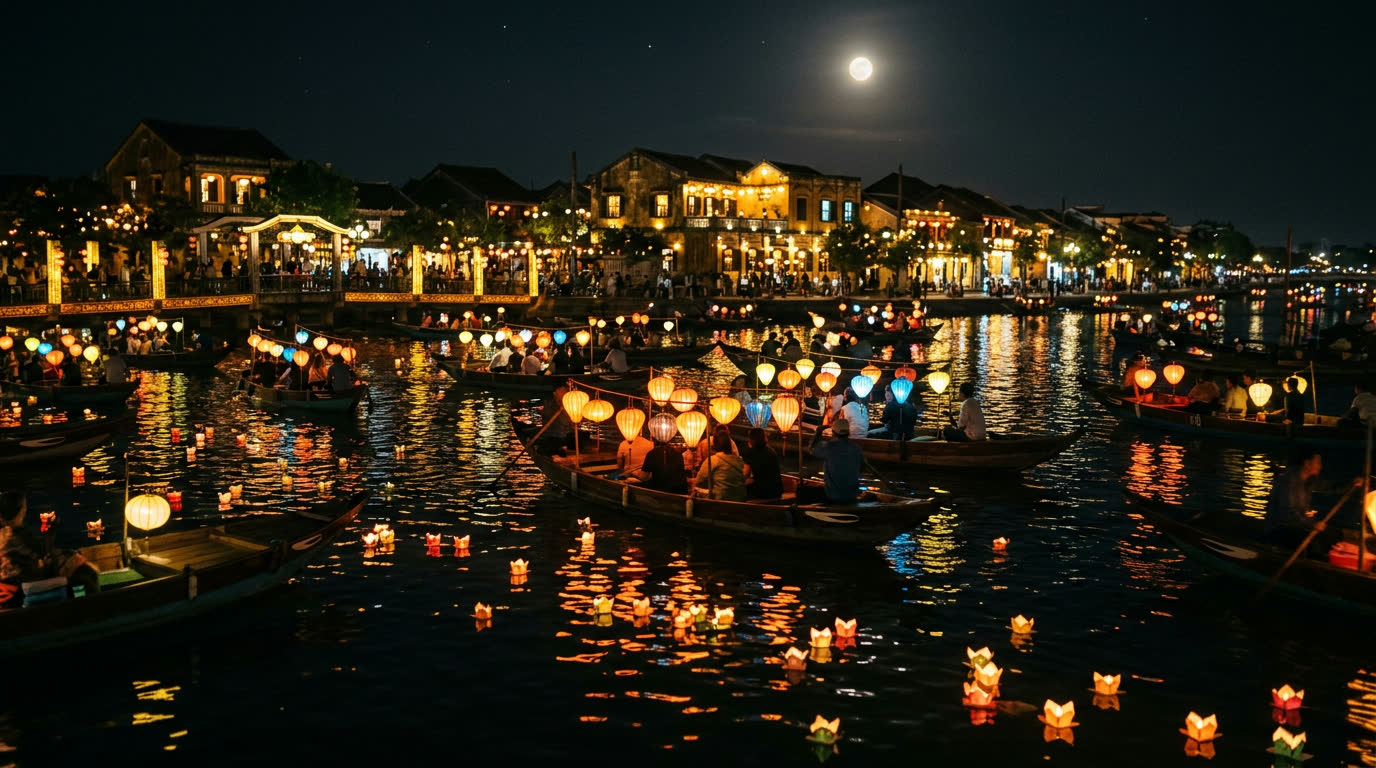
On the 14th of each lunar month the electric lights go off and the town runs on silk and candlelight. See it from the water: a private sampan on the Thu Bon at 6:30pm, floating candle offerings released midstream, then dinner on a riverside balcony booked well ahead. The bridges are a crush; the river is serene. And a secret hiding in plain sight — the ordinary evenings are lantern-lit too, minus several thousand people.
Tra Que village
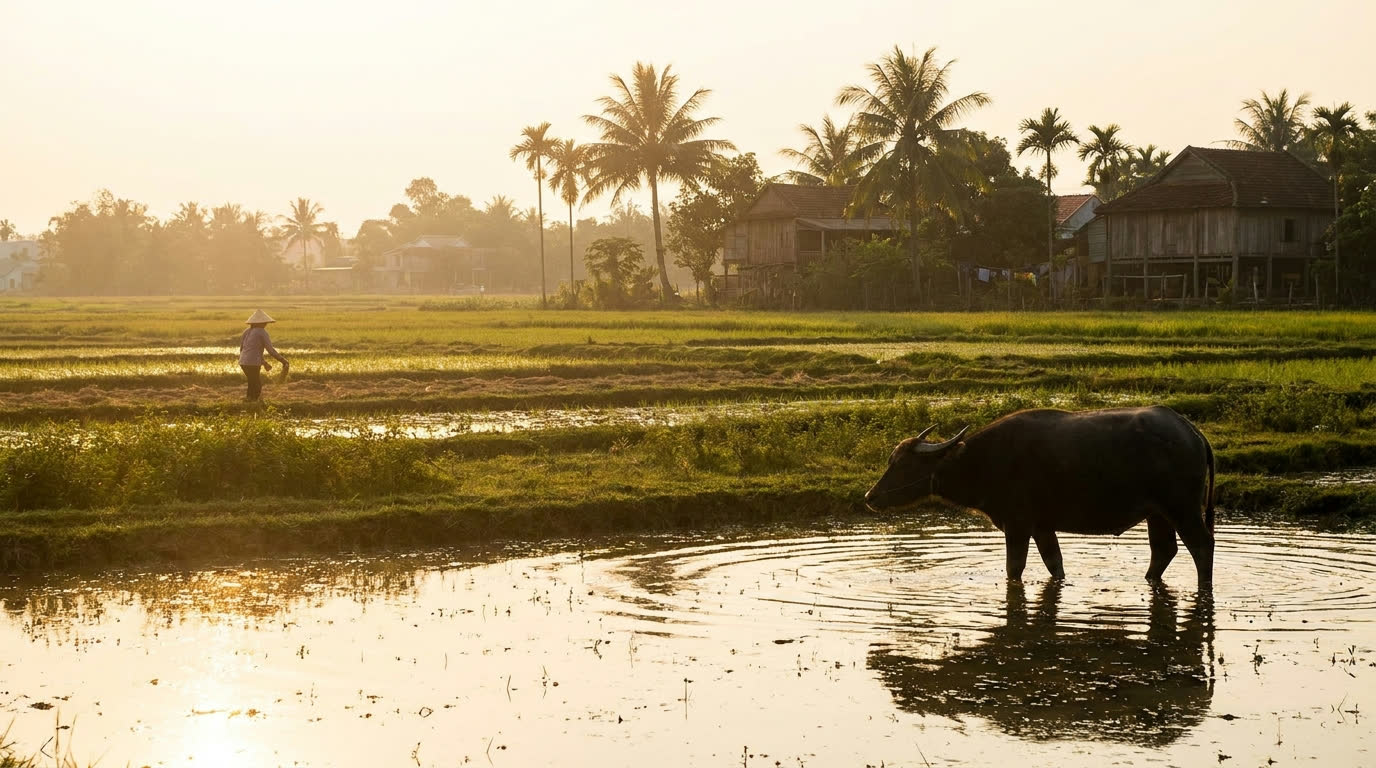
The herb-farming village between town and beach Map still works its plots by hand, seaweed-composted as it has been for centuries. Golden hour turns the rows luminous. Go by bicycle, stay for a farm dinner cooked in a family courtyard.
What should you eat in Hoi An?
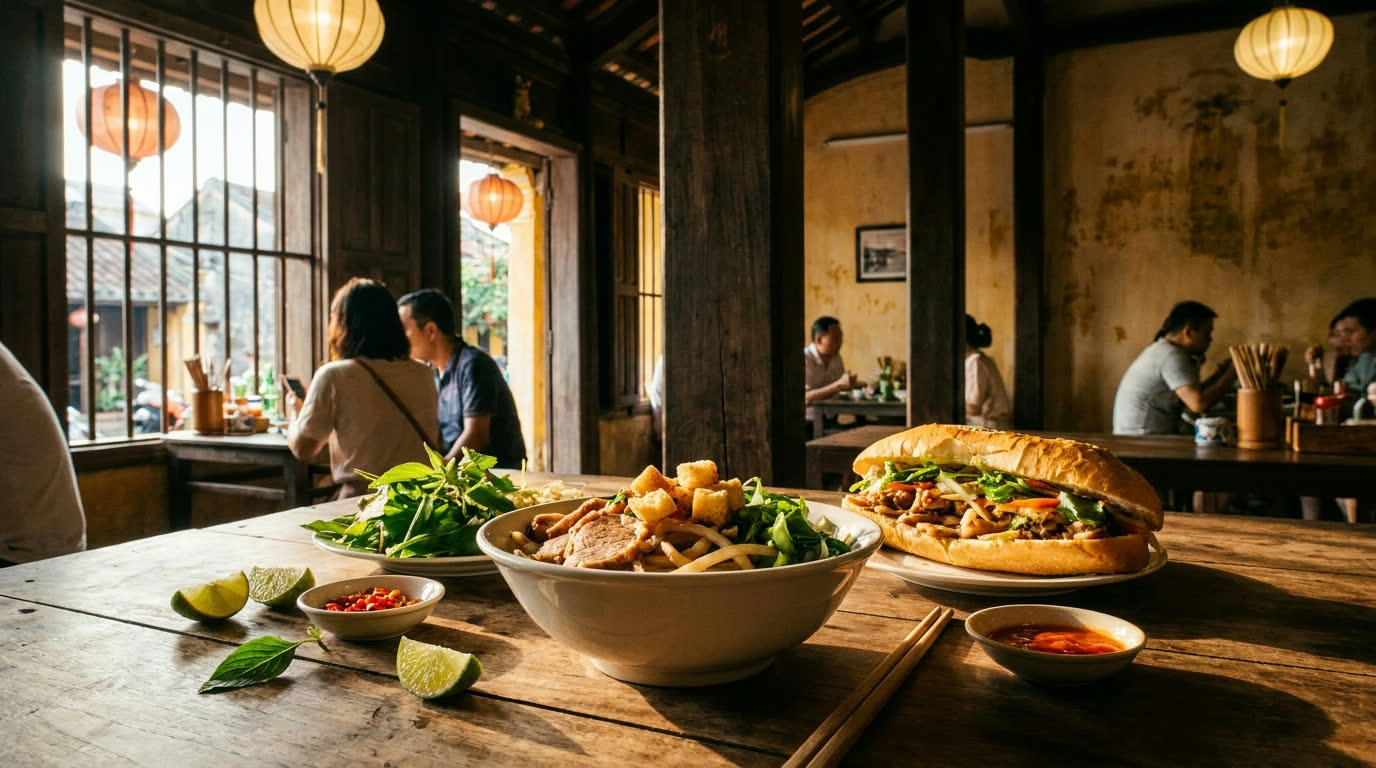
Hoi An has dishes that exist nowhere else, and the best of them cost less than your airport coffee. Cao lau — chewy noodles allegedly made with water from a specific ancient well, char siu-style pork, crisp croutons, greens — is the town's signature and its shibboleth; the barbecue smoke drifting over the market at lunch is the town's true perfume. Eat street-level at lunch, fine at dinner.
The institutions
Morning Glory Map, chef Trinh Diem Vy's old-town flagship, remains the definitive introduction to central Vietnamese home cooking — order the white rose dumplings, the caramelised clay-pot fish and, yes, the morning glory. Nu Eatery Map, a tiny two-storey room near the bridge, does the modern version: short menu, sharp cooking, book ahead. Banh Mi Phuong Map is the baguette Anthony Bourdain called a symphony; the queue moves fast and the crust justifies it.
The fine end
At the Nam Hai, NAYUU runs central Vietnam's first Japanese omakase counter — fish flown in twice weekly — and Café Nam Hai's Indian menu is the region's quiet surprise. Forty minutes north, La Maison 1888 Map at the InterContinental gives the region its French gastronomic statement in a Bensley-designed mansion; Danang's dining scene has carried a Michelin Guide selection since 2023. Our advice runs contrary to instinct here: keep dinners local and low, and spend the saved budget on one blow-out — this is one of the world's great cheap-food towns, and pretending otherwise wastes it.
Learn it
Hoi An's cooking classes are Vietnam's best precisely because the market is 200 metres from most kitchens. The serious versions start at 6:30am among the produce boats, move to a river garden by basket boat, and end with you eating your own white rose dumplings. Ms Vy's market-to-table classes set the template.
Where is Hoi An's luxury insider layer?
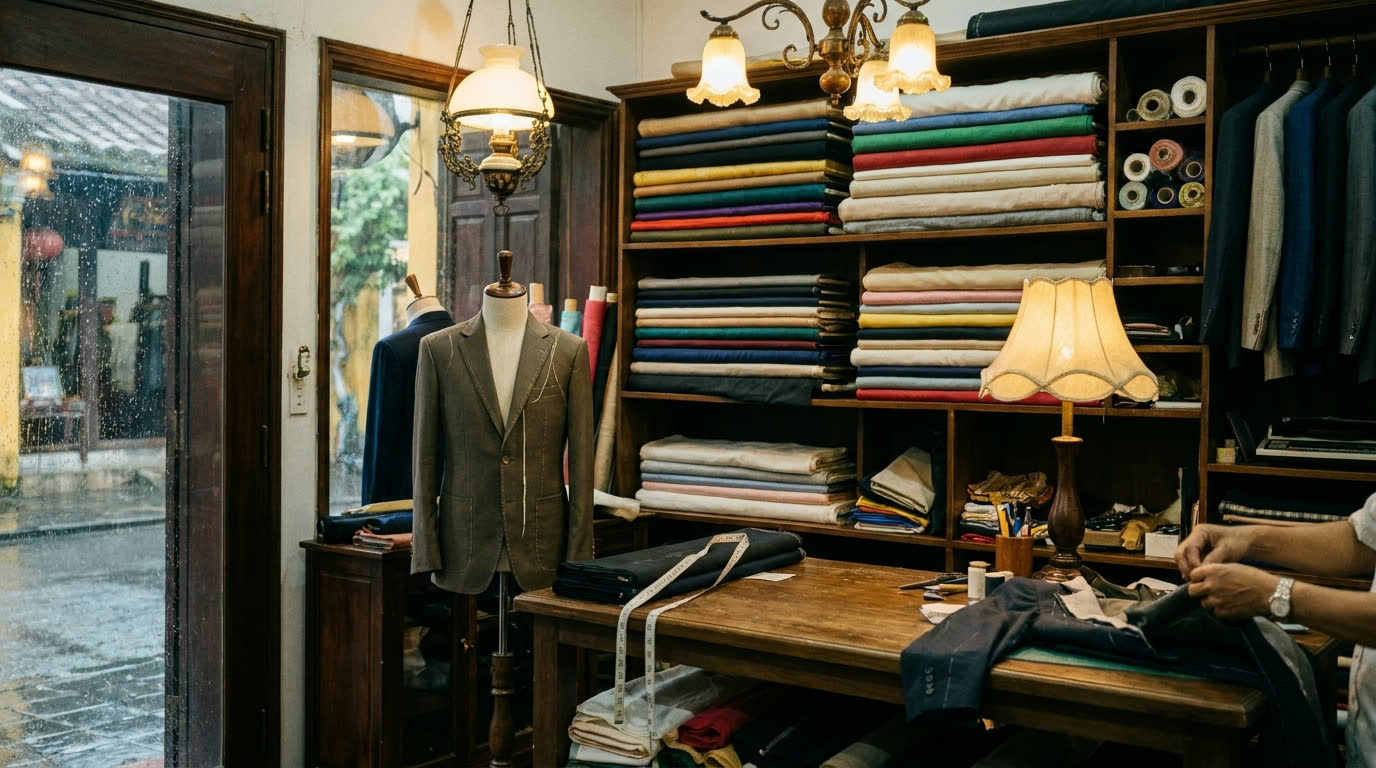
Hoi An's version of private shopping is not a maison suite — it is a tailor who cuts to your body in 48 hours at a tenth of Savile Row's price. Add An Bang's barefoot beach clubs and the private-charter river and islands, and the insider layer here is craft, sand and water rather than velvet rope. (Cigar lounges, for the record, have not reached Hoi An; your hotel bar's terrace is the smoking option.)
The tailors — Hoi An's true luxury retail
Several hundred tailor shops operate in town; three houses do the volume of work that keeps standards high. Yaly Couture Map is the largest and most corporate, with the deepest fabric library — its ateliers handle complex tailoring (structured jackets, evening wear) best. Bebe Tailor Map runs it close on suits and turns fittings around fastest. A Dong Silk Map is the silk specialist. The method matters: bring photographs, choose cloth conservatively (the wilder silks date fast), insist on two fittings, and start on day one so day four can rescue anything. Finished wardrobes ship worldwide; leather shoes made to your outline follow by courier.
An Bang's beach clubs
An Bang Beach Map keeps its luxury barefoot. Soul Kitchen Map is the institution — daybeds on the dune grass, live music at sunset, seafood platters. The Deckhouse and Shore Club next door run the smarter loungers and the cocktail lists. None charges Mediterranean entry fees; all reward arriving by 10am for the front row. The resorts' own beach service (the Nam Hai's especially) covers the fully-staffed version.
Private water
The moves worth making: a private sunrise boat among the Thu Bon net fishermen with a photographer, a chartered speedboat to the Cham Islands before the public fleet, and a sunset sampan with champagne below the old town as the lanterns come on. Each costs less than a Dubai beach-club daybed; together they are the difference between visiting Hoi An and briefly owning it.
Seclusion and connectivity
For working stays, the villa resorts run fibre Wi-Fi reliable enough for video calls, and the Nam Hai's three-bedroom pool villas function as staffed compounds — butler, chef on request, gates. True seclusion is the countryside: private heritage villas among the paddies around Cam Thanh rent with staff, and the silence there at night is total but for frogs.
Practical close. Carry small VND notes for the market and boats; cards work everywhere serious. Dress light and modest for temples. The 90-day e-visa applies to all nationalities — apply online a week out. Pair Hoi An with Hanoi or Bangkok on the way through, and if the lantern festival matters to you, tell us early — the lunar date moves every month and the good river tables go with it.
Every address above can be arranged, reserved and chauffeured for you — free, by your dedicated Dubai-based specialist.
Plan my Hoi An journey