Dubrovnik for the Ultra-Discerning: Walls, Water and the Adriatic's Best Table
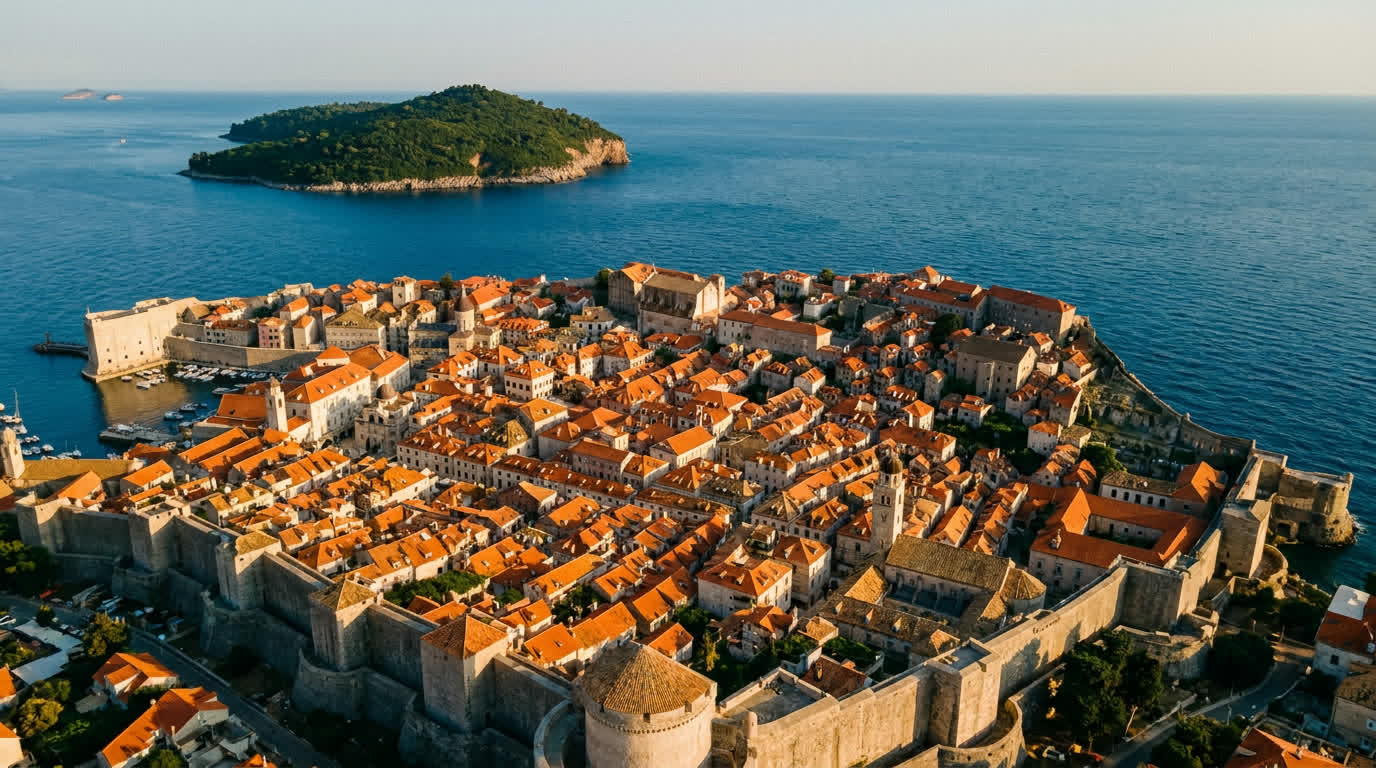
Dubrovnik ran itself as an independent maritime republic for 450 years, out-trading Venice while flying its own flag, and the confidence never left. The walled city is small — you can cross it in eight minutes — and in August it can feel like the whole Mediterranean is trying to. Timed correctly, though, it becomes what it always was: a marble-paved republic of one square kilometre with the Adriatic on three sides. Our Dubrovnik concierge page holds the short brief; this is the working file.
The trick is rhythm. Old Town early and late, water in the middle. Every good Dubrovnik day follows that shape.
What is Dubrovnik really like? The big adventures What to do day by day Where to stay The iconic spots What to eat The luxury insider layer
What is Dubrovnik really like?
Dubrovnik is a preserved Renaissance city-state — the Republic of Ragusa — that abolished slavery in 1416, ran Europe's first quarantine system, and paid tribute to empires rather than kneel to them. Today it is Croatia's most polished destination: compact, walkable, expensive by Balkan standards and cheap by Riviera ones. It suits travellers who like their beach days framed by real history, and couples above families in high summer.
Two forces shape a visit. Cruise ships, which land mid-morning and leave by evening; and the Game of Thrones effect, which turned Fort Lovrijenac and the Jesuit Staircase into pilgrimage sites. Neither ruins the city. Both reward planning around. The town empties beautifully after 7pm, when the day-trippers sail and the limestone of Stradun goes gold underfoot — polished to a shine by four centuries of soles, and genuinely slippery in rain. Wear rubber, not leather.
Season notes: the sea holds 24–26°C from June into October. May and September give you warm water, open terraces and space. February brings the Feast of St Blaise, the locals' own festival, and hotel rates at a third of August.
Every address in this guide can be reserved, sequenced and chauffeured for you — free, by your dedicated Dubai-based specialist.
Plan this journey with your free conciergeWhat are the big adventures around Dubrovnik?
Three: the water, the islands and the wine country. Dubrovnik's adventures are horizontal rather than vertical — sea kayaking under the walls, private cruising through the Elaphiti islands, and driving the Pelješac peninsula where Croatia's biggest reds grow on 45-degree slopes above the sea.
Sea kayaking beneath the walls
The classic sunset route launches beside Fort Lovrijenac Map, rounds the seaward walls and pauses in the Betina cave beach. Two hours, moderate effort, and the only angle from which the fortifications look the way their builders intended — from a boat, as a threat. We book private guides rather than the group flotillas; same route, half the shouting.
The Elaphiti islands by private boat
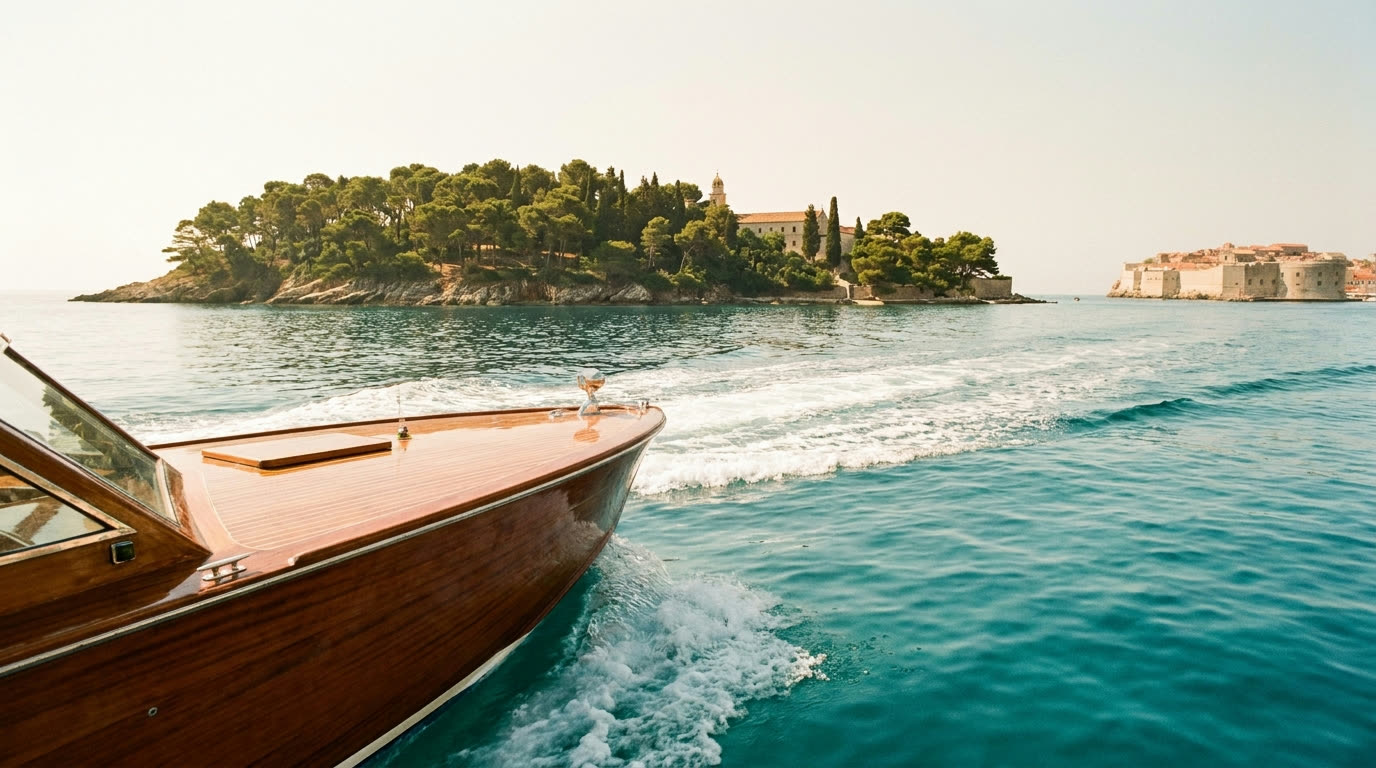
Šipan, Lopud and Koločep sit forty minutes northwest. Lopud is the one: car-free, monastery at one end, and Šunj — a rare true sand beach — at the other Map. A skippered day cruise with lunch at a family konoba on Šipan, swimming stops chosen by wind, is the best single day money buys here.
Pelješac and Ston
An hour up the coast, the Pelješac peninsula grows Plavac Mali — the Dingač appellation's vines pitch straight into the sea — and the salt-town of Ston farms oysters in Mali Ston bay as it has since Roman times. Eat them off the boat at Bota Šare in Mali Ston Map. Walk a stretch of Ston's 5.5-kilometre defensive wall, Europe's longest, before lunch; you'll have earned the second dozen.
What should you do day by day in Dubrovnik?
Four nights is right; five with a Pelješac day. Mornings belong to stone, afternoons to water, evenings to terraces. Here is how we sequence it.
Day one: walls at 8am sharp from the Ploče entrance, anticlockwise (the sea stretch first, empty), then the Rector's Palace Map and the Franciscan Monastery's 1317 pharmacy. Afternoon at your hotel's swim platform. Dinner in the old harbour.
Day two: Lokrum by 10am boat — the island reserve ten minutes offshore with its ruined monastery, peacocks, saltwater "Dead Sea" lagoon and botanical garden Map. Pack swimming shoes; entries are rock ledges, not sand. Sunset cable car to Mount Srđ.
Day three: Elaphiti islands, private boat, konoba lunch. Day four: Pelješac wine and Ston oysters, or — for families — the Sun Gardens pools and a kayak morning. Children take to Dubrovnik surprisingly well: fortress ramparts, dragon-lore, gelato at every second door.
Where should you stay in Dubrovnik?
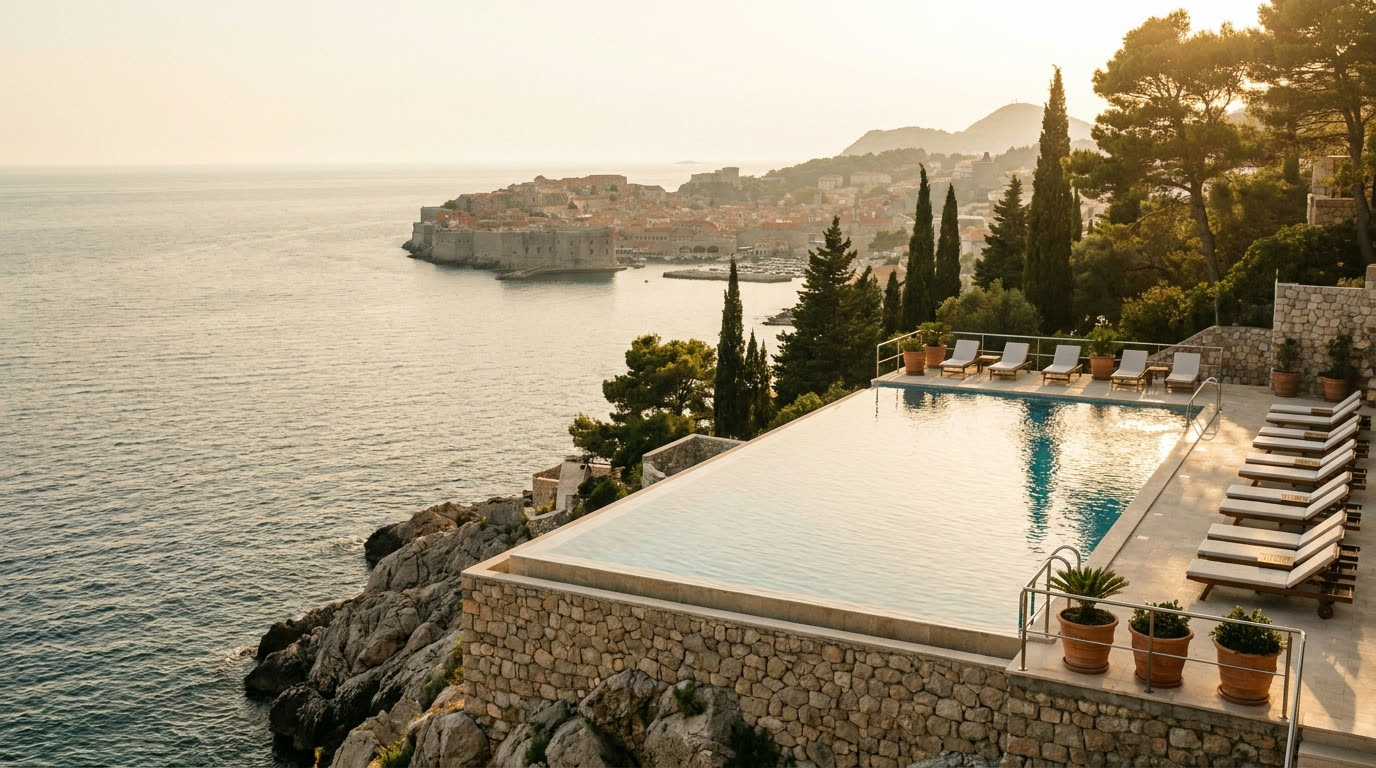
Stay on the Ploče side, east of the Old Town, where a string of cliffside hotels faces the walls across open water — the view every postcard is trying to photograph is the one from your balcony. Inside the walls is atmospheric but luggage arrives by porter's trolley; north-coast resorts trade proximity for space.
| Property | Tier | Indicative from | Best for |
|---|---|---|---|
| Villa Dubrovnik | Ultra | €900/night | Adults-first seclusion, Old Town views from every room |
| Hotel Excelsior | Ultra | €700/night | The 1913 grande dame, 5 minutes to Ploče Gate |
| Grand Villa Argentina | Luxury | €500/night | Terraced gardens and sea platform on the same cliff |
| Sun Gardens Dubrovnik | Luxury | €450/night | Families: pools, kids' club, 20 min north |
| Hotel More | Refined | €300/night | Lapad bay quiet, the famous cave bar below |
Villa Dubrovnik Map
Fifty-six rooms stacked into the cliff at Sveti Jakov, every one facing Lokrum and the walls. There's a funicular down to the sea platform, the Pjerin restaurant, and a rooftop prosciutto-and-wine bar built for the 8:45pm light. The hotel runs its own boat shuttle to the old harbour — take it in, walk the twenty minutes back along the coast path after dinner.
Hotel Excelsior Map
The 1913 original, host to royalty and film festivals for a century, renovated hard and holding a Michelin Guide hotel listing. Ask for an odd-numbered floor room facing the Old Town; the fifth-floor corner suites frame the walls like a cinema screen. The indoor pool and spa rescue shoulder-season rain days.
Grand Villa Argentina Map
Next door to the Excelsior and often €200 cheaper for the same view, with terraced gardens stepping down to a concrete swim deck over clear ten-metre water. Not as polished. Positioned identically. We use it when Villa Dubrovnik is full and the budget has a ceiling.
Every address in this guide can be reserved, sequenced and chauffeured for you — free, by your dedicated Dubai-based specialist.
Plan this journey with your free conciergeWhich iconic spots deserve your time?
Five, and the order matters: the walls first (early), then Lovrijenac, Stradun and the Rector's Palace, Mount Srđ for sunset, and Lokrum on your calmest day. Each has a timing trick that changes the experience entirely.
The city walls Map
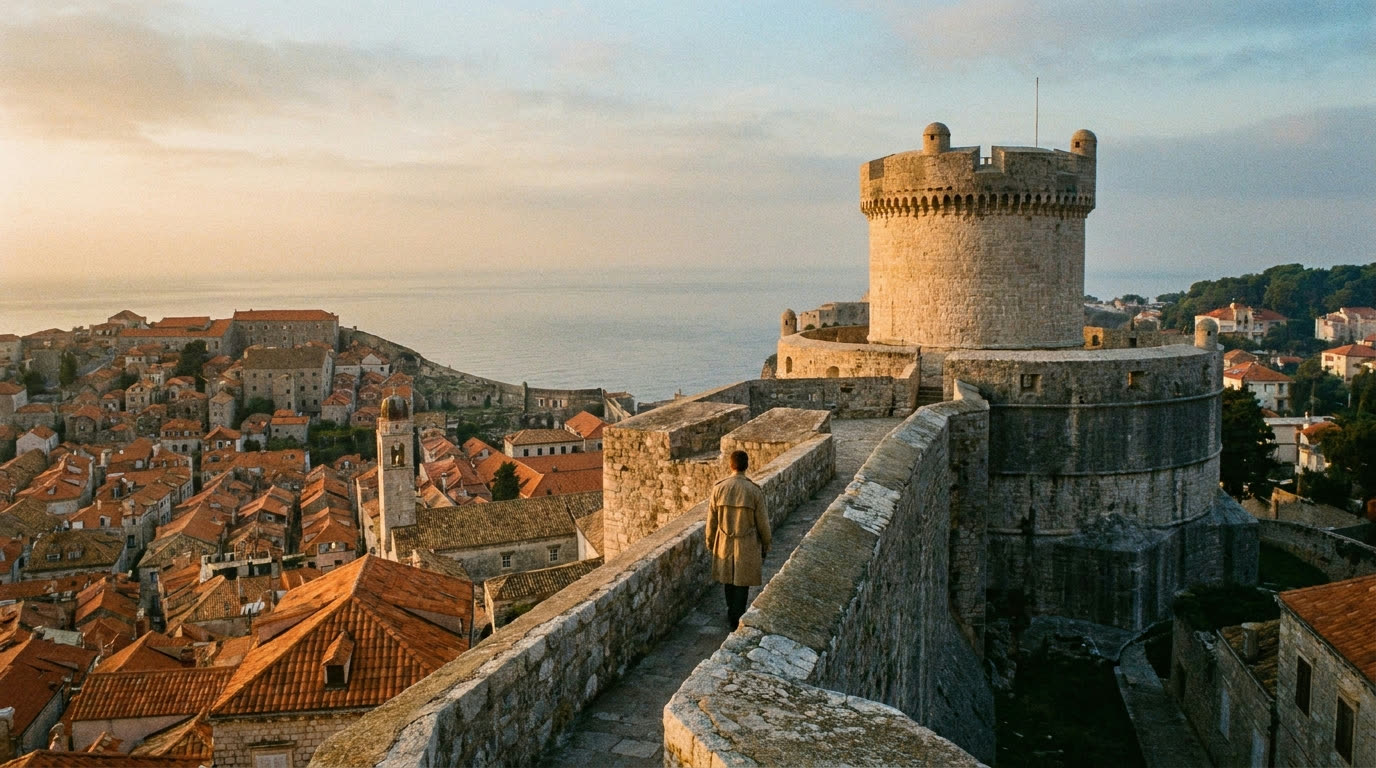
Two kilometres of 15th-century rampart, 25 metres high in places, with the Minčeta Tower — the round crown at the top of the circuit — as its high point. Enter at opening from Ploče, walk anticlockwise, and carry water: there is no shade and the July stone radiates like an oven from 10am. The circuit takes 90 unhurried minutes. Fort Lovrijenac, on its own rock outside the walls, is included in the ticket and is where the Red Keep scenes were shot; its stage hosts Shakespeare during the summer festival, which is the best possible way to see it.
Stradun and the old harbour Map
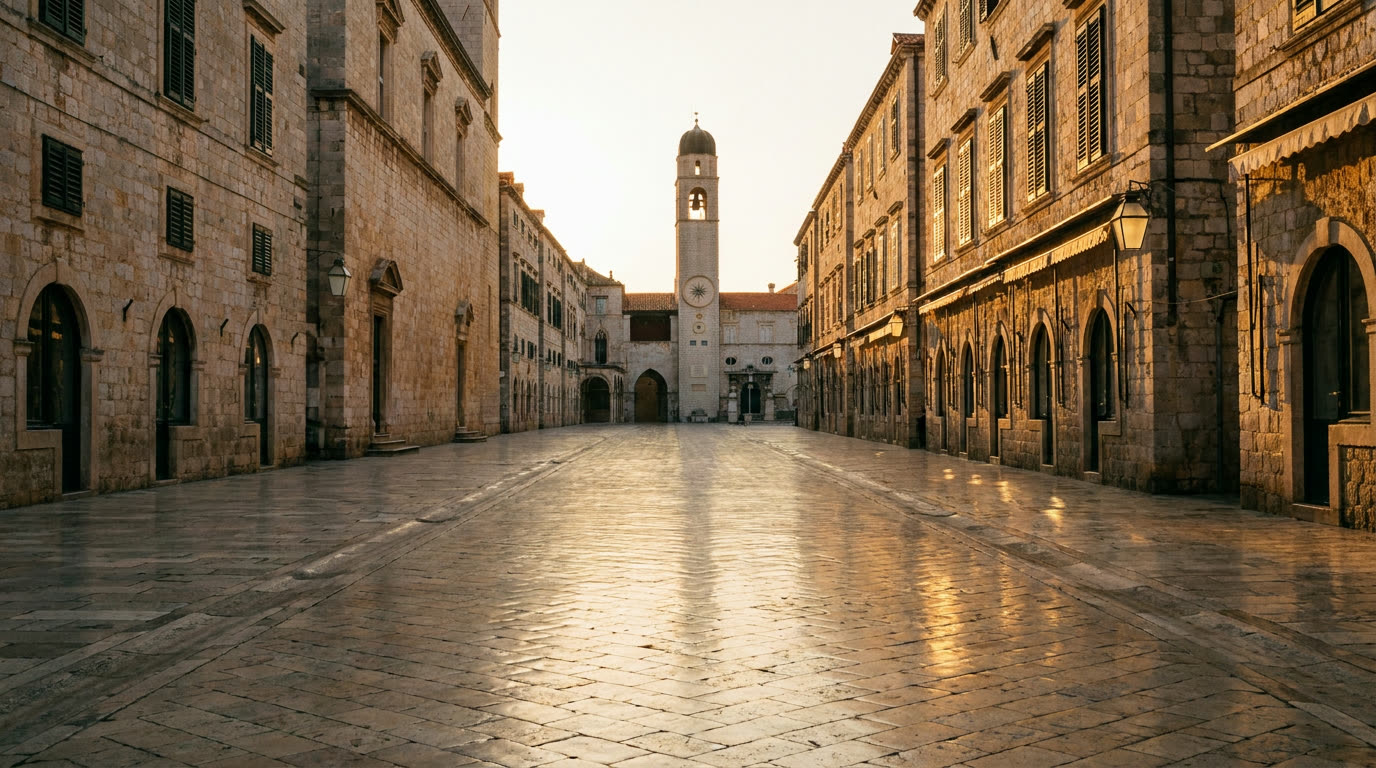
The limestone spine of the city, laid after the 1667 earthquake, book-ended by fountains and the bell tower. Walk it at 7am once. Empty, it is one of Europe's great streets; full, it is a conveyor. The old harbour behind St John's Fortress is where the evening passeggiata ends — take the stone bench by the Porporela breakwater with a gelato and watch the boats come home.
Mount Srđ Map
The cable car climbs 405 metres in four minutes to the full aerial reveal — city, walls, Lokrum, Elaphiti chain. Go 45 minutes before sunset, and know the queue down after can run long in August; we pre-arrange a driver at the top station instead. The Homeland War museum in the Napoleonic fort tells the 1991–92 siege story soberly and is worth thirty minutes of anyone's holiday.
What should you eat in Dubrovnik?
Dalmatian cooking is olive oil, live-fire fish and whatever the boats landed at dawn — closer to Italian than Balkan, with Ston oysters and Pelješac reds as the local trump cards. The star table is inside the fortifications; the honest ones hide two streets back from Stradun.
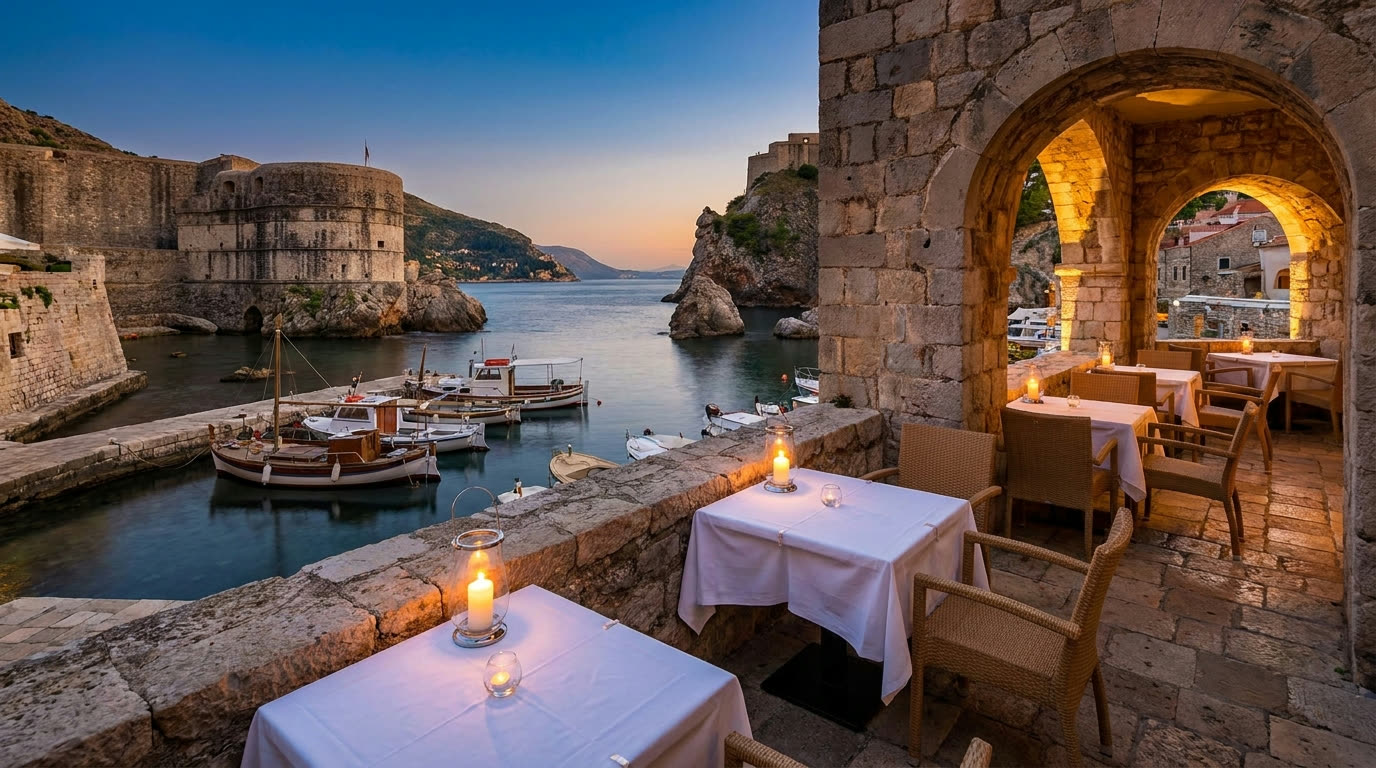
Restaurant 360 Map holds one Michelin star in the 2026 Croatia guide, its terrace built along the ramparts over the old harbour — chef Marijo Curić runs Mediterranean produce through French technique with the odd Asian accent. Ask specifically for the wall-edge tables when we book; the second row misses half the point. Proto Map, serving seafood since 1886, is the old-money choice — order the whole fish baked in salt and let them fillet it tableside. Nautika, by the Pile Gate with Lovrijenac floodlit across the cove, remains the anniversary room.
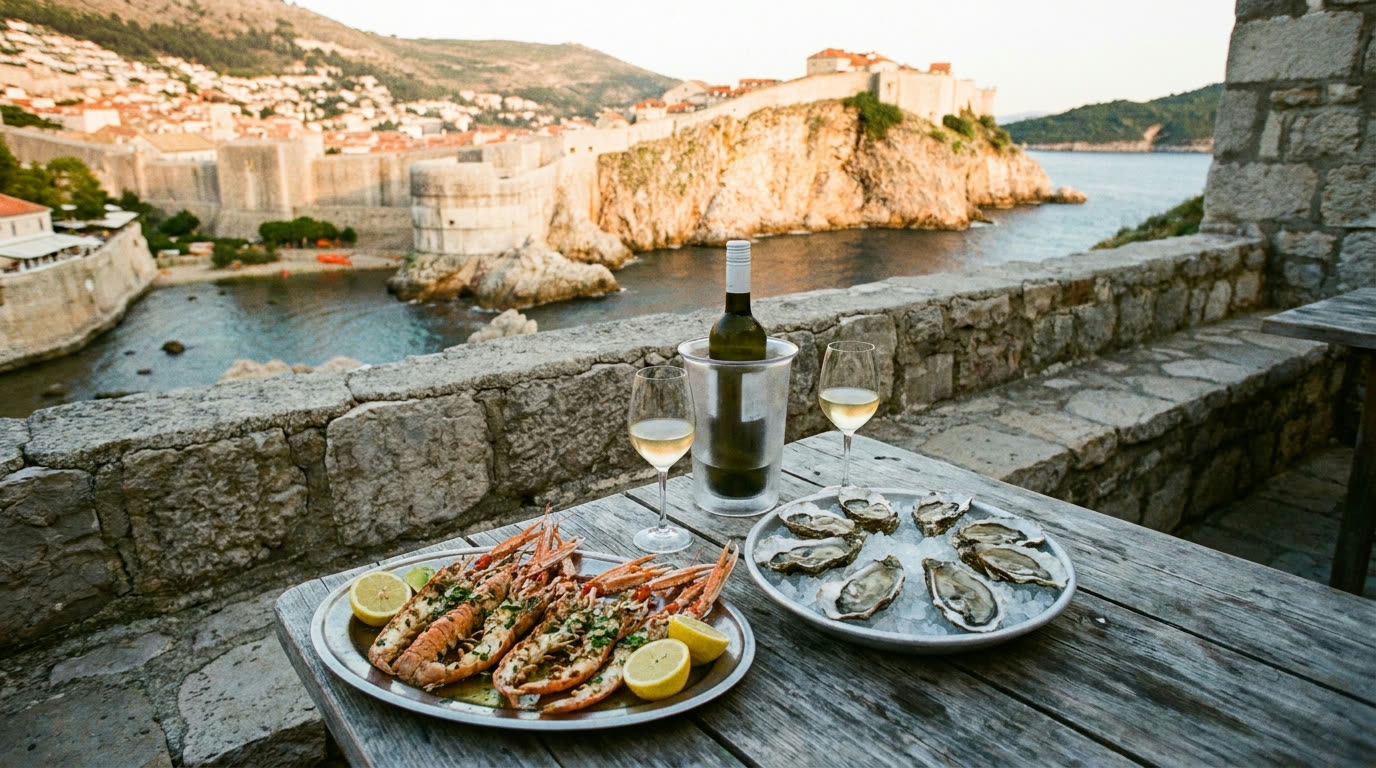
Down a register and better for it: Pantarul in Lapad for modern Dalmatian home cooking (the žrnovski makaruni with beef cheek, always), and any konoba serving black cuttlefish risotto — the national test dish. Skip the tasting menus on night one; order the Ston oysters, the grilled langoustines and a cold bottle of Pošip, and you have eaten Dubrovnik correctly for a third of the price.
Where is the luxury insider layer in Dubrovnik?
Dubrovnik's insider layer floats: the best of the city's private life happens on swim platforms, boat decks and wall-ledges rather than in velvet rooms. Here is the working list.
Beach clubs and cliff bars
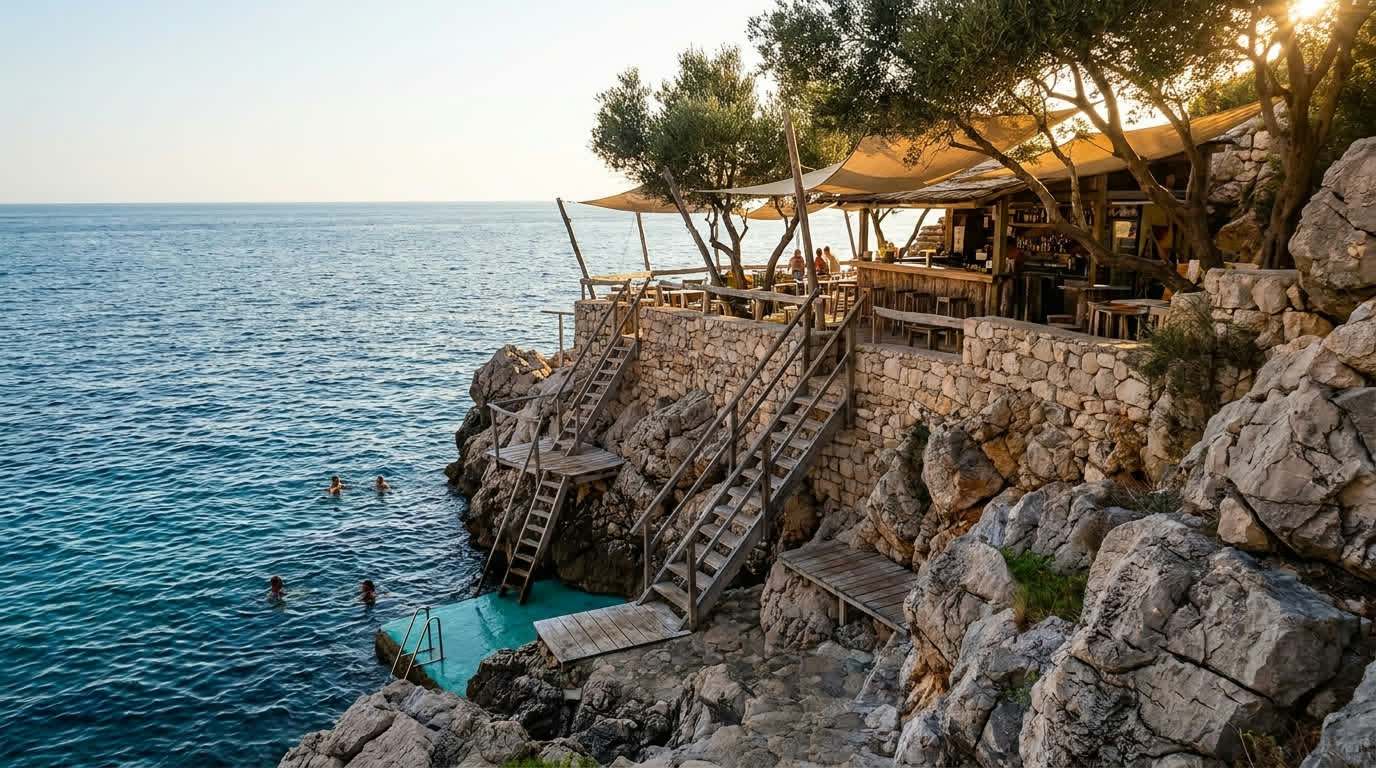
Banje Beach Map is the see-and-be-seen club with the Old Town as backdrop — front-row daybeds book out in July, and we reserve them with lunch. The counterpoint is Buža Map, a bar through a literal hole in the seaward wall: plastic cups, cash, cliff-jumpers, and the best cold-beer-at-sunset seat in the Adriatic. Cave Bar More in Lapad pours cocktails inside a genuine stalactite cave beneath its hotel. All three are exactly as good as their queue discipline; go at opening or at dusk.
Private boats and after-hours access
A skippered day-boat runs €800–2,000 depending on hull; we hold relationships with owners rather than fleets, which matters in August when everything floating is "fully booked". For culture after dark, the Dubrovnik Summer Festival (10 July–25 August) stages drama and recitals inside Lovrijenac and the Rector's Palace atrium — the closest legal thing to having the monuments to yourself. Private early-entry walking tours before the gates busy are also arrangeable through licensed guides; worth it in peak season, unnecessary in May.
Private shopping and the humidor question
Serious retail is boutique-scale: Croatian designers and coral jewellery along Od Puča street, and Maria Concept Store on St Dominika Map carrying international luxury labels in a vaulted stone interior, with private appointments possible outside opening hours. Cigar culture is low-key — the five-star hotels will produce a humidor selection on request, and terrace smoking is tolerated where indoor is not. For a proper lounge you wait for Dubai; for a Cohiba over the water at the Villa Dubrovnik rooftop, you are already in the right place.
Connectivity and seclusion
Fibre and 5G blanket the city; every hotel above runs video-call-grade Wi-Fi, and the Excelsior's business suites are the reliable work base. True seclusion means a villa on Šipan or a Lopud hideaway — offshore, car-free, twenty minutes by tender from a Michelin dinner. We arrange both, with provisioning.
Every address in this guide can be reserved, sequenced and chauffeured for you — free, by your dedicated Dubai-based specialist.
Plan this journey with your free conciergeEvery address above can be arranged, reserved and chauffeured for you — free, by your dedicated Dubai-based specialist.
Plan my Dubrovnik journey